How These Worksheets Support CCSS 2.NBT.A.2
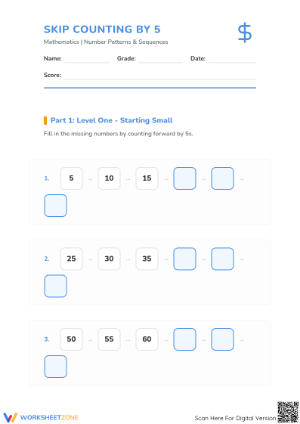
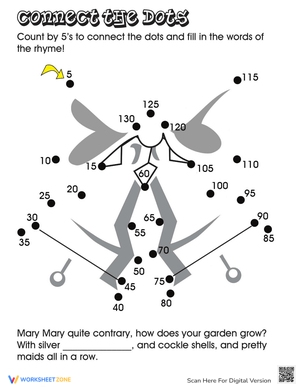
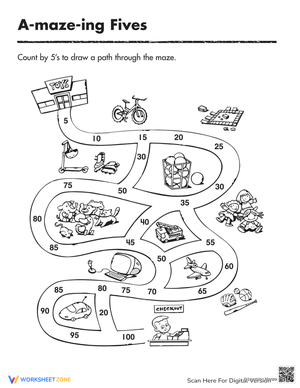
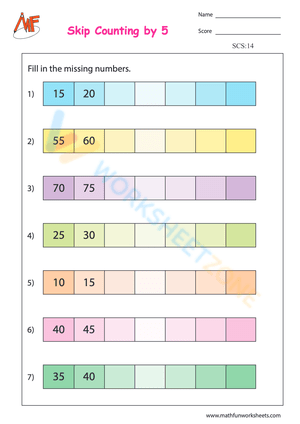
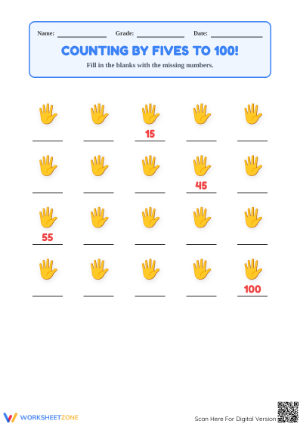
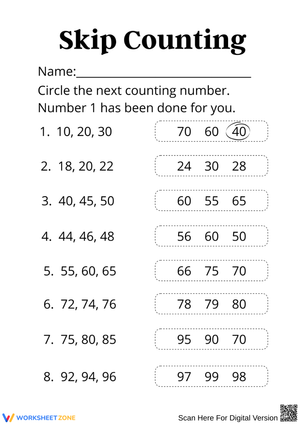
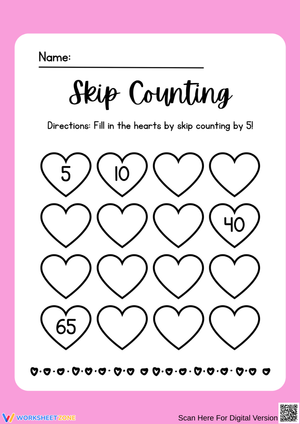
By second grade, skip counting by 5 stops being an enrichment activity and becomes a graded expectation. Worksheets that isolate the 5s pattern let you check that specific skill before students blend it with 10s and 100s.
According to the Common Core State Standards, Grade 2 Number & Operations in Base Ten, standard 2.NBT.A.2 asks students to count within 1000 and skip-count by 5s, 10s, and 100s. That single line means every second grader is accountable for fluent skip counting by 5 well before the end of the year.
It helps to sequence the standard in the order students find it manageable. Many teachers introduce the 10s first because that pattern is cleaner, then bring in the 5s, since the alternating 5 and 0 in the ones place adds a small layer of complexity. Isolating the 5s on its own worksheet, before mixing all three, keeps that extra step from getting lost on a crowded review page.
Using Skip Counting by 5 as a Bridge to Multiplication
Here is the pattern most pacing guides miss: by the middle of second grade, most students already use skip counting by 1, 2, 5, and 10 as their first working model of multiplication and repeated addition. That means the 5s sequence is doing double duty. Every time a student counts 5, 10, 15, 20, 25 to answer how many are in five groups of 5, they are rehearsing the times-5 facts a full grade before those facts appear on a fluency drill. Framing your worksheets this way, as multiplication practice in disguise, changes how you talk about them with students.
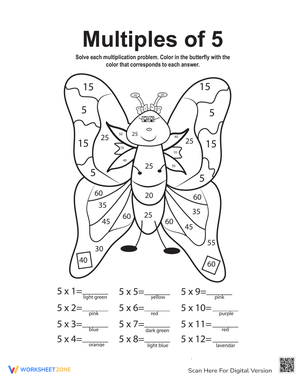
This framing also gives you an easy differentiation lever. Students who finish the 5s sequence quickly can be asked to write the matching multiplication sentence, so five groups of 5 becomes 25, turning a counting page into an early multiplication task without printing anything new.
Differentiating for Intervention and Enrichment
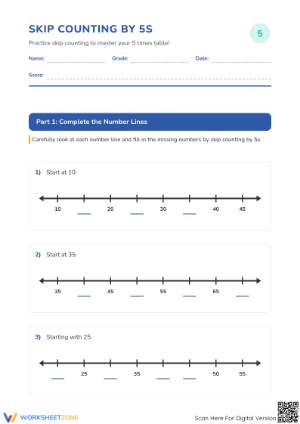
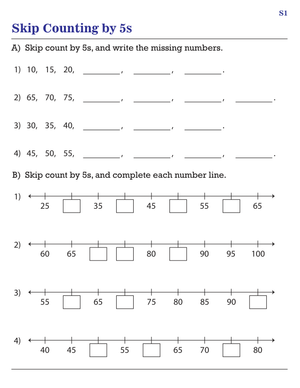
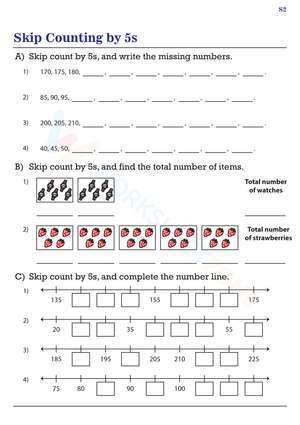
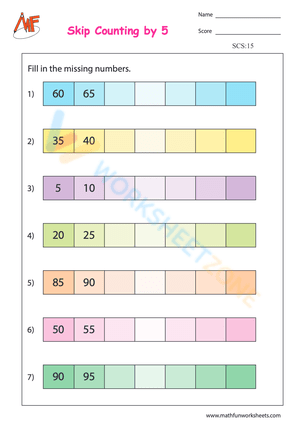
One worksheet rarely fits a whole class. For your intervention group, keep the range small, roughly 5 to 50, and pair every problem with a number line so students can hop rather than recall. Highlight the ones digit that alternates between 5 and 0; that visual anchor helps struggling counters predict the next number.
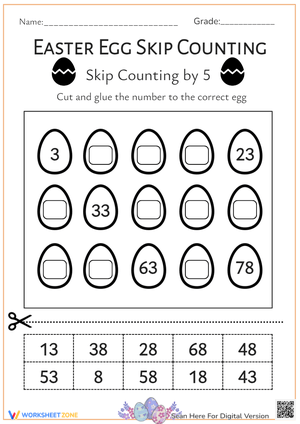
For enrichment, push past 100 and mix in off-decade starting points. Ask students to skip count by 5 starting at 3, so the sequence runs 3, 8, 13, 18, and they generalize the plus-5 rule instead of memorizing one fixed list. Off-decade starts are also a fast way to spot which students truly understand the pattern versus those who have simply memorized the standard chant.
Whichever group you plan for, keep the worksheet's core structure identical across levels. When the intervention and enrichment pages look the same but differ in range, students spend their energy on the math rather than decoding a new format, and you can grade the whole class against one mental rubric.
Pairing Practice With Nickels and Clock Time
Skip counting by 5 pays off well beyond the math block. It is the exact skill students need to count nickels and to read an analog clock in 5-minute intervals. When a worksheet frames the 5s pattern as counting nickels or tracking how many minutes have passed, abstract sequencing becomes a concrete life skill.
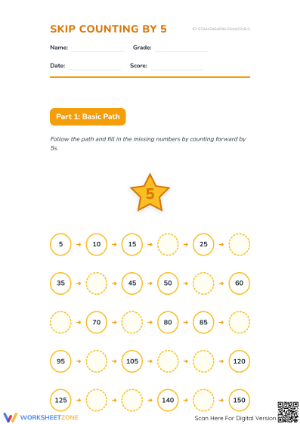
Build a short routine around it: open with a printed row of nickels, then move to a clock face marked at each 5. Students who can jump from 15 to 20 to 25 on paper transfer that fluency directly to money and time units, two areas where second graders often stumble on end-of-year assessments.
You can also use these connections diagnostically. A student who counts nickels smoothly but freezes on a bare 5, 10, 15 sequence often needs context to scaffold the number; one who does the opposite may be leaning on the printed layout rather than the pattern. Both signals shape your next small-group pull.
Teacher Tips
A worksheet is only as strong as the routine around it. These moves stretch a single skip counting by 5 page across a week of instruction without printing anything new.
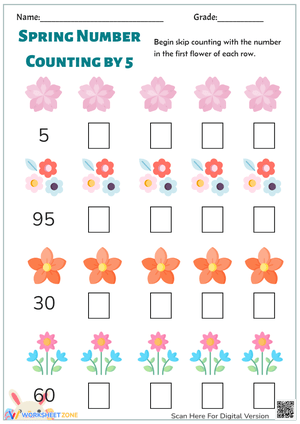
- Read the sequence aloud as a class chant before students write, so the rhythm supports the writing.
- Have students circle the pattern in the ones place to make the 5, 0, 5, 0 rhythm visible.
- Use one worksheet across three days: choral on day one, independent on day two, timed on day three.
- Turn any completed sheet into a quick exit ticket by covering three numbers and asking students to rebuild them.
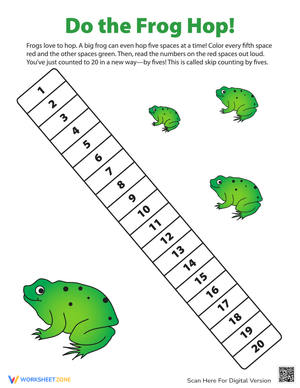
- Keep a laminated 100 chart nearby so students can self-check by shading every fifth square.
Frequently Asked Questions
1. What grade level is skip counting by 5 appropriate for?
Skip counting by 5 is usually introduced in late grade 1, once students count fluently by 1s, and it becomes a graded expectation in grade 2. Kindergarten students can meet it informally through chants, but the written worksheet work fits grades 1 and 2 best.
2. How does skip counting by 5 connect to the standards?
It maps directly to CCSS 2.NBT.A.2, which asks second graders to count within 1000 and skip-count by 5s, 10s, and 100s. Worksheets that isolate the 5s pattern let you assess that one standard component on its own before combining it with the others.
3. How can teachers use these worksheets for small-group intervention?
Keep the number range under 50, attach a number line to every item, and highlight the alternating 5 and 0 in the ones place. Work one row together, then let students finish the next row independently while you watch for the decade-crossing errors.
4. What real-world examples pair well with skip counting by 5?
Counting nickels and reading a clock in 5-minute intervals are the two strongest connections. Both turn the abstract sequence into a concrete task and preview the money and time units students meet later in grade 2.
5. How many practice problems should a worksheet include?
Aim for enough repetition to build fluency without fatigue, which is roughly 15 to 25 items for most grade 2 groups. Split them across two or three formats, such as number lines, missing numbers, and a short word problem, to keep engagement high.













 Interactive Worksheet Maker
 Quiz Maker
 Word Search Maker
 Crossword Puzzle Maker
 Word Scramble Generator
 Sentence Scramble Generator
 Handwriting Worksheet Generator
 Name Tracing Generator
 Fill In The Blank Generator