




























Views
Downloads










Printable Simple Machines Unit | Grade 2 Science

Paste this activity's link or code into your existing LMS (Google Classroom, Canvas, Teams, Schoology, Moodle, etc.).
Students can open and work on the activity right away, with no student login required.
You'll still be able to track student progress and results from your teacher account.
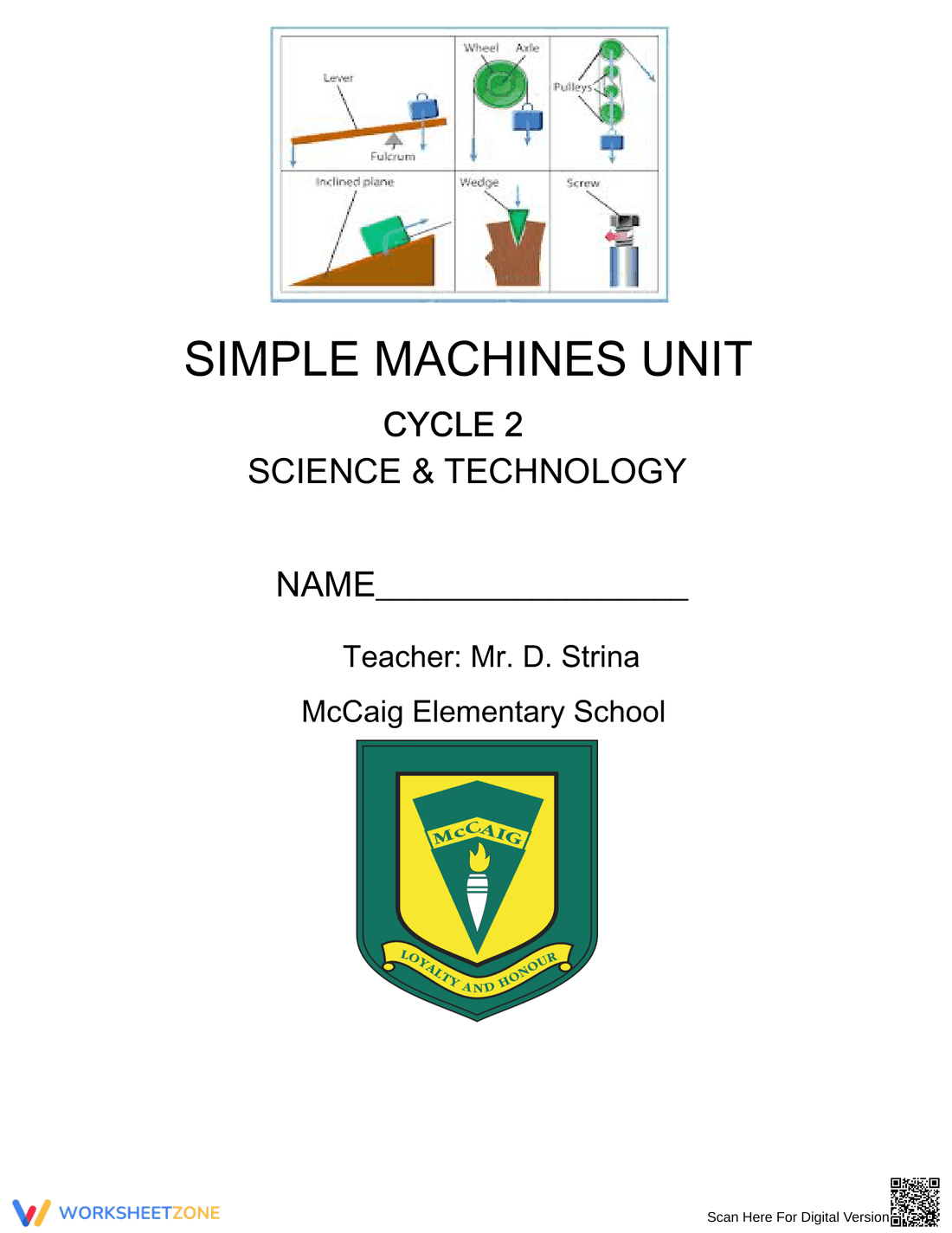
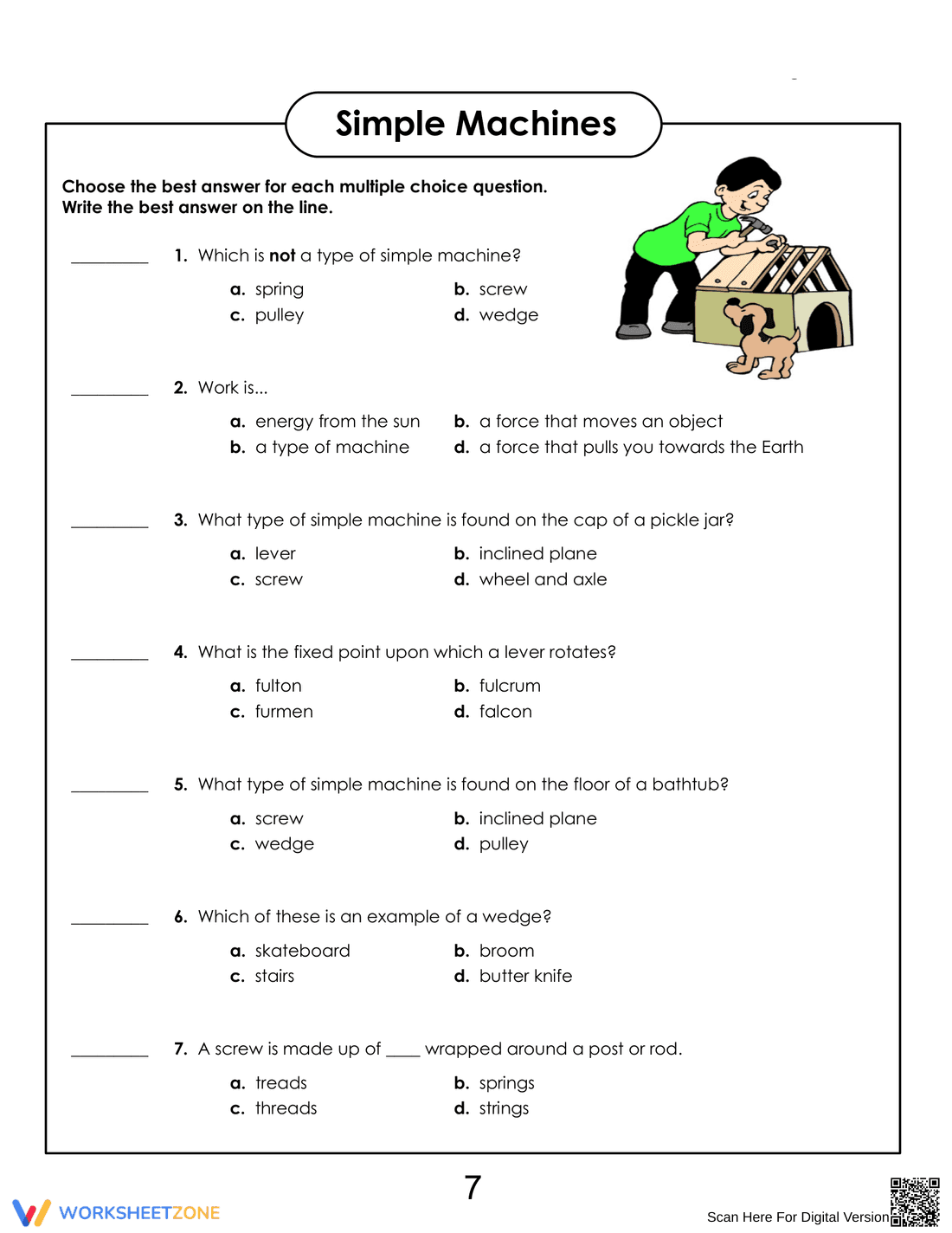
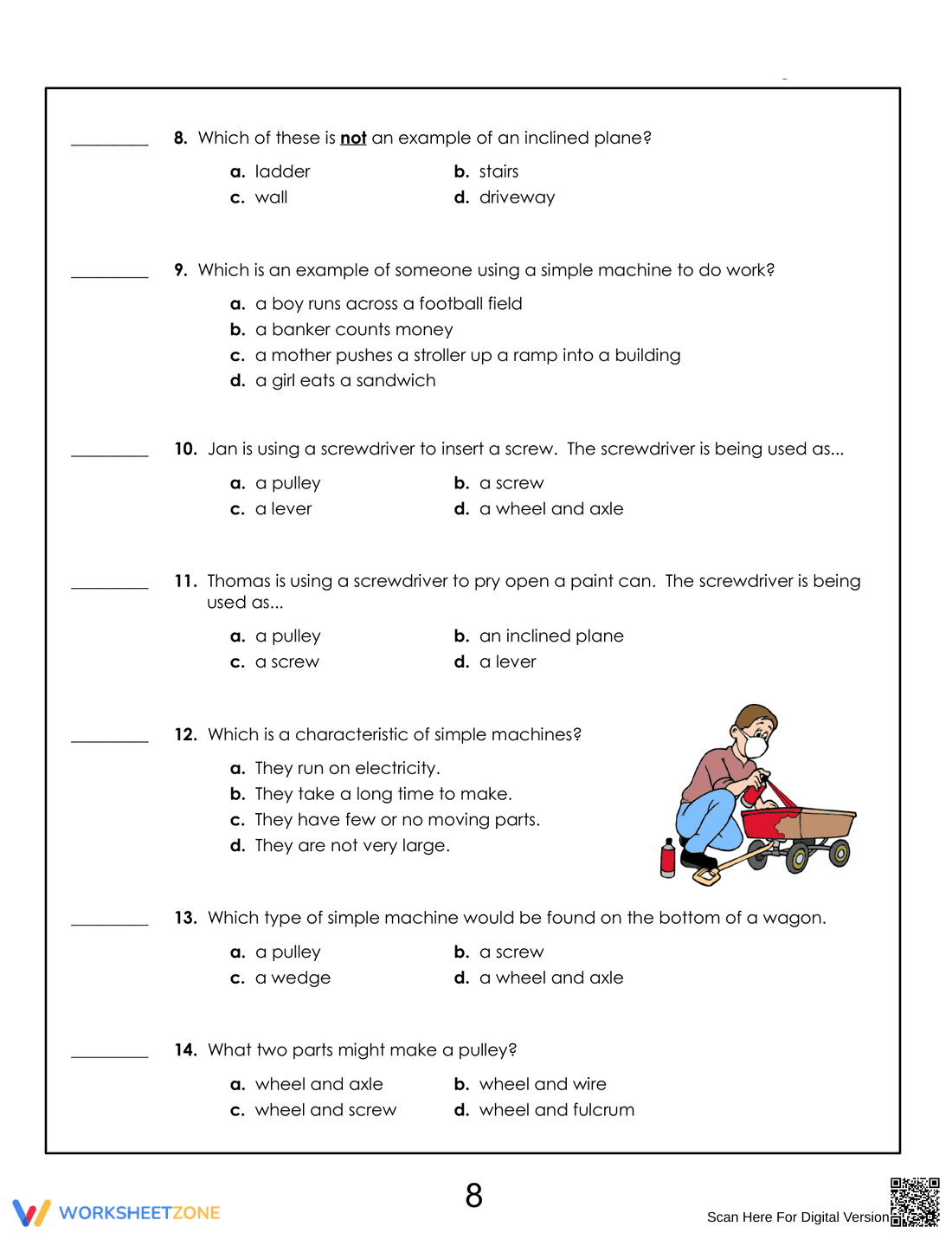
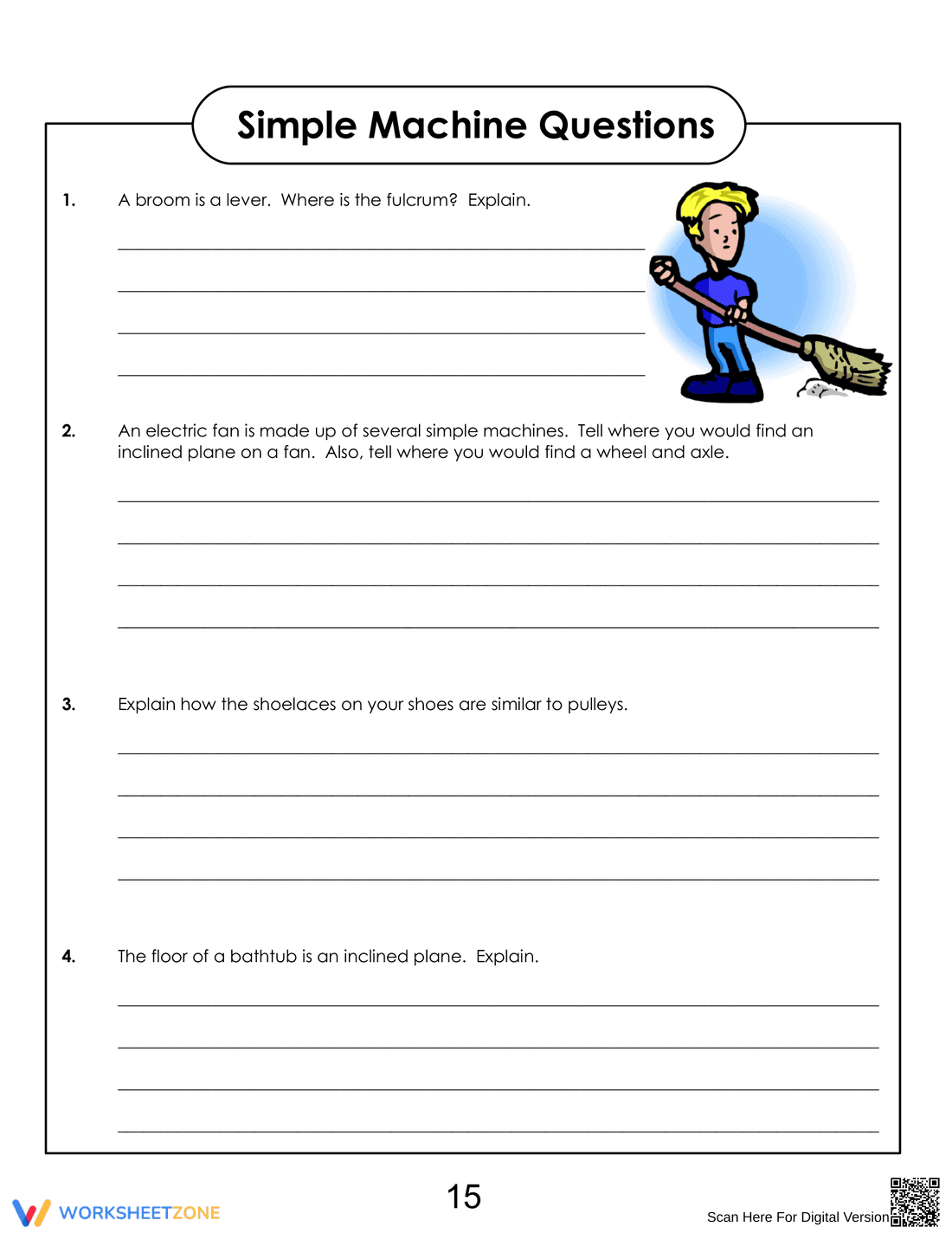
This comprehensive Grade 2 science worksheet gives students a complete unit to identify and explain simple machines. Students will read engaging passages, answer comprehension questions, and apply their knowledge of forces to real-world objects to understand how machines make work easier.
At a Glance
- Grade: 2 · Subject: Science
- Standard:
K-2-ETS1-2— Illustrate how an object's shape helps it function to solve problems- Skill Focus: Identifying simple machines
- Format: 21 pages · 60 problems · PDF
- Best For: Complete unit instruction
- Time: 45–60 minutes per lesson
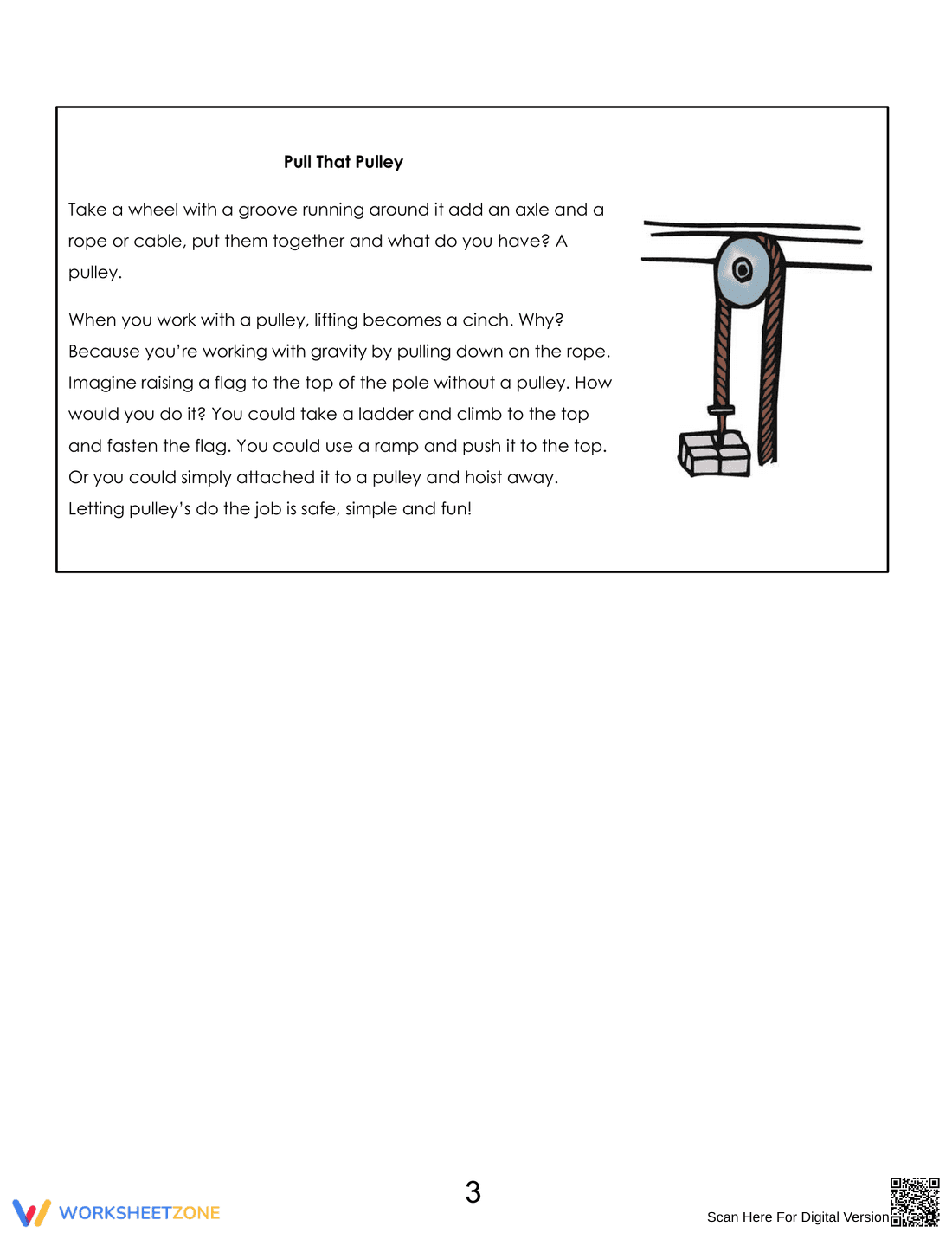
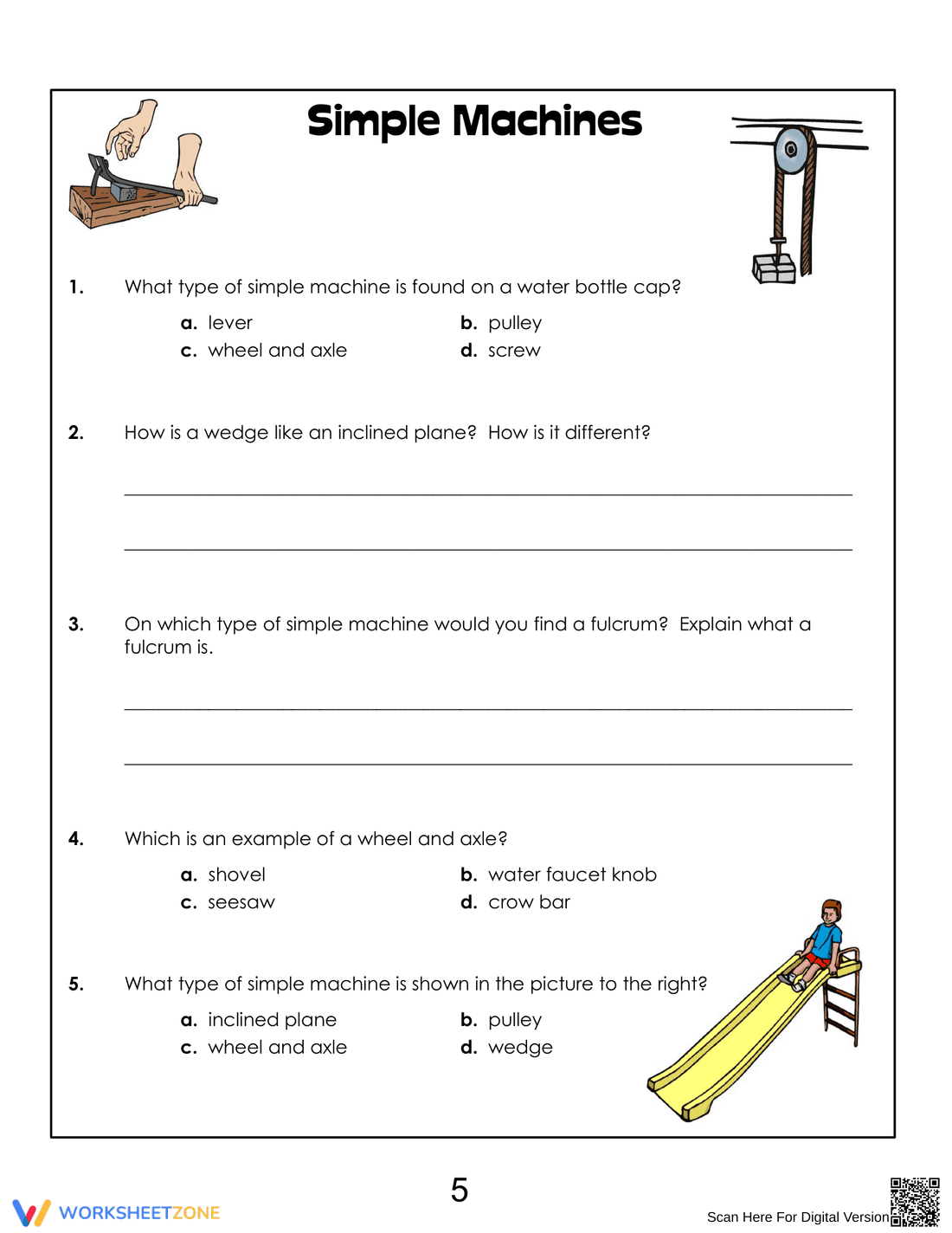
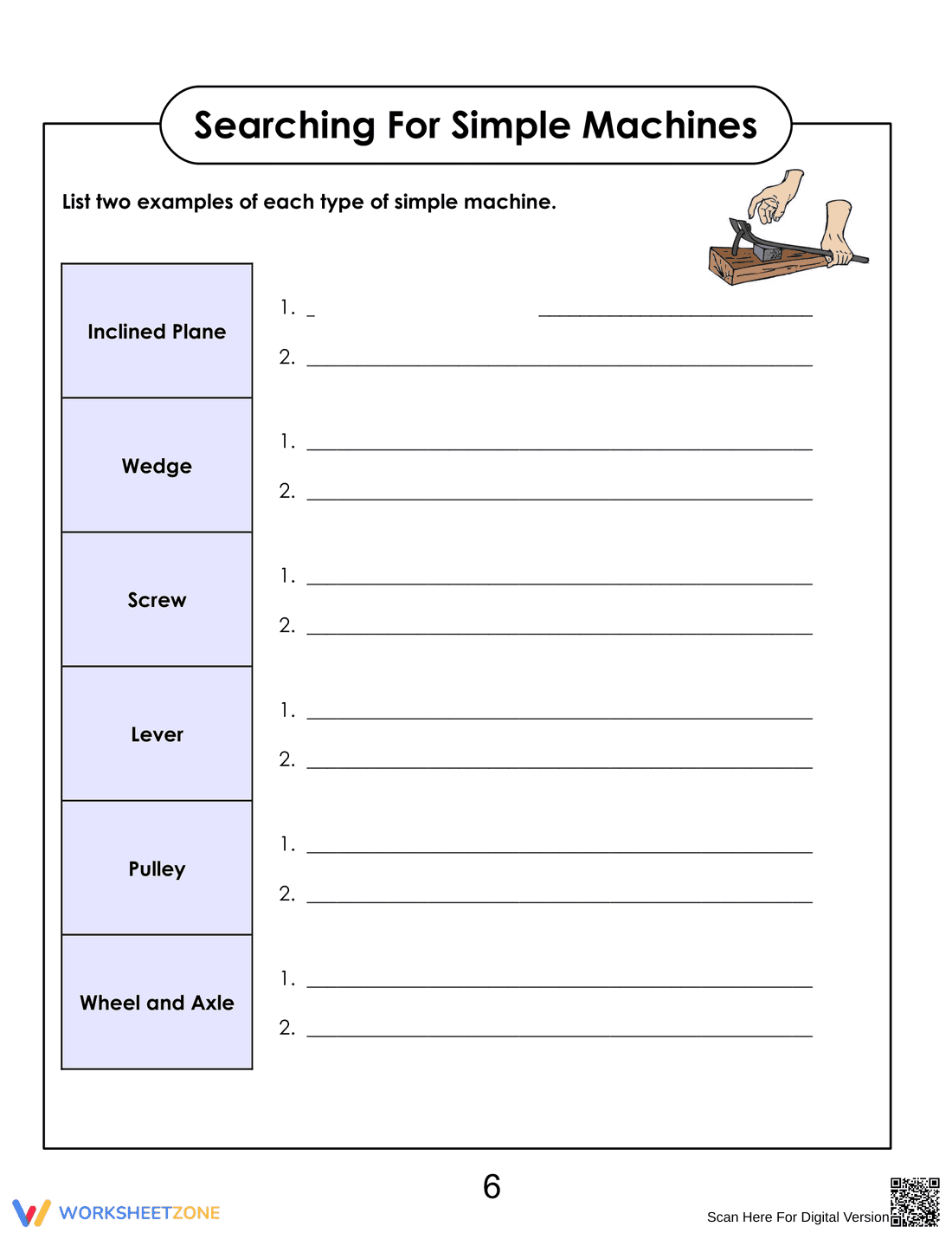
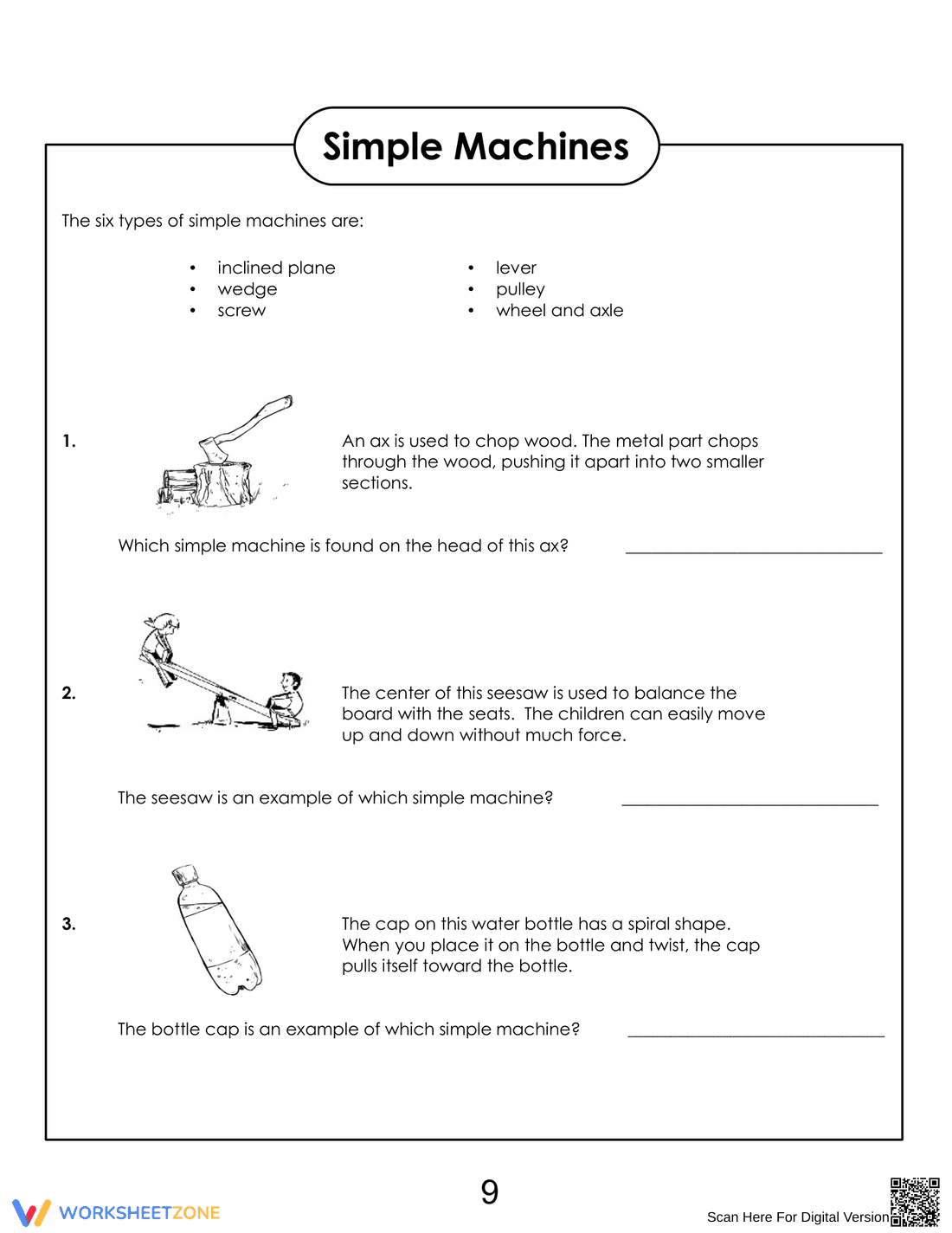
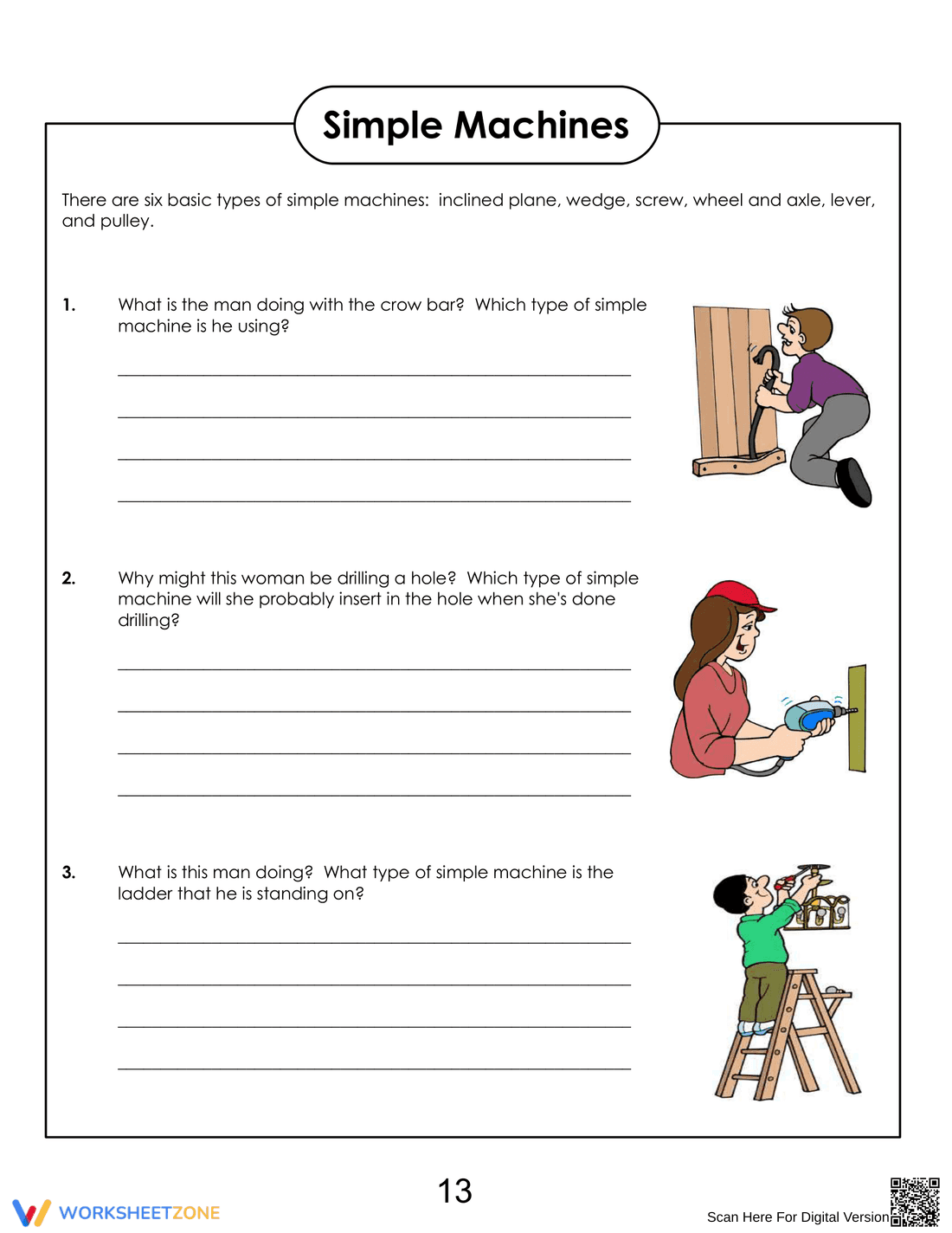
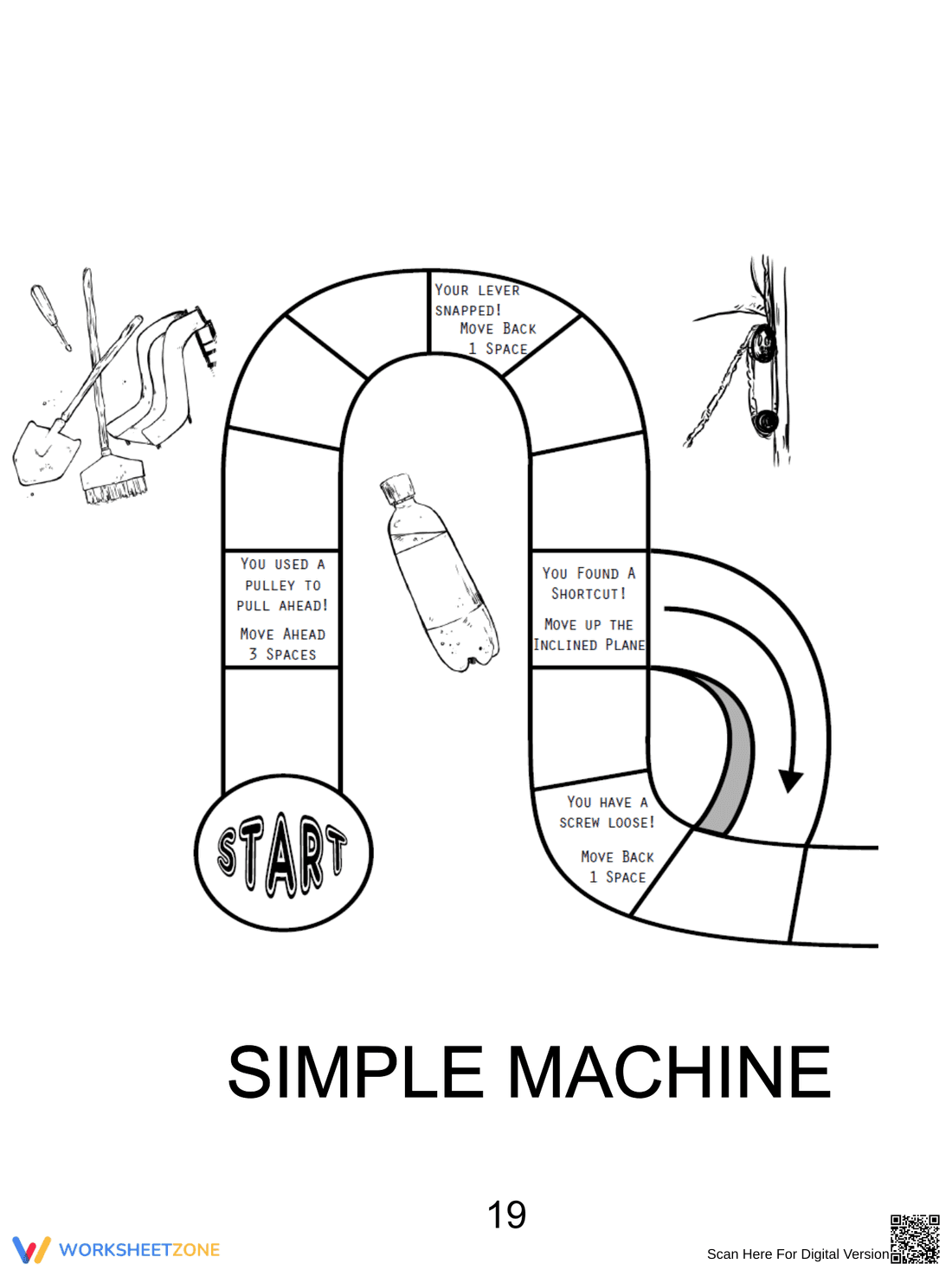
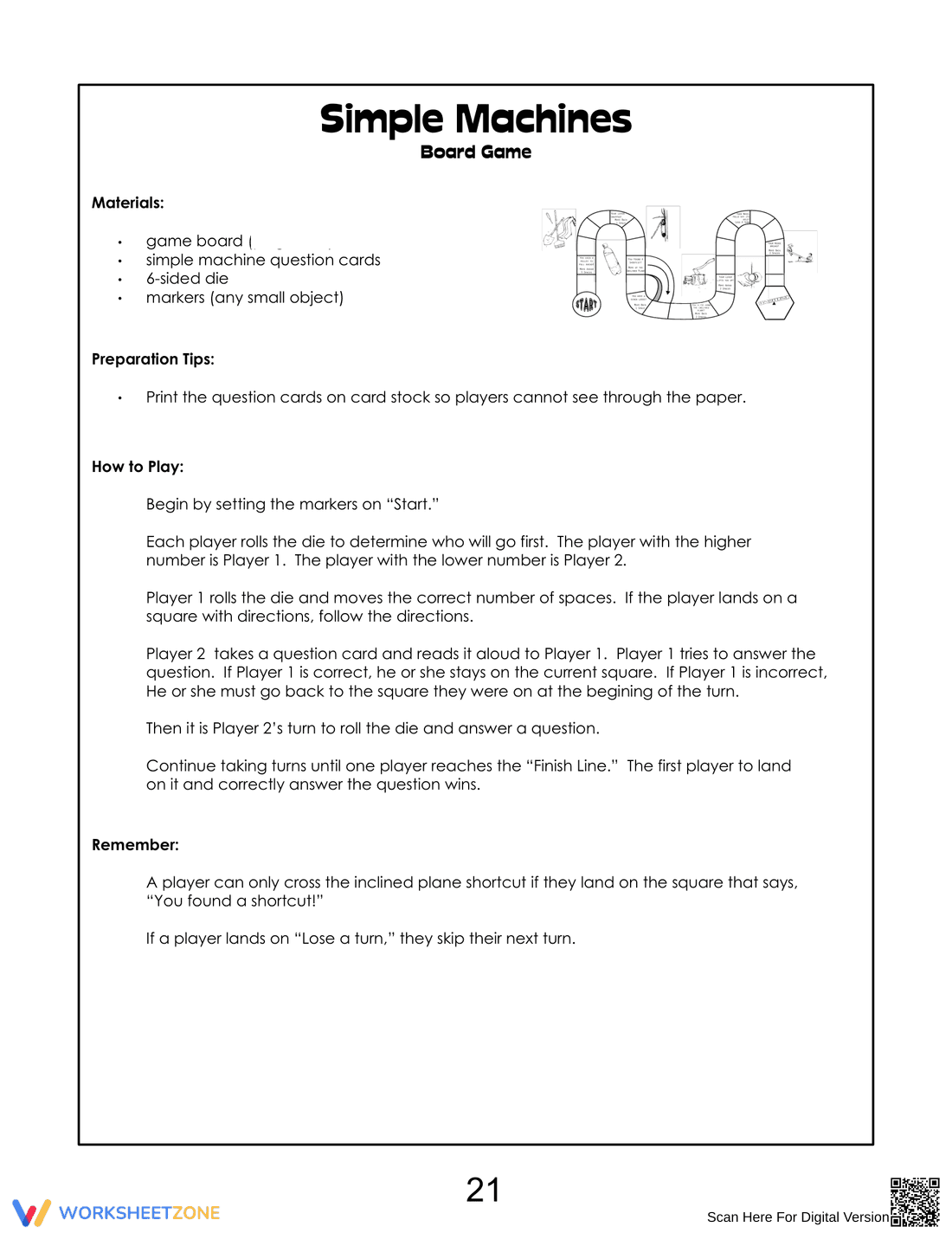
This massive 21-page packet includes reading passages for each of the six simple machines, a vocabulary glossary, multiple-choice questions, short-answer prompts, and a crossword puzzle. It also features extensive review sheets with matching, true/false, and fill-in-the-blank exercises, culminating in a printable board game to reinforce concepts.
- Print (1 minute): Simply print the entire 21-page PDF packet or select specific daily lessons.
- Distribute (1 minute): Hand out the reading passages and corresponding question sheets to students.
- Review (5 minutes): Go over the vocabulary and instructions together before independent work.
With under two minutes of teacher prep time, this resource is perfect for a multi-day science unit or an emergency sub plan.
Aligned to primary standard K-2-ETS1-2: Develop a simple sketch, drawing, or physical model to illustrate how the shape of an object helps it function as needed to solve a given problem. This packet helps students connect the physical shape of wedges, levers, and pulleys to their mechanical functions. Both standard codes can be copied directly into lesson plans, IEP goals, or district curriculum mapping tools.
Use the reading passages and initial questions during direct instruction to introduce each simple machine. Assign the crossword puzzle and review sheets as independent practice or homework to solidify understanding. The included board game serves as an excellent Friday review activity. Expected completion time ranges from 45 to 60 minutes per section over a week-long unit.
Designed for Grade 2 students, this packet is also suitable for advanced first graders or as a review for third graders. The clear illustrations and structured reading passages provide built-in scaffolding for visual learners. Pair this resource with hands-on classroom demonstrations of levers and pulleys.
Integrating comprehensive reading materials with targeted practice questions significantly enhances elementary science education. By addressing standard K-2-ETS1-2 to illustrate how an object's shape helps it function to solve problems, this packet builds foundational STEM literacy. According to a ScienceDirect TpT Analysis, multi-modal worksheets that combine text, visual diagrams, and interactive elements like puzzles and games increase student retention of complex vocabulary and scientific concepts. This resource provides the necessary repetition and varied task types to ensure students master the mechanics of simple machines while remaining engaged throughout the entire instructional unit. Providing students with clear, real-world examples of forces and motion allows them to connect classroom learning to their everyday environment, fostering a deeper, more intuitive understanding of basic physics principles.


