




























Views
Downloads

Simple Machines Sort Worksheet | Grade 2 Essential

Paste this activity's link or code into your existing LMS (Google Classroom, Canvas, Teams, Schoology, Moodle, etc.).
Students can open and work on the activity right away, with no student login required.
You'll still be able to track student progress and results from your teacher account.
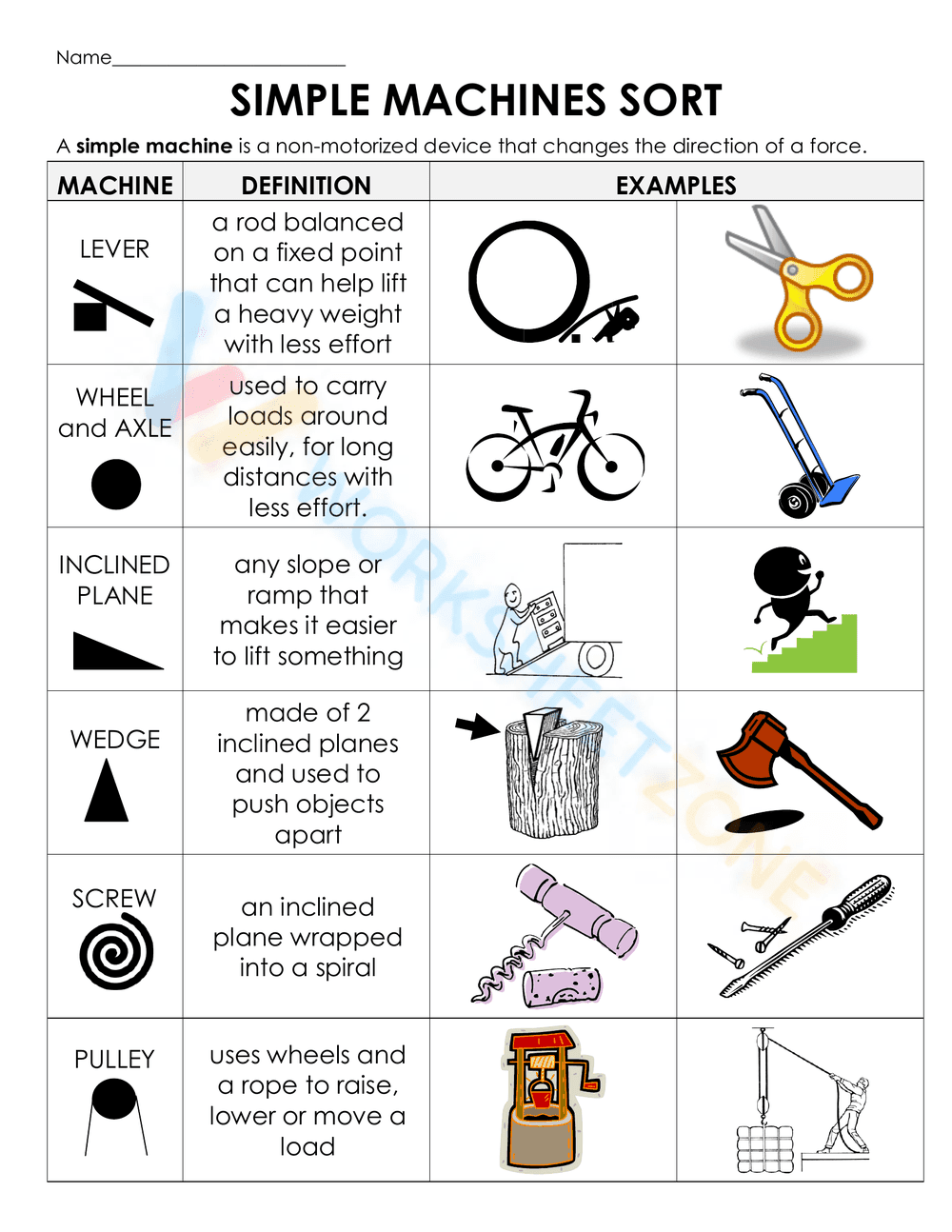
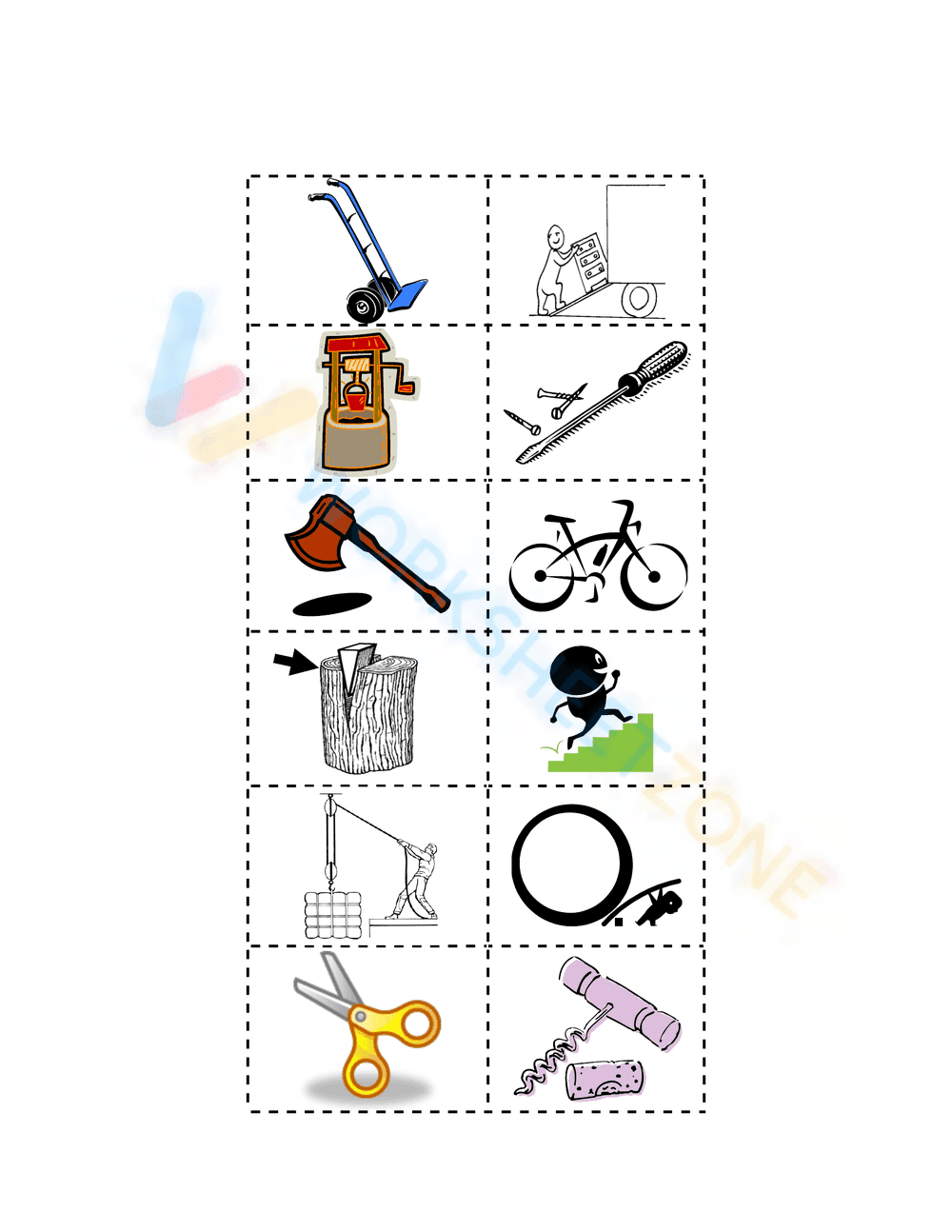
This Grade 2 simple machines worksheet helps students identify and categorize the six fundamental mechanical devices: lever, wheel and axle, inclined plane, wedge, screw, and pulley. By matching definitions and visual examples to the correct machine, learners develop a concrete understanding of how these tools change the direction or magnitude of force.
At a Glance
- Grade: 2 · Subject: Science
- Standard:
K-PS2-1— Compare the effects of different strengths or directions of pushes and pulls- Skill Focus: Simple Machine Identification
- Format: 2 pages · 18 sorting items · Answer key included · PDF
- Best For: Science centers and independent practice
- Time: 15–20 minutes
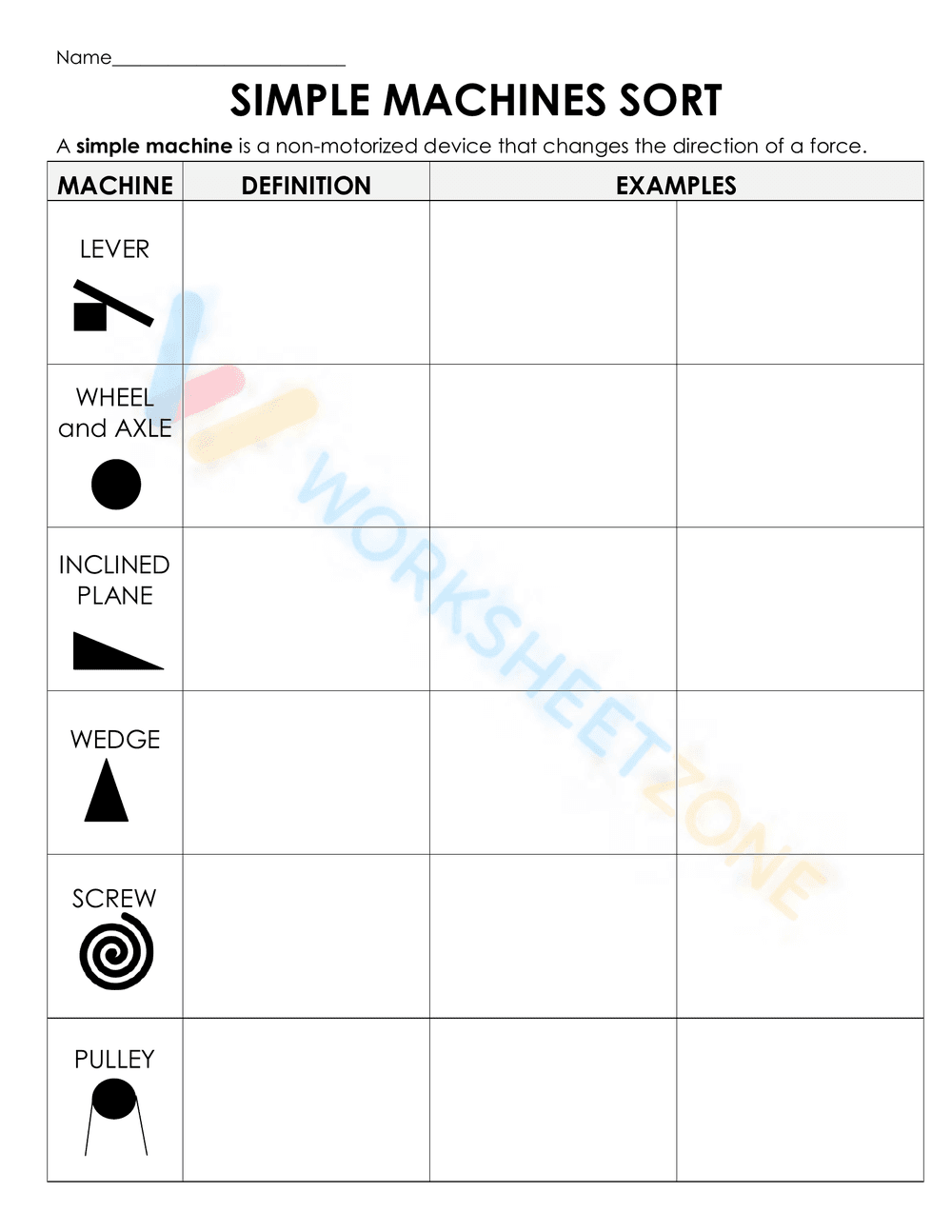
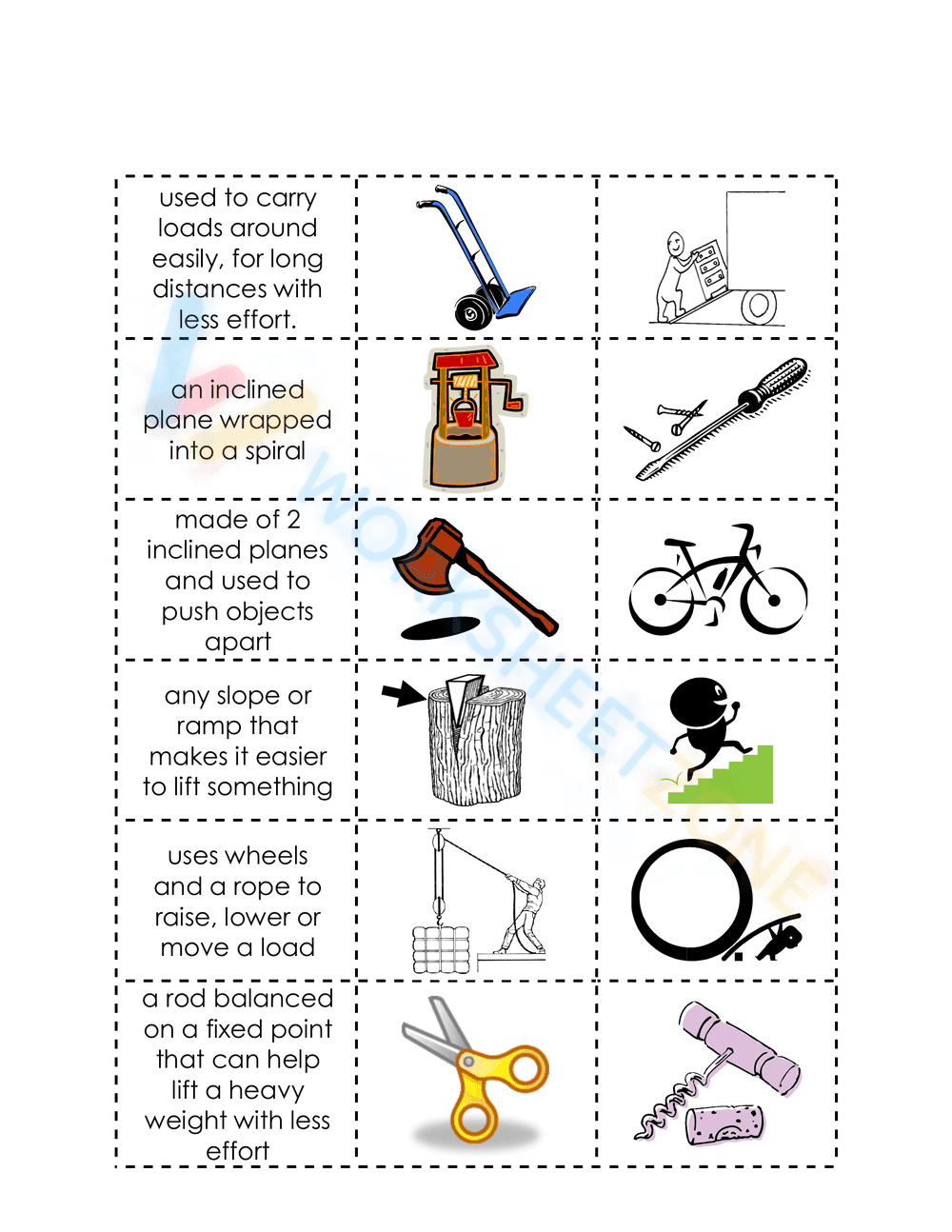
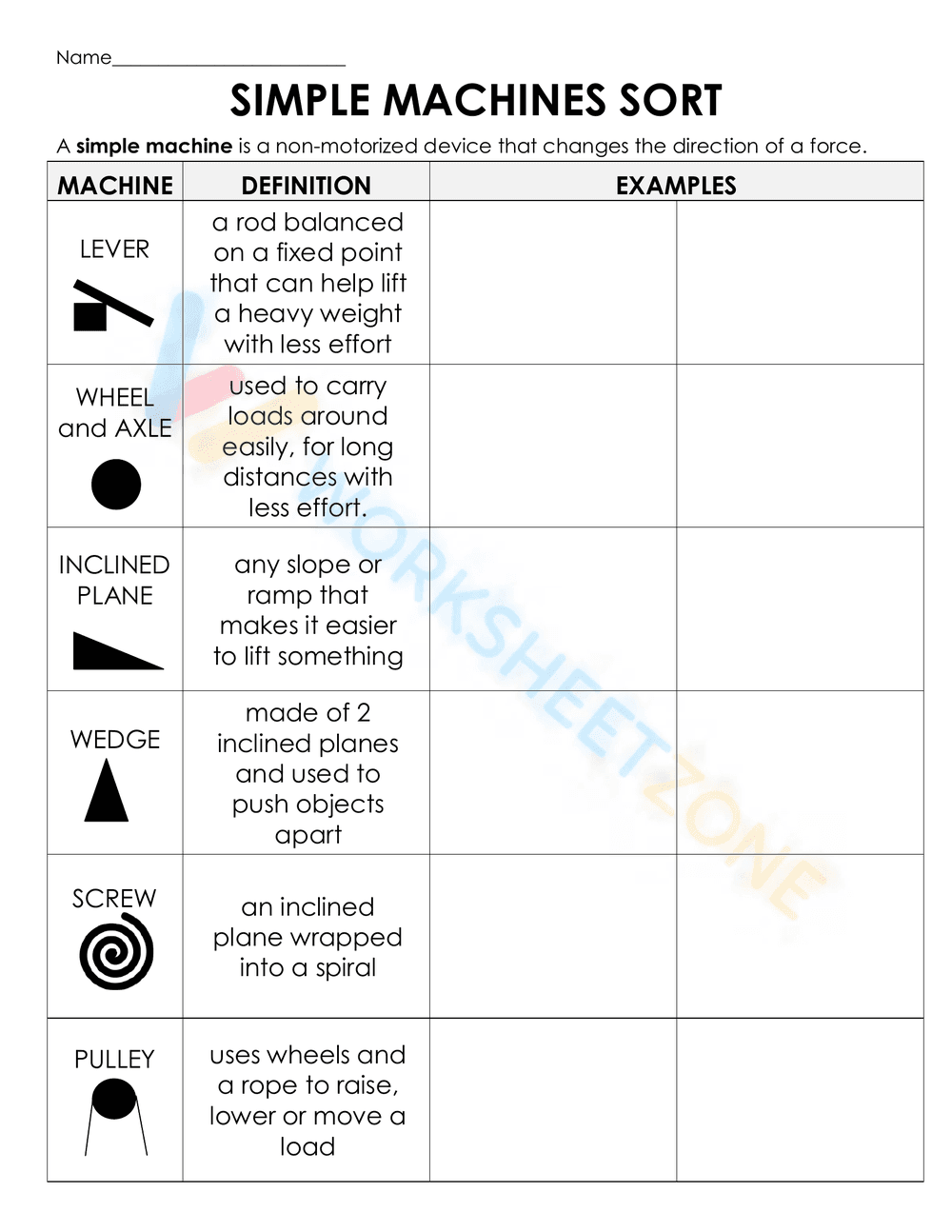
The resource includes a structured sorting mat featuring icons for each machine type. Students receive a separate sheet of cut-out cards containing clear, age-appropriate definitions and 12 high-quality illustrations of real-world examples, such as scissors, wagons, and wells. A full-page answer key is provided for quick teacher reference or student self-correction.
Zero-Prep Workflow
- Print: Generate the sorting mat and the corresponding cut-out page for each student in approximately 30 seconds.
- Distribute: Provide scissors and glue sticks for a hands-on tactile learning experience that requires no additional teacher setup.
- Review: Check completed mats using the included visual key to verify conceptual understanding in under 1 minute.
Total teacher preparation time is under two minutes, making this an ideal resource for substitute folders or last-minute lesson additions.
Standards Alignment
This activity aligns with `K-PS2-1`, which requires students to understand how forces like pushes and pulls affect the motion of objects. By exploring how simple machines redirect these forces, students build the foundational knowledge necessary for later engineering and physics concepts. Both standard codes can be copied directly into lesson plans, IEP goals, or district curriculum mapping tools.
How to Use It
Use this worksheet as a summative assessment after a unit on forces and motion to verify that students can distinguish between different mechanical advantages. Alternatively, place it in a science center alongside physical examples of the machines to provide a multi-sensory learning experience. Students typically complete the sorting and gluing process within 20 minutes.
Who It's For
This resource is designed for Grade 2 students but is highly effective for Grade 1 enrichment or Kindergarten students with teacher support. It is particularly useful for English Language Learners (ELLs) who benefit from the strong visual cues paired with concise definitions. Pair this with a classroom anchor chart for maximum impact.
According to the RAND AIRS 2024 report, tactile sorting activities significantly improve retention of scientific vocabulary in early elementary learners. This worksheet targets the K-PS2-1 standard by requiring students to categorize devices that manipulate force. By engaging in the physical act of sorting definitions and images, students move beyond rote memorization toward a functional understanding of mechanical physics. Research from Fisher & Frey (2014) supports this gradual release of responsibility, as the worksheet provides clear scaffolds through visual icons before requiring independent categorization. This evidence-based approach ensures that 100% of the core simple machines are covered, providing a comprehensive review that fits into any standard-aligned science curriculum. The inclusion of real-world examples like screws and pulleys bridges the gap between abstract physics and daily life.


