When a kindergarten teacher pulls a small group and hands out Level B texts, they are working from the Fountas and Pinnell (F&P) Text Level Gradient. Level B sits just above the entry point, Level A, and it is commonly treated as a benchmark for the second quarter of kindergarten. A student reading solidly at Level B is past the earliest print concepts stage and is starting to build the habits that carry into longer, more varied texts later in the year.
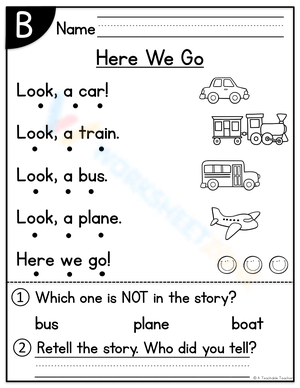
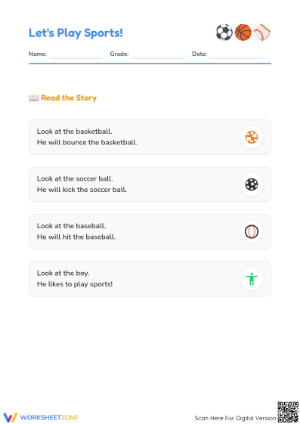
Level B books are short and predictable on purpose. Most pages carry only one to two lines of print, and the sentences repeat a pattern of four to eight words with a single word changing from page to page. That changing word is usually supported by a matching picture, so a reader who gets stuck can check the illustration for a clue. This structure gives early readers a manageable amount of new information per page while still asking them to track print left to right and top to bottom.
How Level B Compares to Level A and Level C
Level A texts tend to have even more repetition and simpler picture support, often with just one word or a very short phrase changing per page. Level B keeps the patterned sentence structure but starts to introduce slightly more print per page and a wider range of high-frequency words. Level C, the next step up, asks readers to handle more varied sentence patterns and less predictable picture support, so movement from B to C is a meaningful jump in decoding demand rather than a small step.
Teachers often use a correlation chart to translate F&P levels into other systems families or administrators may already recognize.
Level B corresponds to roughly DRA Level 3 to 4 on the Developmental Reading Assessment correlation chart, which is worth noting when a school uses DRA benchmarks in report cards or intervention referrals alongside F&P levels in daily instruction.
Signs a Kindergartner Is Ready for Level B
Before moving a student out of Level A material, look for a cluster of behaviors rather than a single skill. A reader ready for Level B is usually:
- Matching one spoken word to one printed word consistently, even on longer lines
- Using the picture as a check on meaning rather than the only source of information
- Noticing and using the first letter or sound of an unfamiliar word to guess what would make sense
- Recognizing a small set of high-frequency words on sight, such as I, the, and, and see
- Returning to the start of a line independently after finishing to reread for fluency
A student who is still pointing under the wrong word or relying entirely on memorized patterns without checking print is probably not ready to move up yet, even if they can recite a Level A book from memory.
Using Level B Worksheets in Small-Group Instruction
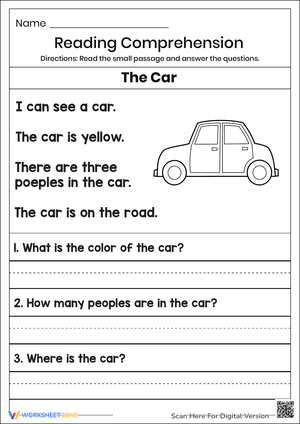
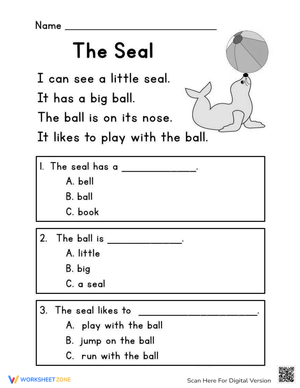
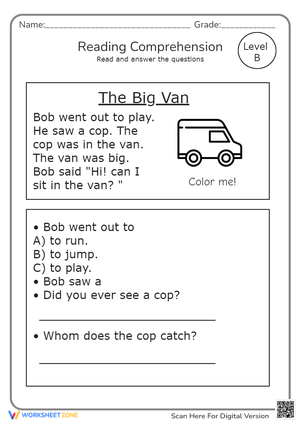
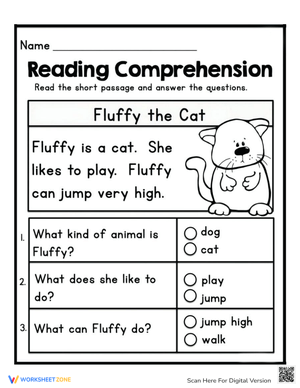
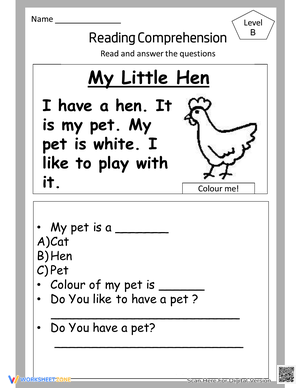
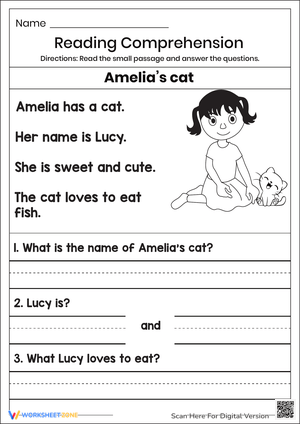
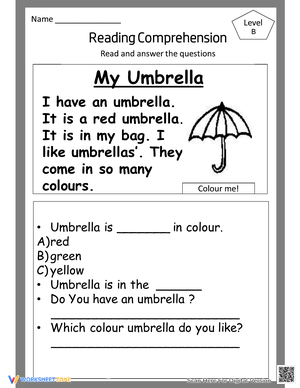
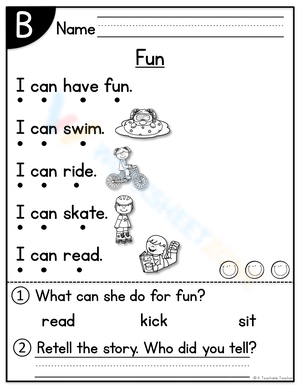
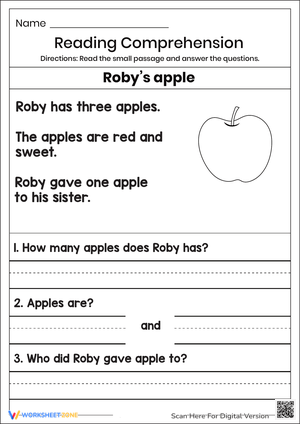
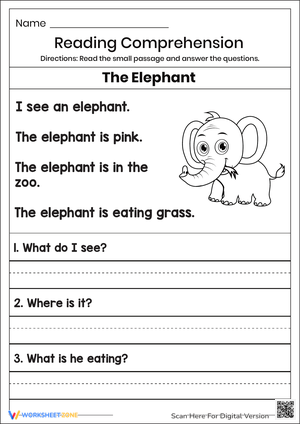
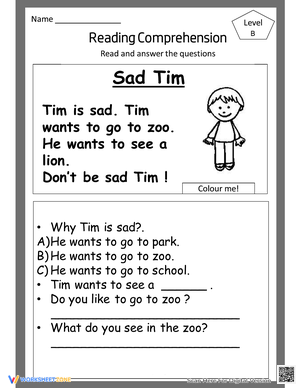
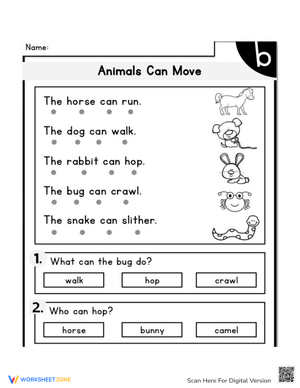
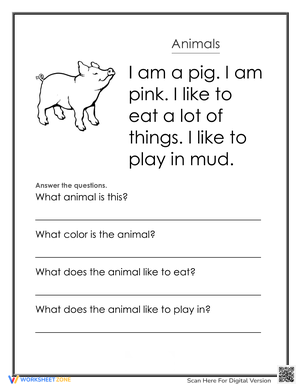
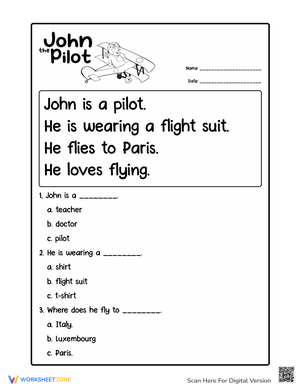
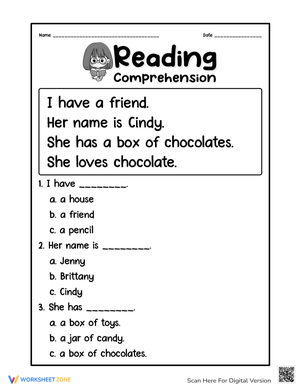
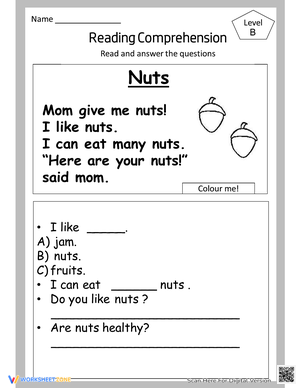
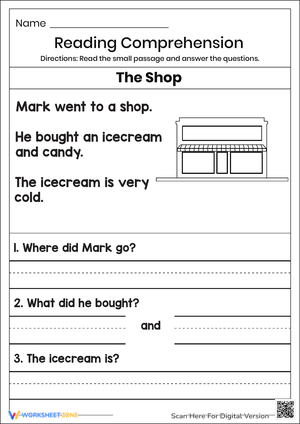
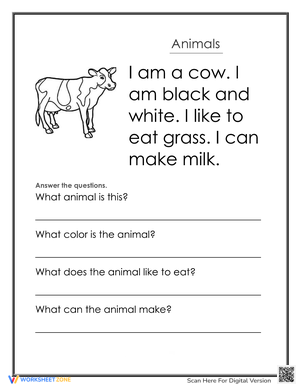
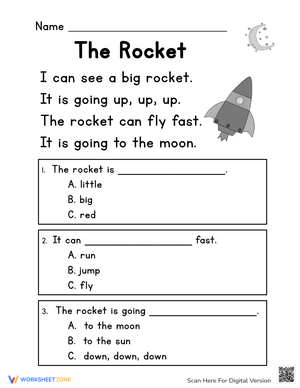
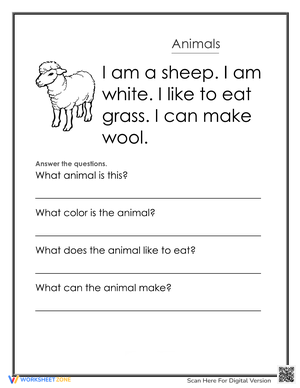
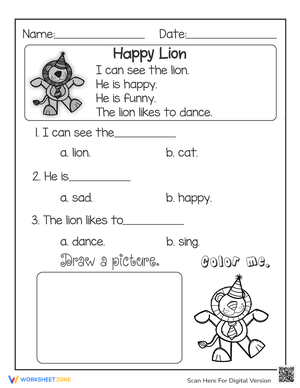
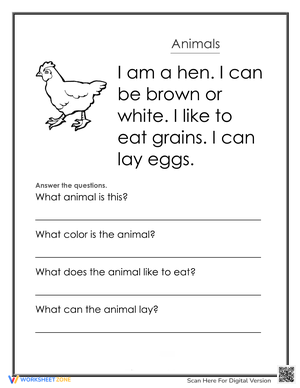
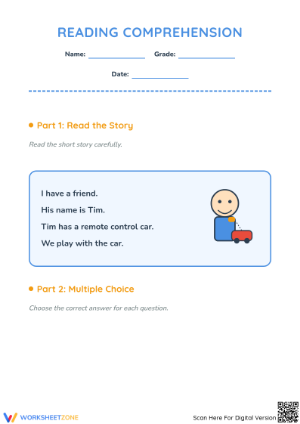
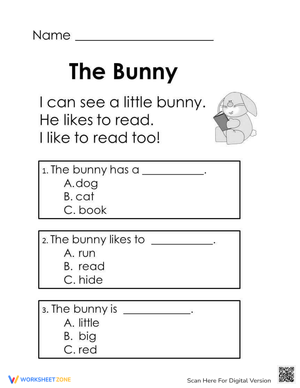
Level B worksheets pair well with the guided reading block because they reinforce the same skills the leveled text is asking students to practice. A worksheet built around a repeating sentence frame gives a reader another chance to apply 1-to-1 matching and initial-letter checking outside the guided reading table, which matters because kindergartners typically need many repetitions before a skill becomes automatic.
During a guided reading rotation, one practical structure is to open with a short picture walk of the new Level B text, read it together with the teacher prompting for print-checking behaviors, then send students to a literacy station with a related worksheet that echoes the same sentence pattern or high-frequency words. This keeps the language and vocabulary consistent across the lesson instead of introducing something new at every station.
Formative Checkpoints Before Moving Past Level B
A running record at Level B gives a clear read on whether a student is ready to move on. Watch for the number of self-corrections, whether the student checks the picture only after trying the print first, and whether errors preserve the meaning of the sentence. A student who is scoring in an instructional range with several self-corrections and meaning-preserving errors is a strong candidate to try a Level C text next.
It also helps to keep a simple running log across several Level B titles rather than deciding based on one book, since a single easy or unusually hard text can give a misleading picture of where a student actually is.
Frequently Asked Questions
1. What grade level is guided reading Level B typically taught at?
Level B is most commonly used in kindergarten, typically as a benchmark for the second quarter of the school year, though pacing varies by student and by school.
2. How is Level B different from Level A?
Level A texts have even simpler, more repetitive patterns with minimal print per page, while Level B introduces slightly more print and a wider range of high-frequency words while keeping a predictable sentence structure.
3. What DRA level is equivalent to F&P Level B?
Level B corresponds to roughly DRA Level 3 to 4 on the Developmental Reading Assessment correlation chart.
4. How many Level B books or worksheets should a kindergartner practice before moving up?
There is no fixed number, but most teachers plan for several titles and multiple running records showing consistent self-correction and meaning-preserving errors before advancing a student to Level C.
5. What skills should a teacher watch for during a Level B running record?
Look for 1-to-1 voice-print matching, use of initial letters and sounds to self-monitor, self-corrections, and reliance on picture clues combined with print rather than picture clues alone.












 Interactive Worksheet Maker
 Quiz Maker
 Word Search Maker
 Crossword Puzzle Maker
 Word Scramble Generator
 Sentence Scramble Generator
 Handwriting Worksheet Generator
 Name Tracing Generator
 Fill In The Blank Generator