


























Views
Downloads
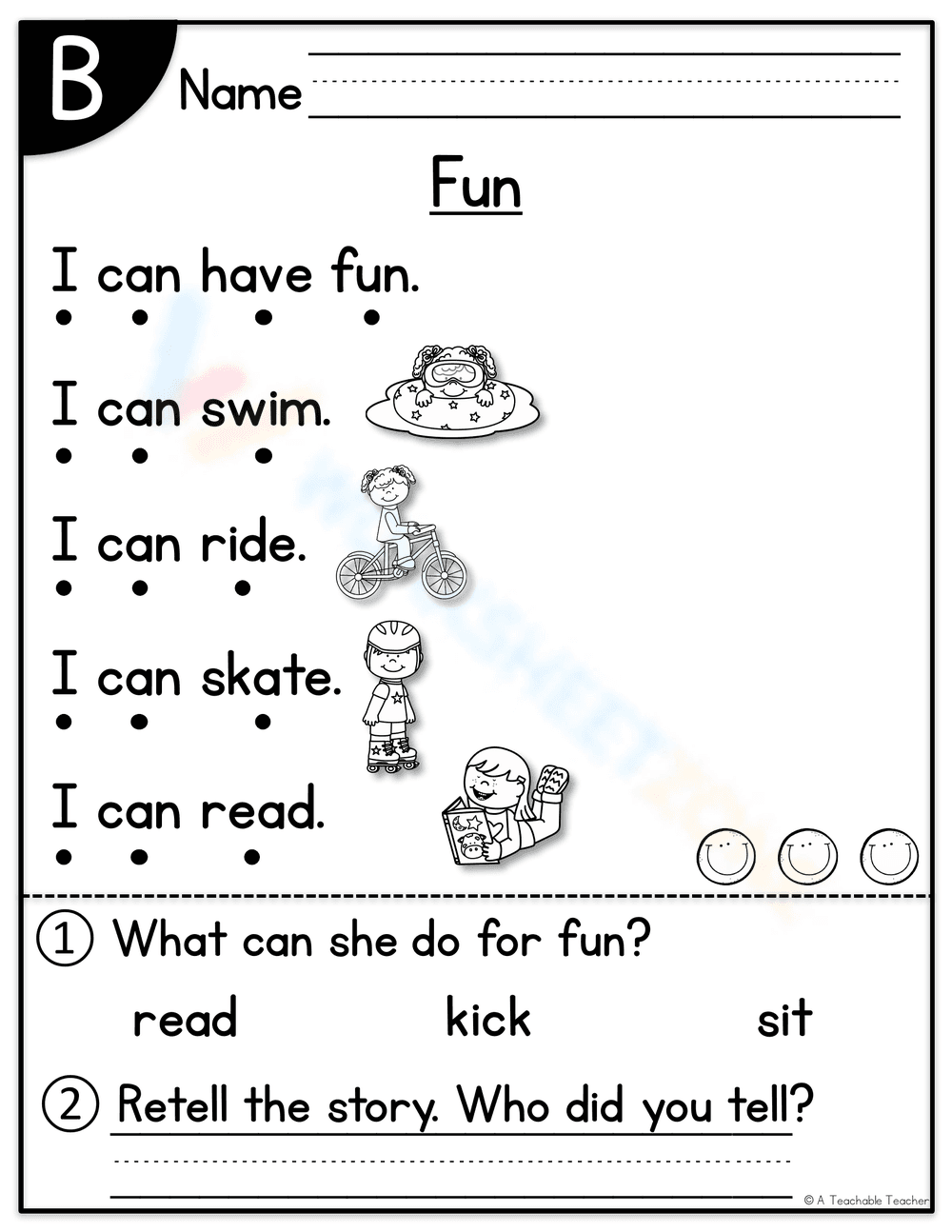

Printable Level B Reading Worksheet | Grade 1 Fun
Paste this activity's link or code into your existing LMS (Google Classroom, Canvas, Teams, Schoology, Moodle, etc.).
Students can open and work on the activity right away, with no student login required.
You'll still be able to track student progress and results from your teacher account.
This Grade 1 reading comprehension worksheet helps early readers build fluency and basic understanding using simple sentences. Students practice tracking print with guided dots and answer text-dependent questions to demonstrate comprehension. This resource provides immediate practice to reinforce foundational literacy skills and build reading confidence.
At a Glance
- Grade: Grade 1 · Subject: Reading
- Standard:
CCSS.ELA-LITERACY.RL.1.1— Ask and answer questions about key details in a simple text- Skill Focus: Sentence tracking and comprehension
- Format: 1 page · 2 tasks · Tracking dots included · PDF
- Best For: Independent morning work, literacy centers, or quick homework
- Time: 10–15 minutes
The worksheet features a single-page layout containing five simple sentences focused on the theme of fun activities. Each word is paired with a tracking dot to support one-to-one correspondence during reading. Three smiley faces allow students to self-track reading the passage three times. Below the text, two comprehension tasks require students to select a multiple-choice answer and write a short response about retelling the story.
This resource is designed for immediate classroom integration with zero teacher preparation required. First, print the single-page PDF in under 1 minute. Second, distribute the sheets to students during your literacy block, taking less than 30 seconds. Finally, review student answers in 1 minute using the clear multiple-choice and retelling prompts. The entire workflow takes less than 2 minutes of prep time, making it an excellent option for emergency sub plans or transition activities.
This activity aligns directly with the Common Core State Standard `CCSS.ELA-LITERACY.RL.1.1`, which requires students to ask and answer questions about key details in a text. Additionally, it supports foundational reading skills by encouraging print concepts and word recognition. Both standard codes can be copied directly into lesson plans, IEP goals, or district curriculum mapping tools.
How to Use This Worksheet
Use this worksheet during small-group guided reading instruction to monitor decoding and tracking. Have students point to each dot as they read aloud, then complete the questions independently. Alternatively, assign it as a quick formative assessment at the end of a lesson to check sentence comprehension. Observe if students use the text to find the answer to the multiple-choice question. Expect completion within 10 to 15 minutes.
Target Audience
This resource is ideal for Grade 1 students, struggling Grade 2 readers, or kindergarteners working at Level B reading proficiency. It offers scaffolded support for English language learners who benefit from visual cues and short sentences. Pair this worksheet with a simple anchor chart on tracking print or a shared reading passage about favorite hobbies to extend the lesson.
This reading comprehension worksheet targets the foundational literacy skills outlined in `CCSS.ELA-LITERACY.RL.1.1` by focusing on sentence tracking and text-based questioning. According to the Fisher & Frey (2014) framework for gradual release of responsibility, structured scaffolds like tracking dots and repetitive sentence structures help early readers transition from guided practice to independent reading success. By engaging with simple sentences and immediate comprehension checks, students build the cognitive stamina necessary for decoding more complex texts. The inclusion of a retelling prompt encourages verbal processing, which research shows strengthens memory retention and narrative comprehension in early childhood education. Teachers can utilize this structured layout to gather quick diagnostic data on student tracking accuracy and literal comprehension. This evidence-based design ensures that early readers develop both print awareness and critical thinking skills simultaneously.


