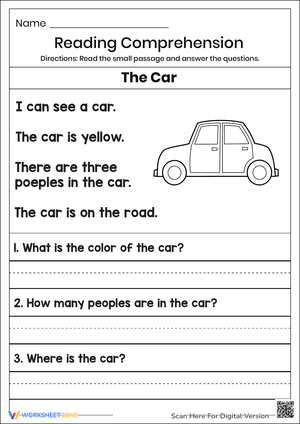
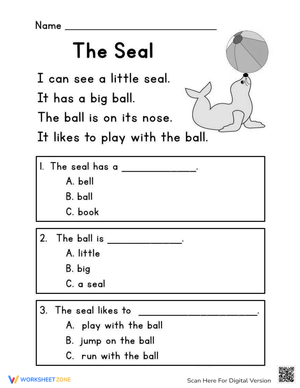
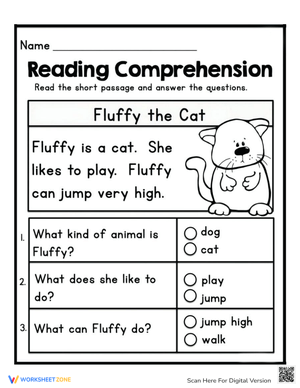
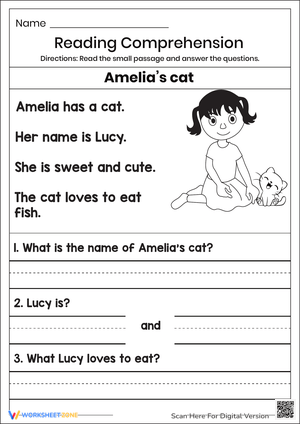
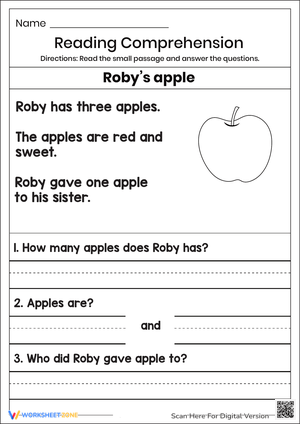
Level C worksheets for Kindergarten
These level c worksheets for kindergarten target the specific window in early reading development when students move from single-line, picture-heavy texts to multi-line passages with varied sentence structure — a shift that sounds small but trips up more kindergarteners than any other transition in the literacy year. Each worksheet in the set focuses on the print behaviors, sight word recognition, and decoding strategies students need before stepping into first grade.
What Students Practice
The central challenge at this reading level is the return sweep — the eye movement from the end of one line of text back to the beginning of the next. Students who have only read one-line texts find this unnatural, and the result is a predictable pattern of line-skipping and re-reading. Each worksheet gives students repeated exposure to two-to-four line passages until that left-to-right, top-to-bottom tracking sequence becomes automatic rather than labored.
Beyond tracking, the set targets three skill areas that work together at this stage:
- High-frequency word automaticity: Words like the, and, is, can, we, see, my, and like must be recognized on sight so students reserve their mental energy for decoding the CVC words in the same sentence.
- Initial consonant cross-checking: Students identify the first letter of an unfamiliar word, then confirm it against the picture before committing to a reading — a strategy that builds the habit of checking rather than guessing.
- CVC word decoding: Short-vowel words — cat, sit, hop, den — appear alongside sight words in every passage, requiring students to blend sounds rather than recognize them from memory.
- Sentence-level meaning monitoring: As sentence structure expands from I see the cat to The little cat is sitting on the mat, students start tracking whether what they read sounds like a real, complete thought — the earliest form of self-correction behavior.
Mistakes Students Make That These Worksheets Help You Catch
The most consistent error at this level is picture over-reliance. A student who reads "The dog is big" when the text says "The dog is fat" has used the illustration correctly but never checked the final letter of the target word. These worksheets make that miscue visible quickly because the picture and the target word don't always align one-to-one — students have to confirm with the print, not just the image. When you see this pattern, the fix is direct: ask the student to point to the last letter of the word and say its sound before accepting their answer.
A second pattern worth watching: students who correctly read sit in isolation will say siting instead of sitting when they hit inflected forms in running text. Final consonant doubling isn't a Level C phonics expectation, but those word forms show up in Level C sentences, and students routinely drop the doubled consonant. Flag these when they appear so they don't harden into a habit. Separately, look for students who re-read the same line twice rather than completing the return sweep — this almost always means the eye isn't anchoring at the left margin yet, not that the student has misunderstood the passage.
Standard Alignment
RF.K.3 (Phonics and Word Recognition) requires kindergarteners to apply grade-level phonics and word analysis skills when decoding words. At Level C, that standard is exercised in context rather than in isolation — students apply letter-sound correspondences while also holding sentence meaning, which makes the practice more demanding than a standalone phonics drill. These worksheets also address RF.K.4 (Reading Emergent-Reader Texts with Purpose and Understanding), the standard most directly connected to end-of-year benchmark expectations. Most US districts set Level C or Level D as the kindergarten year-end target, so RF.K.4 progress carries weight not just in the classroom but in family conferences and school-wide literacy reporting.
How to Build These Worksheets Into Your Lesson Plans
Small guided reading groups are the most productive first setting for this material. In a group of three or four students, you can listen to each child read aloud, note miscues in real time, and observe which strategies each student is actually using — versus which ones you've taught and they're not yet applying. Running the group in the final 12 to 15 minutes of the literacy block, after students have completed word work, tends to produce cleaner performance than using the worksheet as a cold opener when attention is still distributed across the morning routine.
Once a passage has been introduced in a small group, the same worksheet works well in an independent "Read to Self" or "Read to a Partner" station. Students who have already heard the text read it with noticeably more fluency on the second pass — and building that fluency through repetition is the point, not a shortcut. For a low-prep formative check, ask students to underline every word they recognized without stopping. Reviewing those underlines at the end of the station tells you exactly which sight words have moved into automatic recall. If you're looking for a Monday warm-up that connects back to Friday's small-group work, these level c worksheets for kindergarten reread well as a brief independent opener before morning meeting settles the class.
Adjusting the Worksheets for a Range of Learners
For students who are reading comfortably at Level C and moving toward Level D, remove the picture support before distributing the worksheet. Covering or folding back the illustration forces students to rely entirely on the text, which accelerates the cross-checking habit and builds the decoding confidence they'll need when picture cues thin out at higher levels. A simple writing extension — read the passage, then write one sentence about what happened — links reading to composition without requiring a separate activity.
For students who are not yet secure at Level C, spend three to five minutes before the reading doing a sight word hunt through the passage. Students say each word aloud, spell it, then locate every instance of it in the text before they begin reading. This pre-reading routine reduces the cognitive load during the actual reading so students can focus their attention on decoding the CVC words rather than stopping at every function word. Pairing a student who is working toward Level C with a peer who has recently moved through it — rather than with a significantly stronger reader — tends to produce more useful think-aloud modeling, because the peer's process is still recent enough to be visible and applicable. These level c worksheets for kindergarten also travel home well once students have worked through them in class, giving families a meaningful way to support re-reading practice without requiring explanation of unfamiliar texts.
Frequently Asked Questions
What makes Level C texts different from Level A or B?
Level A and Level B texts typically run one line of print per page with highly repetitive sentence patterns and strong one-to-one picture support. At Level C, a second or third line appears, the return sweep becomes necessary, and sentence structure begins to vary — often by adding a prepositional phrase or swapping one element of a repeated sentence. Students can no longer predict every word from the picture; they have to look at the first letter and confirm it against the print before moving forward.
How do I know when a student is ready to move past Level C?
A student is ready when they can read a Level C passage with 95 percent or greater accuracy while also demonstrating basic comprehension — they can say who the passage was about and what happened. If a student is consistently accurate but reads very slowly, additional repeated reading at Level C builds the speed and automaticity they need before the move up. Don't advance based on accuracy alone if fluency is still halting; first grade texts will demand both at the same time.
Can these worksheets be used for assessment as well as practice?
Both uses work. Running a student through an unfamiliar level c worksheets for kindergarten passage while you take notes on miscues gives you formal data on accuracy rate, error types, and self-correction behavior. Using a familiar passage — one the student has already read — gives you fluency data instead. The two types of information answer different questions: unfamiliar passages reveal what the student can do independently, while familiar ones show how automaticity is developing over repeated exposures.
How many times should a student read the same passage?
Three readings spread across two or three days is a practical target. The first reading in a guided group surfaces errors and shows you which strategies the student is applying. The second reading at a center builds accuracy and the beginning of fluency. A third reading — as a warm-up or at home — moves the student toward reading with expression, which signals that decoding has become automatic enough to let comprehension take over. Beyond three readings, most students have memorized the text rather than reading it, which doesn't extend the underlying skill.
Clear All