


























Views
Downloads

Essential Grade 1 ELA Reading Comprehension Worksheet
Paste this activity's link or code into your existing LMS (Google Classroom, Canvas, Teams, Schoology, Moodle, etc.).
Students can open and work on the activity right away, with no student login required.
You'll still be able to track student progress and results from your teacher account.
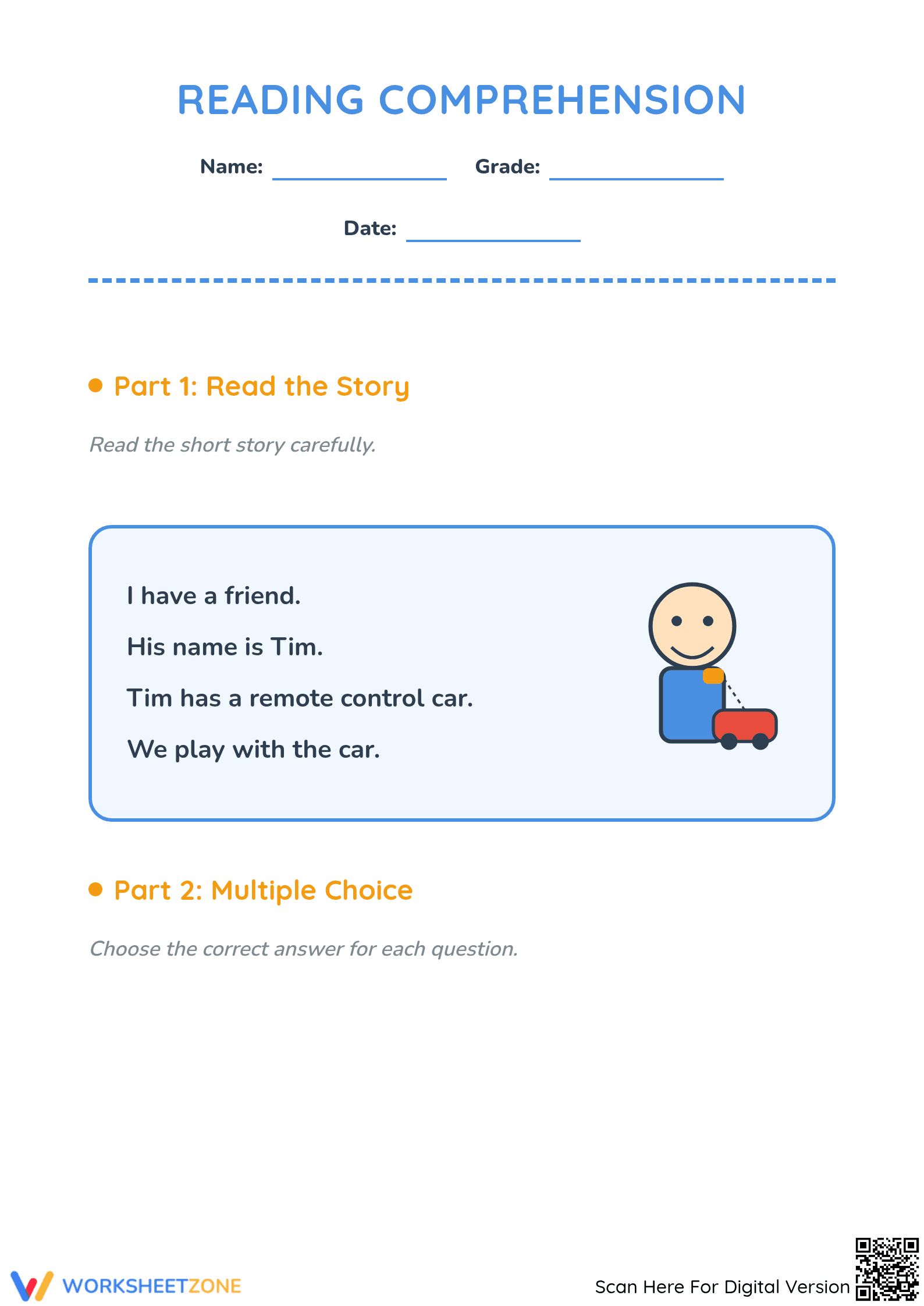
This reading comprehension worksheet helps early readers master literal recall and making personal connections. Students read an accessible story about friendship and demonstrate understanding through multiple-choice questions and creative drawing tasks. It is designed to support instructional level reading for students in Kindergarten through Grade 2.
At a Glance
- Grade: Grade 1 · Subject: ELA
- Standard:
CCSS.ELA-LITERACY.RL.1.1— Ask and answer questions about key details in a text- Skill Focus: Literal recall and personal connection
- Format: 4 pages · 7 problems · Answer key included · PDF
- Best For: Guided reading groups or independent practice
- Time: 15–20 minutes
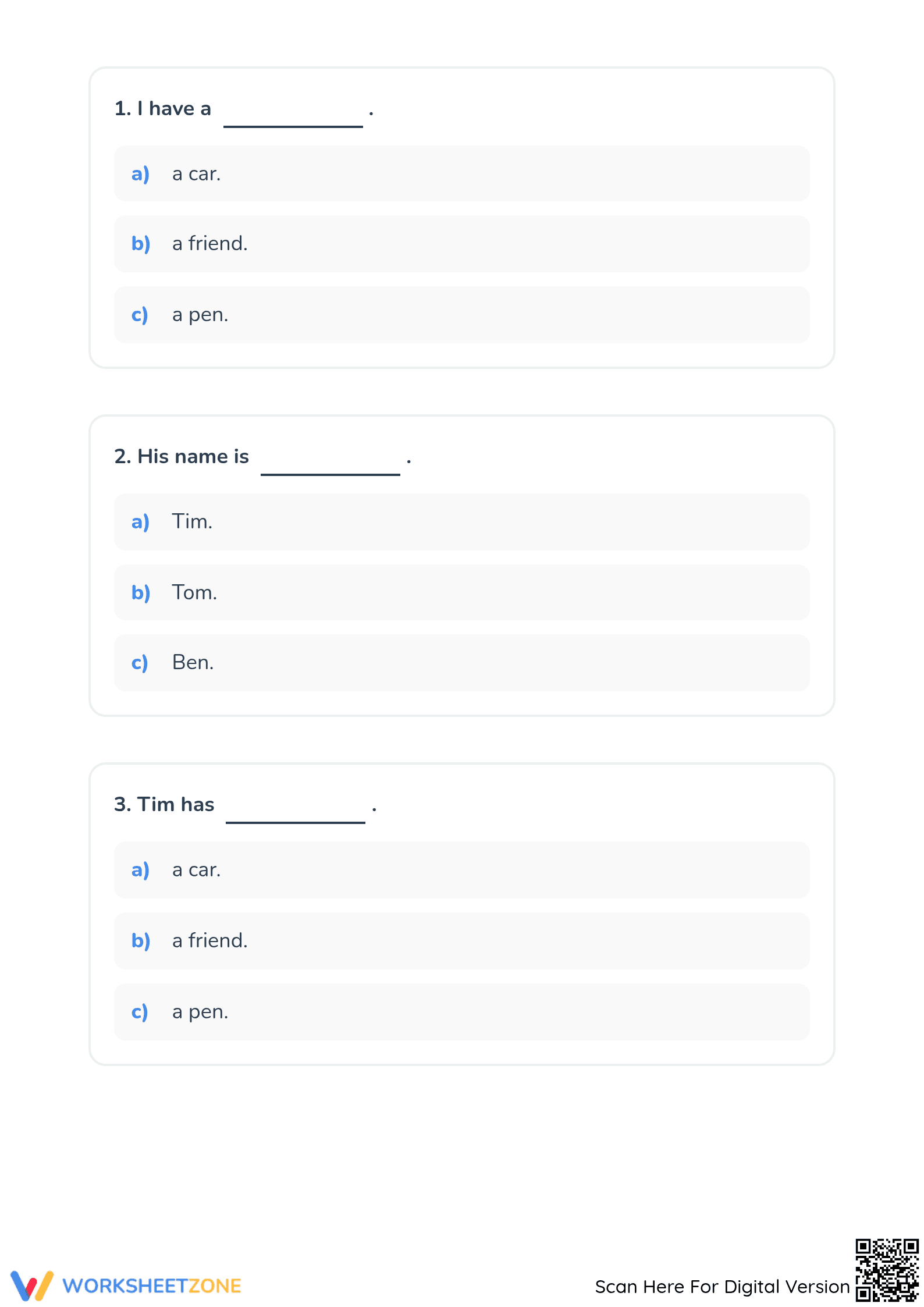
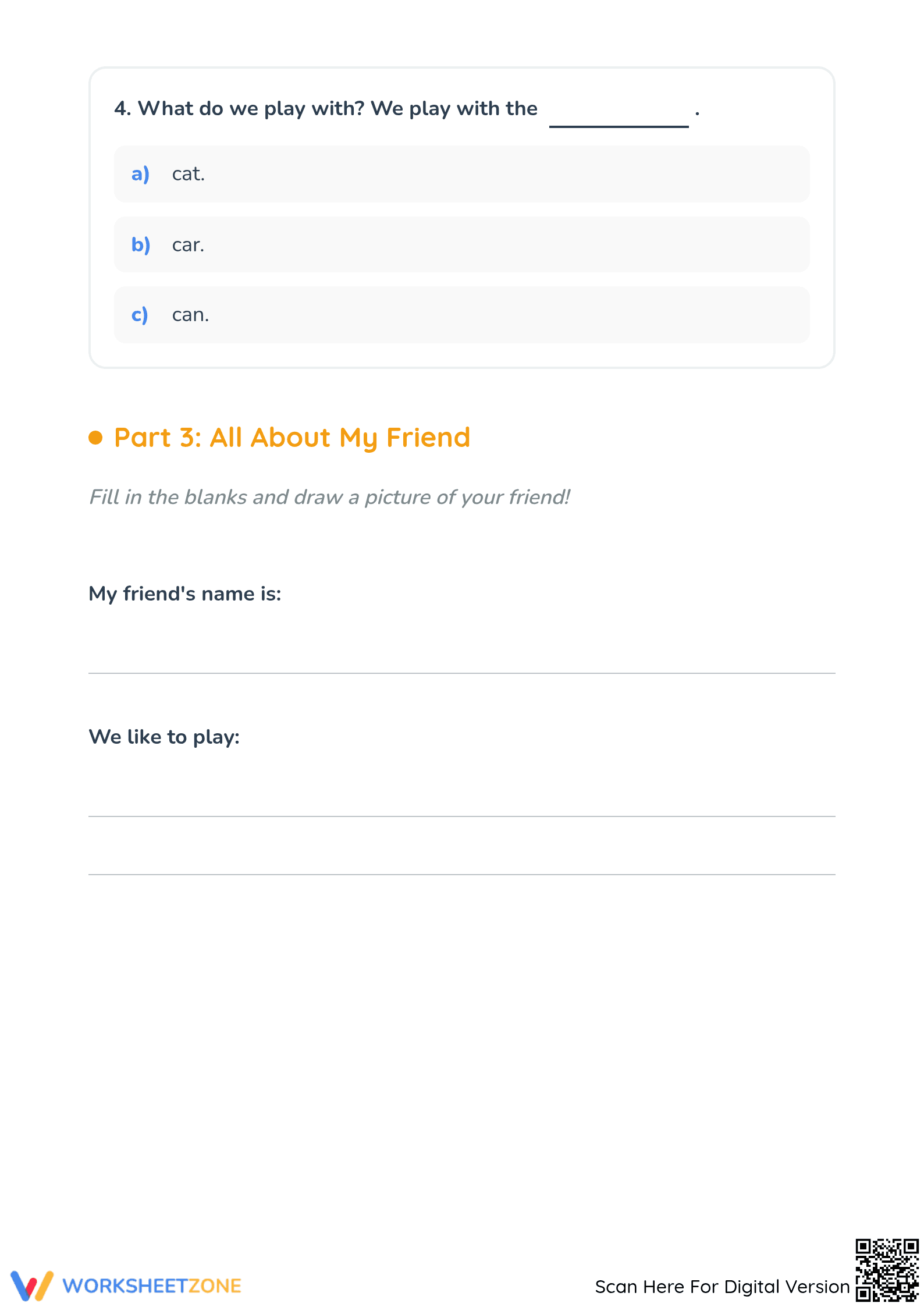
The 4-page PDF includes a high-interest short story titled "My Friends," followed by four multiple-choice comprehension questions that focus on specific details like character names and objects. The third page transitions to personal application with sentence starters about the student's own friends, while the final page provides a dedicated workspace for illustrative expression. A complete answer key is provided for quick grading.
Skill Progression
- Guided practice: The initial story includes visual cues and simple sentence structures (4 sentences) to scaffold the reading experience for Level B learners.
- Supported practice: Four multiple-choice questions offer structured options to help students identify correct details from the text without high cognitive load.
- Independent practice: The final pages encourage students to apply the theme of friendship to their own lives through creative drawing and writing.
This sequence follows a gradual-release model, moving from textual analysis to personal synthesis.
Standards Alignment
This resource is primarily aligned with CCSS.ELA-LITERACY.RL.1.1, which requires students to ask and answer questions about key details in a text. Additionally, the personal connection components support CCSS.ELA-LITERACY.W.1.8 by having students recall information from experiences to answer a question. Both standard codes can be copied directly into lesson plans, IEP goals, or district curriculum mapping tools.
How to Use It
Use this worksheet during a guided reading session after introducing the concept of friendship. As a formative assessment, observe if students can locate the specific sentence in the text that answers the question about the "remote control car." It also serves as an excellent independent center activity following a whole-group read-aloud. Completion usually takes 15 to 20 minutes.
Who It's For
This worksheet is ideal for Grade 1 students, though it is highly appropriate for Kindergarteners requiring enrichment or Grade 2 students needing foundational reading support. It pairs naturally with any Level B guided reading passage or an anchor chart focusing on character traits and setting in short stories.
According to the RAND AIRS 2024 report on early literacy interventions, providing students with structured opportunities to interact with short, level-appropriate texts significantly improves literal comprehension and retention in the primary grades. This worksheet specifically targets the CCSS.ELA-LITERACY.RL.1.1 standard by requiring students to identify key details about characters and events within a controlled vocabulary environment. By blending multiple-choice questions with personal narrative prompts and visual arts integration, the resource supports a multi-modal approach to reading instruction. Research from Fisher & Frey (2014) emphasizes the importance of these foundational literal recall skills as a prerequisite for more complex inferential thinking in later grades. Educators can use these 7 tasks to establish a baseline of understanding for students at the Level B reading stage, ensuring they are prepared for the increasing complexity of texts encountered throughout the school year. This comprehensive approach bridges the gap between simple decoding and meaningful reading engagement.


