9th Grade Revising Writing worksheets: Strategies for High School ELA
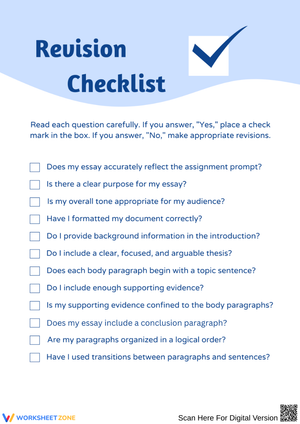
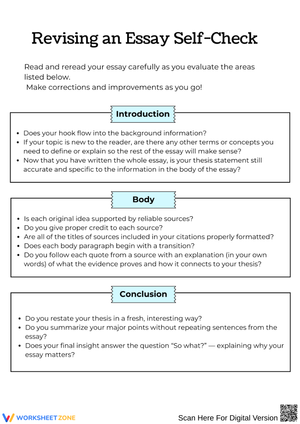
These 9th grade revising writing worksheets resources address what is genuinely the hardest conceptual shift in freshman composition: convincing students that a finished draft is not finished writing. Most ninth graders hand in a first draft and consider the work done — not out of laziness, but because no one has handed them a concrete method for what happens next. Each worksheet gives students a specific, nameable task, and that specificity is what separates a revision lesson that produces real changes from one where students fix three commas and hand the paper back in.
The Specific Skills Each Worksheet Targets
The set organizes revision practice around the ARMS framework — Add, Remove, Move, Substitute — giving students concrete actions rather than a vague directive to "make it better." Each category gets isolated practice before students apply all four lenses to a full draft.
- Add: Students locate bare claims — sentences that assert something without supporting it — and draft a follow-up sentence grounding the assertion in textual evidence. This is especially productive in analytical writing, where ninth graders frequently assert without ever explaining.
- Remove: Ninth graders over-explain. They summarize the plot twice, restate the thesis three different ways in the conclusion, and pad with biographical context that belongs in a Wikipedia entry. Worksheets ask students to underline every sentence that doesn't advance the argument, then write a brief justification for cutting it.
- Move: Organization problems are usually invisible to the writer who created them. Worksheets present paragraphs with scrambled sentences and ask students to reorder them, then write a one-sentence explanation of why a particular piece of evidence must appear before its analysis — not after.
- Substitute: This is not about finding thesaurus synonyms. Students practice replacing vague noun phrases — "the author's word choice" — with precise description: "the sudden shift to second-person address in the final stanza." They also rewrite simple compound sentences into complex constructions that show logical relationship (because, although, unless) rather than just sequence.
Two additional skill areas appear across the set: thesis revision and tone adjustment. Thesis worksheets present three versions of the same argument — a broad, unargued claim; a slightly stronger version; and a fully arguable, text-specific thesis — and ask students to rank all three, annotate what makes each stronger or weaker, and then rewrite one of their own thesis statements using the same criteria. Tone worksheets pair a casual, student-voice paragraph with a formal academic rewrite and ask students to mark every word-level change before applying the same process to their own drafts.
Where Student Revision Attempts Break Down
The most persistent problem is not resistance — it's misdirection. When asked to revise, most ninth graders edit. They fix the comma before a coordinating conjunction, capitalize a proper noun they missed, and hand the draft back in feeling like they've done what was asked. The worksheets counter this by presenting the revision task before students ever see a grammar checklist. When the sequencing separates the two stages, the distinction becomes structural rather than theoretical.
A second pattern: students refuse to touch the thesis. They'll move a body paragraph, cut a sentence, even swap vocabulary — but the thesis sits untouched because it took effort to write. The thesis revision worksheets address this by asking students to rate their own thesis against three explicit criteria before rewriting it, which gives them permission to change it without feeling like they're erasing earlier work.
The substitution exercises reveal a subtler problem. When ninth graders replace a weak verb, they often reach for a synonym that changes the meaning rather than sharpening it. A student who replaces "shows" with "illuminates" in an analysis of a news article isn't wrong, exactly — but one who replaces "the author talks about poverty" with "the author attributes unemployment to inadequate job training" has made an actual revision move. The worksheets require students to write a sentence explaining what the substitution accomplishes, not just what changed. That added step exposes whether the student understood the swap or just made it.
Building These Worksheets Into Your Revision Unit
The most productive use of the set is sequenced: don't assign all skills simultaneously. Run the Add and Remove worksheets during the week students receive a graded draft back, when the problems in their writing are still fresh and specific. Reserve the Move worksheets for a standalone lesson on paragraph organization — they function well as a 12-minute warm-up before a writing workshop block. The Substitute worksheets are strong homework the night before a peer review session, because students arrive having already thought carefully about word-level choices in their own drafts.
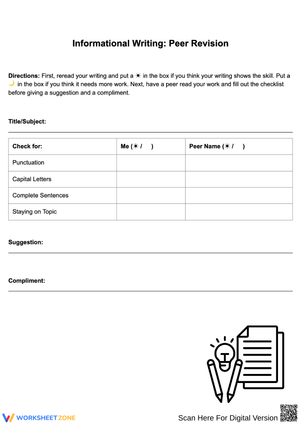
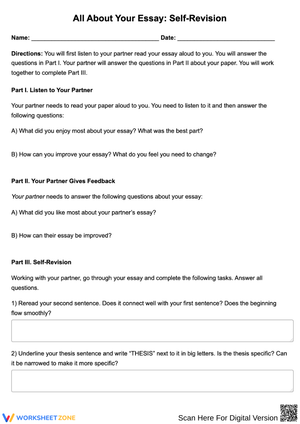
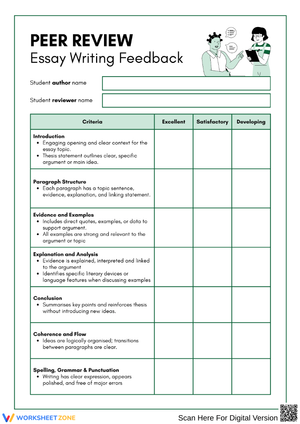
Peer review works best when students have narrow, specific reading roles rather than a general "give feedback" prompt. Assign one partner to read a draft only to evaluate whether every claim has an attached piece of evidence. Assign the other to read only for transition logic between paragraphs. These 9th grade revising writing worksheets support that structure by giving each reviewer a concrete written task rather than an open-ended instruction to "look for areas to improve" — which, without guidance, produces comments like good job and I liked your intro.
Document camera modeling is worth the setup time. Project a sample draft — anonymous student writing from a previous year works well, or a piece you've written with deliberate problems — and work through a revision worksheet live while thinking aloud. Students need to see an adult actually deliberate: "This paragraph is doing two things at once. Where do I split it?" That metacognitive narration is harder to demonstrate than it appears, and modeling it alongside a worksheet makes the decision-making visible rather than implied.
Standard Alignment
These worksheets address CCSS.ELA-LITERACY.W.9-10.5, which requires students to develop and strengthen writing by planning, revising, editing, rewriting, or trying a new approach. In instructional terms, that standard asks teachers to treat revision as a taught process — not just a step listed on a rubric that students interpret however they like. The worksheets map directly to that requirement by isolating each revision move so students practice each one deliberately before applying all of them at once to a full draft. The tone and audience worksheets also connect to W.9-10.4, which asks students to produce writing appropriate to task, purpose, and audience — a skill ninth graders frequently lack because they've spent most of middle school writing for one implied audience: the teacher.
Adjusting the Set for a Range of Learners
For students who freeze when asked to revise their own writing, start with pre-written sample drafts that have specific, seeded problems — a weak thesis, a paragraph with two ideas crammed together, three consecutive sentences that all begin with "The author." Working on someone else's draft removes the identity investment that makes self-revision feel like an admission of failure. Once a student can reliably identify and fix those problems in a neutral text, they have the lens to find the same issues in their own work.
Students working above grade level benefit from moving past ARMS into rhetorical revision: adding a concession-and-rebuttal move, adjusting the sequencing of evidence for persuasive impact rather than just logical flow, or deliberately varying syntax for emphasis. These aren't just harder tasks — they're a different kind of revision task, asking students to think about the reader's experience rather than the internal coherence of the argument. The 9th grade revising writing worksheets set works as a foundation for those extensions: once advanced students complete the core work, they can apply the same framework to evaluate how their revisions changed the essay's rhetorical effect.
For students significantly behind in writing development, keeping practice on neutral sample texts — rather than their own drafts — until they can consistently identify one problem type prevents paralysis. When the combination of a weak draft and an unclear task hits at once, many students shut down. One step at a time: find a bare claim in a sample paragraph first, then find one in their own paragraph.
Frequently Asked Questions
What is the practical difference between revising and editing, and how do I teach it so students actually remember?
Revising means re-seeing the draft at the level of ideas: does the argument hold? Is the evidence specific enough? Does the organization move the reader through a logical sequence? Editing addresses the surface: grammar, punctuation, spelling, capitalization. The most effective way to keep students from conflating them is to enforce a firm order — revision always precedes editing, and students know it. If they're aware that a grammar pass comes later, they stop wasting revision time on commas. The ARMS framework reinforces this because none of its four moves are grammatical. Students literally cannot edit while working through it.
Why do ninth graders resist changing their own drafts, and what actually helps?
Some of the resistance is developmental — adolescents are more ego-invested in products they've made than younger students typically are. But a larger part is that revision feels like failure when students haven't yet internalized it as a normal stage of writing. Worksheets with quantifiable tasks help considerably: "combine three pairs of sentences" or "rewrite your thesis using all three criteria on the checklist" turns revision into a concrete task with a visible completion point. The 9th grade revising writing worksheets format works here because students can see what done looks like — the worksheet is finished when the task is finished, which removes the open-ended anxiety of not knowing if the essay is "good enough yet."
How should I sequence peer review alongside individual revision work?
Individual revision should always come first. When students bring first drafts to peer review, they lean on the reader to catch everything rather than developing the eye to catch problems themselves. Have students complete at least one full ARMS pass on their own draft before sitting down with a partner. Then give the peer reviewer a narrow, written task — not "read the essay and give feedback," but "underline every sentence in the body paragraphs that does not connect back to the thesis." That specificity makes peer review useful rather than social, and it trains both students: the reviewer learns to look for the same issue in their own future drafts.
Clear All