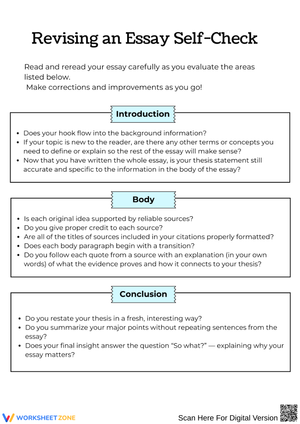
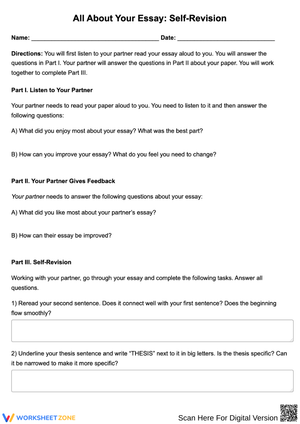
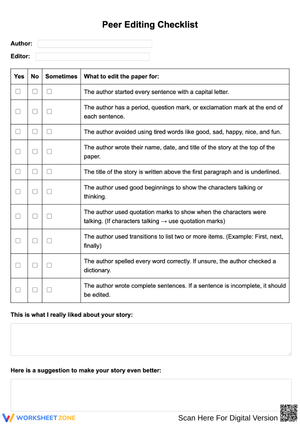
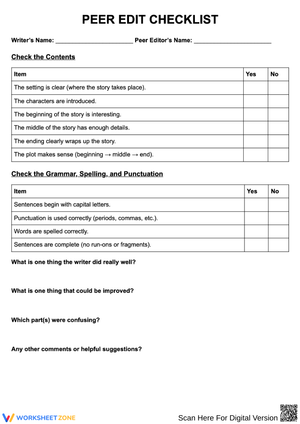
These 9th grade editing printable worksheets give students structured practice with the grammar and punctuation conventions that high school writing actually demands — not isolated drill items, but editing tasks set inside real prose. Each worksheet targets a distinct skill cluster drawn from the language standards for grades 9 and 10: parallel structure, semicolons and colons, comma splices, and dangling modifiers. The set moves students past surface-level proofreading toward the sentence-level decision-making that high school essay evaluations grade on.
The Specific Skills Targeted in Each Worksheet
Parallel structure gets more attention in this set than almost any other skill, and for good reason. Students who build grammatically correct sentences still regularly break parallelism without noticing. The failure mode looks like this: "The coach told the players that they should get plenty of sleep, to eat a healthy breakfast, and they should arrive on time." Students rewrite sentences like this one until the pattern — matching grammatical form across all items in a series — stops requiring conscious effort and becomes automatic. That automaticity is what frees up cognitive load for the argumentative thinking freshman essays actually require.
Semicolons and colons are the other major focus. At this stage, students know the period and the comma well enough. What trips them up is the middle ground: knowing when two closely related independent clauses earn a semicolon instead of a hard stop, and when a colon does actual work introducing a list or a quotation rather than just signaling that something formal is coming. Each worksheet presents these marks inside multi-sentence passages rather than in isolated sentences, so students see how punctuation shapes the pacing and emphasis of a paragraph — not just whether a rule is technically satisfied.
Comma splices and dangling modifiers round out the skill targets. Dangling modifiers are especially persistent: students who write "Running down the hall, the bell rang" genuinely do not see the logical problem until they are asked to read the sentence aloud and identify who is running. That moment of recognition — oh, the bell can't run — is more instructive than any rule definition.
Mistakes Students Make That These Worksheets Help You Catch
Parallel structure errors come in recognizable patterns. The most common: mixing infinitives and gerunds in the same list — "She wanted to travel, writing in her journal, and meeting new people" — or combining a noun phrase with a full clause — "His strengths are loyalty, patience, and he never gives up." Students often sense something sounds wrong when they read these aloud, but they cannot name why. That naming is what the editing practice builds, because catching the error in a worksheet is only useful if students can later diagnose the same structure in their own drafts.
With semicolons, the recurring mistake is placing one before a coordinating conjunction: "He studied hard; but he still failed." This error signals that students have absorbed the surface form of a rule without grasping its function. The worksheets surface that gap specifically because students must choose the correct mark in context, not just recognize it in a multiple-choice stem.
One honest limitation worth naming: students who are still developing reading fluency sometimes spend the editing period processing unfamiliar vocabulary rather than attending to sentence mechanics. Short, plainly written passages work better for those students than longer literary excerpts, and it is worth having a few simpler passages ready as alternatives.
How to Build These Worksheets Into Your Lesson Plans
The most reliable use is the bell-ringer. Five to eight minutes at the start of class — before the day's reading or writing task — keeps grammar practice from living only inside a quarterly grammar unit and then disappearing for weeks. Students who edit a short passage at the start of each Monday build a habit of attending to mechanics; students who only encounter grammar during formal essay prep treat it as an event rather than a discipline.
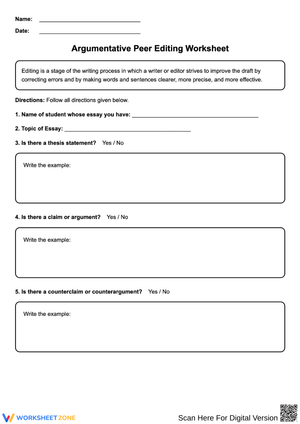
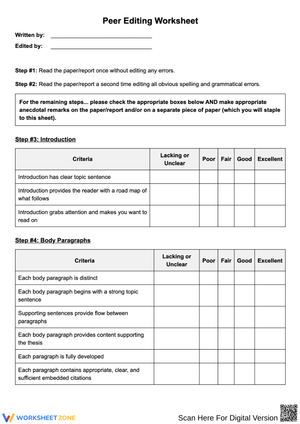
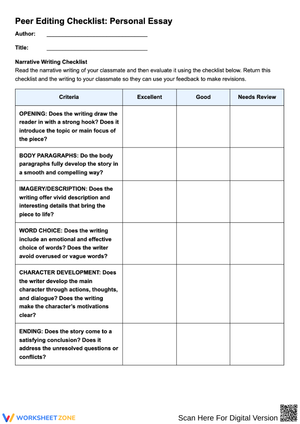
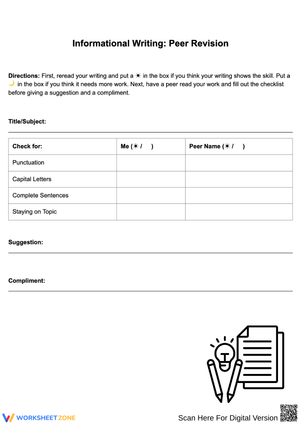
A stronger mid-unit move: after collecting first drafts, scan for the two or three most common error types in that batch, then run a targeted editing session built around a passage that deliberately mimics those specific mistakes. Ask students to label each error with the convention it violates — not just correct it. That categorization step shifts the work from correction to analysis, and analysis transfers to their own drafts far more reliably than marking a right answer does. These 9th grade editing printable worksheets also provide a ready structure for peer review sessions; when students use a completed worksheet as a reference while reading a classmate's draft, the feedback they give becomes specific and mechanical rather than vague.
For substitute plans, each worksheet holds up well independently. The task instructions are self-contained, no prior class context is required to begin, and the work produces something concrete — a corrected passage — rather than open-ended notes that go nowhere without the teacher present.
Standard Alignment
The set addresses CCSS.ELA-LITERACY.L.9-10.1, which requires students to demonstrate command of standard English grammar in writing, and CCSS.ELA-LITERACY.L.9-10.2, which covers capitalization, punctuation, and spelling — specifically including the use of semicolons and colons, the precise targets of several worksheets in this set. CCSS.ELA-LITERACY.W.9-10.5 is also directly relevant: it asks students to strengthen writing through editing, which positions this work inside the writing process rather than as a standalone grammar unit. In instructional terms, that placement matters — these worksheets belong between drafting and final revision in any essay sequence, not as a separate track. The 9th grade editing printable worksheets in this set map squarely to the L.9-10 strand, where the standards shift noticeably from middle school expectations of basic sentence fluency toward the command of conventions that college-preparatory writing demands.
Adjusting the Set for a Range of Learners
For students still sorting out basic sentence boundaries, the parallel structure and advanced punctuation tasks in this set arrive well ahead of where they are. In those cases, narrow the editing task to a single error type per session — comma splices only, for instance — and have the student mark every instance before attempting any correction. That constraint removes the pressure of scanning for multiple error types simultaneously, which can otherwise cause students to overlook everything while looking for anything.
For students ready to move beyond correction, the meta-cognitive extension applies: ask them to write two or three sentences explaining why each error breaks the convention, not just what the corrected version should say. Students who can articulate the function of a semicolon — not just fix a sentence that misuses one — are the students who will apply that knowledge under timed conditions on a final exam or standardized assessment.
Frequently Asked Questions
Can these worksheets replace direct grammar instruction?
No. Editing practice reinforces grammar knowledge students already have — it does not replace direct instruction on rules they have never encountered. A student who has never been taught what a semicolon does will guess on these tasks rather than reason through them. The worksheets work best as practice and reinforcement after a rule has been introduced explicitly, or as diagnostic tools that reveal which conventions still need more targeted teaching.
How do these fit into SAT and ACT preparation?
The SAT Writing and Language section and the ACT English section test parallel structure, punctuation at sentence boundaries, and sentence combining at exactly the level these worksheets address. Starting that practice in 9th grade means students are not encountering the underlying skills for the first time during junior-year test prep. The 9th grade editing printable worksheets in this set build familiarity with the error types and punctuation decisions those test sections require — well before timed practice under testing conditions becomes the priority.
How do I explain the difference between editing and revising to students who conflate the two?
Revision is about the big picture: does the argument hold, is the evidence placed correctly, does the thesis accurately reflect what the essay actually argues? Editing comes after those decisions are made and focuses on local issues — grammar, punctuation, word choice, and sentence clarity. A practical classroom rule: students should not edit a sentence they might still delete during revision. Running these worksheets after revision decisions are finalized keeps the two stages distinct and prevents students from spending editing time polishing prose that will not survive the next draft.












 Interactive Worksheet Maker
 Quiz Maker
 Word Search Maker
 Crossword Puzzle Maker
 Word Scramble Generator
 Sentence Scramble Generator
 Handwriting Worksheet Generator
 Name Tracing Generator
 Fill In The Blank Generator