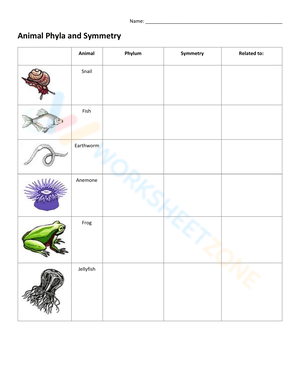
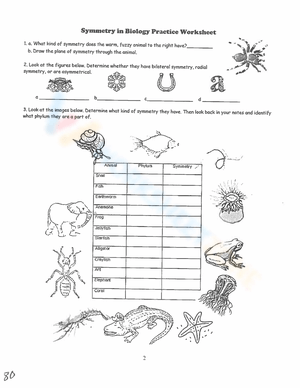
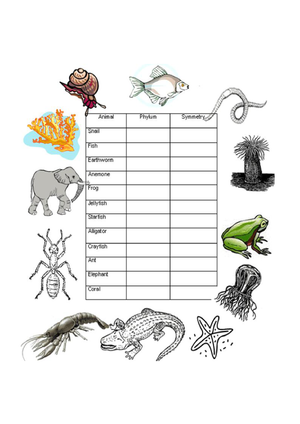
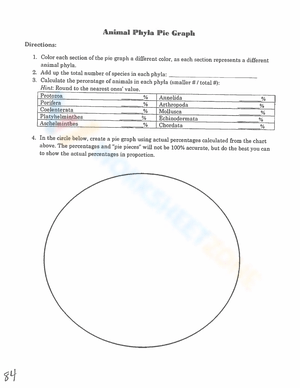
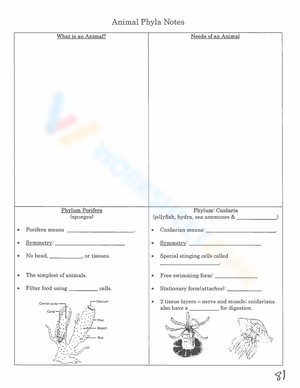
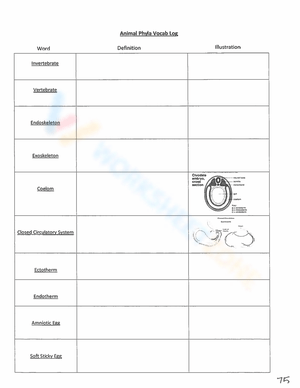
Animal phyla and symmetry worksheets for 8th grade give teachers a focused classification task that requires no lab setup, no projector, and minimal prep — just the worksheet and a few minutes of structured student thinking. These resources ask students to look at an organism, identify its symmetry type, match it to a phylum, and defend the choice with one observable trait. That three-part structure is what separates useful formative material from surface-level labeling work.
The Specific Skills Each Worksheet Targets
The core job here is moving students from recognizing names to reading body plans. Grade 8 life science expects students to do more than memorize that a jellyfish belongs to Cnidaria — they need to see that body parts arranged around a central axis indicate radial symmetry, and they need to connect that observation to phylum classification without being told first.
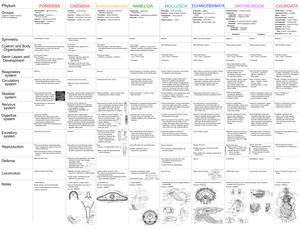
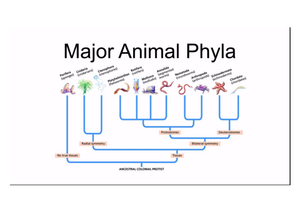
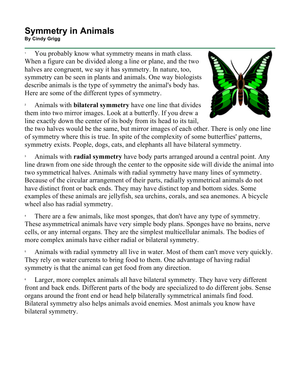
The three symmetry categories students work through are asymmetrical (Porifera, anchored by the sponge), radial (Cnidaria, anchored by the jellyfish), and bilateral (Annelida, Arthropoda, Chordata — earthworms, insects, and most vertebrates). The bilateral category is the one students recognize fastest, which makes it a productive anchor before they encounter harder cases. But a strong animal phyla and symmetry worksheets for 8th grade resource doesn't stop at labeling; it asks students to name one additional trait — segmentation for earthworms, stinging cells for jellyfish, appendages for insects — so every answer requires evidence rather than guessing.
A student who circles "bilateral" for an earthworm and then writes "segmented body" in the justification column shows far more understanding than one who circles the same answer and leaves the rest blank. That distinction shapes how teachers read the stack and plan the next day.
Why the Echinoderm Is the Most Useful Organism in the Set
Starfish and other echinoderms are the most instructionally valuable organisms to include, not because they're the easiest to classify but because they complicate the task in exactly the right way. Adult echinoderms appear radial, but their larvae begin bilateral — a developmental detail that OpenStax Biology 2e addresses directly when discussing features used to classify animals. That contrast forces students to revise a clean rule without abandoning it entirely, which is a fundamentally different cognitive demand than applying a rule for the first time.
In practice, this is where classroom discussion breaks open. When one student marks a starfish radial and another marks it bilateral, the disagreement is a teaching moment. The answer depends on which life stage you're describing. Letting students argue the case for two to three minutes in pairs before the teacher reveals the developmental explanation produces retention that a quietly corrected answer sheet never does. A worksheet that includes an echinoderm generates that kind of productive friction reliably — it's one of the few places in middle school life science where two students can give opposite answers and both be partially right.
Mistakes Students Make That These Worksheets Help You Catch
The most frequent error isn't confusing radial and bilateral in general — it's assigning bilateral symmetry to echinoderms. A five-point radial arrangement reads as "organized" or "patterned" to most 8th graders, and they conflate pattern with bilateral. The fix is straightforward: ask students to draw the line of symmetry on a diagram. A student who can bisect an earthworm cleanly but can't do the same for a starfish understands the distinction. One who struggles with both needs more time with the visual before touching the phylum column.
The second predictable error is classifying sponges by shape rather than body plan. Students who associate "sponge" with the rectangular household object sometimes assign it a loose bilateral symmetry because the shape looks elongated. A photograph of an actual sponge colony — irregular, spreading, no discernible axis — resolves most of that confusion quickly. It also surfaces how much of students' prior "knowledge" about sponges comes from animated television, which is worth acknowledging directly before moving on.
Building These Worksheets Into Your Lesson Planning
The strongest placement is the 10-to-12-minute segment at the start of class on the day after direct instruction. Students have heard the vocabulary and seen the examples; the worksheet gives them a chance to apply both before the lesson pushes forward. That gap between instruction and structured practice is where these resources do their most useful work — not as homework sent home cold, but as the first independent task after a concept lands in class.
Station rotations are another consistent fit. One station runs each worksheet independently while another has students arranging image cards by symmetry type without written labels first. Running images before writing reduces the cognitive demand for students who build understanding visually before they process text. When they arrive at the written worksheet after the sorting station, they're matching words to a mental picture already formed rather than constructing the image from scratch.
- Bell ringer: two organisms, one trait justification each — eight minutes, easy to scan for misconceptions before the lesson starts.
- Partner check: students compare answers before teacher review, then flag any disagreements for whole-class discussion.
- Small-group reteach: pull the three anchor organisms — sponge, jellyfish, earthworm — and repeat the same task across two class periods until the pattern is reliable.
- Friday self-check: distribute the answer key alongside the worksheet and ask students to write one sentence explaining any answer they changed.
Standard Alignment
These worksheets connect most directly to NGSS MS-LS4-2, which calls on students to apply scientific reasoning to construct explanations for anatomical similarities and differences among modern organisms. Symmetry classification fits that standard because it gives students a visible, arguable trait they can use to group animals by body plan rather than by surface appearance. The three-step task on each worksheet — identify symmetry, name phylum, justify with a trait — mirrors the evidence-and-explanation structure the standard requires.
Teachers working under state frameworks aligned to older NSES biodiversity and classification strands also reach for animal phyla and symmetry worksheets for 8th grade when they need a focused evidence task rather than a full taxonomy unit. The worksheet format keeps the work scoped: students evaluate a defined organism set, apply two criteria (symmetry type and one additional observable trait), and write a short, checkable justification.
Adjusting the Worksheets for a Range of Learners
For students who need more structure before working independently, narrow the organism list to three anchor examples and provide one completed model row — symmetry type and phylum already filled in, trait justification left blank. That keeps the reasoning demand on the step where it belongs while removing the recall burden that stops some students before they start. The goal is to get them writing a reason, not retrieving a name.
For students who move through the standard task without friction, add one extension question at the bottom: identify two organisms from the worksheet that share a symmetry type but belong to different phyla, then explain in two sentences why symmetry alone doesn't determine classification. That question draws entirely from what students already marked, so it measures reasoning rather than additional content knowledge — and it doesn't require a separate handout.
Students working above grade level can be pushed further by asking them to identify one organism whose symmetry classification would change depending on the life stage being observed. There's only one correct answer in the typical worksheet set, but arriving at it independently requires genuine biological reasoning rather than word-bank retrieval.
Frequently Asked Questions
Which phyla should 8th graders be expected to work with on these worksheets?
A practical set covers Porifera, Cnidaria, Echinodermata, Annelida, and Arthropoda — one or two anchor organisms per symmetry category plus the echinoderm exception. Teachers who want to extend the task can add Chordata and Platyhelminthes, but the five-phylum core gives students enough to build reliable pattern recognition without turning the worksheet into an endurance exercise.
How should teachers handle disagreement over echinoderm classification?
Don't resolve it immediately. Let students argue for two to three minutes in pairs, then return to the whole group and introduce the developmental explanation — radial in adults, bilateral in larvae. That sequence converts a worksheet disagreement into a discussion students remember far longer than a quietly corrected answer would produce. The confusion is the lesson.
Can these worksheets function as formative assessment data?
Yes, and they're most useful in that role when the justification column is collected alongside the label column. A student who marks every symmetry type correctly but leaves the trait column blank is in a very different instructional position than one who marks one type incorrectly and writes a well-reasoned observation. Reading both columns together gives more actionable information than scoring labels alone. The best animal phyla and symmetry worksheets for 8th grade resources make that two-column structure a default rather than an optional add-on.
What does a strong student response actually look like compared to a weak one?
A complete, correct response names the symmetry type, gives the phylum, and writes one observable trait that supports both choices — for example, "bilateral / Annelida / segmented body with no appendages." A weak response has the right label but a blank or vague justification ("it looks like that"). When you see the vague justification pattern across several papers in the same class period, the next lesson needs a direct-instruction moment on what counts as a visible, nameable trait in biology — not another classification task handed back without comment.












 Interactive Worksheet Maker
 Quiz Maker
 Word Search Maker
 Crossword Puzzle Maker
 Word Scramble Generator
 Sentence Scramble Generator
 Handwriting Worksheet Generator
 Name Tracing Generator
 Fill In The Blank Generator