




























Views
Downloads

Animal Phyla Vocab Log | Essential Biology Worksheet

Paste this activity's link or code into your existing LMS (Google Classroom, Canvas, Teams, Schoology, Moodle, etc.).
Students can open and work on the activity right away, with no student login required.
You'll still be able to track student progress and results from your teacher account.
This Animal Phyla Vocab Log provides a structured framework for students to internalize complex biological terminology. By requiring both a formal definition and a visual illustration, the worksheet ensures that learners move beyond rote memorization toward a conceptual understanding of animal classification and physiological traits. It is an effective tool for building scientific literacy in secondary life science classrooms.
At a Glance
- Grade: 6-12 · Subject: Biology / Life Science
- Standard:
VA SOL LS.4— Classify organisms based on internal and external characteristics- Skill Focus: Biological Vocabulary Acquisition
- Format: 2 pages · 10 problems · Answer key included · PDF
- Best For: Unit introduction or study guide
- Time: 25–35 minutes
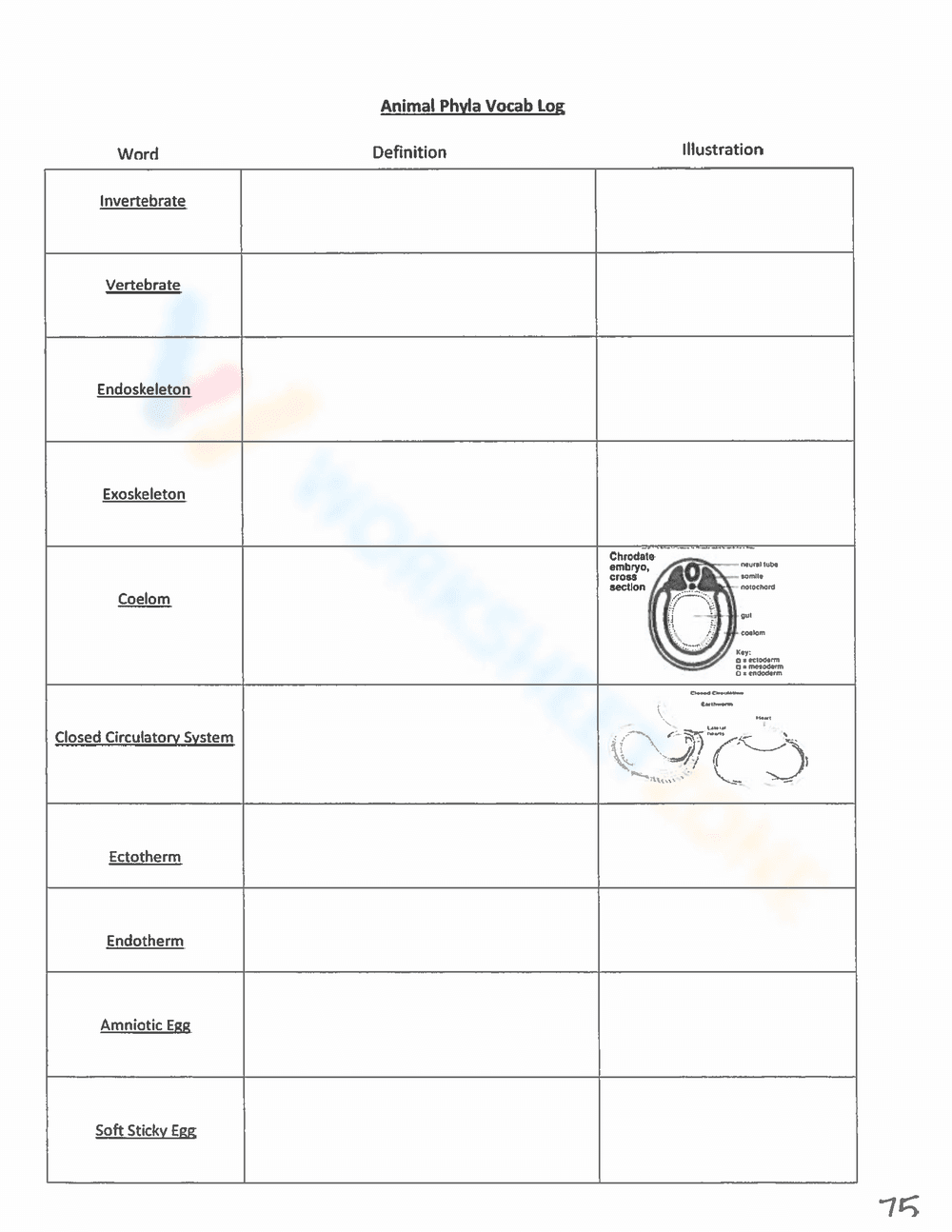
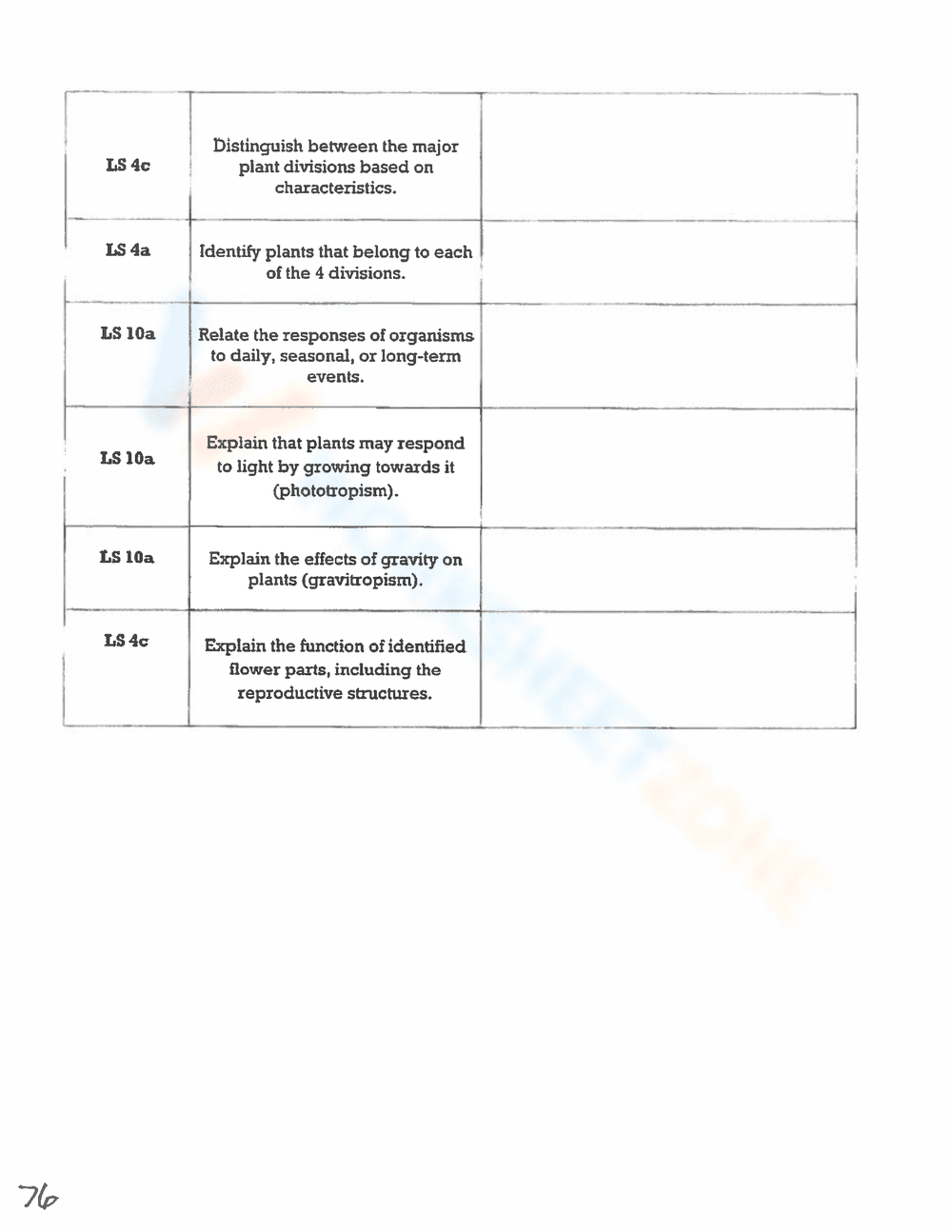
The resource consists of a two-page layout designed for maximum clarity. The primary page features a 10-term vocabulary log with dedicated columns for the word, its scientific definition, and a space for student-drawn illustrations. Key terms include Invertebrate, Vertebrate, Endoskeleton, Exoskeleton, Coelom, and Ectotherm. The second page includes a standards-tracking table for Virginia Life Science objectives, helping teachers and students monitor progress toward mastery.
Zero-Prep Workflow
- Print: Select the vocabulary log page and print enough copies for your class (30 seconds).
- Distribute: Hand out the logs to students as they begin a new unit on Kingdom Animalia or animal body plans (1 minute).
- Review: Use the completed logs as a quick-check formative assessment or as a permanent entry in a science interactive notebook.
Total teacher preparation time is under two minutes, making this an ideal resource for busy educators or emergency sub plans.
Standards Alignment: This worksheet is aligned to VA SOL LS.4, which requires students to investigate and understand that organisms can be classified based on their characteristics. It specifically supports sub-standard LS.4c regarding the major divisions of organisms. Both standard codes can be copied directly into lesson plans, IEP goals, or district curriculum mapping tools.
How to Use It: Assign this log during the "Explore" phase of a 5E lesson model to help students organize new information as they read their textbooks or watch instructional videos. Alternatively, use it as a summative study guide before a unit test on animal phyla. Completion typically takes 25–35 minutes depending on the detail of the illustrations provided by the students.
Who It's For: This log is ideal for Grade 6–12 life science and biology students, including English Language Learners (ELLs) who benefit from the visual illustration requirement. It pairs naturally with a classroom anchor chart on animal symmetry or a direct instruction lesson on vertebrate versus invertebrate anatomy.
According to research by Fisher & Frey (2014), the use of graphic organizers that combine linguistic definitions with non-linguistic representations significantly enhances the retention of specialized academic vocabulary. This Animal Phyla Vocab Log leverages that dual-coding approach to help students master VA SOL LS.4 concepts. By documenting terms like "Coelom" and "Amniotic Egg" through multiple modalities, students build a more robust mental model of biological classification. The structured format reduces cognitive load, allowing learners to focus on the nuances of animal physiology rather than the organization of their notes. This evidence-based strategy is particularly effective in secondary science environments where technical vocabulary density is high, ensuring that all students, regardless of their starting point, can access and retain core curriculum content for long-term academic success.


