These 8th grade environment worksheets resources give middle school science teachers a printable set of practice tasks that spans the environmental science topics most Grade 8 units actually cover — food webs, atmospheric layers, invasive species, soil, water systems, resource classification, and human impact. The worksheets are built for teachers who need something they can drop into a bell ringer, station rotation, homework slot, or sub plan without reformatting or hunting for supplementary directions.
The Environmental Science Concepts in This Set
Each worksheet targets one of the content strands that appear repeatedly in Grade 8 science sequences. The topics are independent — teachers pull whichever one matches the current unit rather than working through the collection in order.
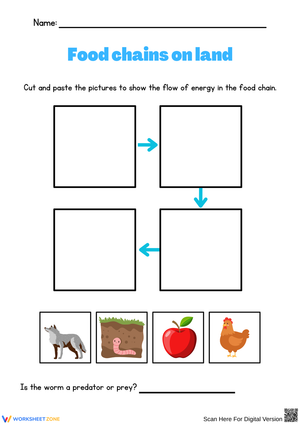
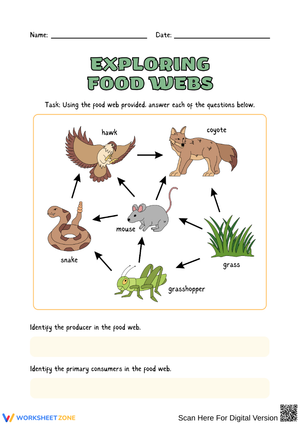
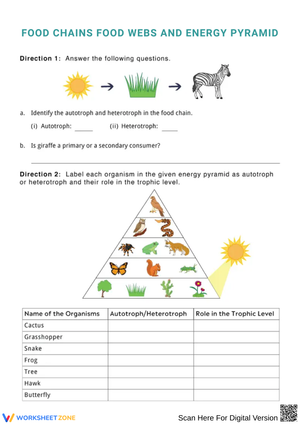
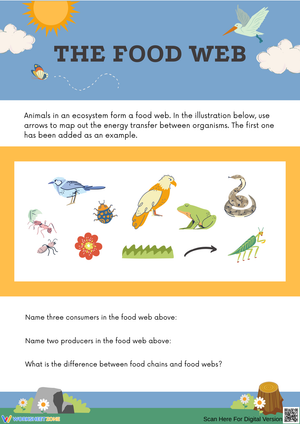
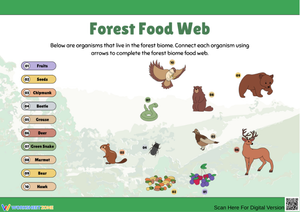
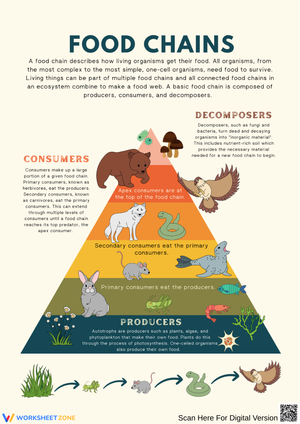
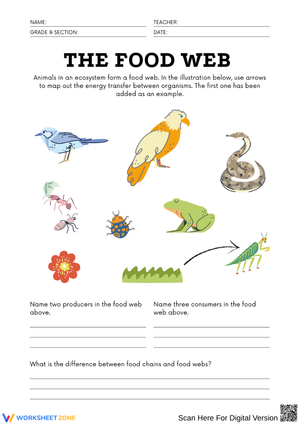
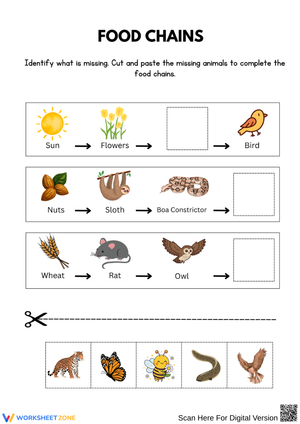
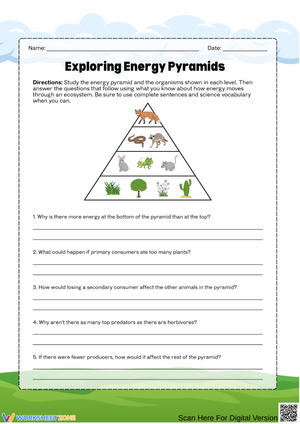
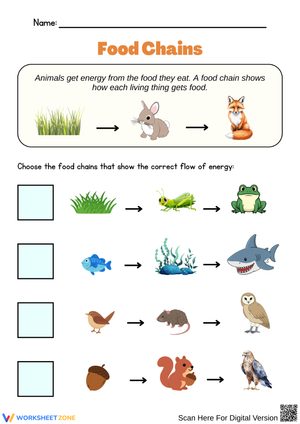
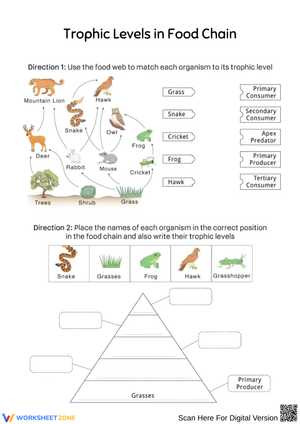
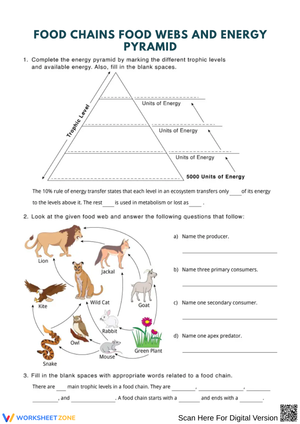
- Food webs and energy flow: Students trace energy through producer-consumer-decomposer relationships, identify trophic levels, and explain what a population change means for the rest of the system.
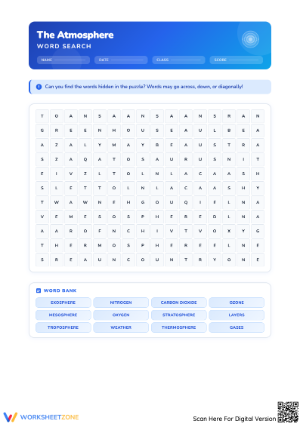
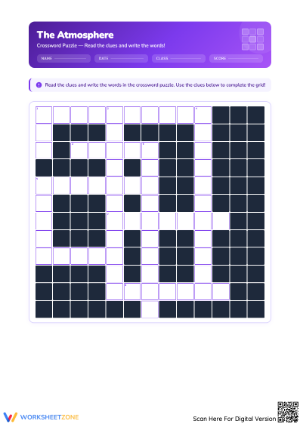
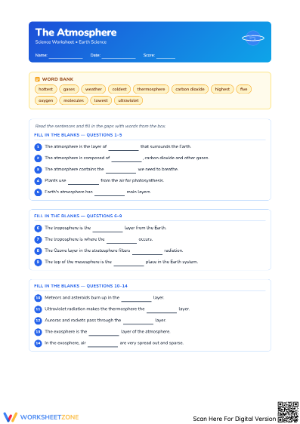
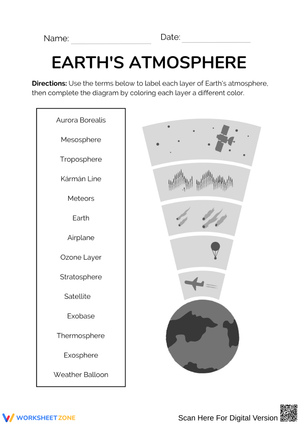
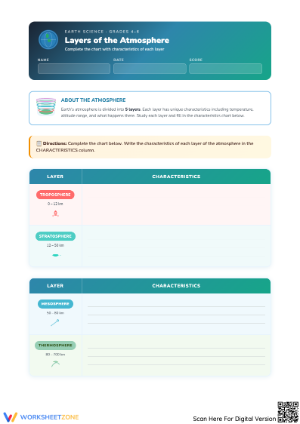
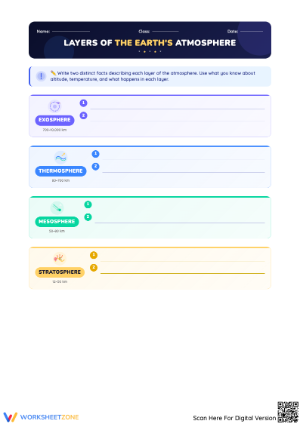
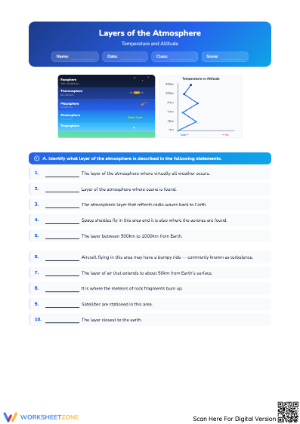
- Atmospheric layers: Each worksheet on atmosphere asks students to sequence the troposphere, stratosphere, mesosphere, thermosphere, and exosphere, then connect each layer to conditions affecting weather, climate, and life on Earth's surface.
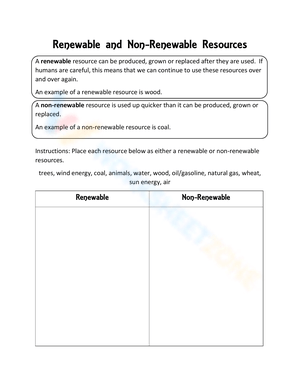
- Renewable and non-renewable resources: Students compare resource types, examine availability and extraction patterns, and weigh long-term consequences of resource choices — not just match terms to definitions.
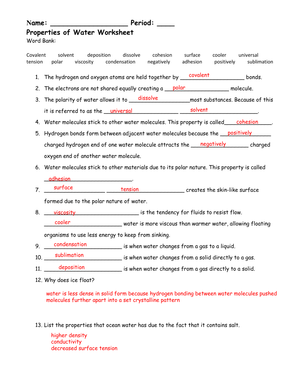
- Water and soil systems: These worksheets address erosion, conservation, water quality, and the soil conditions that support healthy ecosystems — useful in both Earth science and environmental science units.
- Human impact and invasive species: Students analyze scenarios in which human decisions or introduced organisms alter biodiversity, habitat, and resource balance, moving from description to cause-and-effect explanation.
That range matters because Grade 8 teachers rarely teach environmental topics as one isolated unit. Having options across multiple content strands means the set supports reinforcement at several points in the year, not just one chapter.
Frequent Student Errors Worth Anticipating and Correcting
Food web arrows catch students repeatedly. The arrow in a food web represents energy transfer — it should point from the organism being eaten toward the one doing the eating. Students consistently draw them the opposite direction because they read the arrow as "eats." A worksheet that asks students to trace energy through four trophic levels and then explain what the arrows represent forces that distinction into the open. A multiple-choice unit test usually does not.
Resource classification produces a different, quieter error. Most 8th graders know that solar and wind power are renewable, but many treat "renewable" as synonymous with "limitless" or "consequence-free." They're surprised to learn that lithium mining for batteries or land use for solar installations carries real constraints. Worksheets that ask students to compare tradeoffs — rather than sort resources into two columns — expose this assumption early enough to address before end-of-unit assessments.
Atmospheric layers create a third pattern worth watching. Students who can list the layers in order often can't explain why weather forms in the troposphere, why stratosphere temperature increases with altitude, or what the ozone layer has to do with life at Earth's surface. Questions that ask "what happens in this layer and why does it matter" surface that gap faster than a labeling task alone.
How to Work These Worksheets Into Your Lesson Plans
These worksheets work best when the instructional purpose is clear before students receive them. The same food web worksheet lands differently as a Monday warm-up to activate prior knowledge than as a Friday exit check after three days of ecosystem instruction. Deciding in advance which function a worksheet serves — retrieval practice, formative check, reteach, or extension — changes which student responses deserve the closest attention when circulating or collecting work.
- Bell ringers: One or two targeted questions from an environment worksheet work well in the first six to eight minutes of class. Students write, the teacher circulates and reads, and the opening discussion starts from what students actually know rather than what teachers assume they know.
- Station rotations: Pair a printable worksheet with a diagram, a short passage, or a physical model so students move through related environmental science tasks rather than completing one long activity at their desks.
- Post-lab processing: After an erosion demonstration or food web simulation, a worksheet that asks students to identify patterns, label cause-and-effect relationships, or explain what they observed gives structured processing time with a record teachers can collect and review.
- Sub plans: A PDF printable holds its formatting, requires no logins, and comes with its own task instructions. Keeping two or three environment worksheets set aside for that purpose removes a real planning headache on short-notice absences.
- Reteach groups: If students struggled with resource tradeoffs but not ecosystems, pull that worksheet for the reteach group while others move forward. A single topic-focused worksheet fits that need better than a broad review packet.
Standard Alignment
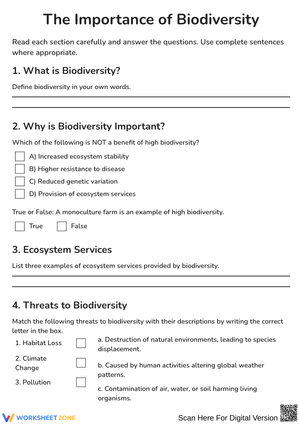
The NGSS middle school disciplinary core idea MS-ESS3: Earth and Human Activity includes five performance expectations centered on human impacts on Earth systems, monitoring environmental change, and evaluating solutions that reduce harm. When determining whether a specific 8th grade environment worksheets resource aligns to these expectations, the key question is whether the prompts ask students to explain, compare, and analyze rather than recall and define. A human impact worksheet that presents a deforestation scenario and asks students to trace effects on water runoff, soil stability, and local biodiversity is doing different intellectual work than one that asks students to list three negative effects of pollution.
The food web and atmospheric layers worksheets connect additionally to MS-LS2 (Ecosystems: Interactions, Energy, and Dynamics) and MS-ESS2 (Earth's Systems), which extends the usefulness of this set across multiple NGSS strands rather than a single standard. Teachers building units around crosscutting concepts — particularly cause and effect, systems and system models, and stability and change — will find those lenses present in the stronger prompts throughout the collection.
Differentiating the Worksheets for a Mixed-Readiness Class
The content stays consistent across readiness levels — every 8th grader should work with food webs, atmospheric layers, and human impact concepts. What changes is the cognitive demand. For students still building basic content knowledge, starting with identification and labeling makes sense: sequence the atmospheric layers, label producers and consumers on a food web diagram, sort resources into their correct categories. For students ready for more, the goal shifts to explanation and prediction: why does energy decrease at each trophic level, what would happen to a grassland ecosystem if the apex predator were removed, or what makes a given resource truly non-renewable rather than just slow to replenish?
A practical approach is to print the same worksheet for the whole class but give different written instructions to each group. Group one completes the identification questions. Group two adds the short-answer explanations. Group three finishes everything and writes a brief extension — connecting, for example, an invasive species scenario to a resource or human impact concept from an earlier lesson. Prep time stays low, the content is the same for everyone, and the actual intellectual work is adjusted. The 8th grade environment worksheets format supports this structure well: students annotate, underline, draw arrows, and write directly on printed copies, which makes paired and independent practice easy to manage without extra materials.
Frequently Asked Questions
What environmental science topics do these worksheets cover?
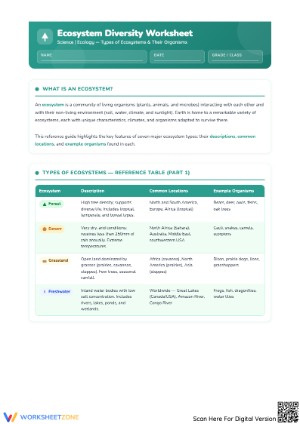
The set includes worksheets on food webs and energy flow, atmospheric layers, renewable and non-renewable resources, water systems, soil, invasive species, and human impact on ecosystems. That range covers the environmental topics most commonly taught across Grade 8 life science, Earth science, and integrated science courses in US schools.
Are these resources printable, or do they require a screen?
Every worksheet is available as a PDF and prints cleanly without a device, login, or internet connection. The formatting holds whether teachers print at school, share files with a team, or leave materials for a substitute. Students can write directly on printed copies, which is especially useful for tasks that involve labeling diagrams or annotating food web relationships.
How do these worksheets work in an NGSS-aligned class without becoming recall practice?
That depends on how teachers frame the task and which questions they assign. A food web worksheet used for labeling stays at a surface level. The same worksheet used after a class discussion — with a prompt asking students to predict what happens when a middle consumer disappears from the ecosystem — becomes evidence-based reasoning practice. The 8th grade environment worksheets format provides the content structure; teachers supply the instructional context that sets the actual cognitive level of the work.
Can these worksheets serve as formative assessment?
They work well as formative assessment when teachers collect and read responses before the next lesson. Short-answer questions on human impact or resource tradeoffs show clearly which students are reasoning through environmental systems and which are still operating at the vocabulary level — a distinction that directly shapes what the following class needs to address.












 Interactive Worksheet Maker
 Quiz Maker
 Word Search Maker
 Crossword Puzzle Maker
 Word Scramble Generator
 Sentence Scramble Generator
 Handwriting Worksheet Generator
 Name Tracing Generator
 Fill In The Blank Generator