


























1 / 6
0
Views
0
Downloads

9.5
0
Save
0 Likes
Share
Explore Fossils with this Engaging Worksheet
0 Views
0 Downloads
Paste this activity's link or code into your existing LMS (Google Classroom, Canvas, Teams, Schoology, Moodle, etc.).
Students can open and work on the activity right away, with no student login required.
You'll still be able to track student progress and results from your teacher account.
Information
Description
What It Is:
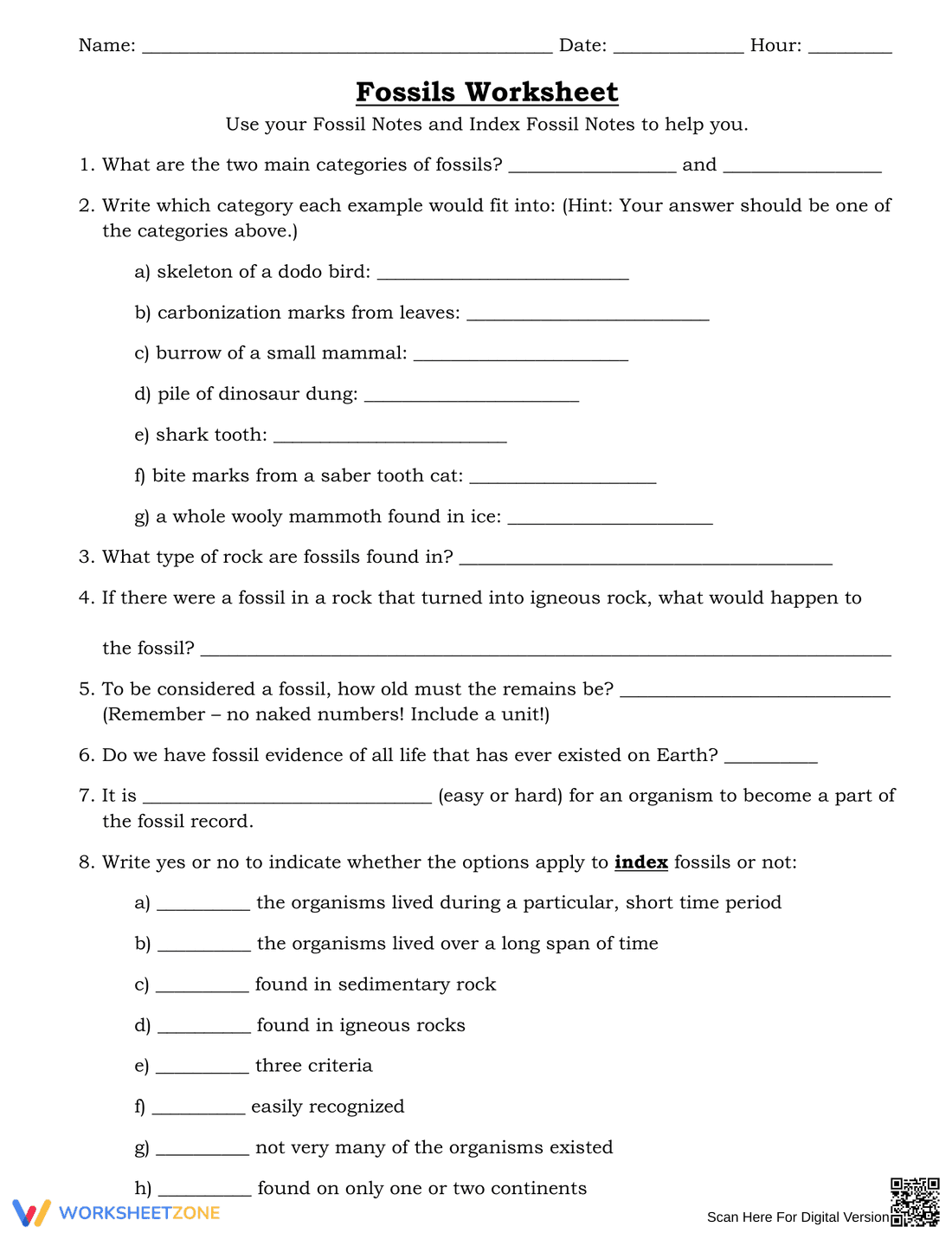
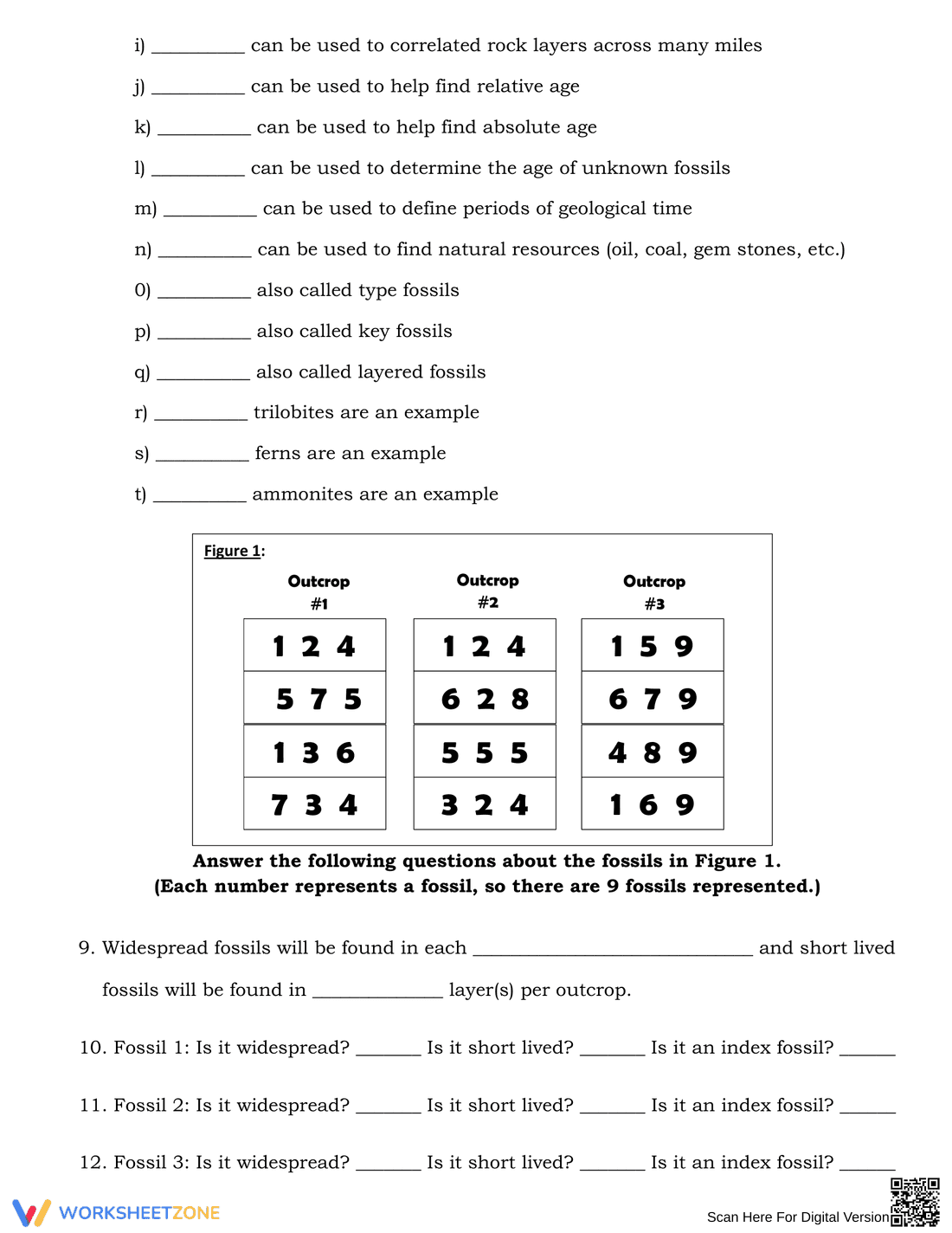
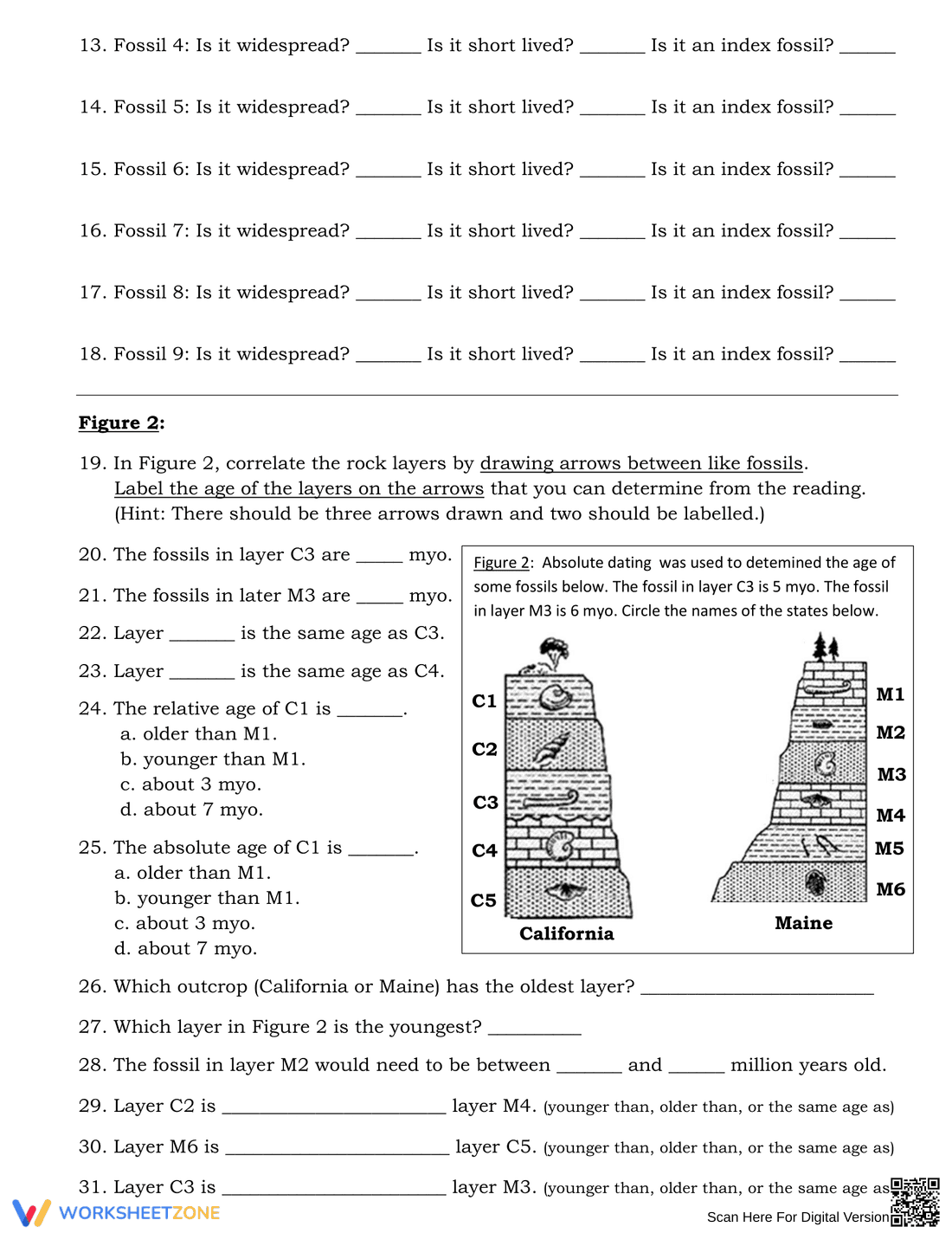
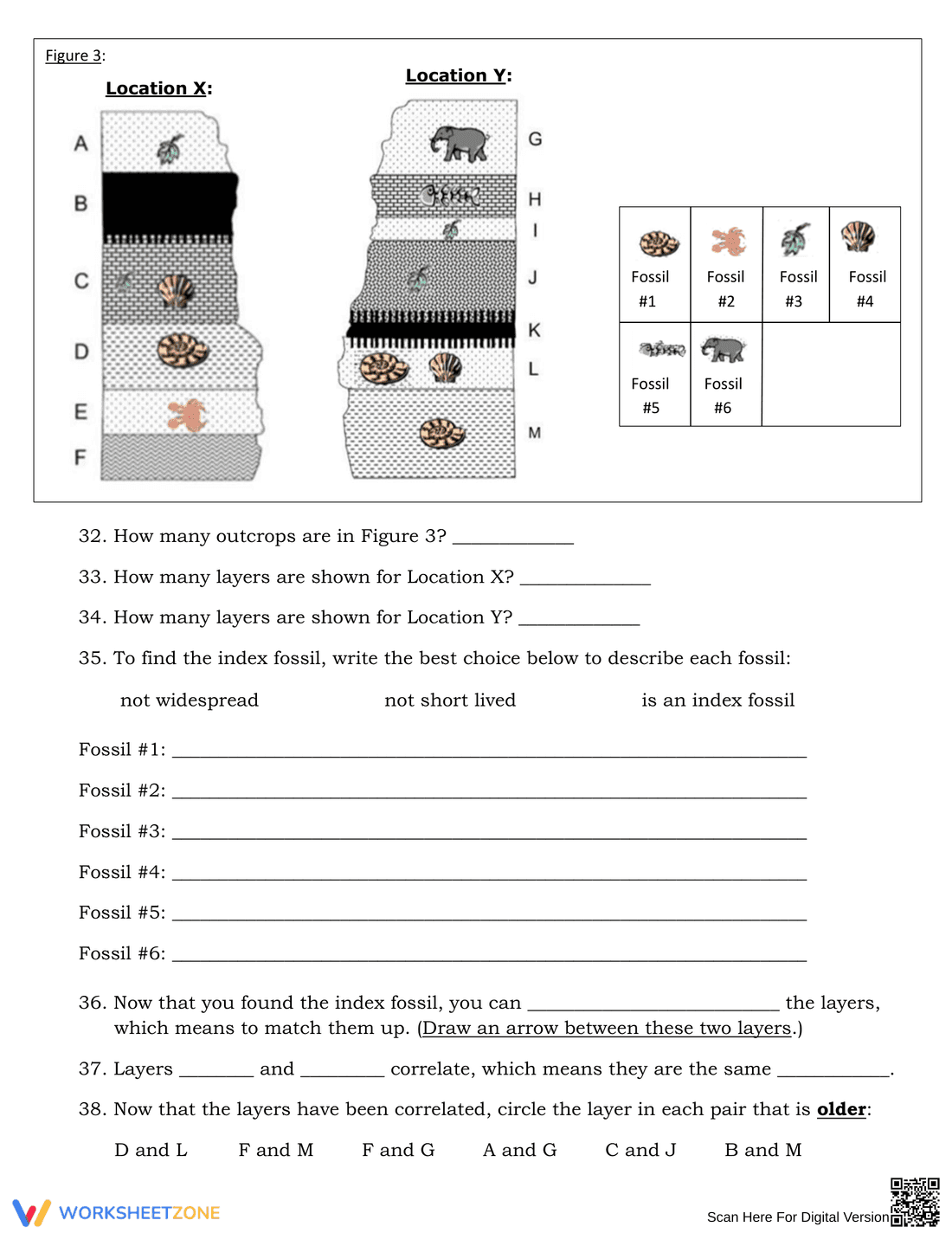
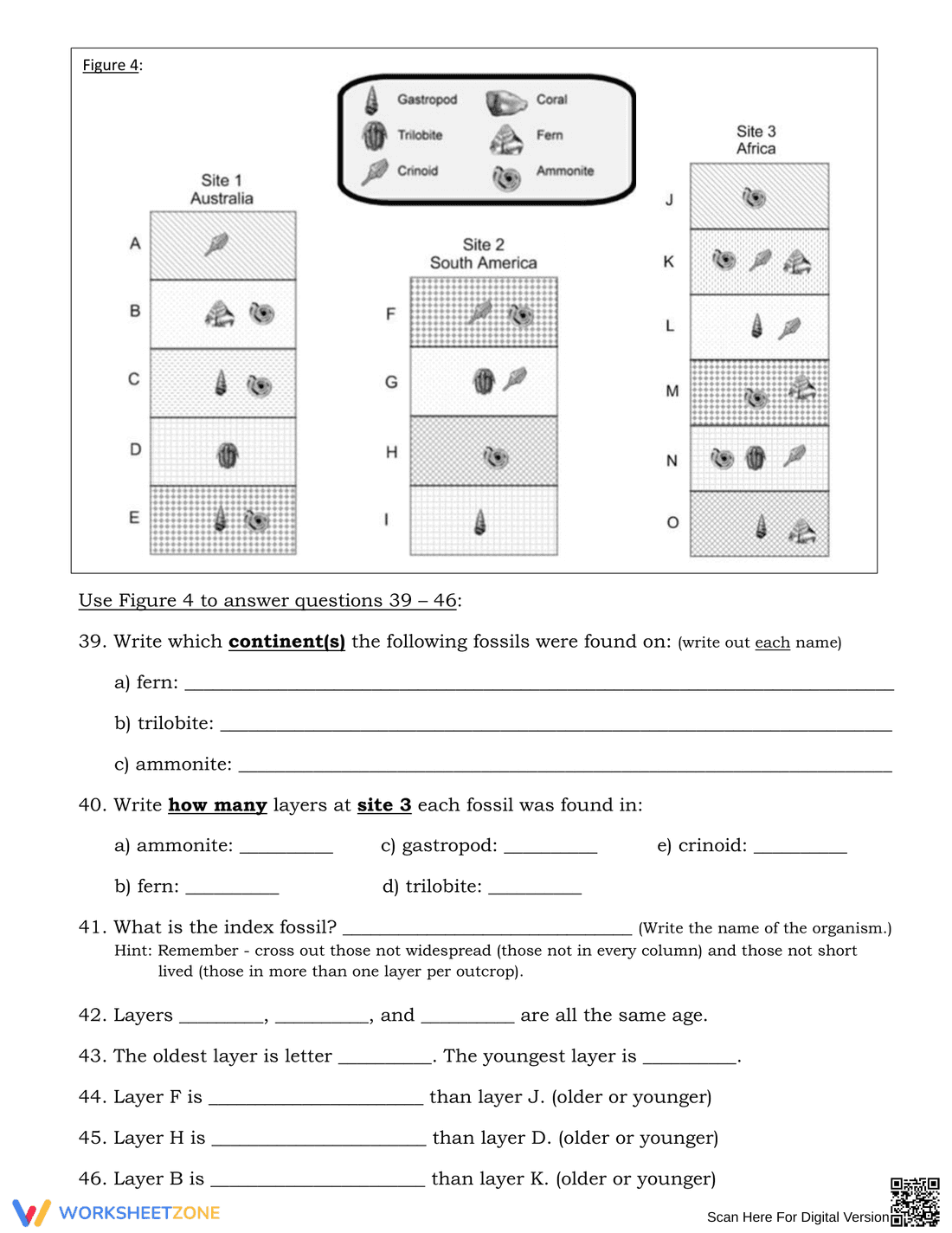
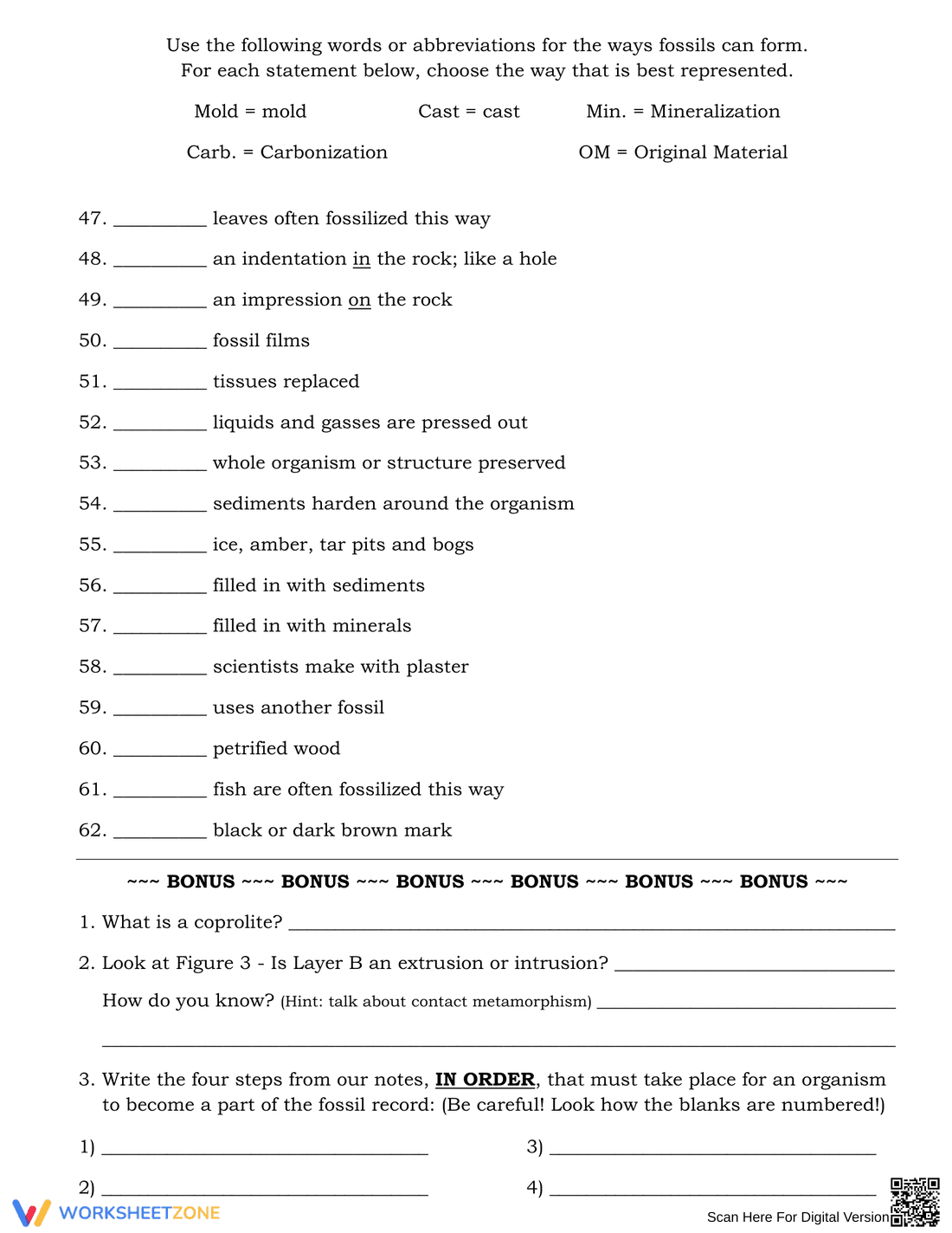
This is a 'Fossils Worksheet' designed to test students' understanding of fossils and index fossils. The worksheet includes questions about the main categories of fossils, classifying examples of fossils (like a dodo bird skeleton, carbonization marks from leaves, and a shark tooth), the type of rock fossils are found in, what happens to fossils in igneous rock, the age requirement for remains to be considered a fossil, the completeness of the fossil record, and characteristics of index fossils.
Grade Level Suitability:
This worksheet is most suitable for grades 6-9 (middle school) or introductory high school earth science. The concepts covered require some prior knowledge of geology, biology, and the fossil record. The questions range in complexity, making it appropriate for a range of student abilities within those grade levels.
Why Use It:
This worksheet reinforces key concepts about fossils, including their formation, classification, and significance. It encourages critical thinking by asking students to apply their knowledge to specific examples and scenarios. The worksheet also assesses understanding of index fossils and their role in dating rock layers.
How to Use It:
Students should use their 'Fossil Notes' and 'Index Fossil Notes' as resources to answer the questions. They need to fill in the blanks with appropriate terms, classify fossil examples, provide short answers to open-ended questions, and indicate 'yes' or 'no' for statements related to index fossils. The worksheet can be used as a review activity, homework assignment, or quiz.
Target Users:
The target users are students in middle school or high school earth science classes who are learning about fossils and the fossil record. It is also suitable for students reviewing these concepts for standardized tests or other assessments.
This is a 'Fossils Worksheet' designed to test students' understanding of fossils and index fossils. The worksheet includes questions about the main categories of fossils, classifying examples of fossils (like a dodo bird skeleton, carbonization marks from leaves, and a shark tooth), the type of rock fossils are found in, what happens to fossils in igneous rock, the age requirement for remains to be considered a fossil, the completeness of the fossil record, and characteristics of index fossils.
Grade Level Suitability:
This worksheet is most suitable for grades 6-9 (middle school) or introductory high school earth science. The concepts covered require some prior knowledge of geology, biology, and the fossil record. The questions range in complexity, making it appropriate for a range of student abilities within those grade levels.
Why Use It:
This worksheet reinforces key concepts about fossils, including their formation, classification, and significance. It encourages critical thinking by asking students to apply their knowledge to specific examples and scenarios. The worksheet also assesses understanding of index fossils and their role in dating rock layers.
How to Use It:
Students should use their 'Fossil Notes' and 'Index Fossil Notes' as resources to answer the questions. They need to fill in the blanks with appropriate terms, classify fossil examples, provide short answers to open-ended questions, and indicate 'yes' or 'no' for statements related to index fossils. The worksheet can be used as a review activity, homework assignment, or quiz.
Target Users:
The target users are students in middle school or high school earth science classes who are learning about fossils and the fossil record. It is also suitable for students reviewing these concepts for standardized tests or other assessments.


