8th grade earth science printable worksheets give teachers something concrete to reach for when a unit is moving fast and students need focused practice on one concept at a time. The set covers Earth's internal structure, plate tectonics, rocks and minerals, the water cycle, weather and climate patterns, and geologic time — the topic areas that anchor most eighth-grade Earth science courses. Teachers get print-ready resources that fit bell ringers, guided practice, reteach, homework, and sub plans without significant modification.
Student Misconceptions That Show Up Most in This Content Area
The weather-and-climate confusion runs deeper than students let on. Most eighth graders can define both terms in isolation, but when given a specific scenario — a three-day heat wave, a decade of shifting average temperatures — many apply the labels inconsistently. The error usually traces back to intensity: students anchor to dramatic events and label them "climate," while a measurable long-term trend becomes "weather." Worksheets that require students to sort and justify examples surface that instinct before a test does.
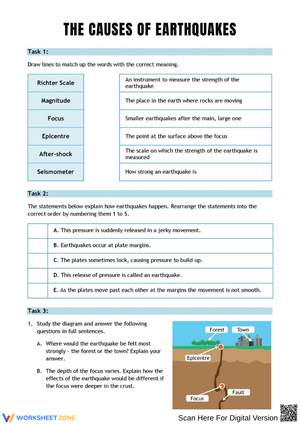
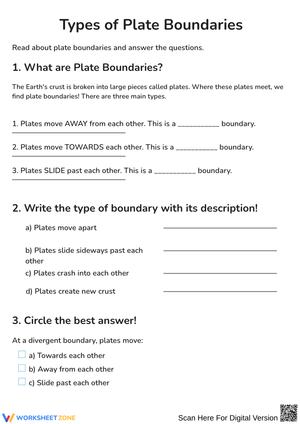
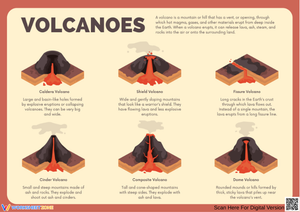
Plate tectonics generates a separate pattern. Students frequently reverse what happens at convergent and divergent boundaries — writing that mountains form where plates pull apart, or that ocean trenches form where plates collide. That isn't typically a vocabulary problem; it's spatial reasoning about what compression versus tension does to crust. A worksheet that asks students to trace what happens to rock material at each boundary and then justify the resulting landform exposes that confusion in a form that's easy to target during reteach.
In the rock cycle, students tend to draw one fixed sequence rather than a system with multiple pathways. When a worksheet asks them to trace what happens to igneous rock under heat and pressure before it ever erodes, many freeze — which tells you the process logic hasn't solidified yet, and catching that early saves reteach time later in the unit.
The Specific Content Each Worksheet Addresses
Earth science at this grade level breaks into distinct topic clusters, and the worksheets follow that same structure. Each worksheet targets one defined concept so teachers can match the resource to the lesson rather than search through a larger compilation for the relevant section.
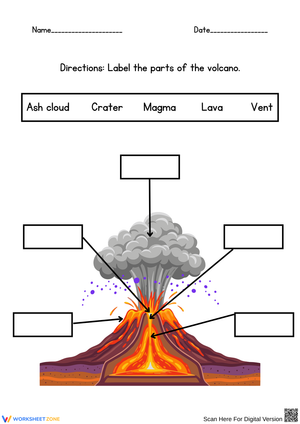
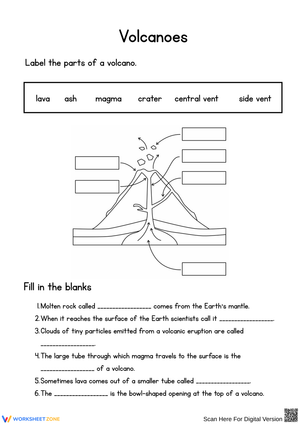
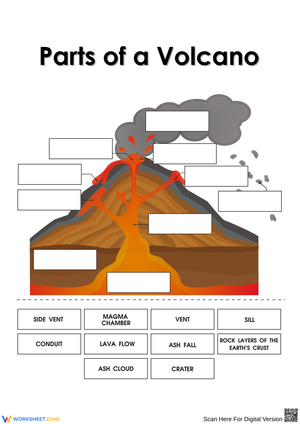
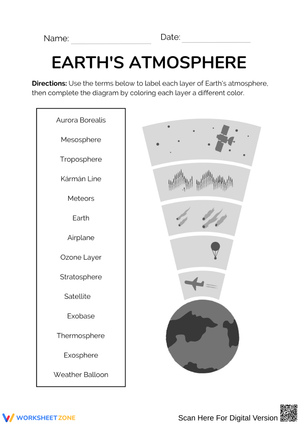
- Earth's layers and internal structure — labeling diagrams, distinguishing the crust from the lithosphere, and explaining how seismic wave data informs what we know about Earth's interior.
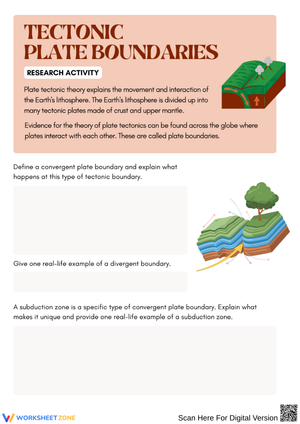
- Plate tectonics — identifying boundary types, connecting interactions to specific landforms, and tracing evidence for crustal movement over geologic time.
- Rocks and minerals — classifying by formation process, matching rock type to cycle stage, and reviewing physical properties used in identification.
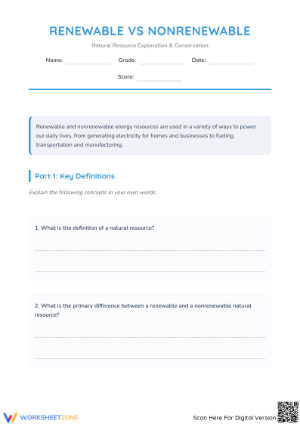
- The water cycle — tracing reservoirs, tracking phase changes, and distinguishing surface runoff from groundwater movement. About 97 percent of Earth's water is saltwater, which means tracking freshwater transfer through the system is more instructionally useful than memorizing step names.
- Weather and climate — interpreting data, separating short-term atmospheric events from long-term patterns, and identifying cause-and-effect relationships across Earth systems.
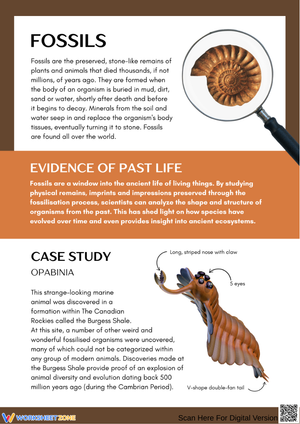
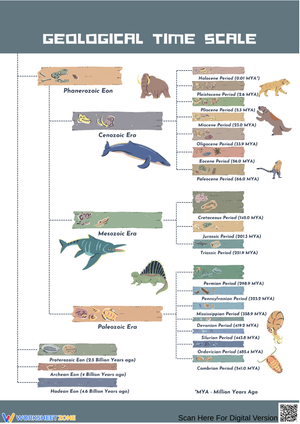
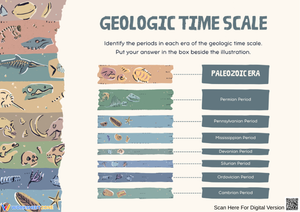
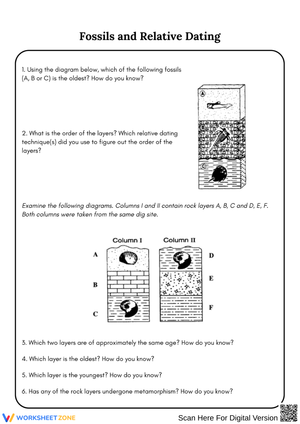
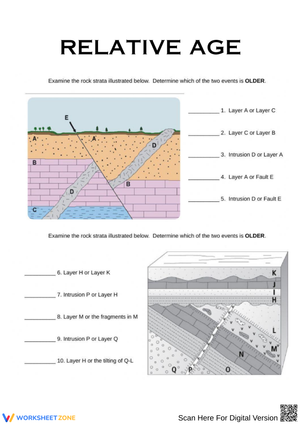
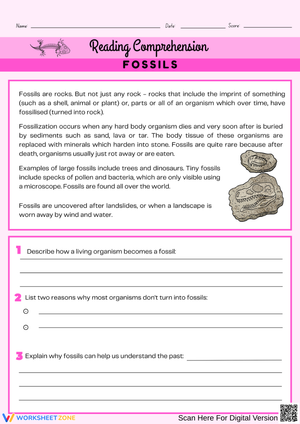
- Geologic time and Earth history — sequencing major events, reading relative time scales, and connecting fossil evidence to environmental change over deep time.
That topic-specific structure is useful when class pacing isn't uniform. A teacher can pull one worksheet for guided practice and a second for reteach the following day without rebuilding the lesson around a different resource.
How to Build These Worksheets Into Your Lesson Plans
The most consistent use pattern for 8th grade earth science printable worksheets is placing them at transition points in the lesson cycle, not treating them as standalone fill-in tasks. A concept-heavy worksheet works before a lab to activate prior knowledge. A diagram-based worksheet does more work placed after direct instruction when the goal is consolidation. A short mixed-review worksheet fits the ten minutes before the end of class better than a passive summary activity.
- Bell ringer: a five-minute review worksheet on the prior day's concept — for example, identifying plate boundary types on a labeled cross-section diagram.
- Station work: pair one worksheet with a short reading or physical model so students encounter the same concept in two formats during a single period.
- Guided practice: work through the worksheet together after whole-class instruction, pausing at prompts where students most often go in the wrong direction.
- Sub plans: worksheets with diagrams and short-response prompts hold structure without the regular teacher present to redirect.
- Unit review: pull several topic-specific worksheets together — one concept each — to build a focused review set without creating a long mixed document from scratch.
One implementation strategy worth building in deliberately: separate concept load from writing load. Eighth graders often understand convection, erosion, and climate forcing better than their written responses suggest. A worksheet that asks students to sort or label first, then write a short explanation, gives teachers a cleaner read on whether the gap is science understanding or academic expression — two problems that need different responses.
Standard Alignment
These worksheets align most directly to the NGSS Middle School Earth and Space Sciences performance expectations. MS-ESS2-2 asks students to construct an explanation based on evidence for how geoscience processes have changed Earth's surface — the plate tectonics and rock cycle worksheets address that reasoning directly. MS-ESS2-4 covers the roles of water in Earth's surface processes, which connects to water cycle worksheets that ask students to trace transfer pathways rather than stop at vocabulary definitions. MS-ESS2-6 targets weather and climate data interpretation, mapping to worksheets where students sort phenomena and identify patterns across time scales.
Teachers using 8th grade earth science printable worksheets in NGSS-aligned classrooms get the most from resources that ask students to explain, compare, or justify — not just recall. A worksheet that ends at "label the boundary" does less instructional work than one that adds "explain why earthquakes cluster near this boundary type." The NSTA Middle School Earth and Space Sciences overview centers instruction on explaining system interactions and using evidence to reason about Earth processes, and worksheets that push students past terminology support that goal directly.
Differentiating the Set for a Mixed-Readiness Classroom
Grade 8 science classes typically hold a wide range of readiness, and these worksheets serve most of that range without requiring separate lesson builds for each level.
Students who need more structure benefit from worksheets with labeled reference diagrams, reduced answer choices, or sentence frames for short responses. A student still working through plate boundary concepts may need a partially completed diagram before interpreting data, while another is ready to evaluate evidence and explain landform distribution independently. 8th grade earth science printable worksheets span enough topic ground that teachers can also use the set to revisit prerequisite content — for a student uncertain about Earth's layers, a targeted worksheet there builds the foundation before plate tectonics instruction begins.
For students who demonstrate early mastery, extend the worksheet beyond its printed prompts: ask them to connect the concept to a current event, evaluate competing explanations, or apply the same process to an unfamiliar scenario. That keeps the resource from functioning as a ceiling without requiring an entirely separate assignment.
Frequently Asked Questions
What topics do these worksheets cover, and can I use them across a full unit?
The set covers Earth's internal structure, plate tectonics, rocks and minerals, the water cycle, weather and climate, and geologic time. Each worksheet focuses on one concept, so teachers can pull individual resources that match the day's lesson. For full-unit coverage, these work best alongside labs, readings, and discussions rather than as the sole instructional resource.
Can these worksheets serve as formative assessments?
Yes. Because each worksheet stays focused on one concept, teachers can scan student responses quickly for recurring errors — a class that consistently misidentifies convergent boundary outcomes, or a group that traces the water cycle without accounting for groundwater movement. Those patterns tell you what to address before moving the unit forward.
How well do these work for sub plans in a science class?
Well, when the worksheets include diagrams and structured prompts. Open-ended tasks tend to fall apart when a substitute is managing the room. A worksheet that asks students to label, sort, and then write one or two sentences based on what they labeled holds its structure without the regular teacher there to guide interpretation.












 Interactive Worksheet Maker
 Quiz Maker
 Word Search Maker
 Crossword Puzzle Maker
 Word Scramble Generator
 Sentence Scramble Generator
 Handwriting Worksheet Generator
 Name Tracing Generator
 Fill In The Blank Generator




 BACK TOSCHOOL