




























1 / 2
0
Views
0
Downloads

0.0
0
Save
0 Likes
Share
Tectonic Plate Boundaries Research Activity
0 Views
0 Downloads

Paste this activity's link or code into your existing LMS (Google Classroom, Canvas, Teams, Schoology, Moodle, etc.).
Students can open and work on the activity right away, with no student login required.
You'll still be able to track student progress and results from your teacher account.
Information
Description
What It Is:
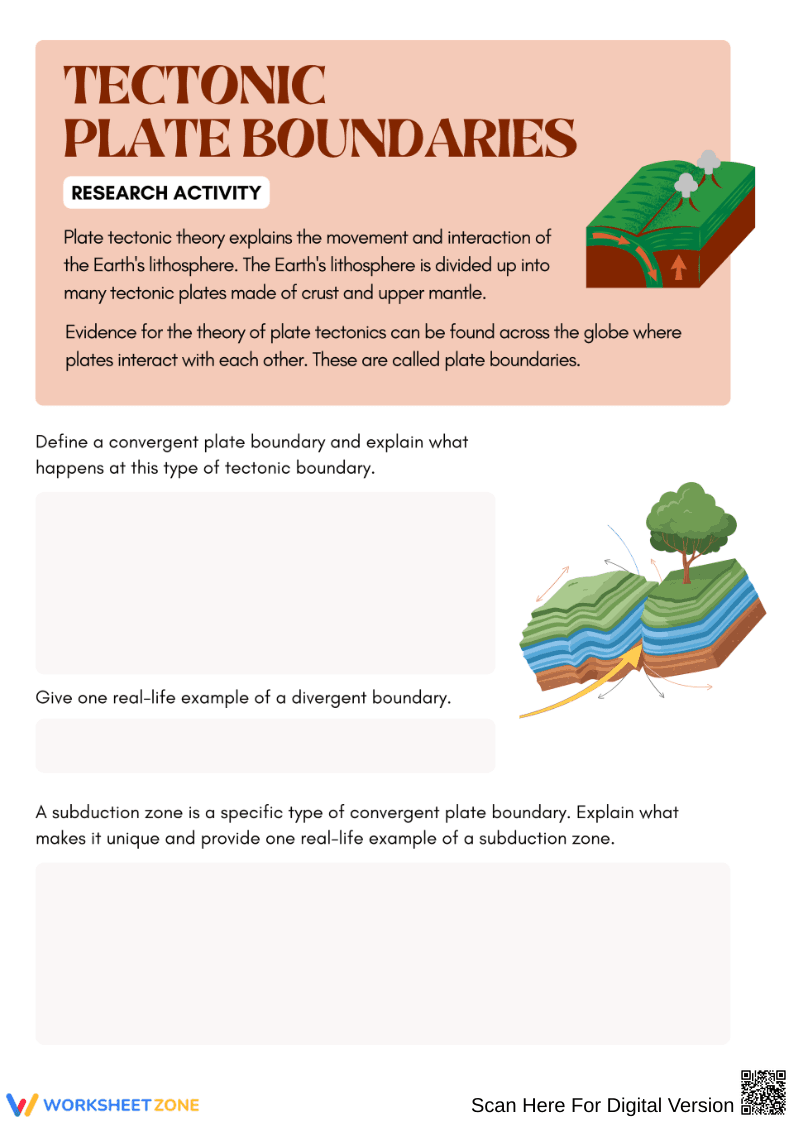
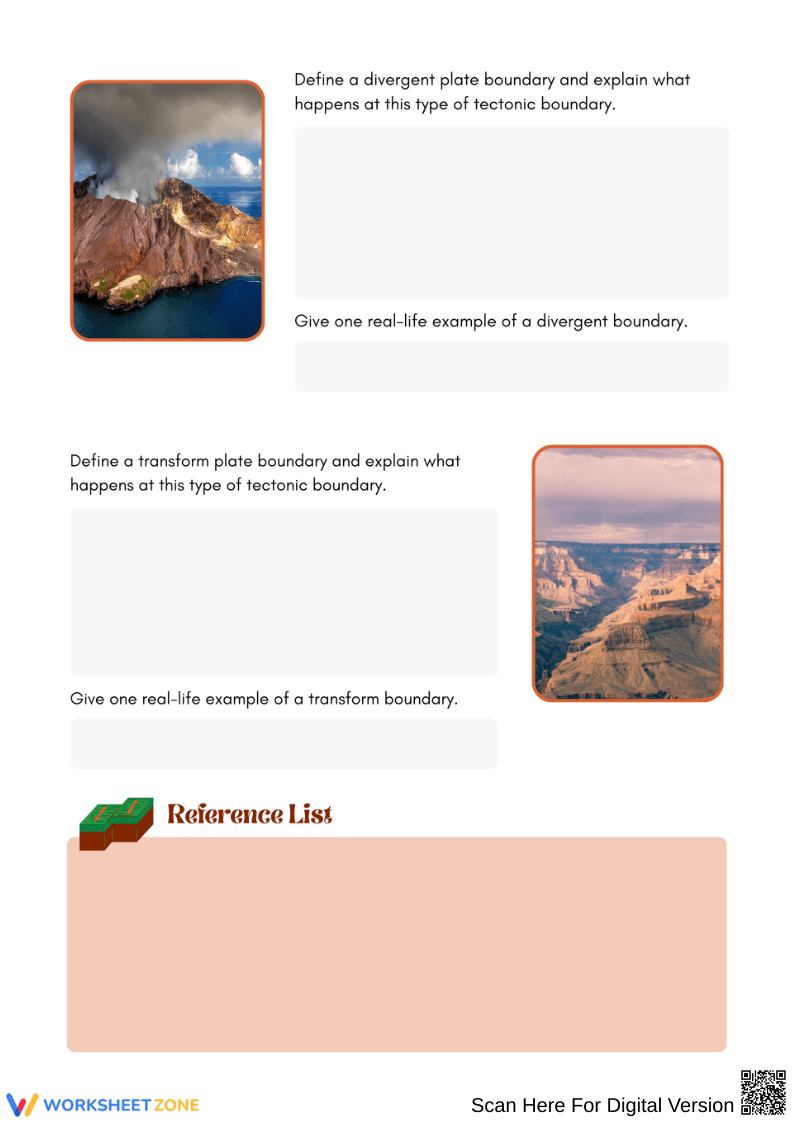
A research activity worksheet that explores the theory of plate tectonics and the different types of plate boundaries. The worksheet prompts students to define, explain, and provide examples of divergent, convergent, and subduction zones, with a focus on real-life scenarios and tectonic processes.
Why Use It:
This worksheet promotes deeper understanding of Earth science concepts, particularly plate tectonics and plate boundaries. It encourages critical thinking and research skills by asking students to define key concepts and apply them to real-world examples.
How to Use It:
• Have students define each type of plate boundary (divergent, convergent, and subduction) and explain the processes involved.
• Ask students to research and provide real-life examples of each type of boundary.
• Use this worksheet as a group activity or individual research assignment to foster learning in Earth science.
• Encourage students to use diagrams or illustrations to support their answers.
Grade Suitability:
Best suited for Grades 4-8.
• Ideal for Earth science units covering plate tectonics and Earth's structure.
• Suitable for engaging students in active learning through research and critical thinking.
Target Users:
Teachers, Earth science educators, homeschool educators, and students learning about the Earth's plate tectonics and plate boundaries.
A research activity worksheet that explores the theory of plate tectonics and the different types of plate boundaries. The worksheet prompts students to define, explain, and provide examples of divergent, convergent, and subduction zones, with a focus on real-life scenarios and tectonic processes.
Why Use It:
This worksheet promotes deeper understanding of Earth science concepts, particularly plate tectonics and plate boundaries. It encourages critical thinking and research skills by asking students to define key concepts and apply them to real-world examples.
How to Use It:
• Have students define each type of plate boundary (divergent, convergent, and subduction) and explain the processes involved.
• Ask students to research and provide real-life examples of each type of boundary.
• Use this worksheet as a group activity or individual research assignment to foster learning in Earth science.
• Encourage students to use diagrams or illustrations to support their answers.
Grade Suitability:
Best suited for Grades 4-8.
• Ideal for Earth science units covering plate tectonics and Earth's structure.
• Suitable for engaging students in active learning through research and critical thinking.
Target Users:
Teachers, Earth science educators, homeschool educators, and students learning about the Earth's plate tectonics and plate boundaries.


