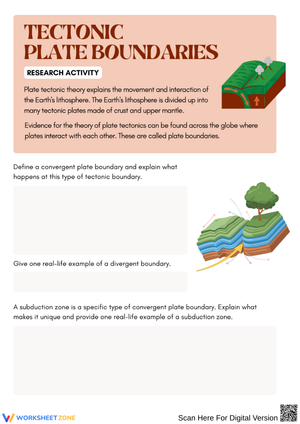
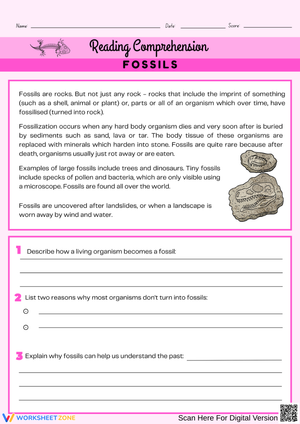
These earth and spaces worksheets for 8th grade give science teachers a print-ready set covering every major unit strand in a typical middle school Earth and Space Science course — solar system structure, Earth's layered systems, weather and climate analysis, and evidence of geological change across deep time. Each worksheet stands alone, so teachers can pull one resource for a lesson introduction, drop another into a reteach group, or hand the full set to a substitute with minimal setup.
What the Set Covers Unit by Unit
The four core strands of middle school Earth and space science each appear across these resources, letting teachers match individual worksheets to wherever the class is in the year rather than pulling unrelated review material.
- Earth's place in the universe: solar system scale and structure, orbital patterns, gravitational relationships, and how Earth fits within larger space systems.
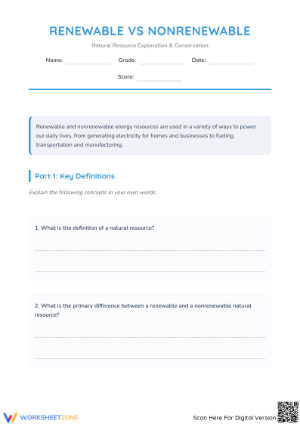
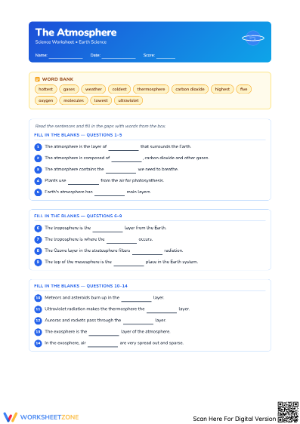
- Earth's systems: interactions among the geosphere, hydrosphere, atmosphere, and biosphere — including how a change in one system produces effects in the others.
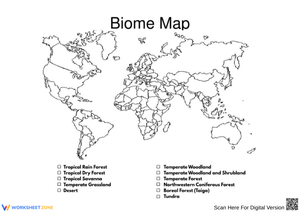
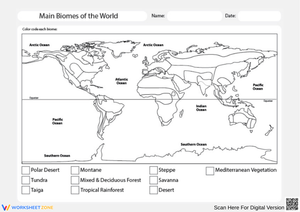
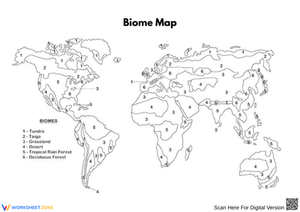
- Weather and climate: factors driving regional weather patterns, climate zone characteristics, and reading scientific evidence from charts, data sets, and maps.
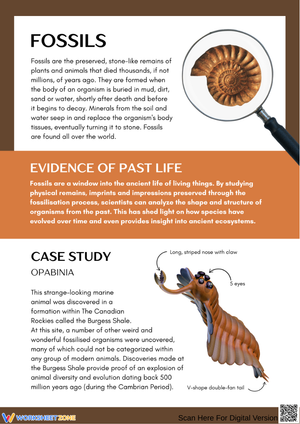
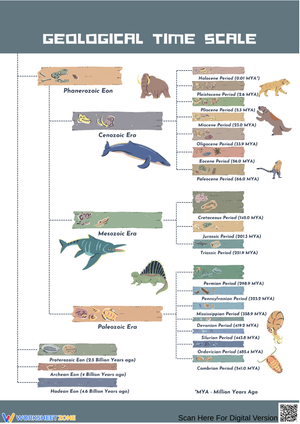
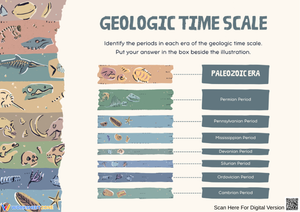
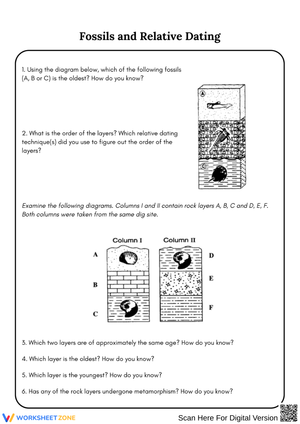
- Earth's processes and history: rock cycle pathways, plate-related landform patterns, and the geological record that reveals Earth's past.
Each worksheet targets one of these strands clearly enough that teachers can build a focused unit set rather than mixing solar system questions into a week spent on the water cycle.
Task Formats Across These Worksheets
A student who correctly labels a rock cycle diagram may still struggle to explain in writing why sedimentary rock cannot form directly from igneous rock without passing through another process first. That gap — only visible when the task type changes — is why format variety across a worksheet set matters more than sheer volume. These resources include a range of task types so different kinds of understanding become visible during the same unit.
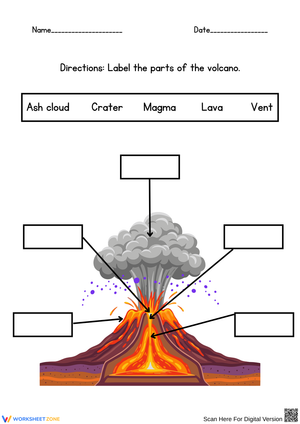
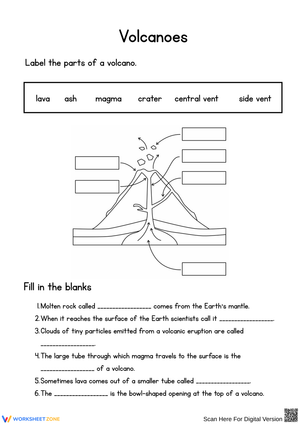
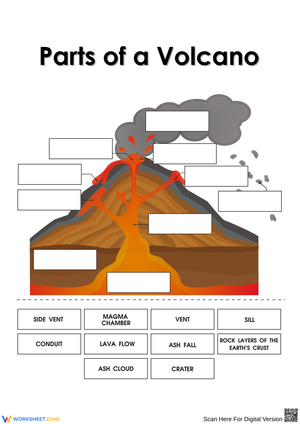
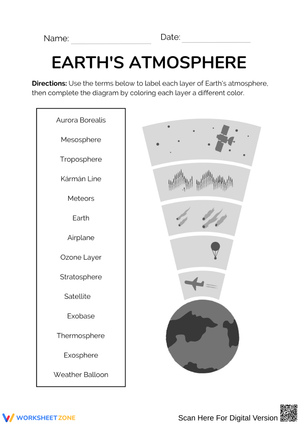
- Diagram labeling and annotation: effective for solar system models, Earth's layers, rock cycle stages, and atmospheric structure.
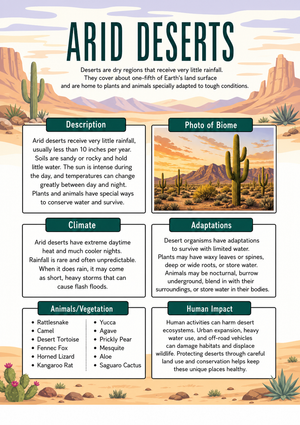
- Reading with text-dependent questions: useful for weather system topics, climate evidence passages, and Earth history content where academic vocabulary runs high.
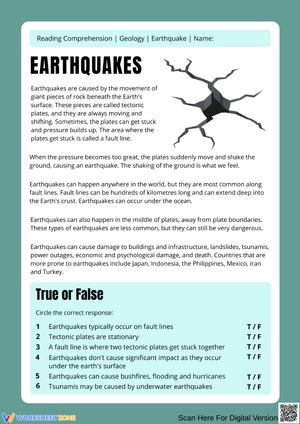
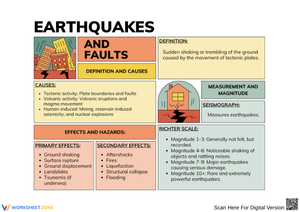
- Data and graph interpretation: strong for identifying patterns in temperature records, precipitation charts, or seismic activity maps.
- Short constructed response: targets explanation — why plates move, how the rock cycle connects to the water cycle — rather than term recognition.
- Mixed review: combines vocabulary, diagram reading, and short answer for bell ringers, pre-quiz review, or end-of-unit consolidation.
Sequencing Worksheets So Students Build Toward Explanation
A worksheet that leads with a heavy constructed-response prompt before students have activated prior knowledge tends to produce rushed, incomplete answers — not because students lack understanding, but because the task demands retrieval before relevant concepts are accessible. Grade 8 students write more accurately when the first worksheet in a sequence anchors vocabulary and visual models, a middle worksheet asks them to read evidence or interpret a diagram, and the final worksheet requires them to explain a relationship or compare two processes.
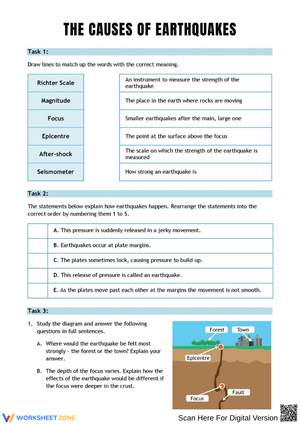
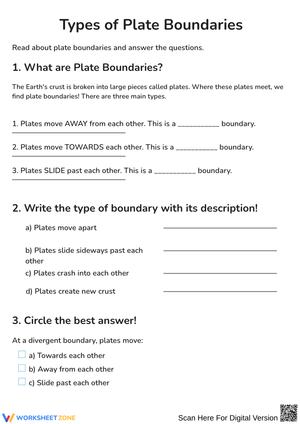
For a plate tectonics mini-unit, that progression might open with an annotated map task (identify boundary types, mark earthquake zones), continue with a data worksheet where students read a graph of seismic frequency and name the pattern, and close with a short written explanation connecting plate movement to the evidence they just analyzed. Each step prepares the one that follows, which reduces the false errors that appear when cognitive demand jumps without warning.
Fitting These Worksheets Into Your Week Without Overplanning
Having earth and spaces worksheets for 8th grade organized by unit strand gives teachers a reliable fallback for the parts of the week that resist advance planning. During whole-group instruction, one worksheet serves as guided practice immediately after direct instruction on seafloor spreading or the greenhouse effect. During station rotations, a diagram or graph worksheet becomes an independent task while the teacher runs a small group. For the Friday review block — that 20-minute stretch before the bell — a mixed-format worksheet covers more ground than reteaching from scratch.
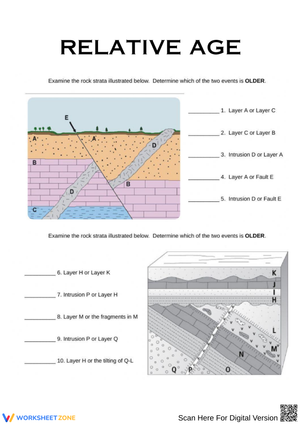
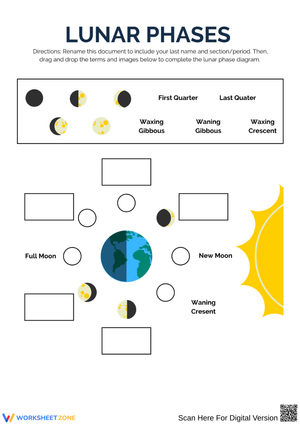
Sub plans are a genuine use case. A worksheet that students read, start, and complete without teacher walkthrough is worth more than a more elaborate activity that stalls on directions alone. Earth and space topics with strong visual components — lunar phases, rock cycle stages, solar system scale models — work especially well for independent worksheet tasks because the diagram carries enough information for students to begin without clarification.
Student Errors Worth Anticipating When You Assign These
In rock cycle work, eighth graders regularly treat the cycle diagram as a fixed sequence — they assume rock must move through every stage in order, which leads them to write that "sedimentary rock becomes metamorphic, then igneous" as though those were the only possible transitions. The arrows show conditional pathways, not an obligatory loop. Students need that distinction made explicit before they can interpret a worksheet asking them to trace a rock's possible histories rather than a single predetermined route.
Weather and climate tasks surface a different problem. Students know the textbook definitions — weather is short-term, climate is long-term — but when asked to analyze a 30-year temperature trend chart, many describe what they see as "the weather getting warmer," defaulting to the more familiar term even though the data clearly represents climate. That language slip is a conceptual gap, not a vocabulary gap. Worksheets that ask students to name the type of pattern they are analyzing — not just describe it — make this confusion visible before the unit assessment does.
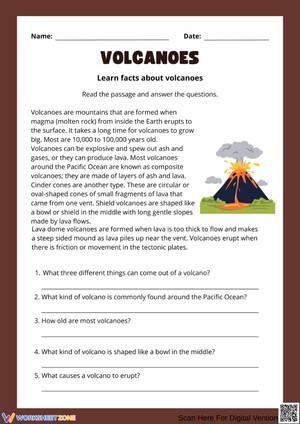
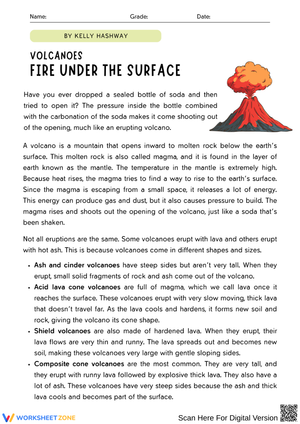
On Earth systems tasks, the misconception that appears most reliably is students treating the four systems as separate containers rather than interacting processes. They can list geosphere, hydrosphere, atmosphere, biosphere without hesitation, but when a worksheet asks them to trace how a volcanic eruption affects the atmosphere and then the biosphere, they describe each effect in isolation rather than as a chain. Written responses showing that fragmentation are worth a brief whole-class discussion — the pattern is common enough across the grade level to address before moving on.
Standard Alignment
These worksheets align to NGSS ESS1: Earth's Place in the Universe and NGSS ESS2: Earth's Systems, both introduced as major content domains at the middle school level. ESS1 asks Grade 8 students to work with orbital patterns, gravitational interactions, and scale modeling — tasks that require interpreting visual models rather than retrieving isolated facts. ESS2 focuses on how the geosphere, hydrosphere, atmosphere, and biosphere interact and change over time, which maps directly to the data analysis and constructed-response tasks throughout the set.
For teachers whose schools use state frameworks that reference but do not fully adopt NGSS, the earth and spaces worksheets for 8th grade in this collection still align to common middle school Earth science learning targets. Identifying landform processes, explaining weather system factors, and reading scientific evidence from geological records are standard Grade 8 expectations across most state frameworks regardless of their relationship to NGSS.
Adjusting the Set for Different Readiness Levels
Students who are still building science literacy — particularly those who freeze when confronted with unfamiliar academic vocabulary in a science context — gain more from starting with diagram and labeling worksheets before moving to reading-heavy tasks. Those worksheets let students work with visual information, which keeps language demand from masking actual science understanding. The diagram itself often carries enough context for those students to begin answering questions they might otherwise skip entirely.
For grade-level students, a worksheet that pairs a short diagram task with two or three data-interpretation questions and a single constructed-response prompt covers enough ground without consuming a full class period. Students who finish early handle comparison tasks well at this age — asking them to explain how the same process would look different in another geographic or geological context extends the thinking without requiring an entirely new worksheet.
When using earth and spaces worksheets for 8th grade in a reteach setting, pulling one focused worksheet rather than a mixed review keeps the session specific. A targeted worksheet on Earth's layers or ocean circulation lets a small group work through one concept together, and the written responses tell the teacher exactly where understanding breaks down — information that a general review session rarely produces with that kind of precision.
Frequently Asked Questions
What topics should 8th grade Earth and space worksheets include?
The four core areas for most Grade 8 Earth and Space Science courses are Earth's place in the universe, Earth's interacting systems, weather and climate, and geological history. Covering all four gives teachers enough range for both unit-level practice and end-of-quarter cumulative review without pulling from unrelated resources.
How do these worksheets connect to NGSS?
They align to NGSS ESS1 and ESS2, which organize middle school Earth and space content around pattern recognition, system modeling, and evidence-based explanation. Teachers working under state frameworks that reference NGSS will find the topic coverage maps closely to their standards documents.
Are these worksheets useful for standardized test preparation?
Yes, particularly the mixed-format worksheets that combine diagram reading, data interpretation, and short written response — the same variety students encounter on most Grade 8 state science assessments. Assigning those in the weeks before a summative test builds the habit of switching quickly between task types, which matters as much as content knowledge during timed assessments.
Can a teacher use one worksheet for an entire Earth and space science unit?
No single worksheet replaces a unit. Each worksheet in this set targets a focused concept or task type. The value comes from selecting several that move from recall to interpretation to explanation — that progression is what builds toward the reasoning a unit assessment actually measures.












 Interactive Worksheet Maker
 Quiz Maker
 Word Search Maker
 Crossword Puzzle Maker
 Word Scramble Generator
 Sentence Scramble Generator
 Handwriting Worksheet Generator
 Name Tracing Generator
 Fill In The Blank Generator