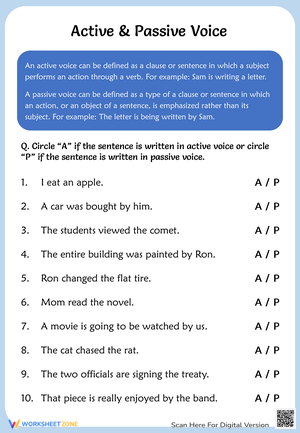
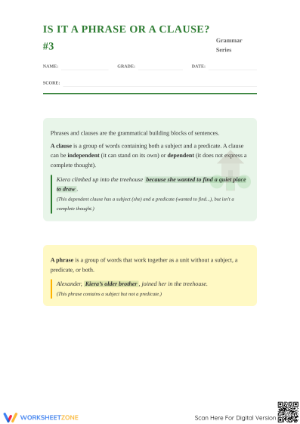
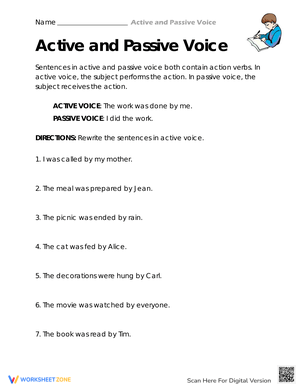
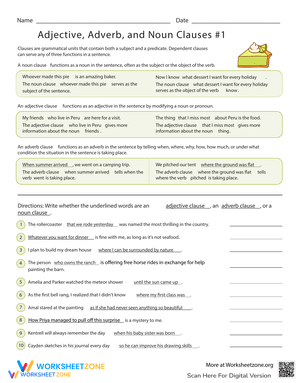
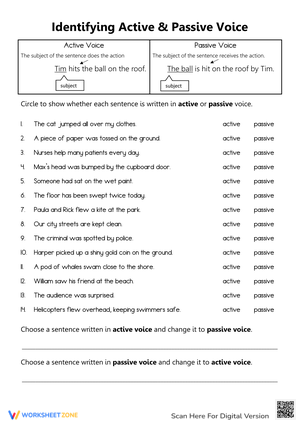
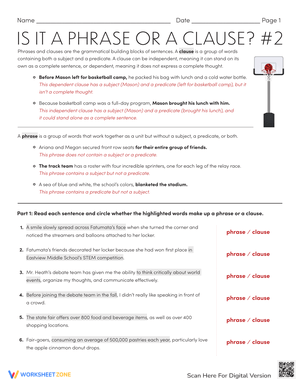
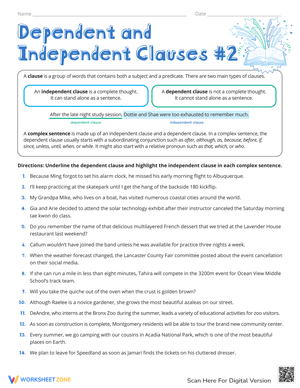
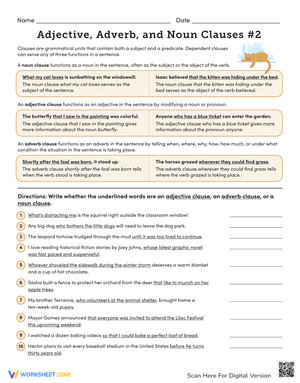
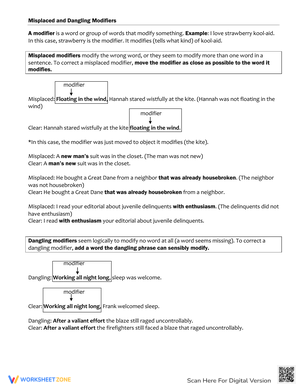
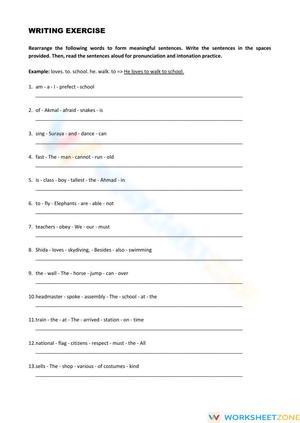
These sentence structure pdf worksheets for 8th grade give teachers something concrete to work with during the stretch of the year when grammar instruction competes with essay deadlines and reading response pressure. The set covers all four sentence types — simple, compound, complex, and compound-complex — and moves students from labeling what they see into combining and revision, which is where grammar knowledge actually transfers into writing.
Where 8th Graders Reliably Go Wrong
The most persistent error at this level is not the one teachers expect. Students who correctly label a complex sentence on a worksheet will still write "Because she wanted to prove her point." as a standalone sentence in their essay the next day. The worksheet gave them the vocabulary; it did not automatically fix the writing habit. A second common problem is the comma splice presented as a compound sentence — students learn that compound sentences join two independent clauses, and they absorb that rule, but then they produce "She studied all night, she passed the exam." without the coordinating conjunction. They can explain the rule; they drop it under the pressure of drafting.
Compound-complex sentences produce their own errors. Students often attach an additional independent clause when a dependent clause is what the meaning requires, or they correctly use a subordinating conjunction but misplace the comma — writing "She left early, although the party had just started" and "Although the party had just started she left early" interchangeably, unsure which version needs punctuation. These are the moments where clause-marking tasks pay off: when students have to underline each clause and label it before identifying the sentence type, the structure becomes visible in a way that reading the sentence as a single unit does not.
Skills Built Across the Set
Each worksheet targets a specific layer of sentence structure knowledge rather than asking students to handle every concept at once. The progression across the set moves from recognition into production:
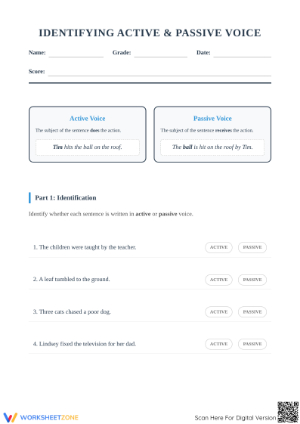
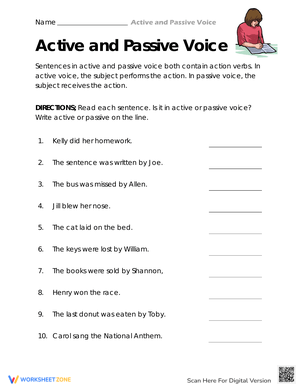
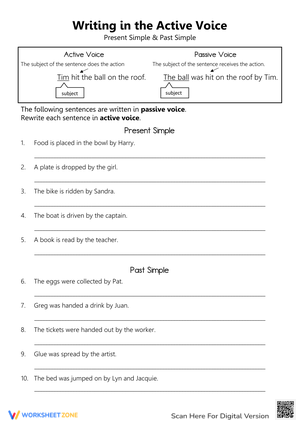
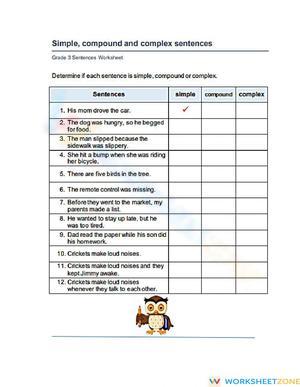
- Identifying sentence types — students read a sentence, mark the clauses, and label the structure as simple, compound, complex, or compound-complex.
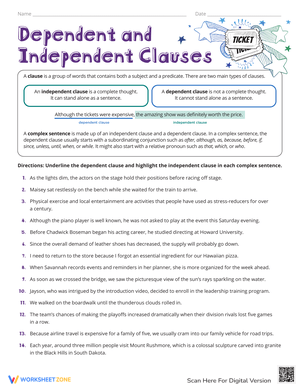
- Clause marking and conjunction work — students underline independent and dependent clauses, circle coordinating and subordinating conjunctions, and note where punctuation shifts accordingly.
- Sorting and categorizing — students place example sentences into labeled categories or match clause fragments to their correct structural homes; this format runs well at small-group tables during intervention blocks.
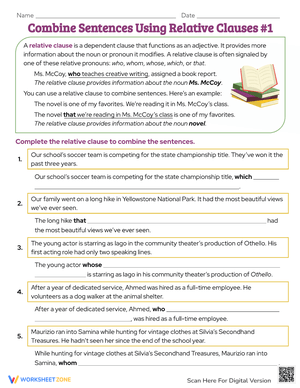
- Sentence combining — students take two or three short ideas and merge them into a target structure, building fluency alongside structural awareness.
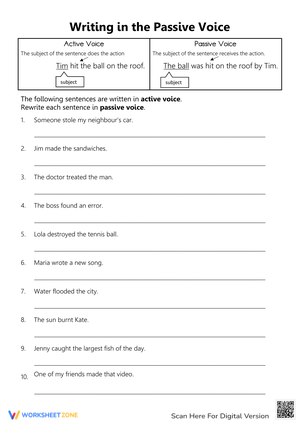
- Paragraph revision — students receive a passage written entirely in simple sentences and rewrite it with deliberate variety, which makes sentence structure feel like a writer's decision rather than a grammar test item.
The revision tasks are worth noting separately. Each worksheet that asks students to improve a repetitive paragraph produces far more evidence of genuine understanding than a matching exercise does. Teachers who want formative information about where students actually are will get more diagnostic data from the revision and combining worksheets than from identification-only tasks.
Fitting These Worksheets Into Your Teaching Week
The most practical entry point is the bell-ringer. Projecting two or three sentences from an identification worksheet at the start of class and asking students to mark clauses on their copy takes about eight minutes and requires nothing extra. That kind of repeated low-stakes practice builds automatic clause recognition more effectively than a single forty-minute lesson can.
After a mini-lesson on compound-complex sentences, assign one focused combining worksheet the same day rather than waiting until the following week. Students benefit from practicing the pattern while instruction is still fresh; distributing that practice across multiple days works well for review but not for initial consolidation. For stations, sentence structure pdf worksheets for 8th grade separate cleanly by task type — identification at one table, combining at another, paragraph revision at a third — so groups rotate through different cognitive demands inside the same period.
Sub-plan use is a genuine practical strength. A clearly labeled PDF left in a sub folder with a brief direction sheet runs itself. Students can check identification tasks with an answer key, or the sub can read answers aloud at the close of class. That reliability matters when a teacher is out and needs grammar review to actually happen.
Adjusting the Work for a Mixed-Ability Class
Sentence structure pdf worksheets for 8th grade work across a wider ability range than most grammar resources because the task format — not the content — is what changes for different learners. A student who still struggles to locate the verb in a sentence is not ready to categorize compound-complex structures; start that student with clause-marking on simple and compound sentences only, using sentence stems that anchor the independent clause: "The team worked hard, and ___." Students who have solid clause awareness but write in nothing but simple sentences need the revision tasks — specifically, a paragraph from their own recent writing, handed back with a prompt to add one compound sentence and one complex sentence before resubmission.
For students who grasp all four sentence types quickly, the challenge is purposeful stylistic control. Ask them to rewrite the same paragraph three ways: once using only simple and compound sentences, once leaning on complex sentences with front-loaded dependent clauses, and once mixing all types for rhythm. That kind of task stops grammar from feeling like a labeling exercise and starts it feeling like a craft decision — which is exactly what strong 8th grade writing instruction needs to do.
Standard Alignment
These worksheets address CCSS.ELA-Literacy.L.8.1, which requires 8th graders to demonstrate command of grammar and usage with particular attention to sentence structure, clauses, and punctuation conventions. The clause-marking and sentence-combining tasks directly support the standard's expectation that students not only recognize grammatical structures but apply them accurately in writing. The paragraph revision worksheets also connect L.8.1 to CCSS.ELA-Literacy.W.8.5, which addresses revising and editing as part of the writing process — making it reasonable to pull these resources during a writing unit rather than reserving them for a standalone grammar block.
Frequently Asked Questions
Do these worksheets work without a lesson first, or do students need prior instruction?
They work best after direct instruction, particularly for compound-complex sentences and clause punctuation rules. Identification worksheets can double as pre-assessment tools before teaching begins, but most students need at least one explicit lesson on dependent clauses before the combining and revision tasks make sense. Using a combining worksheet before any teaching on subordination tends to frustrate students who don't yet know what a dependent clause is — that frustration is not productive struggle; it's just confusion.
How do I decide which worksheet to give a student when the class is at very different places?
Look at recent writing first. If a student produces fragments or comma splices, start with clause-marking identification before moving to combining. If the writing shows simple sentences but no variety, go straight to combining or paragraph revision. These resources are not meant to be worked through from easiest to hardest in a fixed sequence — they are meant to match the specific gap you are already seeing in student work.
Are these useful for standardized test preparation?
The mixed-review worksheets align with the editing and revision questions that appear on state ELA assessments at this grade level. Sentence structure pdf worksheets for 8th grade that include clause identification, punctuation correction, and sentence combining address the same skills tested in the language and editing sections of most standards-based assessments. Running one mixed-review worksheet per week in the month before a benchmark gives students consistent low-stakes exposure to those item types without turning every class period into test practice.












 Interactive Worksheet Maker
 Quiz Maker
 Word Search Maker
 Crossword Puzzle Maker
 Word Scramble Generator
 Sentence Scramble Generator
 Handwriting Worksheet Generator
 Name Tracing Generator
 Fill In The Blank Generator