


























Views
Downloads

Phrases and Clauses Worksheet | Grade 7 ELA Printable
Paste this activity's link or code into your existing LMS (Google Classroom, Canvas, Teams, Schoology, Moodle, etc.).
Students can open and work on the activity right away, with no student login required.
You'll still be able to track student progress and results from your teacher account.
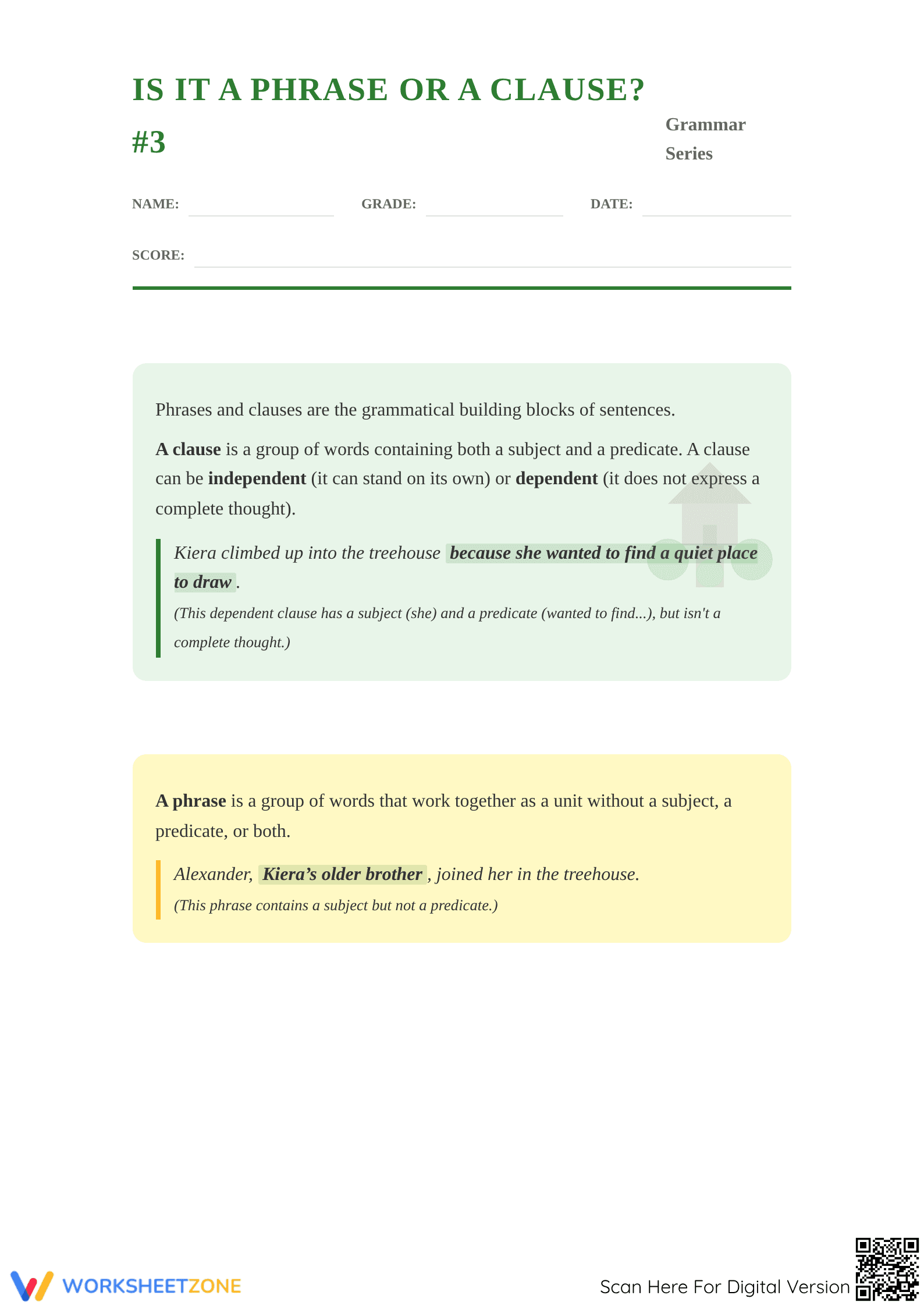
This comprehensive grammar worksheet helps middle school students master the fundamental differences between phrases and clauses. By progressing from basic identification to original sentence construction, learners build the syntactic awareness required for advanced writing and reading comprehension. The structured format ensures students confidently grasp these essential sentence building blocks.
At a Glance
- Grade: 7 · Subject: ELA
- Standard:
CCSS.ELA-LITERACY.L.7.1.A— Explain the function of phrases and clauses- Skill Focus: Identifying and writing phrases and clauses
- Format: 5 pages · 24 problems · Answer key included · PDF
- Best For: Independent practice and grammar review
- Time: 25–35 minutes
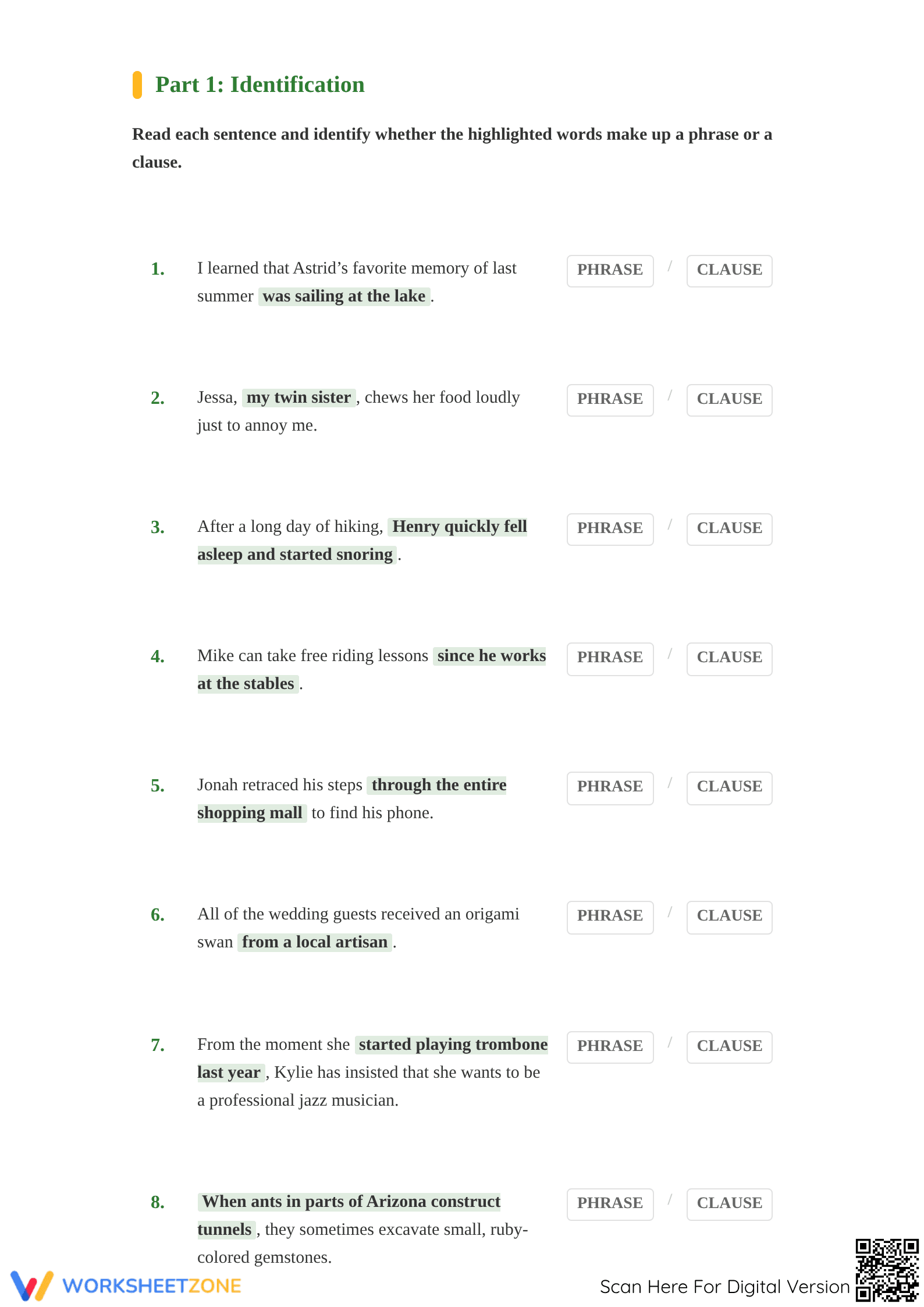
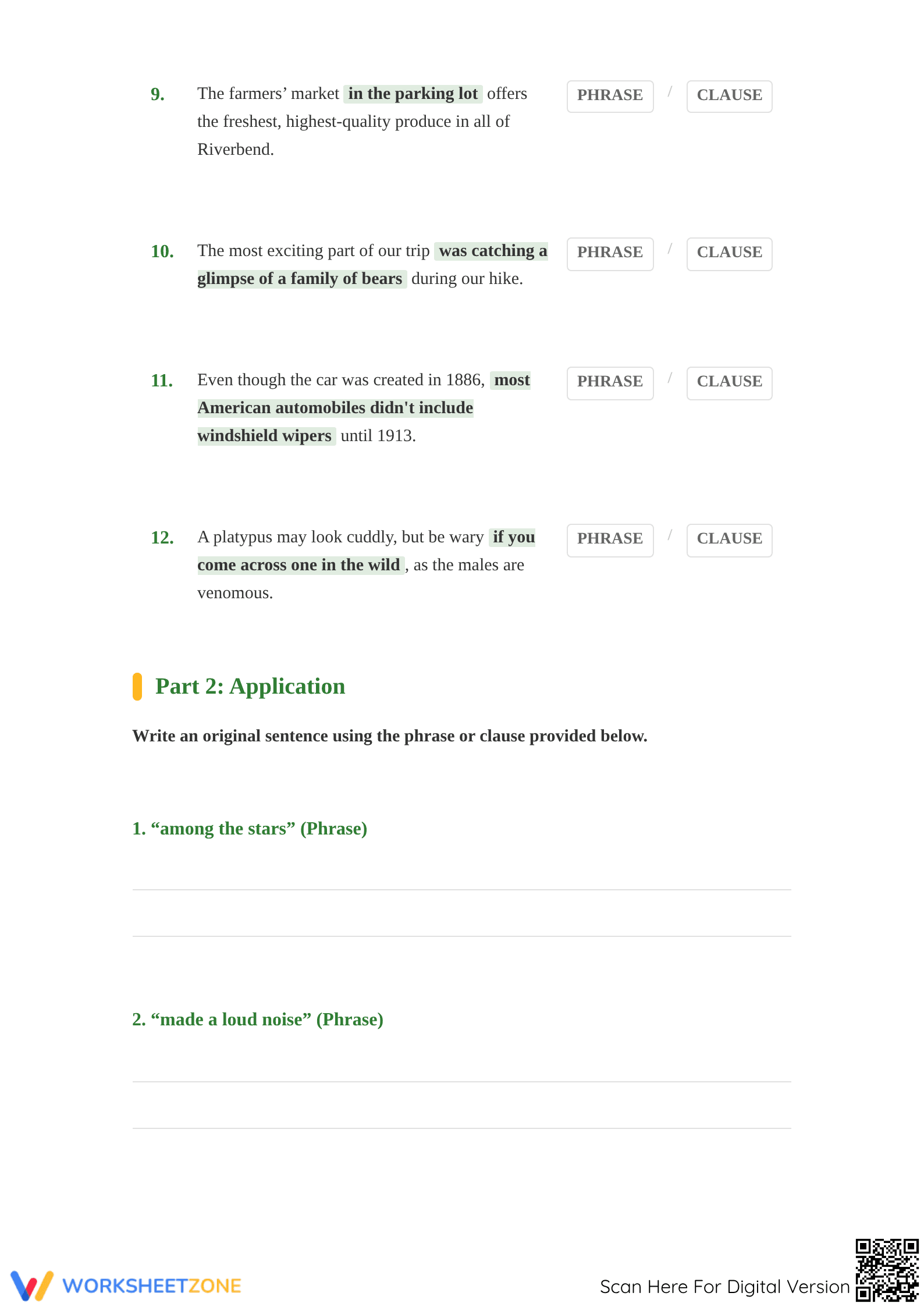
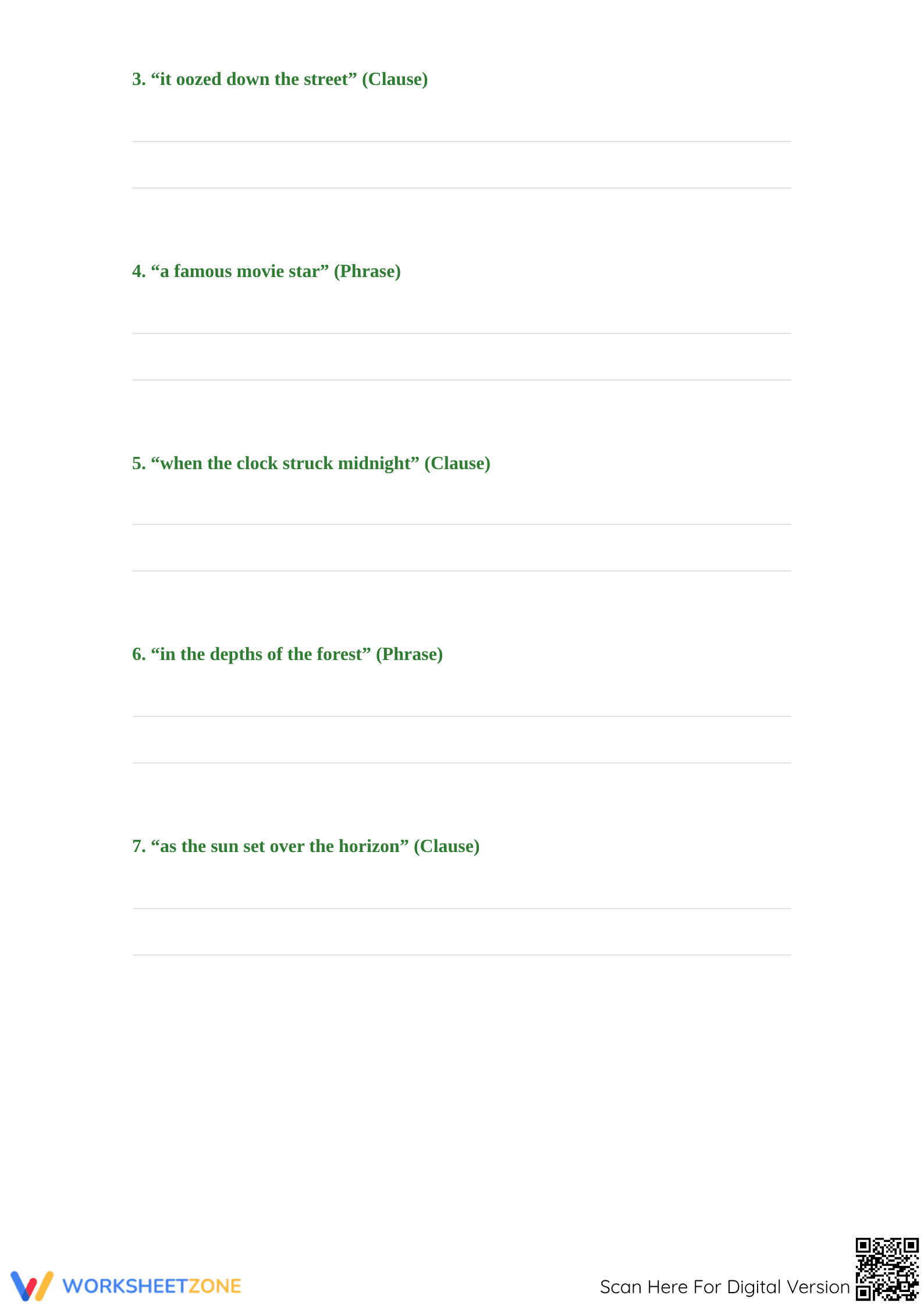
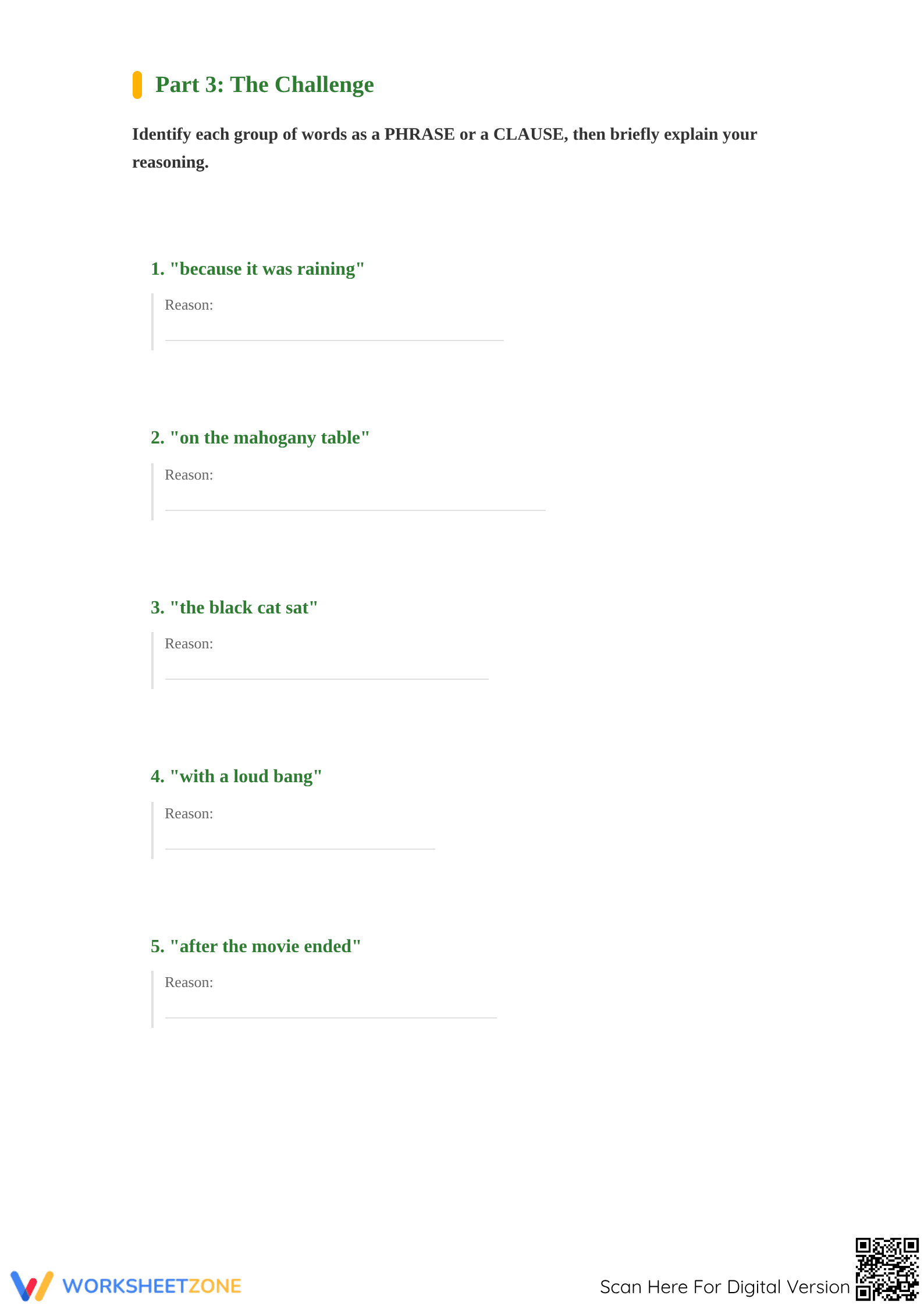
This five-page packet features 24 distinct tasks designed to solidify grammar mechanics. It begins with a clear reference guide defining independent clauses, dependent clauses, and phrases, complete with highlighted examples. The practice is divided into three distinct parts: multiple-choice identification, sentence application, and a written reasoning challenge. A complete five-page answer key is provided for quick grading.
Skill Progression
- Guided practice: Part 1 features 12 sentences where students identify whether a highlighted group of words is a phrase or a clause, relying on the provided definitions.
- Supported practice: Part 2 requires students to write 7 original sentences incorporating specific provided phrases or clauses, applying their structural knowledge.
- Independent practice: Part 3 challenges students with 5 items where they must categorize word groups and write out their reasoning.
This gradual-release approach moves learners from simple recognition to higher-order application and explanation.
Standards Alignment
This resource is directly aligned to CCSS.ELA-LITERACY.L.7.1.A: Explain the function of phrases and clauses in general and their function in specific sentences. It also supports broader language standards by requiring students to demonstrate command of standard English grammar when writing. Both standard codes can be copied directly into lesson plans, IEP goals, or district curriculum mapping tools.
How to Use It
Deploy this packet during the "You Do" phase of a grammar lesson, immediately following direct instruction on sentence structure. It also serves as an excellent homework assignment or station activity. Expect students to complete the work in 25 to 35 minutes. As a formative assessment tip, review students' written explanations in Part 3 to quickly identify misconceptions about subjects and predicates before moving on to complex sentence diagramming.
Who It's For
This resource is designed for 6th, 7th, and 8th-grade general education students needing targeted grammar reinforcement. For students requiring accommodations, teachers can reduce the writing load in Part 2 or allow them to complete Part 3 orally. Pair this worksheet with a mentor text analysis activity where students highlight phrases and clauses in published literature.
Mastering syntactic structures is a critical component of adolescent literacy development. When students practice CCSS.ELA-LITERACY.L.7.1.A to explain the function of phrases and clauses, they develop the mechanical foundation necessary for complex writing and reading comprehension. According to Fisher & Frey (2014), explicit grammar instruction that moves beyond rote memorization into applied writing significantly improves students' ability to construct varied, sophisticated sentences. By requiring learners to not only identify these structures but also generate original sentences and articulate their reasoning, this resource bridges the gap between passive recognition and active application. Structured practice with these foundational elements reduces sentence fragments and run-ons, directly impacting overall writing quality. This targeted approach ensures students internalize the rules of standard English, equipping them with the tools needed for high school and college-level communication tasks.


