


























Views
Downloads

Grade 8 Active and Passive Voice — Printable Worksheet
Paste this activity's link or code into your existing LMS (Google Classroom, Canvas, Teams, Schoology, Moodle, etc.).
Students can open and work on the activity right away, with no student login required.
You'll still be able to track student progress and results from your teacher account.
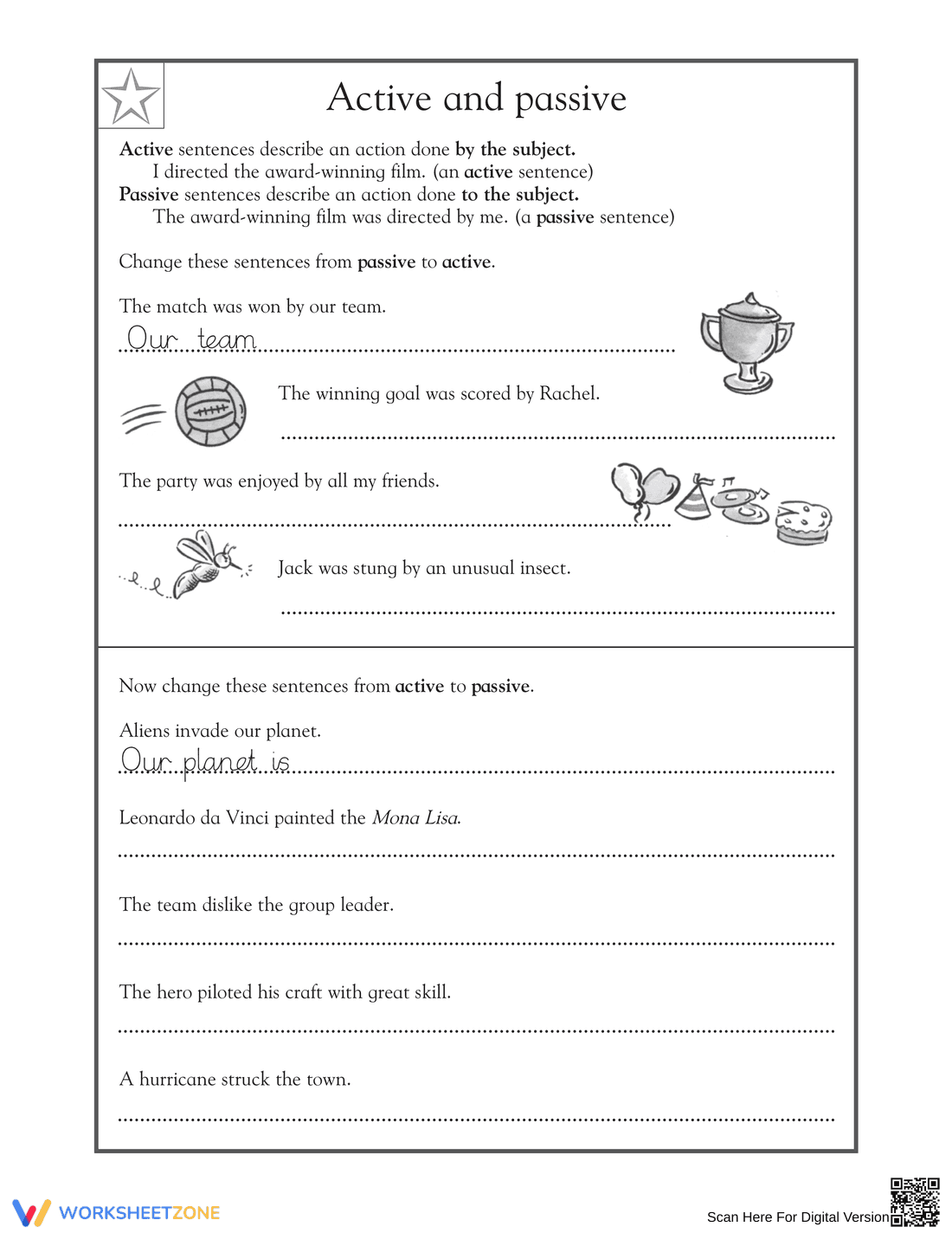
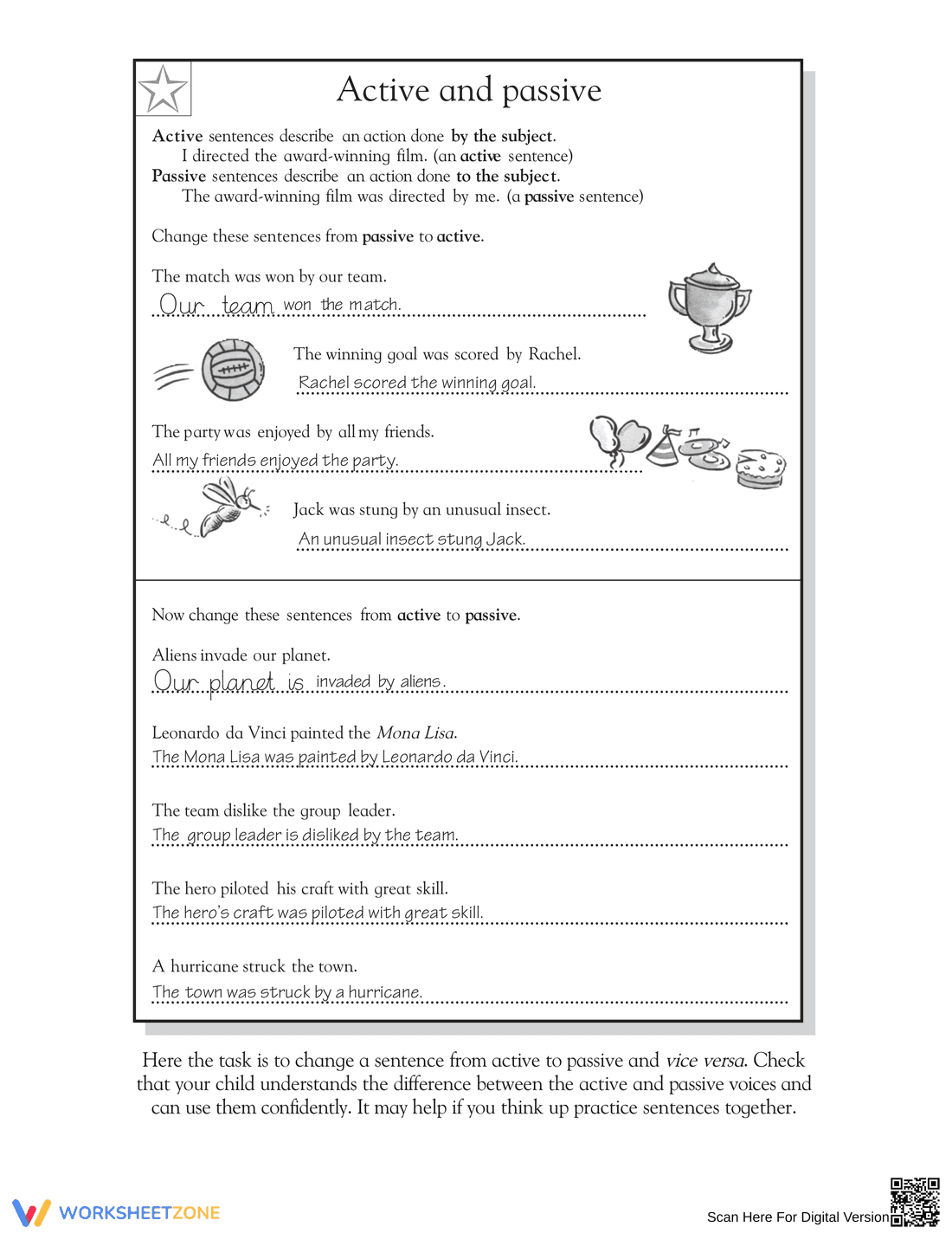
This ready-to-use worksheet helps middle school students master the active and passive voice. By practicing sentence conversions in both directions, learners develop stronger syntactic control and stylistic awareness. Students will identify the subject and action in each sentence, rewriting them to achieve the desired voice and improve overall writing clarity.
At a Glance
- Grade: 8 · Subject: ELA
- Standard:
CCSS.ELA-LITERACY.L.8.1.B— Form and use verbs in active and passive voice- Skill Focus: Active and passive voice
- Format: 1 page · 9 problems · PDF
- Best For: Independent practice or sub plans
- Time: 15–20 minutes
This single-page resource features a clear introductory guide defining both active and passive sentences with examples. The worksheet is divided into two main sections. The first section requires students to convert four passive sentences into the active voice. The second section challenges them to rewrite five active sentences into the passive voice. Partial sentence frames are provided for the first problem in each section to scaffold the learning process.
This worksheet is designed for immediate classroom implementation with zero teacher preparation required.
- Print (1 minute): The single-page layout is optimized for quick, black-and-white copying.
- Distribute (1 minute): Hand out to students as a bell-ringer, independent assignment, or homework task.
- Review (5 minutes): Go over the answers as a class to reinforce the grammatical concepts.
With a total prep time of under two minutes, this resource is an ideal addition to any emergency sub plan or last-minute lesson adjustment.
This resource is directly aligned to CCSS.ELA-LITERACY.L.8.1.B: Form and use verbs in the active and passive voice. It also supports general language progression by encouraging students to choose language that expresses ideas precisely and concisely. Both standard codes can be copied directly into lesson plans, IEP goals, or district curriculum mapping tools.
Deploy this worksheet during the "You Do" phase of a grammar lesson, immediately following direct instruction on sentence structures. Alternatively, use it as a formative assessment tool at the end of a writing unit to ensure students can manipulate voice effectively. While students work, observe whether they correctly identify the true subject performing the action, which is a common stumbling block. Expected completion time is 15 to 20 minutes.
This practice sheet is designed for 6th through 9th-grade general education students, with a sweet spot at the 8th-grade level. The built-in definitions and modeled examples provide natural differentiation for students who need a quick refresher before beginning the task. Pair this worksheet with a mentor text analysis activity where students highlight active and passive sentences in published writing.
Mastering syntactic flexibility is a critical component of adolescent literacy. According to Fisher & Frey (2014), explicit grammar instruction combined with immediate, targeted practice significantly improves students' ability to manipulate sentence structures for specific rhetorical effects. This worksheet targets CCSS.ELA-LITERACY.L.8.1.B, requiring students to form and use verbs in active and passive voice. By converting sentences between the two voices, learners internalize the mechanical differences and understand how voice impacts tone and clarity. The structured repetition provided in this resource ensures that students move beyond simple identification and develop the cognitive automaticity needed to apply these skills in their own independent writing. Consistent practice with these grammatical transformations builds the foundational language control necessary for advanced high school composition and college-level analytical writing.


