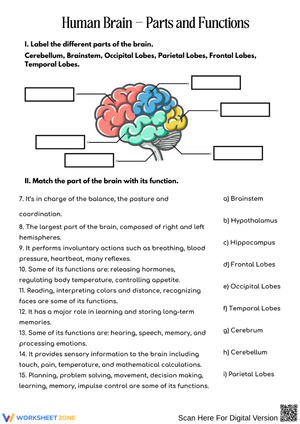
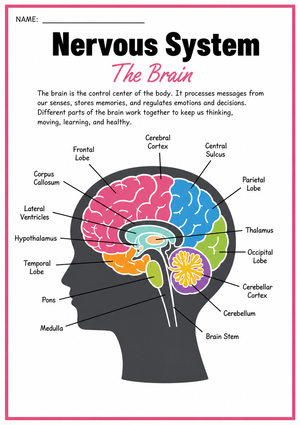
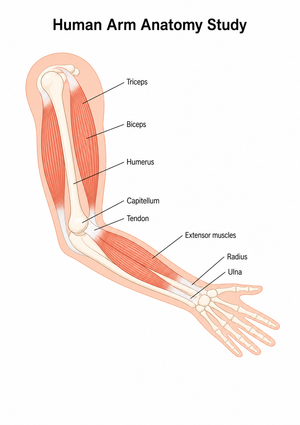
These anatomy worksheets for 7th grade give life science teachers a print-ready set built around the major human body systems covered in most grade 7 curricula. Formats vary across the set—labeling diagrams, vocabulary matching, cloze notes, and short reading passages with comprehension questions—so the resources carry a unit from day one introduction through end-of-unit review. Teachers pull individual worksheets to fit a specific lesson objective or use them in sequence to build cumulative understanding across a multi-week body systems unit.
Body Systems and Skills Across the Set
Each worksheet focuses on one system or one discrete skill within a system. That narrow scope matters at this grade level because 7th graders are often encountering formal body systems terminology for the first time, and asking them to track multiple systems simultaneously produces surface memorization rather than durable understanding of structure and function. The systems covered include:
- Skeletal system: identifying major bones by name, understanding mechanical functions such as support and protection, and connecting bone structure to movement.
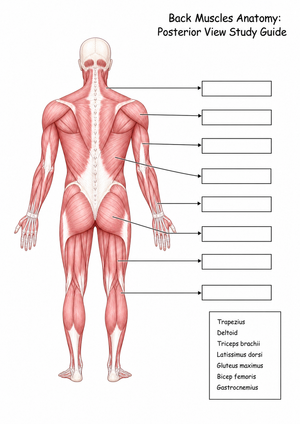
- Muscular system: naming major muscle groups, distinguishing voluntary from involuntary muscle, and explaining how muscles work with bones to produce motion.
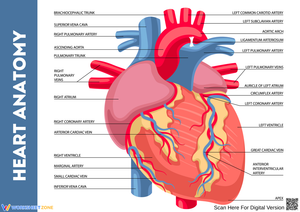
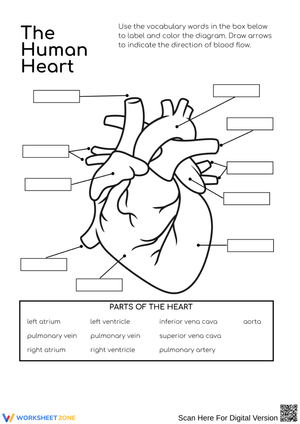
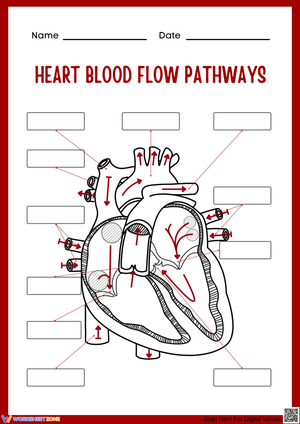
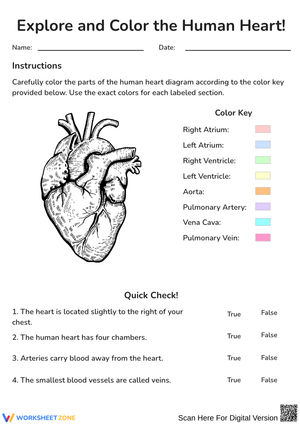
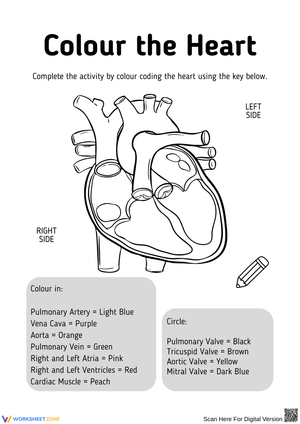
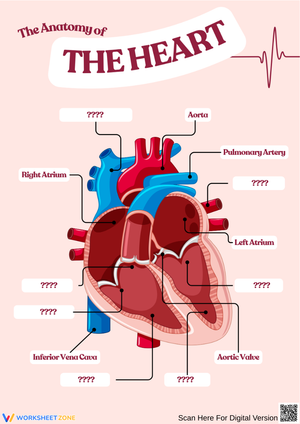
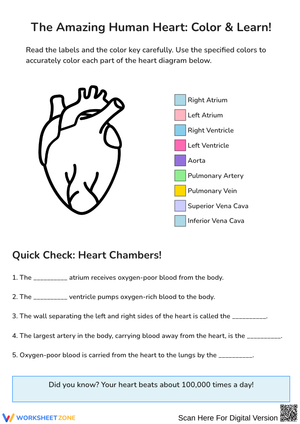
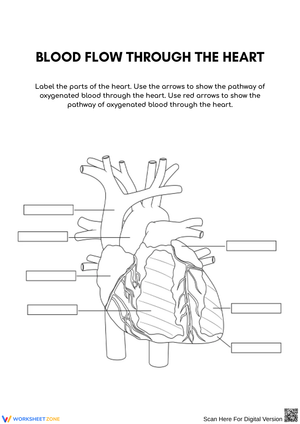
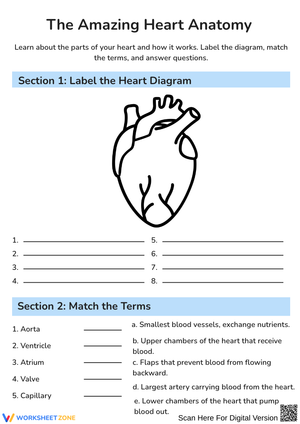
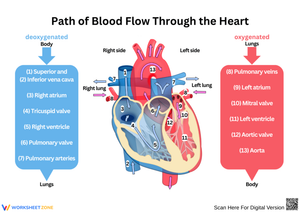
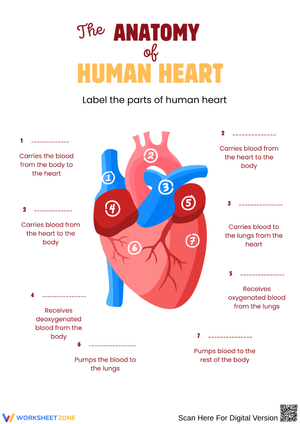
- Circulatory system: tracing blood flow through the heart and major vessels, identifying arteries versus veins, and explaining how blood transports oxygen and nutrients to body tissues.
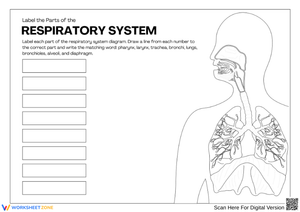
- Respiratory system: labeling air pathways and lung structures, describing gas exchange at the alveoli in grade-appropriate language, and connecting breathing to circulatory function.
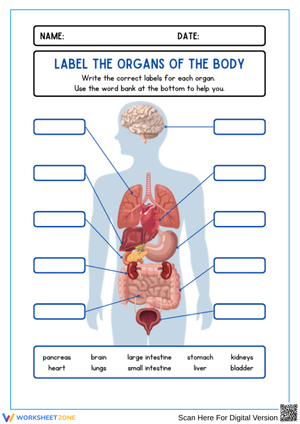
- Digestive system: sequencing how food moves from mouth to large intestine and naming the organs responsible for each stage of breakdown.
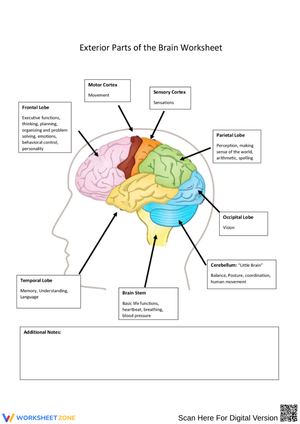
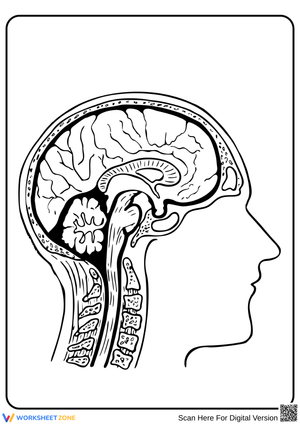
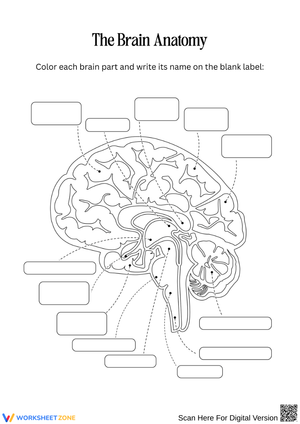
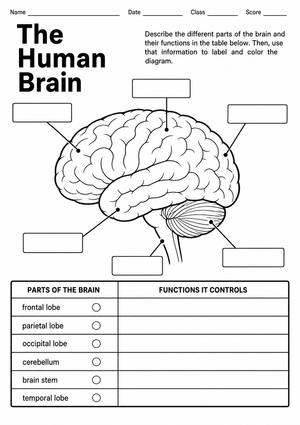
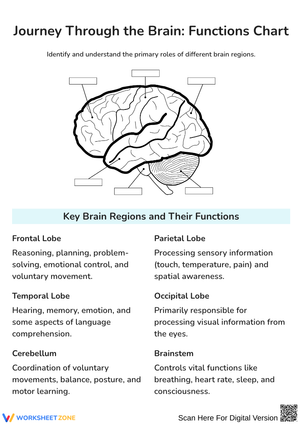
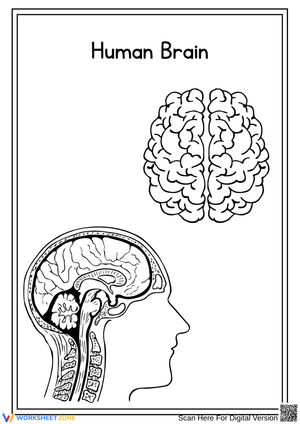
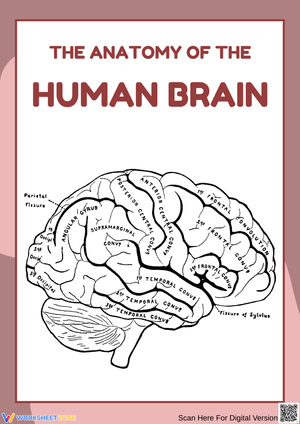
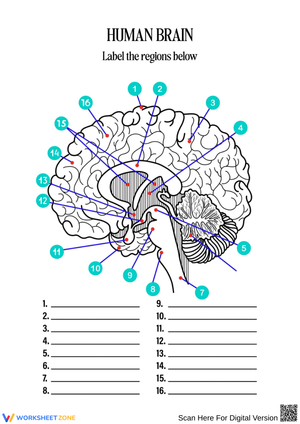
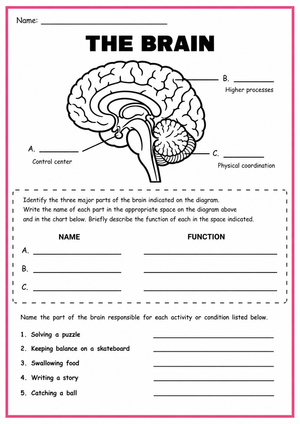
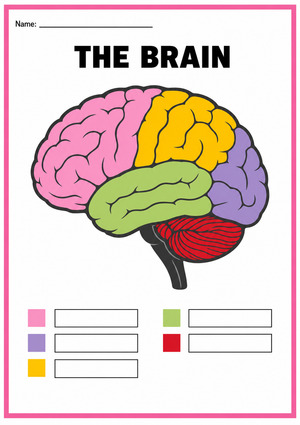
- Nervous system: identifying the brain, spinal cord, and peripheral nerves, and tracing how signals coordinate the body's response to internal and external stimuli.
- Integumentary system: understanding the skin's protective function and how it interacts with other systems during temperature regulation and immune response.
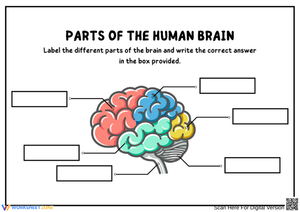
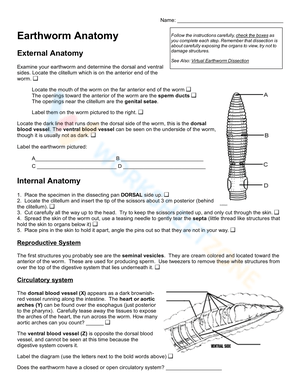
The task formats themselves serve different instructional purposes beyond just covering content. Labeling worksheets work early in a unit when students need to attach names to structures before they can discuss function with any precision. Matching and cloze tasks reinforce vocabulary after instruction without requiring long written responses—useful for students who struggle with open-ended writing during a content-heavy science block. Reading passages with comprehension questions build scientific literacy alongside body system knowledge. Teachers who use all four task types across a unit find that students arrive at assessments with both vocabulary and conceptual understanding rather than one at the expense of the other.
Mistakes Students Make That These Worksheets Help You Catch
Anatomy at the 7th grade level generates predictable errors in the same places, year after year. The circulatory system produces the most consistent confusion: students regularly reverse the roles of arteries and veins. Even students who correctly memorize "arteries carry blood away from the heart" will flip that answer on a diagram when they see vessels drawn leaving and returning to the heart without a color cue distinguishing oxygenated from deoxygenated blood. That error tells teachers the student learned the definition as isolated vocabulary rather than as a spatial and functional concept—two very different kinds of knowledge.
The digestive system brings a different problem. Ask a class where digestion begins, and most students write "the stomach." They know the stomach does something significant, so it anchors their mental model of the entire process. Worksheets that require students to sequence digestion starting from the mouth—naming the salivary glands and mechanical breakdown before reaching the stomach—push back against that assumption in a way that reviewing a vocabulary list does not. A third recurring error appears on nervous system tasks: students treat "the brain" as the complete answer to every question about nervous system function. Ask them to trace a signal from stimulus to response, and the vagueness of those answers reveals how little structural specificity sits underneath a correct-sounding general statement.
Fitting These Worksheets Into Your Lesson Plans
These resources work in short windows as well as longer blocks. A labeling worksheet takes 8 to 12 minutes at the start of class—long enough to be substantive, short enough to leave time for direct instruction or a lab follow-up. For teachers who use bell ringers, projecting the diagram while students mark their printed copy reduces transition time and keeps the class on task from the first minute of the period.
Station rotations are a natural structure for the anatomy worksheets for 7th grade format. Placing one body system worksheet at each table station and rotating groups every 12 to 15 minutes covers multiple systems in a single period without requiring a long whole-class lecture. That setup also surfaces where students are struggling—when one station slows consistently across groups, that system needs more direct instruction before the assessment rather than another independent practice assignment.
Sub plans are another strong use case. Reading passage worksheets with comprehension questions give a substitute a self-contained lesson that does not require knowledge of where the class currently is in the unit. Teachers who keep a few of these worksheets in their sub folder avoid the "they just watched a video" report that follows most unplanned absences in a science class.
Adjusting the Set for Different Readiness Levels
When evaluating anatomy worksheets for 7th grade resources for a heterogeneous class, the distinction between format difficulty and content difficulty matters. A student who genuinely understands the circulatory system but struggles with dense reading will perform very differently on a labeling worksheet than on a passage-based one. The visual formats in this set—labeling and matching—give lower-readiness students a clear entry point to demonstrate what they actually know about structure and function without the reading demand obscuring that knowledge from the teacher's view.
For students who move through worksheets quickly and need more rigor, the short-answer synthesis questions that close each worksheet require genuine reasoning rather than recall. A question like "Explain how the respiratory and circulatory systems work together to move oxygen from outside air to a muscle cell" typically produces a one-sentence answer from most students. High-readiness students can be held to a standard of two to three precise sentences that name specific structures—alveoli, capillaries, red blood cells—and explain the direction and mechanism of exchange. Teachers can also pair two related system worksheets and ask advanced students to annotate both with cross-system connection notes, identifying where the two systems physically or functionally interact at a named location in the body.
Frequently Asked Questions
What body systems do these 7th grade anatomy worksheets cover?
The set addresses all seven systems typically required in middle school life science: skeletal, muscular, circulatory, respiratory, digestive, nervous, and integumentary. Each worksheet targets one system with a specific task type—labeling, matching, cloze, short reading, or review—so teachers assign individual worksheets to reinforce a particular lesson without committing to a fixed sequence across the whole unit.
Are these worksheets formatted for standard school printing?
Yes. Each worksheet uses black-and-white formatting that copies cleanly on standard school copiers. Diagrams are sized so that label lines are readable and structures are visually distinct, which matters when students are writing directly on the worksheet rather than working from a projected image on a shared screen.
Do the worksheets come with answer keys?
Each worksheet includes a complete answer key. For labeling tasks, the key shows accepted label placement. For matching and cloze, answers are unambiguous. For short-answer questions, the key includes sample responses at the expected grade-level depth, which helps teachers calibrate grading consistently across multiple class periods.
How do these worksheets fit into a full body systems unit?
Most teachers use labeling worksheets early in each system's instruction to build structure recognition, then assign matching and cloze tasks mid-unit to reinforce vocabulary, and close with reading passages and review tasks before the unit assessment. The anatomy worksheets for 7th grade format supports that flexible sequence because each worksheet stands alone—teachers can insert, reorder, or skip individual worksheets based on where the class actually is, rather than being locked into a fixed packet progression.












 Interactive Worksheet Maker
 Quiz Maker
 Word Search Maker
 Crossword Puzzle Maker
 Word Scramble Generator
 Sentence Scramble Generator
 Handwriting Worksheet Generator
 Name Tracing Generator
 Fill In The Blank Generator