




























Views
Downloads
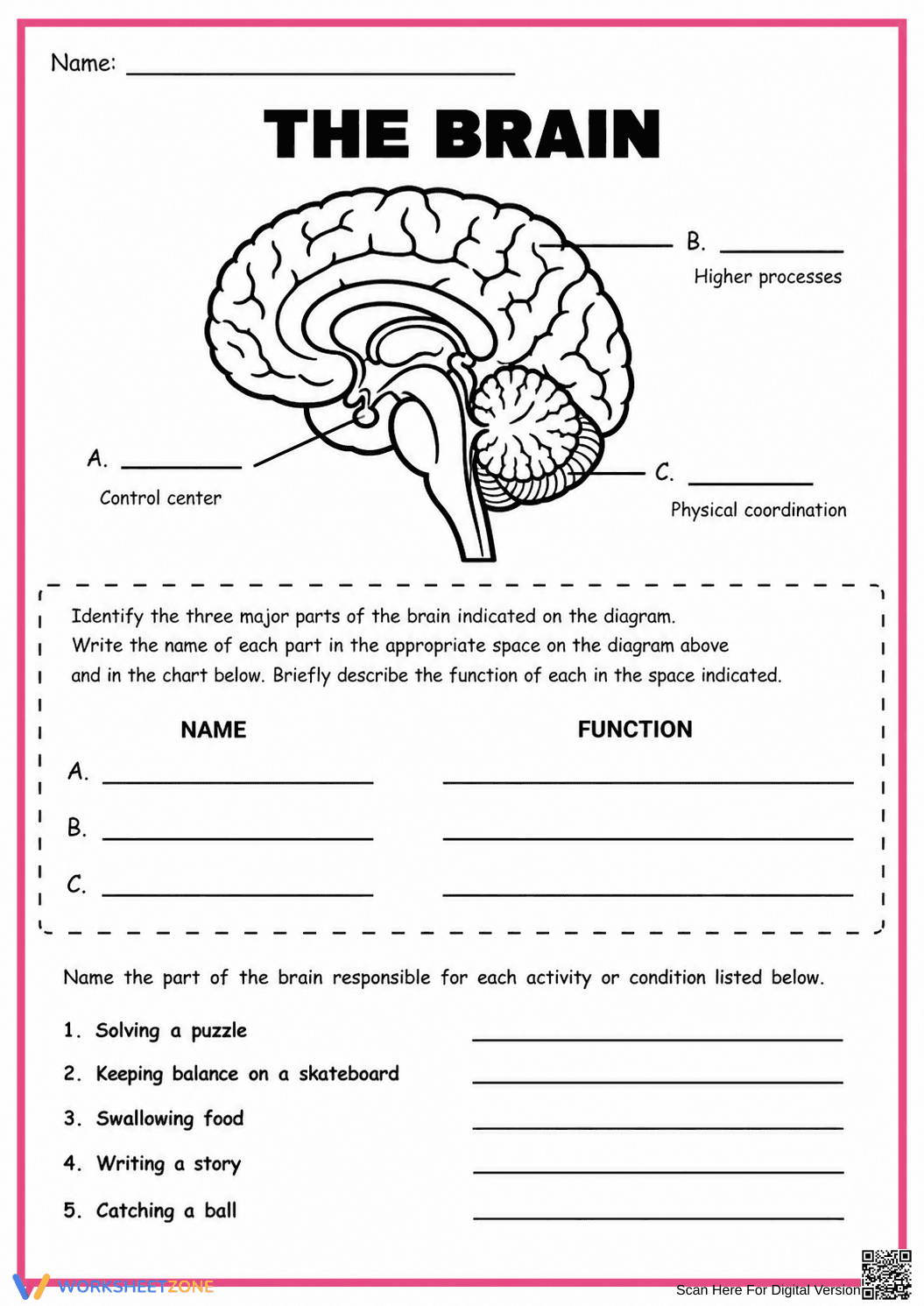

Essential Brain Functions Worksheet | Grade 7 Science Ready

Paste this activity's link or code into your existing LMS (Google Classroom, Canvas, Teams, Schoology, Moodle, etc.).
Students can open and work on the activity right away, with no student login required.
You'll still be able to track student progress and results from your teacher account.
This Grade 7 science worksheet helps students master the anatomy and physiology of the human brain. By identifying major structures and linking them to biological functions, learners connect anatomical parts with everyday activities. It provides a clear path for students to understand how the nervous system processes information and controls behavior.
At a Glance
- Grade: 7 · Subject: Science
- Standard:
MS-LS1-8— Gather and synthesize information on how the brain processes sensory stimuli- Skill Focus: Brain anatomy and functional localization
- Format: 1 page · 11 problems · Answer key included · PDF
- Best For: Independent practice or quick formative assessment
- Time: 15–20 minutes
What's Inside
This single-page PDF features an anatomical diagram of the brain with three labeling points. Students name the cerebrum, cerebellum, and brainstem based on functional cues. The resource includes a chart for defining functions and five application scenarios where students determine which brain region controls actions like breathing or artistic ability.
Zero-Prep Workflow
- Print: Generate copies of the single-page PDF in under 30 seconds.
- Distribute: Hand out the worksheet as a bell-ringer or exit ticket for immediate engagement.
- Review: Use the included answer key to provide feedback in approximately 5 minutes.
Total teacher preparation time is under two minutes, making it ideal for emergency sub plans or busy instructional days.
Standards Alignment
The primary focus is `MS-LS1-8`, requiring students to synthesize how sensory receptors send messages to the brain. By linking activities like "tasting a hamburger" to brain regions, students demonstrate understanding of the nervous system. Both standard codes can be copied directly into lesson plans, IEP goals, or district curriculum mapping tools.
How to Use It
Use this worksheet during the "Evaluate" phase of a lesson on the nervous system. It serves as a formative assessment after a lecture. Teachers should observe students during the application section to identify misconceptions regarding voluntary versus autonomic functions. Expected completion time is 15 to 20 minutes.
Who It's For
This resource is tailored for Grade 7 life science students. The clear visual layout supports English Language Learners and students with IEPs who benefit from scaffolded labeling. It pairs naturally with a 3D brain model or an introductory video on the central nervous system.
According to the RAND AIRS 2024 report on instructional materials, high-quality science worksheets must bridge the gap between rote memorization of anatomy and the functional application of biological concepts. This worksheet achieves that balance by requiring students to map the `MS-LS1-8` standard onto real-world scenarios, such as coordinating physical movement or regulating the rate of breathing. Research from Fisher & Frey (2014) emphasizes that visual labeling combined with written synthesis promotes long-term retention of complex physiological systems. By focusing on the plain-English skill of identifying brain parts and their specific roles, this resource ensures that students can articulate how the nervous system governs both conscious and unconscious behaviors. The inclusion of 11 distinct tasks provides sufficient data points for teachers to measure student mastery of the nervous system's organizational structure and its vital role in human biology and survival.


