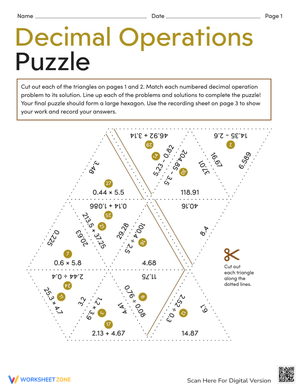
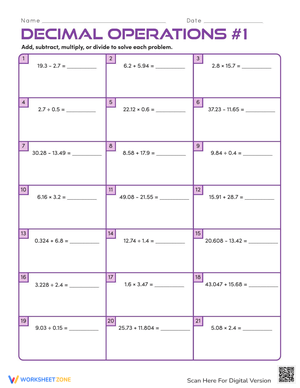
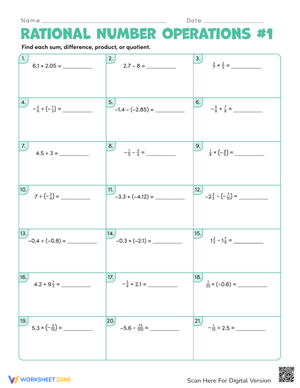
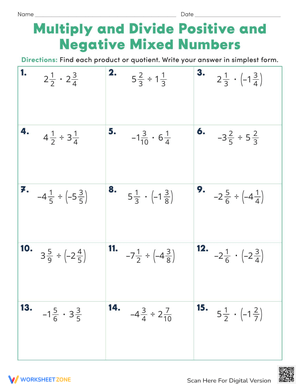
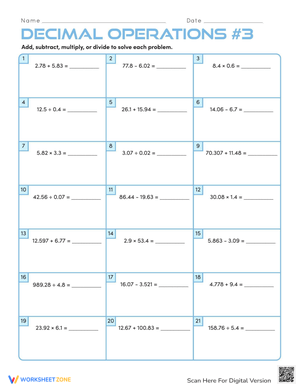
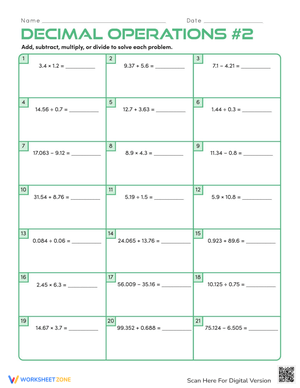
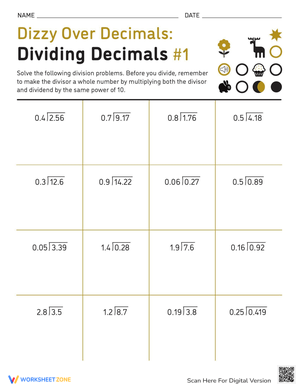
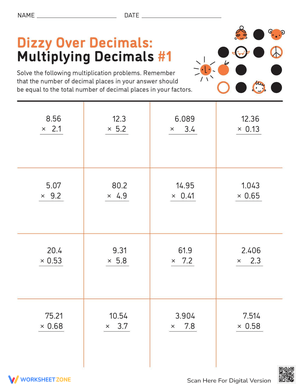
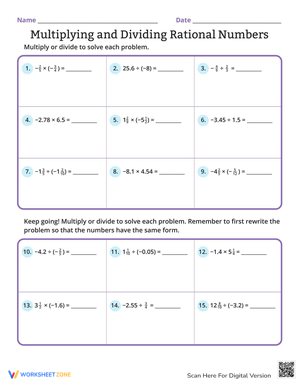
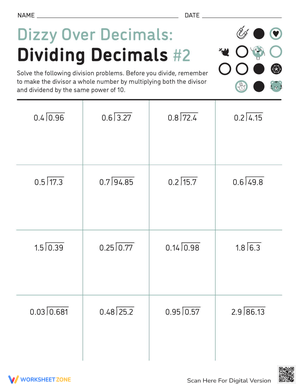
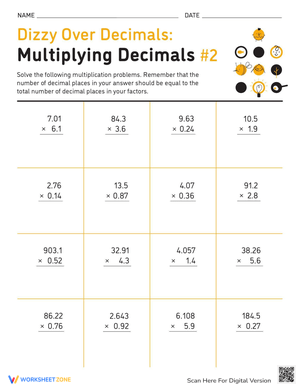
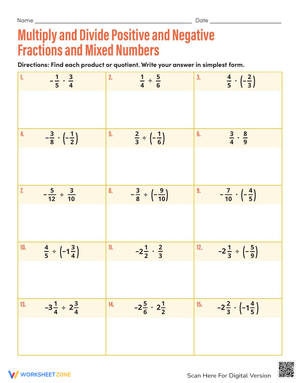
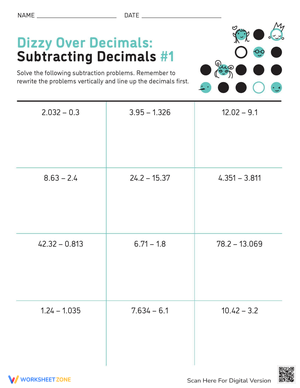
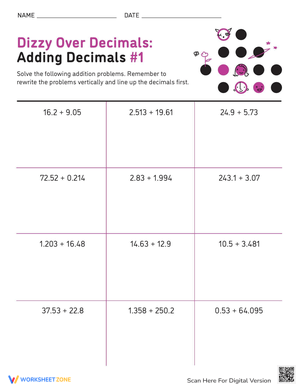
Operations rational worksheets for 7th grade give teachers a ready-built sequence for one of the most procedurally demanding units in middle school math — the stretch where students must track sign rules, fraction procedures, and decimal precision across four operations, often within the same problem. This set moves from focused single-skill practice into mixed review so fluency builds in the right order.
Skills Each Worksheet Targets
Each worksheet addresses one specific layer of rational number computation before problems start combining number types. The full set covers:
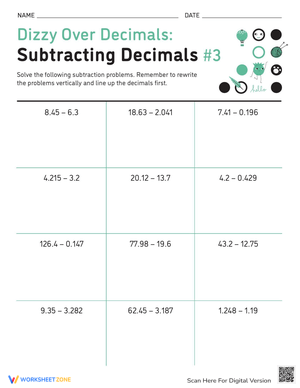
- Integer addition and subtraction — problems built around opposite signs, absolute value, and zero pairs
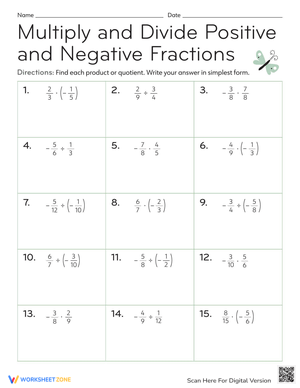
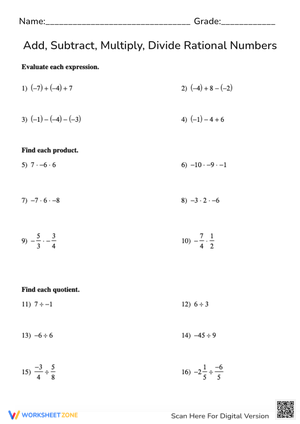
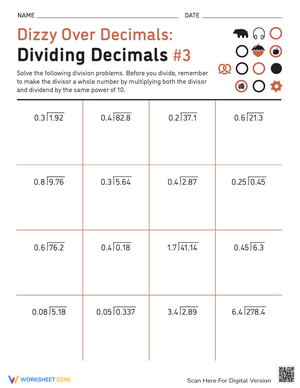
- Multiplication and division of signed numbers — repeated practice until sign-rule application becomes automatic rather than effortful
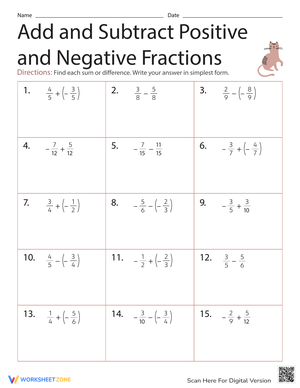
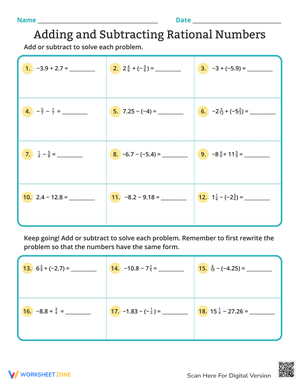
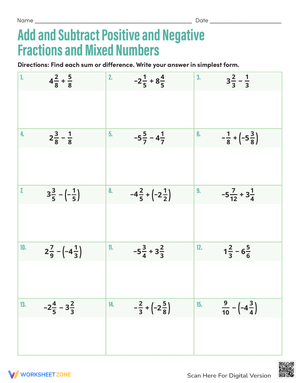
- Fraction operations — adding and subtracting with unlike denominators, multiplying fractions, and dividing using reciprocal reasoning
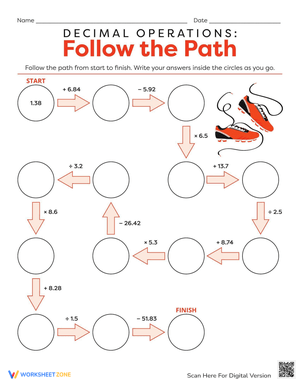
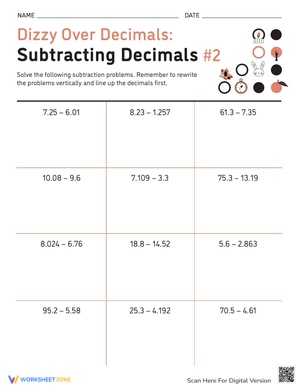
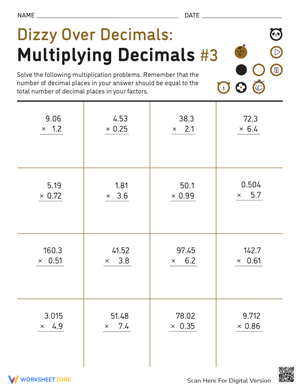
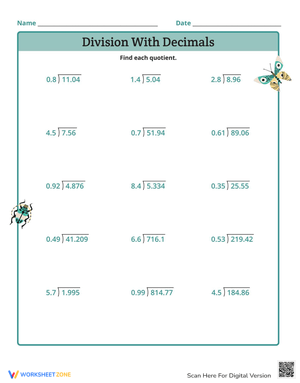
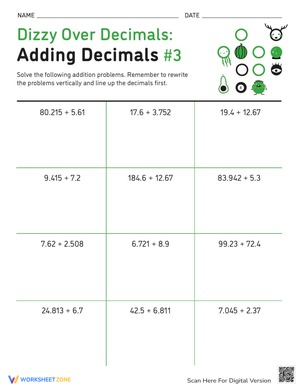
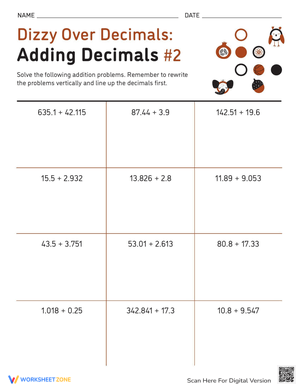
- Signed decimal computation — including real-world contexts involving money, elevation, and temperature
- Mixed rational number sets — problems where students select the operation themselves, not prompted by section labels
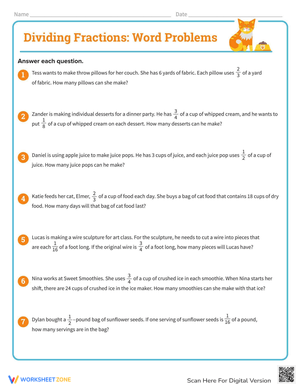
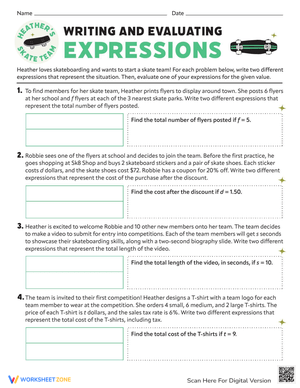
- Word problems — situations involving account balances, sea level, and temperature change that require students to write and solve their own expressions
- Error analysis — worked examples with embedded mistakes for students to identify and correct, which is particularly effective for catching sign-rule confusions before they harden into habits
Grade 7 is the year CCSS formally introduces rational number operations as its own domain, and students arrive with uneven preparation. Some have seen integer work; others barely touched it. Starting with separated skills rather than immediate mixed review accounts for that range without slowing down students who are already comfortable with integers.
Common Student Errors Worth Watching For and Correcting
The most disruptive pattern in this unit is sign-rule bleed across operations. Students who correctly compute −9 + 4 = −5 by taking the sign of the larger absolute value will sometimes apply that same additive logic to multiplication. The result: a student writes −3 × (−8) = −24 because "both numbers are negative, so the answer must be negative" — importing a rule that belongs in addition into a context where it does not apply. These worksheets place sign-rule problems across all four operations in the same set so that error surfaces during practice rather than on the unit test.
A second consistent pattern involves fractions. Students who conceptually understand multiplication often reach for common denominators anyway, applying the addition procedure by habit. In division, the "flip and multiply" procedure trips students who flip the first fraction instead of the second. Isolating fraction operations on a dedicated worksheet makes those procedural slips visible before they get tangled into multi-step problems where the source of the error is harder to identify.
How to Work These Worksheets Into Your Lesson Plan Each Week
Short daily sets outperform long packets in a rational numbers unit. Cognitive load runs high when students track negative signs through multi-step fraction problems, and accuracy drops sharply after about 12 to 15 minutes of that kind of work. A practical weekly structure:
- Monday warm-up: 8–10 integer addition and subtraction problems — brief enough to finish before morning meeting wraps up, concrete enough to set the tone for the week's sign-rule work
- Tuesday: multiplication and division of signed numbers as independent work while the teacher pulls a small reteach group
- Wednesday: fraction operations worksheet, teacher-facilitated, with deliberate pauses after each problem type to name errors aloud before students continue
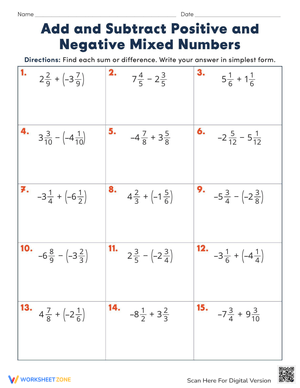
- Thursday: mixed rational number worksheet with two word problems done as partner work — pairs compare their procedures step by step, not just their final answers
- Friday exit ticket: five to eight targeted problems, self-scored with the answer key before the bell so students leave knowing exactly where they slipped
One instructional move worth making explicit: keep integer-only work completely separate from fraction and decimal work for the first three or four days of the unit, even with students who appear comfortable. What looks like a sign-rule problem is often a computation-fluency gap with fractions. Separating those two sources of difficulty makes intervention faster and far more targeted.
Differentiating the Set Across Student Readiness Levels
For teachers managing a mixed-readiness classroom, operations rational worksheets for 7th grade deliver usable practice across multiple levels without requiring a completely separate set of materials for each group. The key is assigning selectively.
Students who are still shaky on integer sign rules benefit from the integer-focused worksheets paired with a number-line reference at the top of their work space. That visual reduces working memory demand enough that students can focus on the sign rule itself rather than spending effort tracking magnitude. On-level students work through the computation sections plus one or two word problems per worksheet. Students ready for more take on mixed-format sets that embed parentheses, fractions, and negative decimals in the same expression — the type of problem that appears on state assessments and requires careful step sequencing.
Differentiation by purpose matters as much as differentiation by difficulty. A reteach worksheet should isolate one misconception — reciprocal division with positive fractions only, for instance, before adding negative signs to the mix. A review worksheet should combine formats deliberately so students can't rely on section labels to identify the operation. Assigning shorter problem sets to students who need more processing time, rather than different content entirely, is often enough to make participation productive across the room.
Standard Alignment
These worksheets address CCSS 7.NS.A.1 (apply properties of operations to add and subtract rational numbers), 7.NS.A.2 (apply and extend previous understandings of multiplication and division of fractions to all rational numbers), and 7.NS.A.3 (solve real-world and mathematical problems involving the four operations with rational numbers). In most instructional sequences, teachers address 7.NS.A.1 and 7.NS.A.2 before 7.NS.A.3, since the word-problem standard assumes computation fluency is already in place. Teachers using these worksheets for formative data can separate assessments by standard: integer-focused worksheets map directly to 7.NS.A.1, while mixed-format and word-problem worksheets provide evidence toward 7.NS.A.3.
Frequently Asked Questions
What order should I assign these worksheets in?
Start with integer addition and subtraction, then move to multiplication and division of signed numbers, then introduce fractions and decimals before assigning mixed-operation practice. That progression matches the typical 7th-grade instructional sequence and reduces the chance of conflating two separate skill gaps when a student makes an error.
Do the worksheets come with answer keys?
Yes. Answer keys are especially important in a rational numbers unit because the errors students make are specific — a wrong sign is a different instructional problem than a wrong denominator. Same-day feedback through answer-key review keeps misconceptions from becoming entrenched. Use the keys for partner checks, teacher-led review during small groups, or student self-correction at the end of a period.
Are these better suited for classwork or homework?
In-class use produces better results early in the unit. When a student hits a sign-rule error at home, there is no one to catch it, and they often practice that error repeatedly before realizing it. Once students demonstrate accuracy on focused skill worksheets during class, homework sets become productive. Five problems at the end of class, self-scored with the answer key, gives teachers a clear picture of who needs reteaching before the next lesson — that's exactly where operations rational worksheets for 7th grade prove most useful.
Can I assign individual worksheets instead of the full set?
Yes, and selective assignment is often the right call. A student who has mastered integer rules can move directly to fraction and decimal operations — or work through mixed-format sets with integer problems as a confidence anchor. There is no need to complete every worksheet in strict sequence when the teacher already knows what a student needs. Operations rational worksheets for 7th grade work best when treated as a flexible menu rather than a fixed march through every worksheet in order.













 Interactive Worksheet Maker
 Quiz Maker
 Word Search Maker
 Crossword Puzzle Maker
 Word Scramble Generator
 Sentence Scramble Generator
 Handwriting Worksheet Generator
 Name Tracing Generator
 Fill In The Blank Generator