


























Views
Downloads

Essential Grade 6-10 Math Bellringers: Weekly Review
Paste this activity's link or code into your existing LMS (Google Classroom, Canvas, Teams, Schoology, Moodle, etc.).
Students can open and work on the activity right away, with no student login required.
You'll still be able to track student progress and results from your teacher account.
This comprehensive math bellringer package provides structured daily practice for middle and high school students. It ensures a consistent start to every math period by reviewing core concepts like arithmetic, decimal operations, and algebraic equations. By integrating these targeted exercises, educators can identify learning gaps and reinforce essential problem-solving skills throughout the school year.
At a Glance
- Grade: 6-10 · Subject: Math
- Standard:
CCSS.MATH.CONTENT.7.NS.A.3— Solve multi-step mathematical problems involving the four operations with rational numbers- Skill Focus: Mixed Math Review
- Format: 4 pages · 30 problems · Answer key included · PDF
- Best For: Daily warm-ups and spiral review
- Time: 5–10 minutes
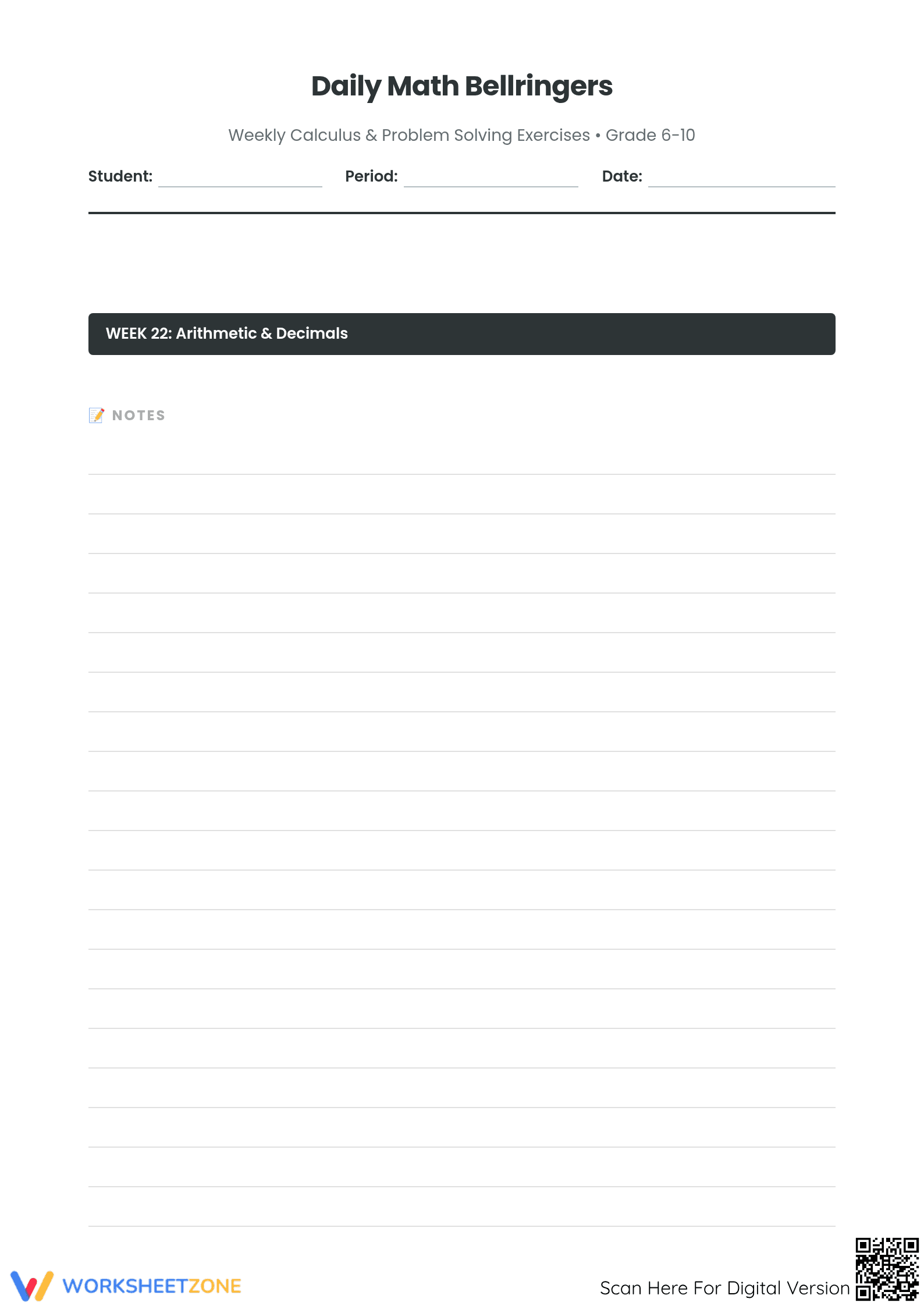
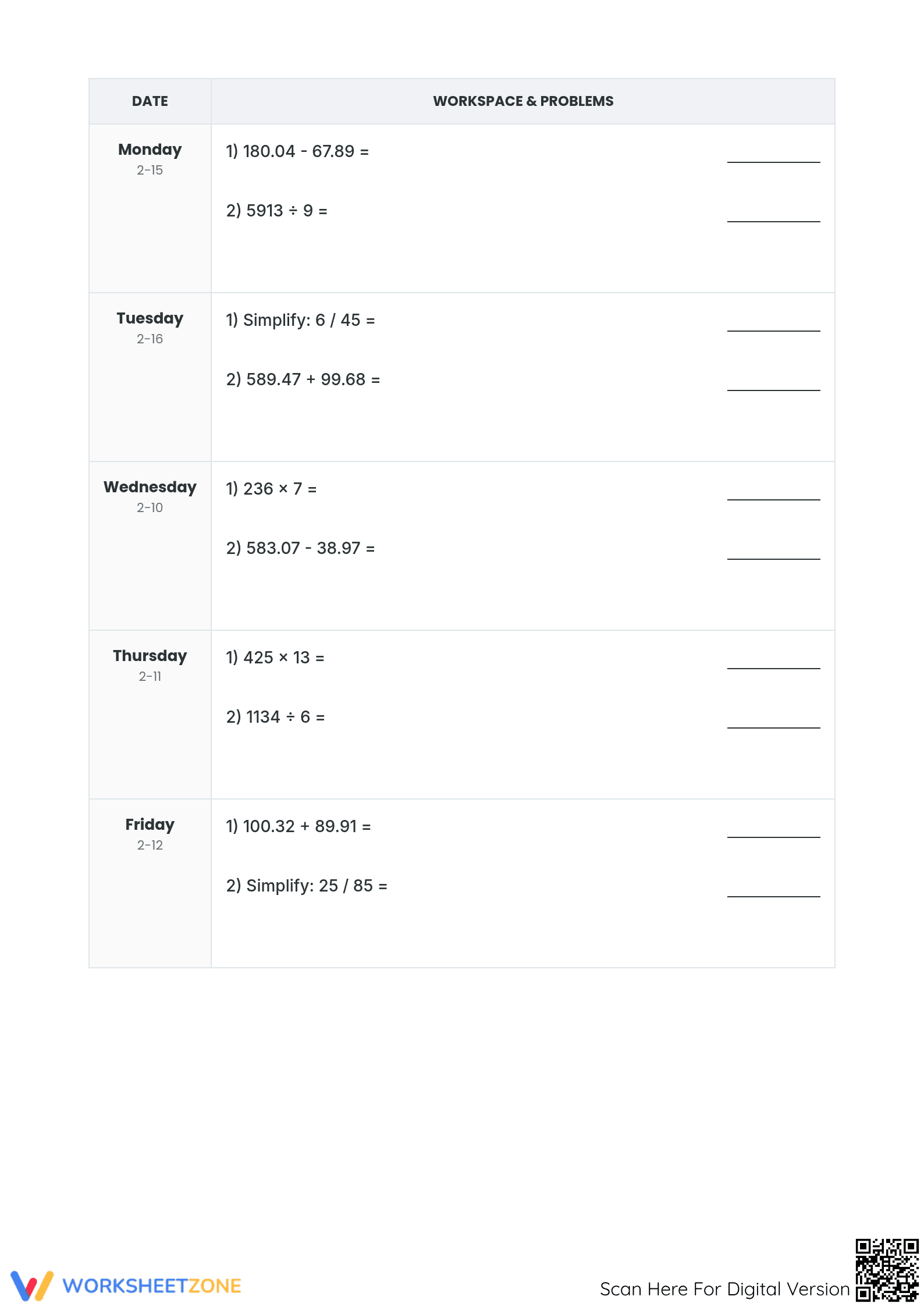
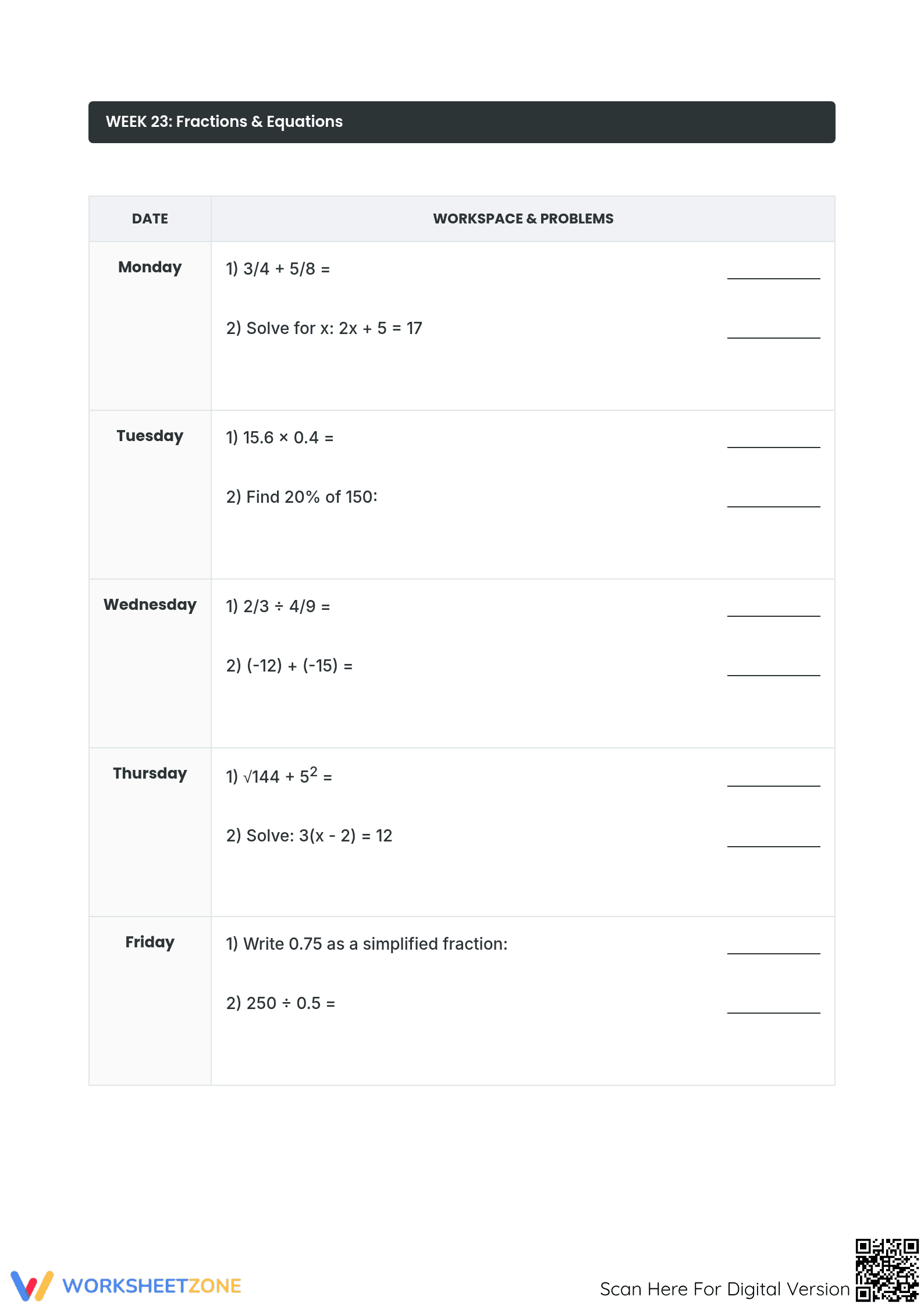
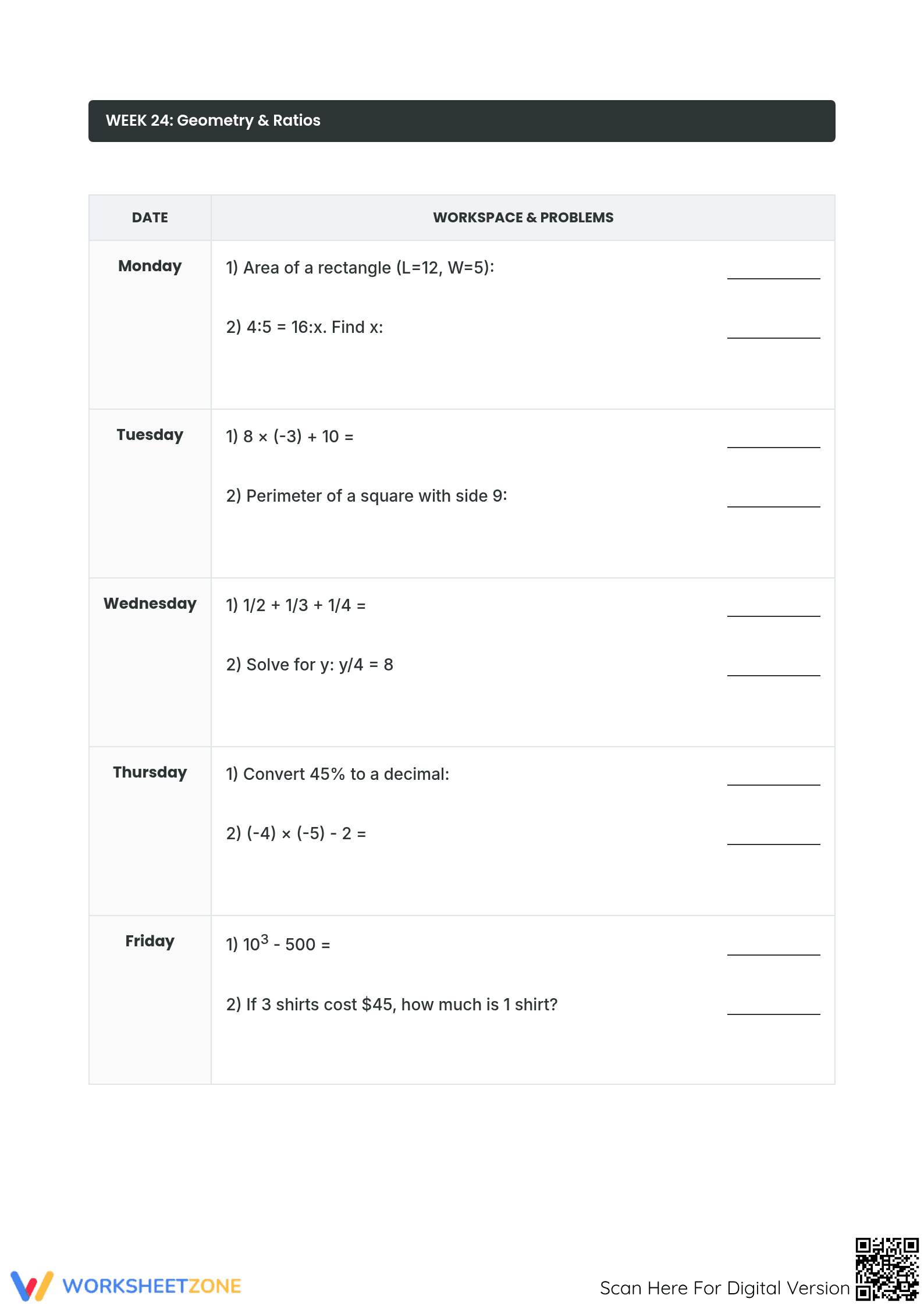
This resource contains three full weeks of bellringers, totaling 30 problems. Each week focuses on a specific theme: arithmetic and decimals, fractions and equations, or geometry and ratios. The layout is clean and organized, featuring dedicated workspace for student calculations, a notes page for strategy tracking, and a full answer key for rapid grading. The predictable structure helps students build confidence in their mathematical abilities.
Zero-Prep Workflow
- Step 1: Print the 4-page PDF and make copies for your class (under 2 minutes).
- Step 2: Distribute the weekly sheet at the start of Monday's lesson (1 minute).
- Step 3: Review the two daily problems together as a transition into the main lesson (5 minutes).
The total teacher preparation time is less than two minutes per week, making this an ideal solution for busy educators or emergency sub plans. The clear formatting ensures students can work independently with minimal guidance.
Standards Alignment
CCSS.MATH.CONTENT.7.NS.A.3 requires students to solve real-world and mathematical problems involving the four operations with rational numbers. This worksheet scaffolds that mastery by starting with decimal fluency and progressing toward multi-step equations and geometric calculations. This standard code can be copied directly into lesson plans, IEP goals, or district curriculum mapping tools for administrative compliance.
How to Use It
Assign this worksheet as a "Do Now" activity immediately as students enter the classroom. Use the notes page to have students record one specific strategy or difficult step they encountered during the week's problems. This provides a quick formative assessment observation tip: check student workspace to identify if errors are conceptual or simple calculation slips before moving to new material.
Who It's For
Designed for students in Grades 6 through 10, including those in SPED or RTI Tier 2 environments needing consistent spiral review. It pairs naturally with a digital passage or anchor chart on order of operations to support independent completion during transition times. The versatile difficulty range makes it suitable for diverse classroom populations.
Research by EdReports (2024) highlights that spiral review is a fundamental component of long-term retention in secondary mathematics. By revisiting concepts like CCSS.MATH.CONTENT.7.NS.A.3 across several weeks, students move from rote calculation to conceptual fluency. This worksheet addresses the common forgetting curve by requiring daily engagement with varied problem types, from decimal subtraction to complex ratios and perimeter calculations. Fisher & Frey (2014) emphasize that such "bellringer" activities serve as critical scaffolds for gradual release of responsibility, allowing teachers to assess prior knowledge before introducing new content. The inclusion of 30 structured tasks ensures that learners receive sufficient repetition to achieve mastery without being overwhelmed by a single-sitting assessment. This approach is particularly effective in SPED settings where consistency and predictable routines are paramount for student success. This citation-ready capsule confirms the resource's efficacy for meeting diverse learner needs through standard-aligned practice.


