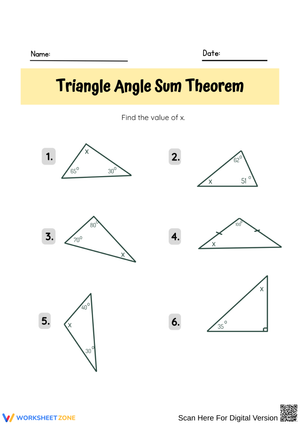
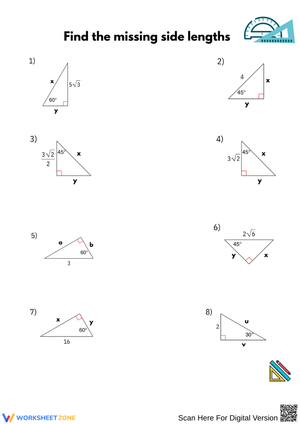
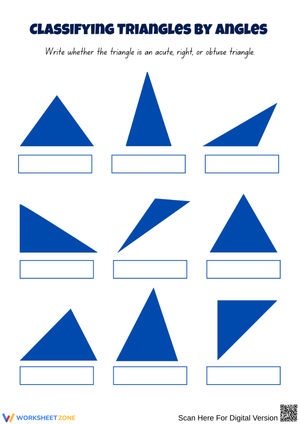
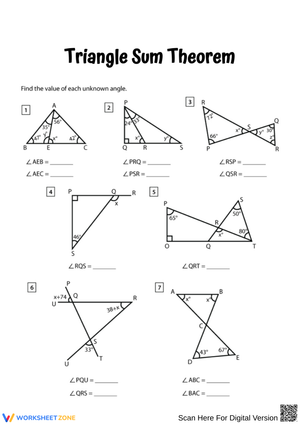
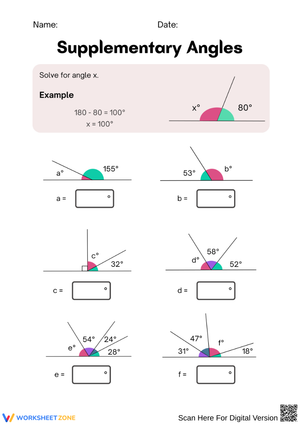
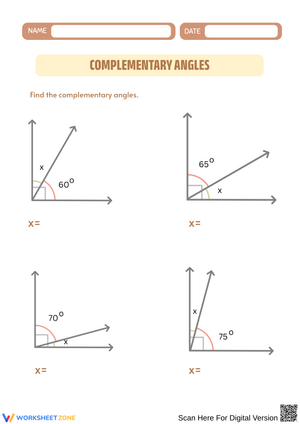
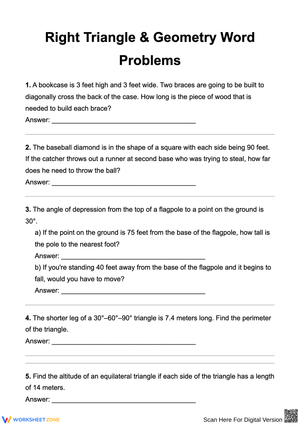
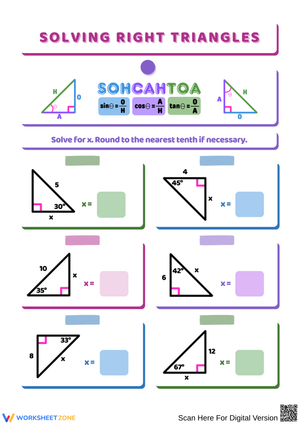
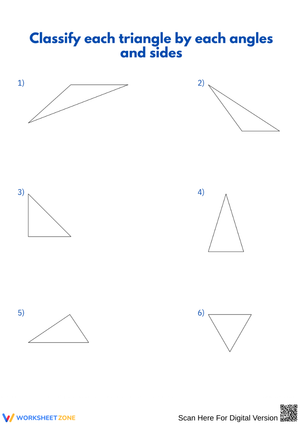
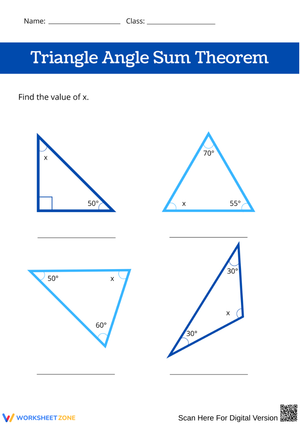
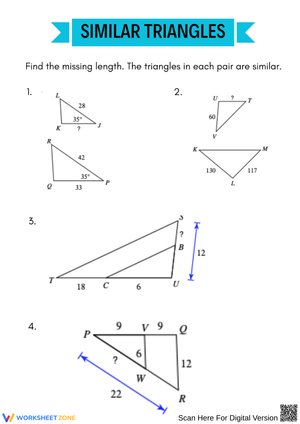
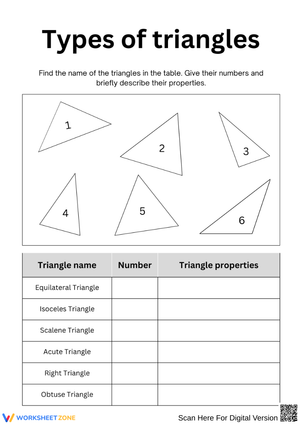
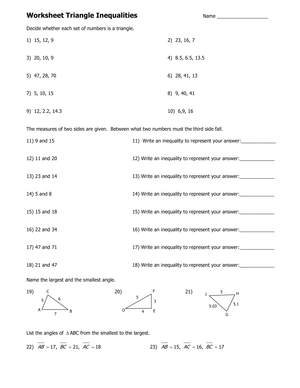
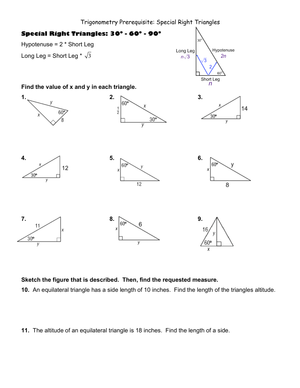
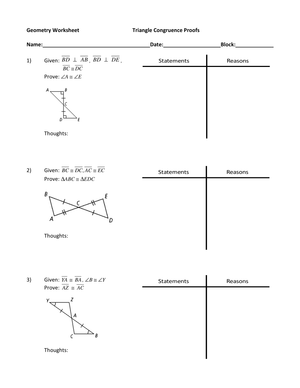
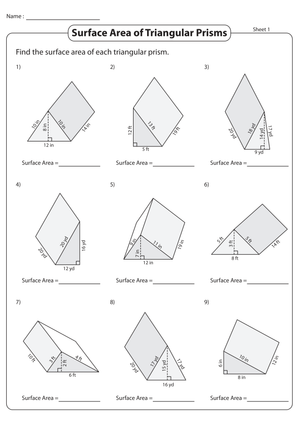
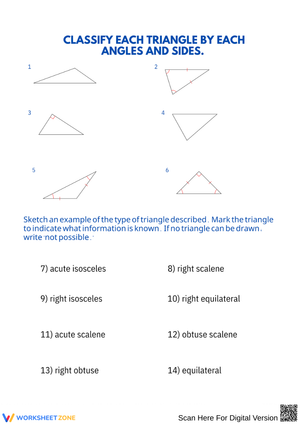
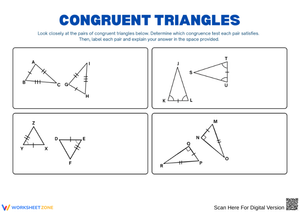
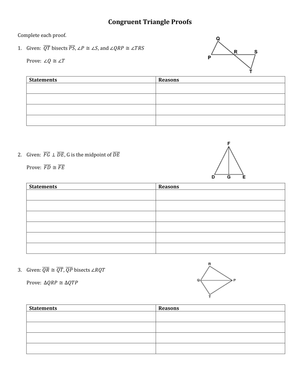
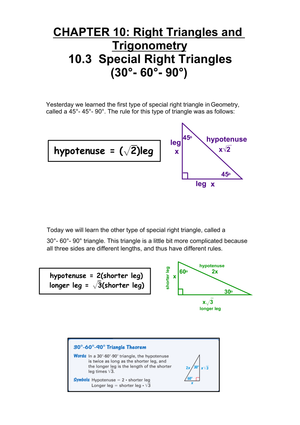
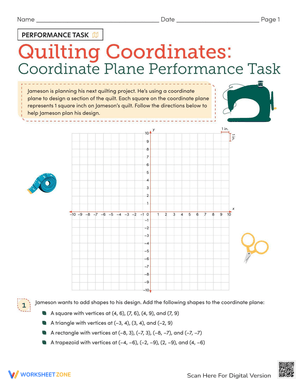
These triangles worksheets for 7th grade give teachers three things at once: classification practice, angle-sum computation, and area and perimeter work — all built around diagrams and word problems that reveal whether students understand the concept or have only memorized a procedure. The set covers what Grade 7 geometry actually requires at this point in the year, when students need to move from naming shapes to solving for unknowns and defending their answers.
Frequent Student Errors Worth Watching For and Addressing
Two mistakes appear with enough regularity that teachers should plan for them before assigning any triangle work. The first is conflating classification by sides with classification by angles. A student who correctly labels a right triangle as "right" will then look at the same figure and call it "isosceles" based on how it appears — using visual intuition to answer a measurement question. The fix is requiring students to label actual side lengths before classifying rather than deciding from the picture.
The second persistent error involves area. Students reach for a visible slanted side as the height rather than the perpendicular distance from a vertex to the base. A triangle drawn with a tilted base makes this worse: a student measures the slanted left side, calls it the height, and plugs it into A = ½bh with full confidence. Several worksheets in this set include diagrams specifically drawn to surface that confusion — some mark the correct perpendicular height, others deliberately leave it unmarked — so teachers can see exactly which students have internalized the formula and which have not.
A subtler issue at this grade is algebraic setup. Most students can write the equation correctly when using the 180° angle sum to find an unknown. The breakdown happens during simplification. A student who sees two angles labeled 47° and (3x + 5)° will write 47 + 3x + 5 = 180, then combine incorrectly to 3x + 47 = 175 by dropping the constant term. Short, targeted practice on the transition between setup and simplification catches this faster than more rounds of basic computation do.
Skills These Worksheets Build
Each worksheet targets one of the core skill categories that make up triangle geometry in Grade 7:
- Side-based classification: Students identify scalene, isosceles, and equilateral triangles from labeled figures and, in some cases, from coordinate-grid drawings where they calculate side lengths to determine equality.
- Angle-based classification: Students sort triangles as acute, right, or obtuse using given angle measures and diagrams with standard angle marks.
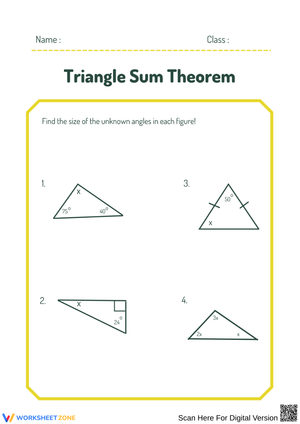
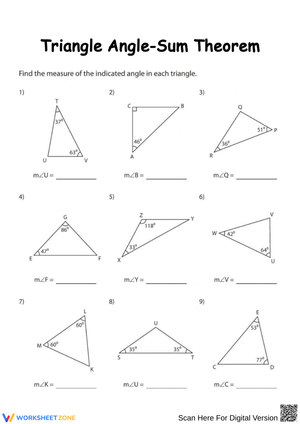
- Angle-sum problems: Students find missing angles using the triangle angle-sum property, including several problems that require setting up and solving a simple algebraic equation before computing the answer.
- Perimeter tasks: Students add side lengths, find a missing side when the perimeter is given, and compare two triangle figures.
- Area problems: Students apply the area formula across varied diagram orientations — heights drawn both inside and outside the triangle, and some figures without the height pre-marked.
- Mixed review: Students move across classification, angle, and measurement skills within a single worksheet, which works especially well before a unit assessment or after a longer gap in instruction.
Across the set, triangles worksheets for 7th grade also include short written-response items that ask students to justify a classification or explain why a particular angle measure makes a triangle impossible. These items slow down procedural work long enough for students to demonstrate real understanding rather than pattern-matching.
Fitting These Worksheets Into Your Instructional Week
The most consistent use pattern is one targeted worksheet per skill, introduced the same day as direct instruction and completed during independent practice. A focused area worksheet with six to eight problems covering mixed diagram orientations gives useful information within a 15-minute block. The two-column correction routine is worth building in regularly: students fix the computation in the left column and write the reason in the right — height must be perpendicular to the base or angle sum is always 180° — turning the correction into a fast formative check of mathematical reasoning, not just accuracy.
Mixed-review worksheets hold up well as Friday pre-quiz work or as Monday re-entry tasks after a break. Classification worksheets, which ask students to identify and sort without calculating, make better warm-ups for the first eight minutes of class than computation tasks do — they activate vocabulary without demanding that students are already in full problem-solving mode. A few teachers have also used the longer mixed worksheets as sub plans because the directions are self-contained and the work does not depend on in-class instruction from that day.
Standard Alignment
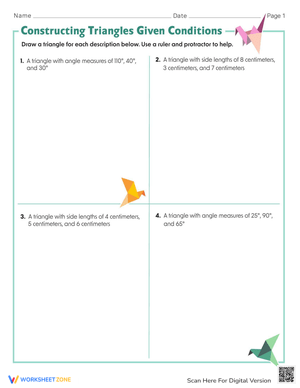
The worksheets address two CCSS Grade 7 Geometry standards. 7.G.A.2 asks students to draw geometric figures given conditions on angle and side measures, and to explore whether those conditions produce a unique triangle, more than one possible triangle, or no valid triangle at all. The classification and angle-sum worksheets support this directly. 7.G.B.6 covers area problems in real-world and mathematical contexts; the area worksheets build the triangle-specific computation this standard requires. Teachers who teach triangle geometry in the first or second semester geometry block will find these worksheets fit both the introduction phase and the review phase without modification.
Adjusting the Set for Mixed-Readiness Classrooms
Triangles worksheets for 7th grade that focus on classification by side and angle serve as strong entry-level material for students who need to build confidence before computing. These students do better with diagrams that already have side lengths labeled and with tasks that ask them to circle or underline rather than derive values from scratch. Shifting that group to perimeter next — where the only computation is addition — keeps them working with triangle vocabulary while introducing number work at a manageable level.
Students who have the basics move productively into angle-sum problems with algebraic unknowns, area tasks with non-standard diagram orientations, and mixed worksheets that combine two or three skill categories in sequence. The most demanding items in the set ask whether given conditions produce a valid triangle and require written justification — these combine geometric reasoning with the precise mathematical language that 8th grade geometry will expect.
One practical move for whole-class use: assign the same mixed-review worksheet to everyone and tell students to start on the section matching their current focus skill. The group working on classification builds toward the computation problems at their own pace, the group ready for mixed application gets there faster, and no one sits waiting with nothing to do.
Frequently Asked Questions
Do students need to know algebra before working with these triangle materials?
Not for most of the set. Classification and perimeter worksheets involve no algebra at all. The angle-sum worksheets that include unknown angles require students to write and solve simple one- or two-step equations, which aligns with what most 7th graders have covered by mid-year. Teachers can sequence those worksheets after early-year algebra work rather than assigning them as the first triangle task.
How long does each worksheet take to complete?
Most worksheets in the set run 8 to 12 problems. The majority of 7th graders finish in 10 to 20 minutes depending on their current fluency with the targeted skill. Mixed-review worksheets run longer and work better as full-period independent practice or homework assignments than as quick warm-ups or bell ringers.
Are answer keys included with the worksheets?
Yes. Each worksheet has a corresponding answer key. For multi-step problems — area calculations and algebraic angle-sum tasks — the keys show solution steps, not just final answers. That makes them useful for student self-correction during small-group review, and for teachers who want to identify exactly where a class is breaking down before planning a reteach.
Can these be used in a digital format, or are they print-only?
The layouts are clean enough for digital projection and tablet annotation. Teachers have used individual worksheets on interactive boards during whole-class review and on tablets for partner markup tasks. For students submitting work digitally, a PDF annotation tool handles the diagram-based questions well. That said, these triangles worksheets for 7th grade are built for print-first use, and diagram clarity holds up best on paper when students are doing their own sketching, labeling, and measurement work.













 Interactive Worksheet Maker
 Quiz Maker
 Word Search Maker
 Crossword Puzzle Maker
 Word Scramble Generator
 Sentence Scramble Generator
 Handwriting Worksheet Generator
 Name Tracing Generator
 Fill In The Blank Generator