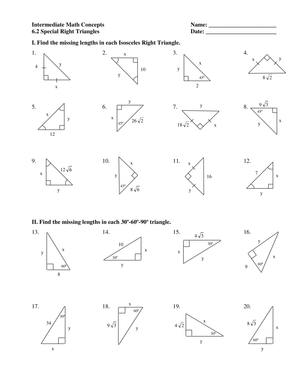
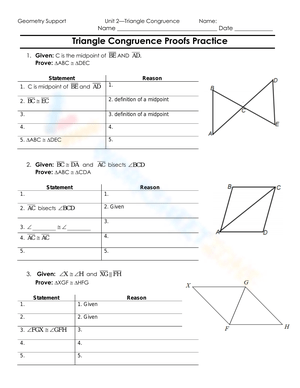
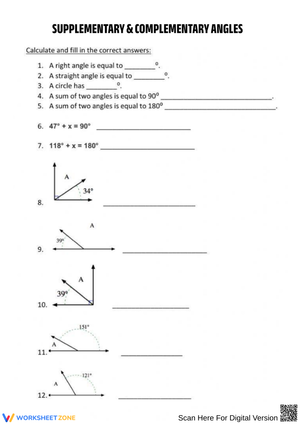
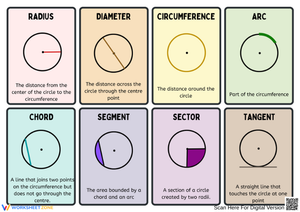
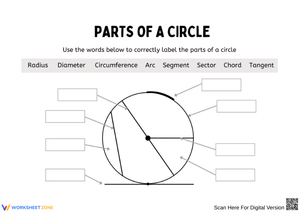
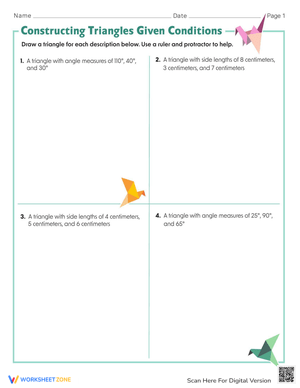
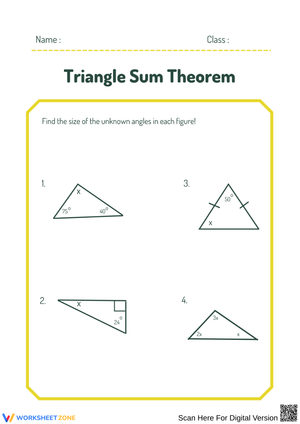
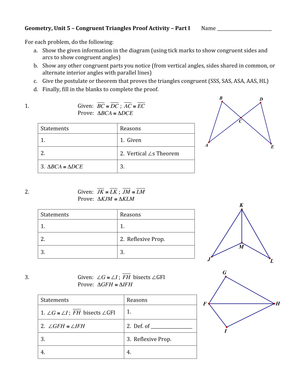
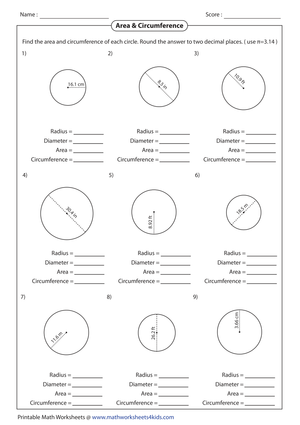
7th grade 2d shapes printable worksheets give teachers a practical tool for moving students past shape identification into the angle relationships, classification hierarchies, and measurement tasks that characterize actual middle school geometry. The set covers classifying polygons, working with quadrilateral attributes, solving missing angle problems, and calculating area and perimeter — including composite figures that require students to decompose shapes before applying any formula.
Geometry Skills These Worksheets Build
Each worksheet targets a specific slice of grade 7 geometry rather than bundling too many skills into one task. The areas of focus across the set include:
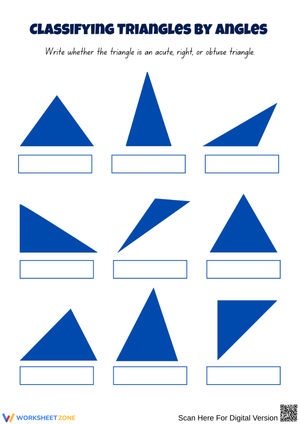
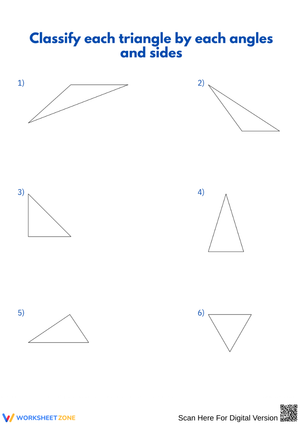
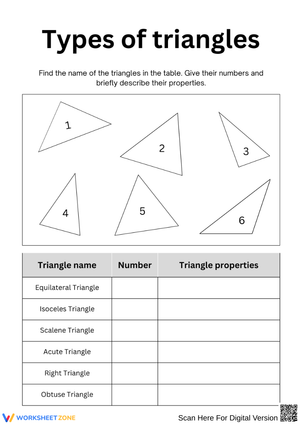
- Polygon classification: sorting figures by number of sides, angle types, and whether they are regular or irregular
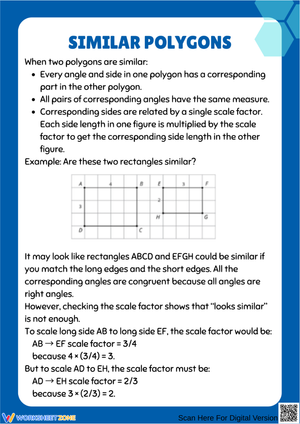
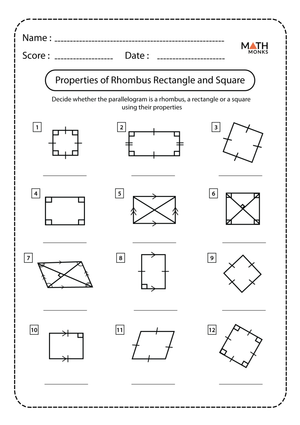
- Quadrilateral attributes: identifying properties of parallelograms, rectangles, rhombuses, squares, and trapezoids — including which properties are shared across the classification hierarchy
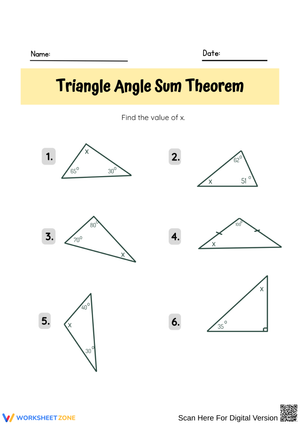
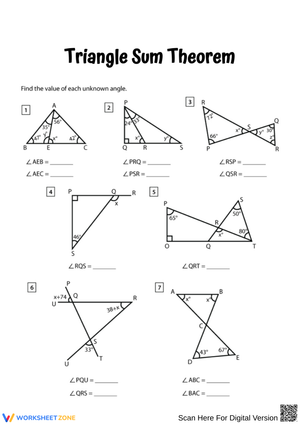
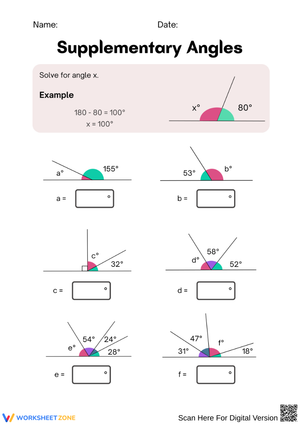
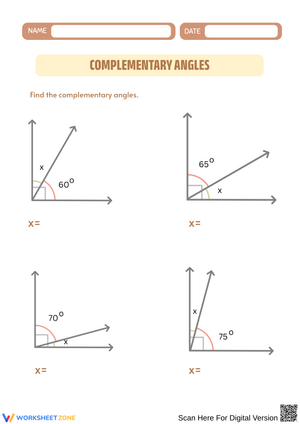
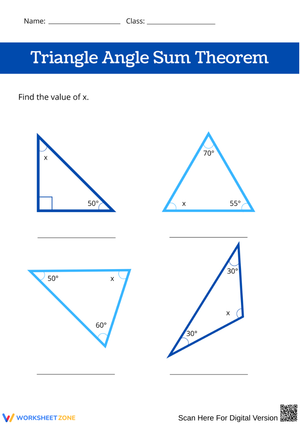
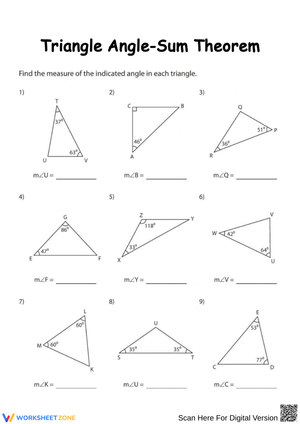
- Missing angle problems: applying the triangle angle sum, the quadrilateral angle sum, and supplementary angle relationships to find unknown values
- Area and perimeter: using formulas for triangles, parallelograms, trapezoids, and rectangles, with units required in all answers
- Composite figures: decomposing non-standard polygons into recognizable shapes, calculating each part separately, and combining results
- Written justifications: short prompts that ask students to explain why a shape fits a category, not just mark an answer
That last item matters more than it appears. Students who write only numerical answers can mask significant conceptual gaps. Asking a student to explain in two sentences why a rhombus is also a parallelogram reveals whether they understand the hierarchy or just memorized a term.
Geometry Errors That Show Up Consistently in Grade 7 Work
The classification hierarchy is where confusion concentrates most reliably. Students accept that a square is a square, but many resist the idea that the same figure is simultaneously a rhombus, a parallelogram, and a quadrilateral. They read "a square is a rectangle" as an error rather than a geometric fact. Each worksheet that asks for all correct classifications — not just one — surfaces this confusion immediately and gives teachers a concrete discussion point the next day.
Area and perimeter mix-ups persist well into grade 7, often because students learned the procedures without building a strong conceptual anchor. The tell is specific: a student will add all four side lengths of a parallelogram correctly, label the answer in square centimeters, and hand it in confident. Teaching perimeter and area on separate worksheets first, then combining them on a later review worksheet, gives students practice making the deliberate choice between the two rather than defaulting to whichever procedure they grabbed first.
Composite figure problems expose a third consistent error: students split the shape incorrectly, calculate overlapping regions, or leave out a section entirely. The most reliable composite figure worksheets leave blank space specifically so students can draw their own decomposition lines before they begin calculating — that single step catches most of the mistakes before they become wrong answers.
Fitting These Worksheets Into the Flow of a Geometry Unit
Match each worksheet to the instructional stage rather than assigning the whole set at once. Early in a geometry unit, classification worksheets work well as warm-ups — the five minutes after morning announcements when the class needs a low-stakes entry point. Mid-unit, angle and area worksheets shift into guided practice territory, where a brief teacher model before independent work prevents students from inventing their own procedures. Near the end of a unit, the mixed review worksheets earn their place as pre-assessment tools or the Friday practice block before a test.
Station rotations are a reliable fit for this set. One station handles polygon classification and vocabulary, another targets missing angle problems with diagrams, and a third addresses area of composite figures. Because each worksheet is self-contained, the teacher can pull a small group for reteaching while the other stations run independently — no constant re-explanation of directions required.
For substitute coverage, geometry printables are more dependable than most alternatives. The diagrams communicate the task even when a sub cannot offer the same explanations a classroom teacher would. Having a few 7th grade 2d shapes printable worksheets in a substitute folder is the kind of practical backup that experienced teachers keep ready from September.
Standard Alignment
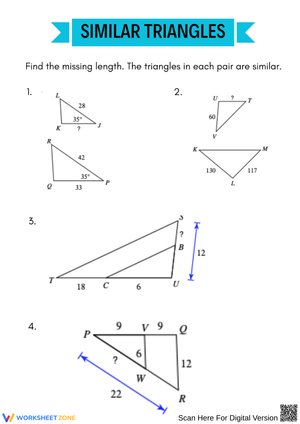
The 7th grade 2d shapes printable worksheets in this set align directly to CCSS 7.G.B.5 and 7.G.B.6. Standard 7.G.B.5 addresses the angle relationships students apply throughout the missing angle worksheets — supplementary, complementary, vertical, and adjacent angles in multi-step problems. Standard 7.G.B.6 covers real-world area problems involving triangles, quadrilaterals, and composite figures, which maps directly to the area, perimeter, and composite figure tasks in the set. Classification and attribute work connects to the broader 7.G domain and extends skills introduced in 6.G.A.1, which many grade 7 students still need to consolidate before applying them to more complex figures.
Adjusting the Set for Different Readiness Levels in the Same Room
For students still building foundational geometry vocabulary, single-skill worksheets reduce the processing load considerably. A worksheet focused only on naming and sorting quadrilaterals — with labeled diagrams and a reference box showing key attributes — lets a student practice the classification logic without simultaneously recalling formulas and decoding multi-part directions. Pairing those worksheets with a brief vocabulary list they can consult while working removes a barrier without removing the thinking.
On-level students benefit most from mixed worksheets that mirror how geometry appears on classroom assessments: identify the shape, describe an attribute, solve for the area. That combination requires students to think through what they actually know about a figure before reaching for a formula. It produces different — and more durable — learning than running through twelve identical area calculations in a row.
Advanced students can extend the same core tasks without needing an entirely separate worksheet. Ask them to show two different ways to decompose a composite figure and verify that both approaches produce the same area, or to explain which of two solution paths is more efficient and why. 7th grade 2d shapes printable worksheets handle this kind of layering well when the core problems are clear enough that adding a justification requirement raises the level without creating confusion about the original task.
Frequently Asked Questions
Do these worksheets cover composite figures, or only standard polygon shapes?
The set includes composite figure worksheets alongside single-shape tasks. Students work with non-standard polygons that require decomposition before applying any formula. Those worksheets leave space for students to draw their own decomposition lines — a step that significantly reduces the calculation errors that come from misreading the figure.
Are these appropriate for students who are still developing geometry vocabulary?
The classification worksheets in particular include labeled diagrams and attribute checklists that students can reference while working. For students who are significantly behind on vocabulary, using those worksheets alongside a brief reference chart gives them language support without removing the geometric reasoning the task requires.
How do the angle problem worksheets present the information — diagrams or written descriptions?
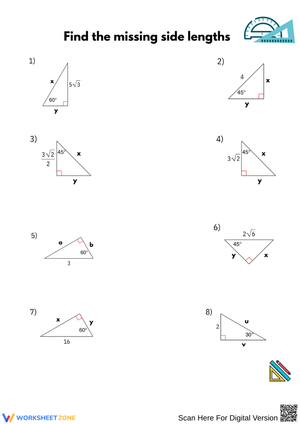
Angle worksheets in this set use diagrams with angle marks and side marks so students read the geometric relationships visually rather than extracting them from text. Missing angle problems show the figure with known measurements labeled; students identify the relevant relationship — supplementary angles, interior angles of a triangle, quadrilateral angle sum — before writing the equation and solving. That sequence discourages the common shortcut of plugging numbers into a formula without checking which relationship actually applies.
Can one worksheet serve both as practice and as a quick formative check?
Most worksheets in the set include a short written reasoning prompt alongside the calculation items. That combination gives teachers two layers of information from a single task: whether the student can execute the procedure, and whether the student understands the concept well enough to explain it. Circulating while students work on the written prompt is one of the faster ways to catch a misconception before it hardens into a repeated error.













 Interactive Worksheet Maker
 Quiz Maker
 Word Search Maker
 Crossword Puzzle Maker
 Word Scramble Generator
 Sentence Scramble Generator
 Handwriting Worksheet Generator
 Name Tracing Generator
 Fill In The Blank Generator