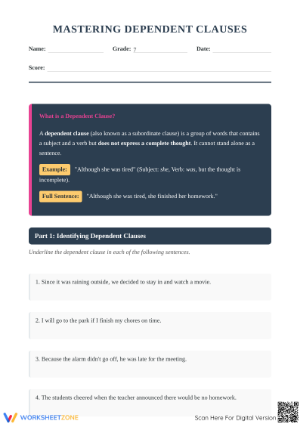
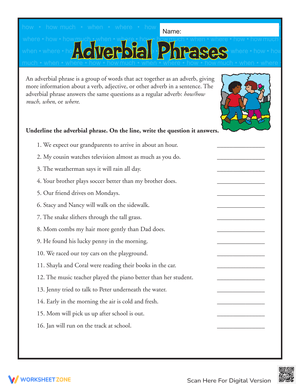
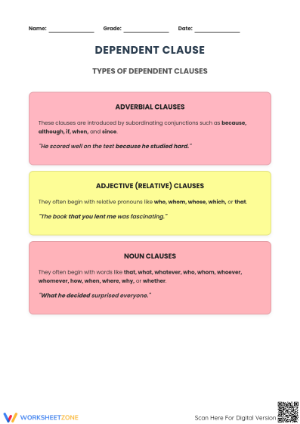
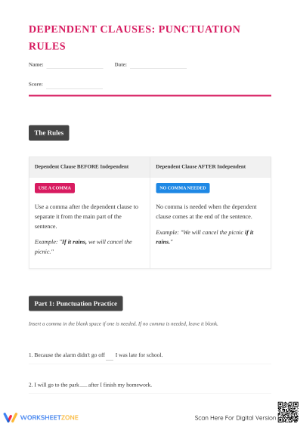
These 7th grade phrases and clauses pdf worksheets give teachers a printable tool for building the exact grammar skill that precedes fragment correction, clause-combining, and real sentence revision — distinguishing a word group that can stand alone from one that cannot. Each worksheet moves students through recognition, comparison, and sentence-level writing, so the skill builds toward something they can actually use while revising their own paragraphs.
Skills These Worksheets Build
The core work is structural analysis: students must determine whether a group of words contains both a subject and a predicate. That question sounds simple, but it exposes real confusion. A word group can be long, can contain a verb, and can still fall short of being a clause. Students need enough practice with varied examples to stop relying on length or sentence weight as their guide.
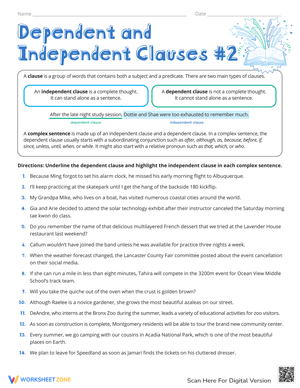
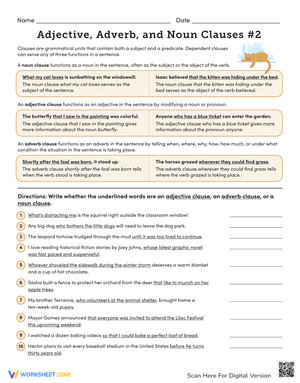
Across the set, students work through five activity types:
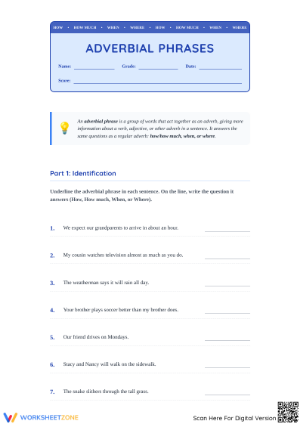
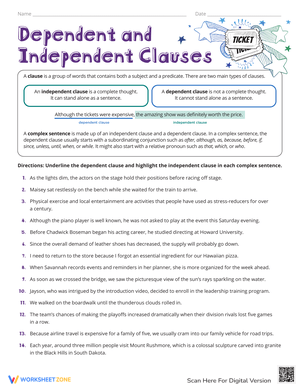
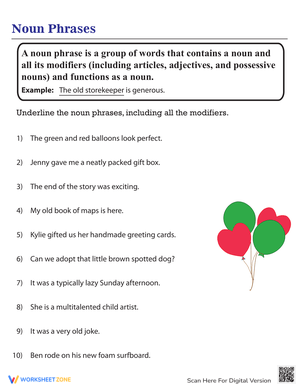
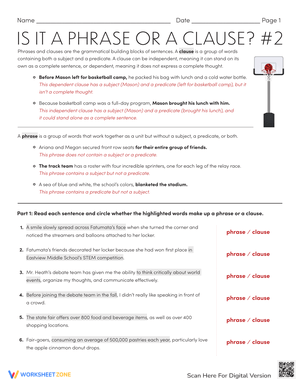
- Underline and label: Mark each word group and identify it as a phrase, independent clause, or dependent clause.
- Sorting: Place mixed examples into categories, then explain one choice in writing.
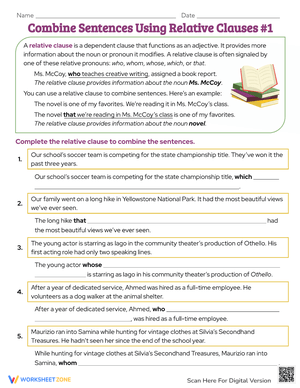
- Sentence combining: Connect two simple sentences by attaching a dependent clause or subordinating conjunction.
- Fragment correction: Identify dependent clauses written as standalone sentences and fix them by adding an independent clause.
- Original writing: Produce one example of each type — phrase, independent clause, dependent clause — with a brief written explanation of how each was built.
That last task consistently surfaces misunderstanding faster than multiple-choice items do. A student can guess correctly on a labeled example; writing one from scratch reveals whether the concept has actually landed.
Student Errors Worth Anticipating Before You Distribute
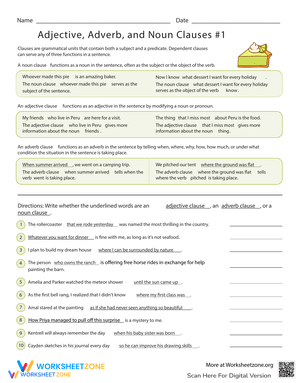
The most persistent mistake is treating a dependent clause as a complete sentence. Students see "because she ran to the store" and assume the subject-verb combination makes it independent. They've been told a sentence needs a subject and a verb, so they stop there. What these worksheets push them to ask is whether the word group expresses a complete thought on its own — which requires noticing the subordinating conjunction and understanding what it signals.
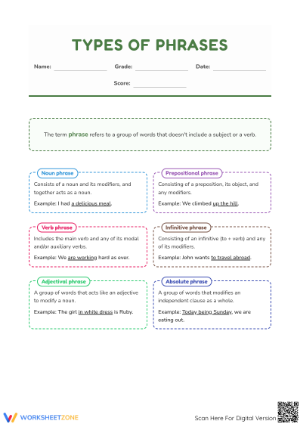
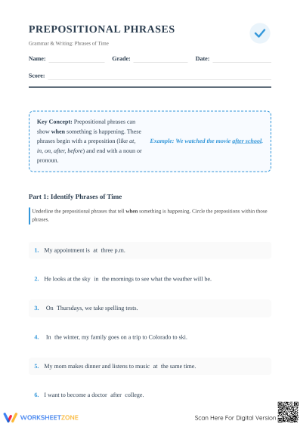
A second error involves long prepositional phrases. A phrase like "during the final quarter of the championship game held in the fieldhouse" contains no predicate and no independent meaning, but students read it and assume clause status because of its length. Tasks that pair phrases of four or more words alongside short clauses help students separate the two concepts from surface impressions of sentence weight.
A third pattern shows up in sentence-combining work. A student will correctly identify a dependent clause but then write "Although the team was tired. They kept playing." — two pieces that each needed the other. That error signals the student understands dependency conceptually but hasn't internalized how punctuation marks the relationship between clauses. Brief whole-class review of two or three combined examples usually closes that gap before the next worksheet.
How to Work These Worksheets Into Your Lesson Plans
The strongest sequence most teachers find is this: one full-class lesson on phrase versus clause using board examples, followed by a guided worksheet completed together, then independent practice on a second worksheet the next day. The spacing matters. Coming back to the concept after 24 hours produces noticeably stronger retention than working two worksheets back-to-back in a single block — even when total instructional time is identical.
The format also handles multiple instructional moments well. A short identification worksheet works as a Monday bell ringer after a weekend away from grammar. The sentence-combining and original-writing worksheets fit better inside the writing block, especially during revision cycles when students are already thinking about sentence fluency. Using the 7th grade phrases and clauses pdf worksheets this way — spread across a unit rather than concentrated in one grammar week — gives students the repeated exposure the concept actually requires.
For sub plans or review days, the sorting and labeling worksheets need almost no setup. Distribute the materials, write the two or three key definitions on the board, and students who have seen the content before can work independently.
Standard Alignment
These worksheets address CCSS.ELA-LITERACY.L.7.1a, which asks 7th graders to explain the function of phrases and clauses in general and their role in specific sentences. The standard appears in the Language strand because it treats grammar as a tool for writing and analysis, not a standalone memory task. Teachers meeting this standard should connect worksheet practice to student writing directly — the identification tasks build vocabulary, but the standard's "explain the function" language means students eventually need to articulate why a word group works the way it does inside an actual sentence, not just label it correctly in isolation.
Adjusting the Set for a Range of Learners
For students who are still shaky on subject and predicate identification, the 7th grade phrases and clauses pdf worksheets work best when students apply a two-step annotation routine before labeling anything: circle the subject, then underline the predicate with two lines. This shifts attention to structure rather than sound and gives struggling students a repeatable process for timed tasks and writing assessments. Without that step, students who feel uncertain will guess based on punctuation or length — and they'll often be wrong in the same systematic ways.
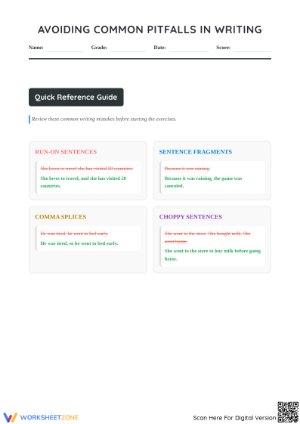
Advanced students who move through the identification tasks quickly can extend each worksheet by transforming the phrases into full clauses, then combining those clauses into a sentence that avoids run-on or comma splice errors. That extension requires holding three grammar concepts simultaneously — a challenge that reliably occupies students who otherwise disengage from grammar practice. For students receiving intervention support, narrowing the focus to phrase versus clause only, and holding off on the independent/dependent distinction until the first concept is solid, reduces cognitive load without removing the core rigor of the task.
Frequently Asked Questions
What is the difference between a phrase and a clause, explained simply for 7th graders?
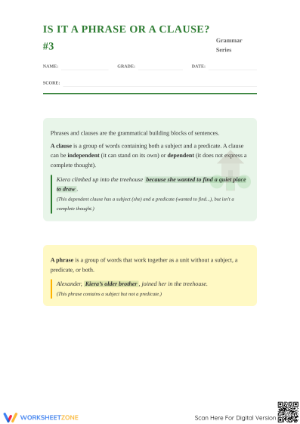
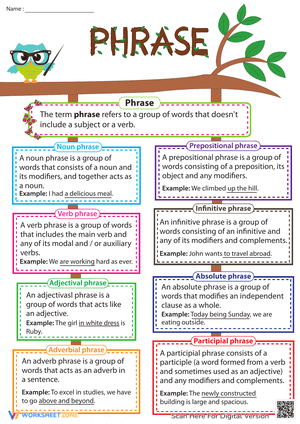
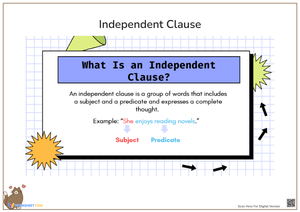
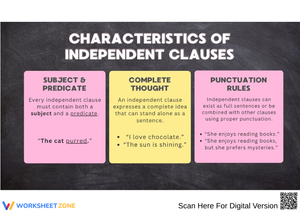
A phrase is a group of words missing either a subject or a predicate — or both. A clause has both. An independent clause expresses a complete thought and can stand alone as a sentence. A dependent clause also contains a subject and verb, but a subordinating conjunction makes it unable to stand alone without an independent clause attached.
How many practice rounds do students typically need before this distinction becomes reliable?
Most students need three to five exposures across different activity types before the distinction becomes automatic. Two identification worksheets followed by sentence-combining and original-writing practice cover that range. Students with limited sentence-grammar background may need an additional review round before the independent/dependent clause distinction holds in their own writing.
Can these worksheets support test preparation?
Yes. State ELA assessments aligned with CCSS standards frequently include grammar editing tasks where students identify or correct sentence errors — fragments and run-ons especially. Strong phrase and clause recognition directly supports those items. The 7th grade phrases and clauses pdf worksheets also give students the grammar vocabulary they need for constructed-response answers when a prompt asks them to analyze sentence structure in a reading passage.
Do the worksheets work for students who missed the original lesson?
They do, particularly the worksheets that include definitions and worked examples before the practice items begin. Students who missed class can read the definitions, study the examples, and attempt the identification tasks with reasonable independence. A five-minute check-in is still worth building in, because the dependent clause concept tends to need a short conversation before it fully clicks.












 Interactive Worksheet Maker
 Quiz Maker
 Word Search Maker
 Crossword Puzzle Maker
 Word Scramble Generator
 Sentence Scramble Generator
 Handwriting Worksheet Generator
 Name Tracing Generator
 Fill In The Blank Generator