




























Views
Downloads

Types of Phrases Worksheet | Grade 7 ELA Printable

Paste this activity's link or code into your existing LMS (Google Classroom, Canvas, Teams, Schoology, Moodle, etc.).
Students can open and work on the activity right away, with no student login required.
You'll still be able to track student progress and results from your teacher account.
This comprehensive grammar worksheet helps middle school students master sentence structure by identifying and generating various types of phrases. By moving from a clear reference chart to active sentence writing, learners build the syntactic control necessary to craft more complex, descriptive, and varied sentences in their own writing.
At a Glance
- Grade: 7 · Subject: ELA
- Standard:
CCSS.ELA-LITERACY.L.7.1.A— Explain the function of phrases and clauses.- Skill Focus: Types of Phrases
- Format: 4 pages · 12 problems · Answer key included · PDF
- Best For: Independent practice and grammar review
- Time: 20–30 minutes
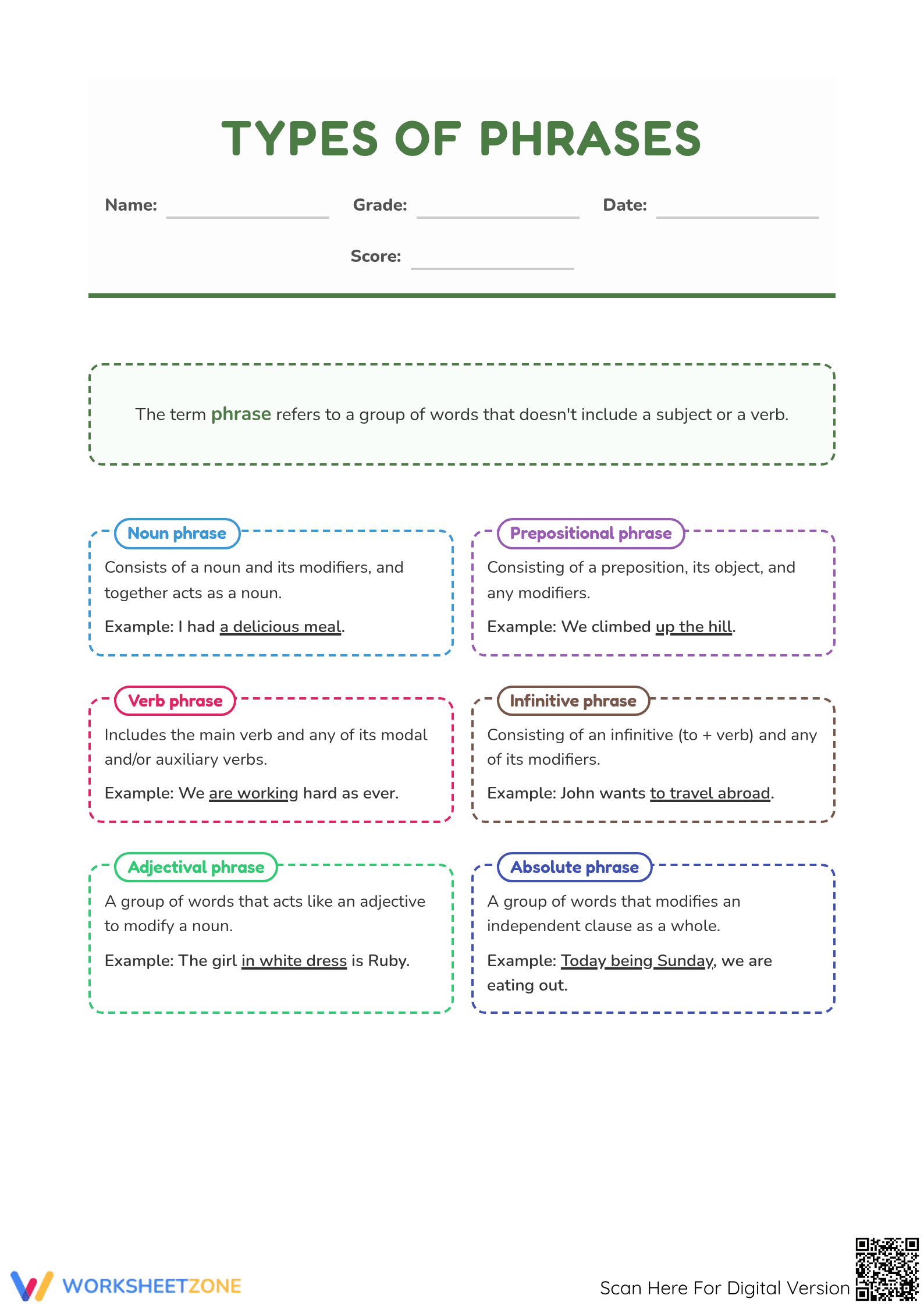
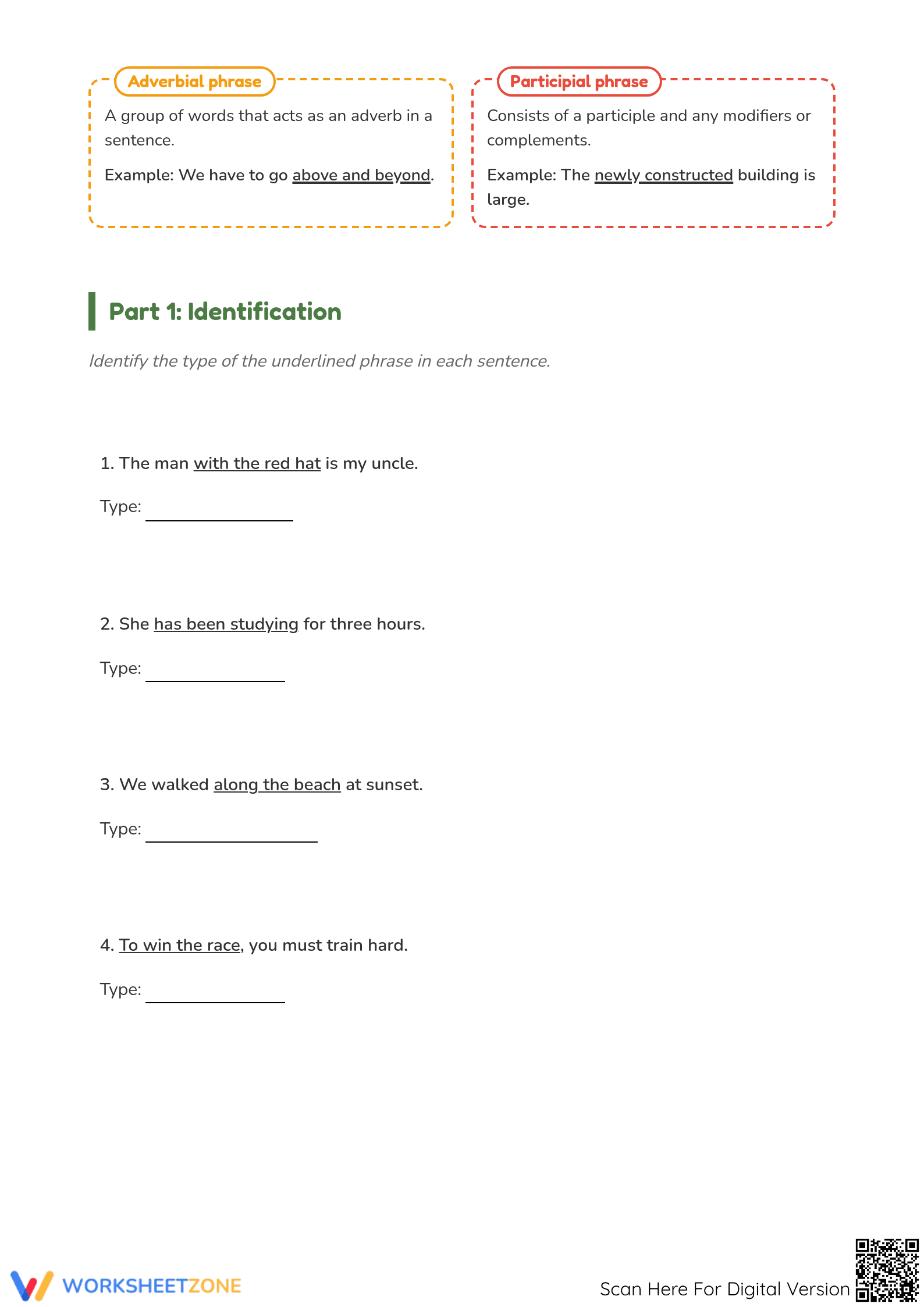
This four-page resource opens with a detailed reference chart defining and illustrating eight phrase types: noun, prepositional, verb, infinitive, adjectival, absolute, adverbial, and participial. Following the chart, students tackle 12 targeted questions broken into three distinct task types. The packet includes a complete answer key with possible responses for the open-ended sections, making grading straightforward and efficient.
- Guided practice: Part 1 features 5 identification problems where students analyze underlined phrases in pre-written sentences, relying on the provided chart for support.
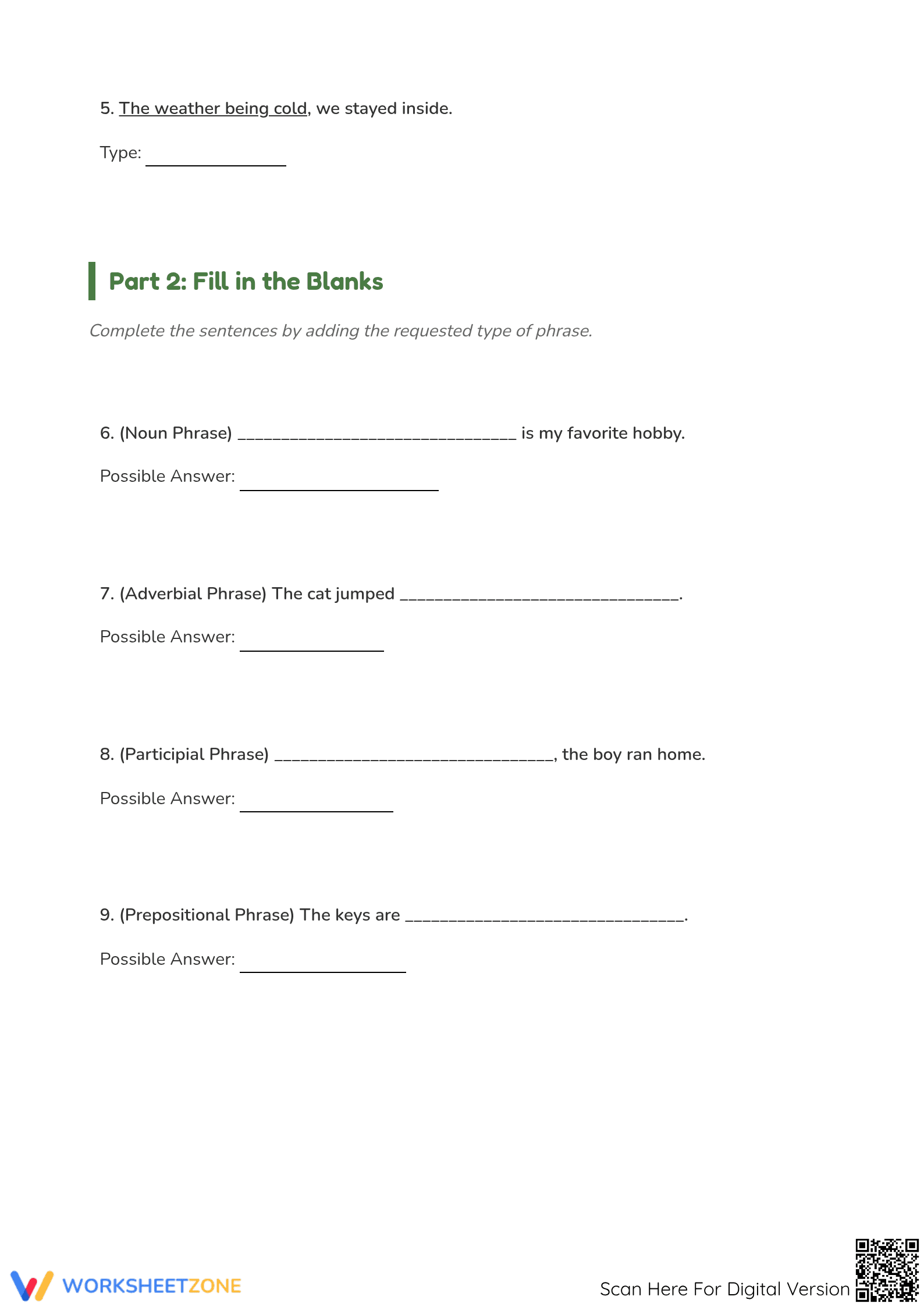
- Supported practice: Part 2 offers 4 fill-in-the-blank exercises requiring learners to supply a specific phrase type to complete a sentence frame.
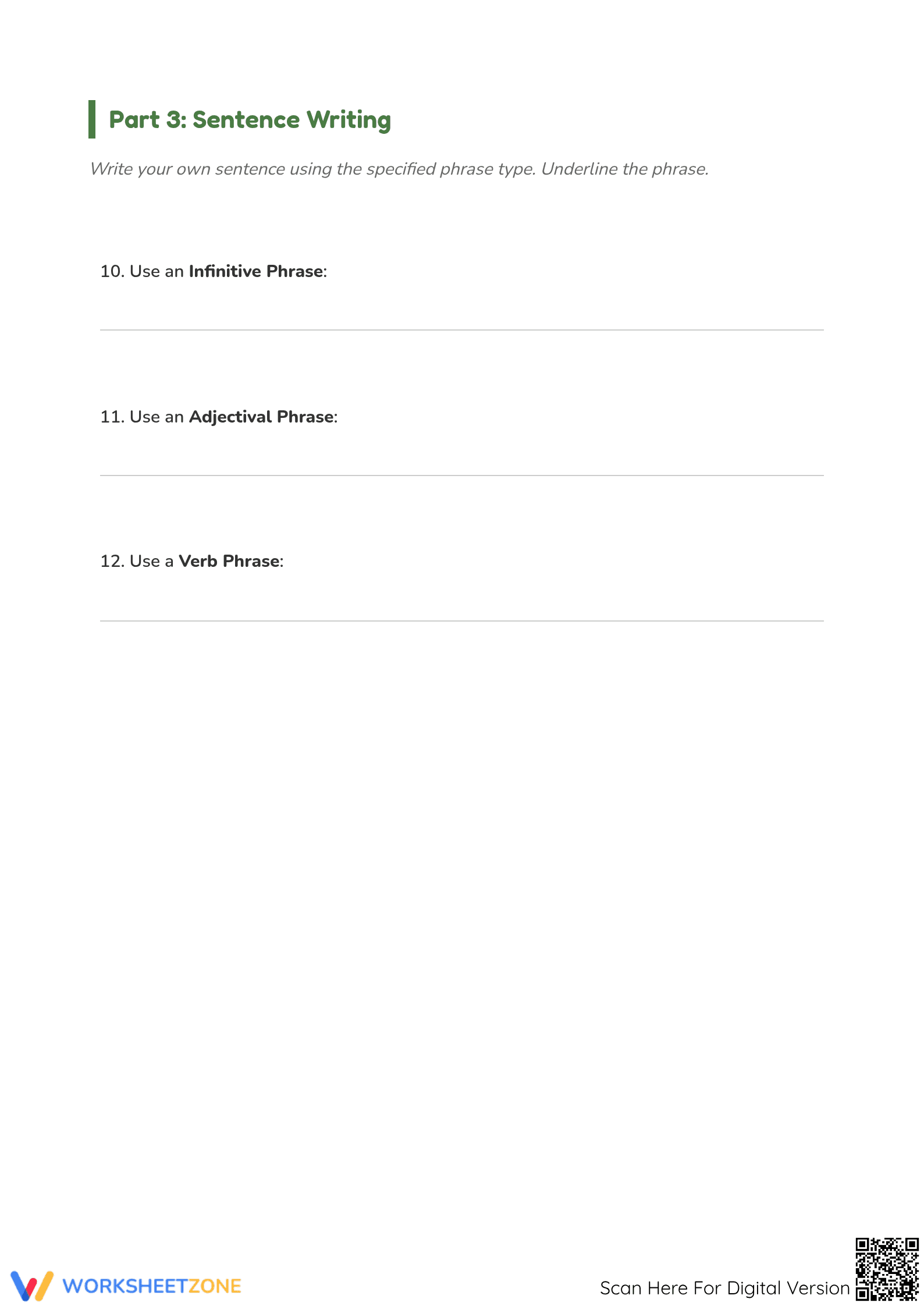
- Independent practice: Part 3 challenges students with 3 sentence-writing tasks where they must construct original sentences using specified phrase types.
This gradual-release model ensures students build confidence before attempting to generate complex structures independently.
This resource is directly aligned to CCSS.ELA-LITERACY.L.7.1.A, requiring students to explain the function of phrases and clauses in general and their function in specific sentences. It also supports foundational grammar skills for grades 5 and 6. Both standard codes can be copied directly into lesson plans, IEP goals, or district curriculum mapping tools.
Deploy this worksheet immediately following direct instruction on sentence structure. The built-in reference chart makes it an excellent candidate for independent station work or a reliable substitute teacher plan. As a formative assessment tip, review students' original sentences in Part 3 to verify they are not accidentally writing full independent clauses when a phrase is requested. Expect the entire packet to take 20 to 30 minutes to complete.
This material is designed for 5th, 6th, and 7th-grade language arts students developing their syntactic awareness. The clear definitions and examples on the first page provide essential scaffolding for English Language Learners or students needing extra support with grammar terminology. Pair this activity with a mentor text analysis where students hunt for absolute or participial phrases in published literature.
Mastering syntactic variety through explicit grammar instruction is a critical component of adolescent literacy development. This resource targets CCSS.ELA-LITERACY.L.7.1.A, helping students explain the function of phrases and clauses to improve sentence complexity. According to Fisher & Frey (2014), providing students with clear reference tools alongside gradual-release practice significantly reduces cognitive overload during complex grammar tasks. By transitioning learners from basic identification to original sentence generation, this worksheet reinforces the structural mechanics required for advanced academic writing. The inclusion of eight distinct phrase types ensures comprehensive exposure, allowing educators to accurately measure student proficiency in manipulating sentence components. This structured approach to grammar practice directly supports broader reading comprehension and writing fluency goals across the middle school curriculum.


