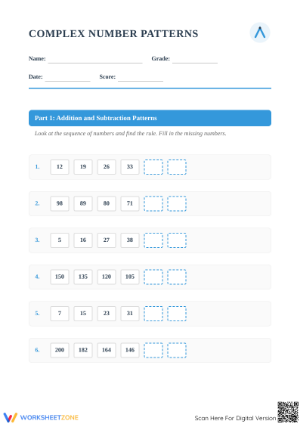
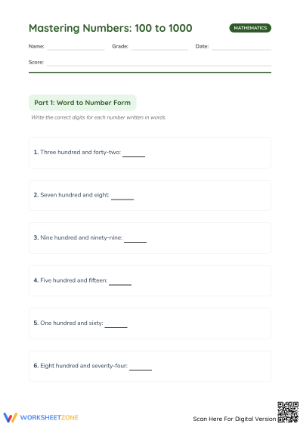
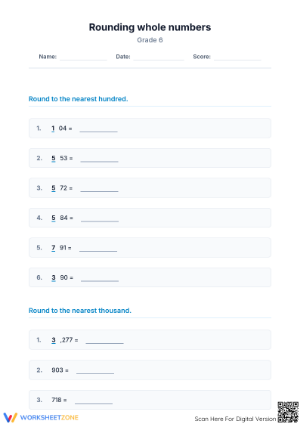
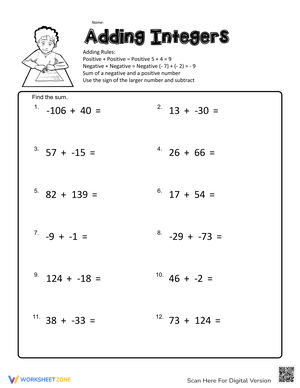
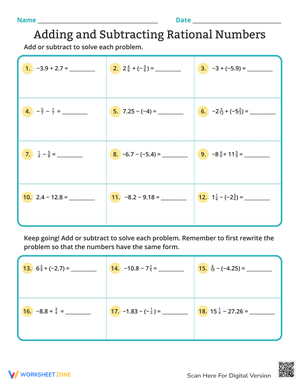
These numbers printable worksheets for 6th grade cover the year's full number strand — fractions, decimals, ratios, percent, integers, and place value — giving teachers a targeted practice bank they can match to whatever unit is currently running. Grade 6 is a genuine turning point in math: students leave behind the relative comfort of whole-number reasoning and enter less familiar territory, including ratio thinking, negative numbers, and operations with rational numbers. That shift calls for consistent, purposeful practice built around specific skills rather than broad mixed review.
What These Worksheets Target, Skill by Skill
Each worksheet addresses a distinct slice of the grade 6 number strand so teachers can pull exactly what a lesson or small group needs. The skills covered include:
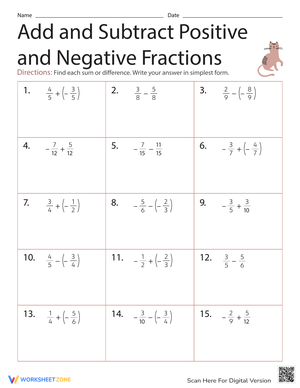
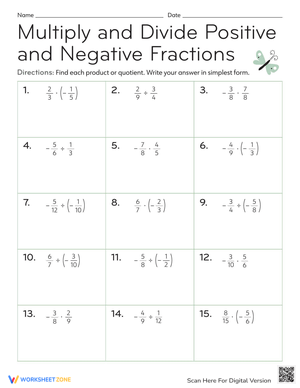
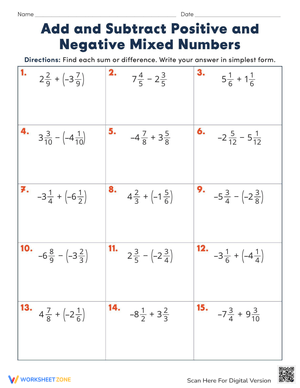
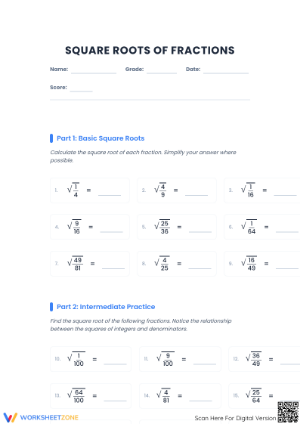
- Fractions: comparing and ordering fractions with unlike denominators, equivalent fractions, all four operations, and multi-step fraction word problems
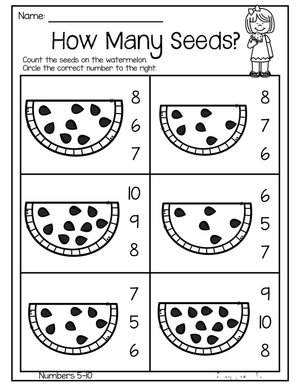
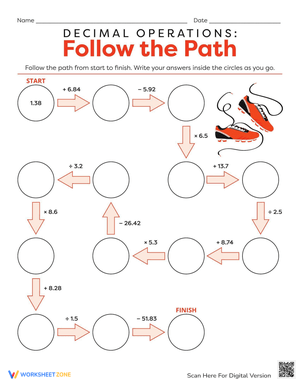
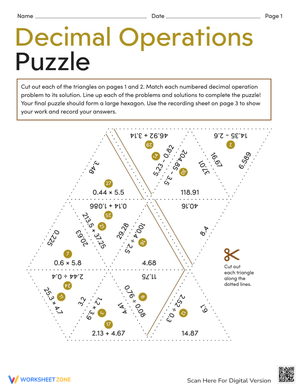
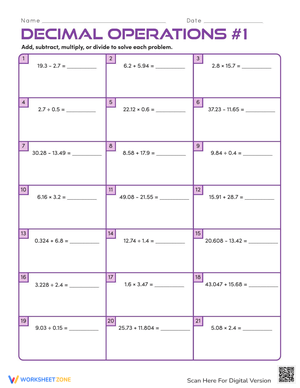
- Decimals: place value through thousandths, rounding, comparing, operations, and decimal models on hundredths grids
- Ratios and rates: ratio tables, tape diagrams, unit rate calculations, and real-world comparison problems involving recipes, speed, and pricing
- Percent: finding a percent of a quantity, percent increase and decrease, and discount and markup problems
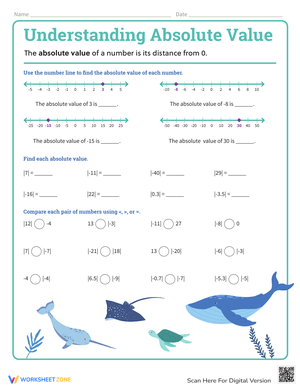
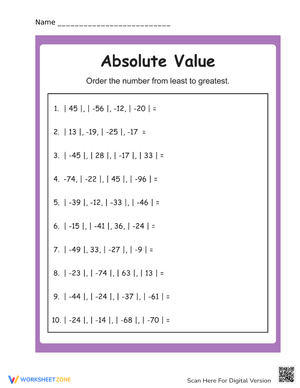
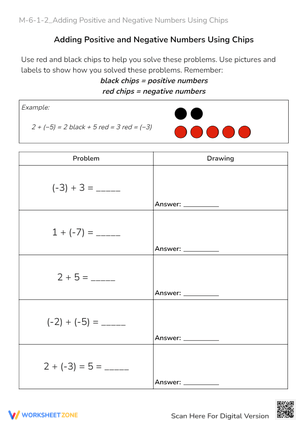
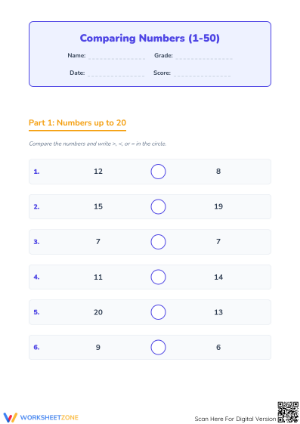
- Integers: ordering on a number line, opposites, absolute value, and temperature and elevation contexts
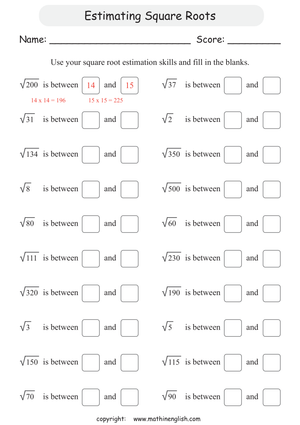
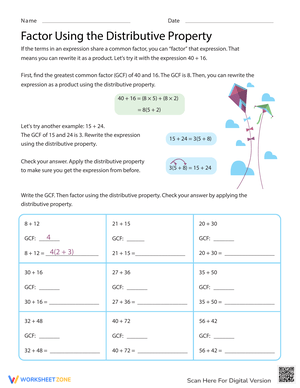
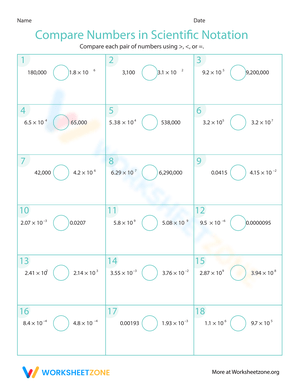
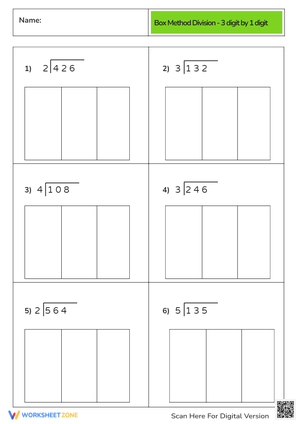
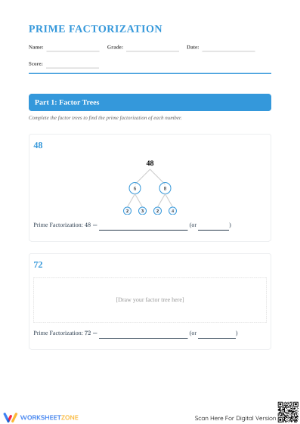
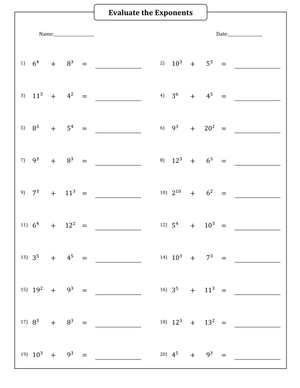
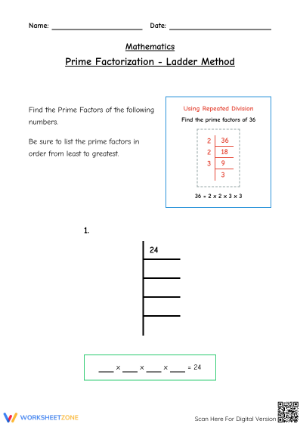
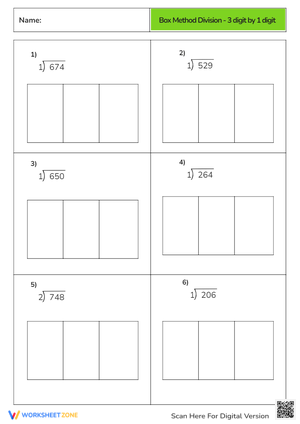
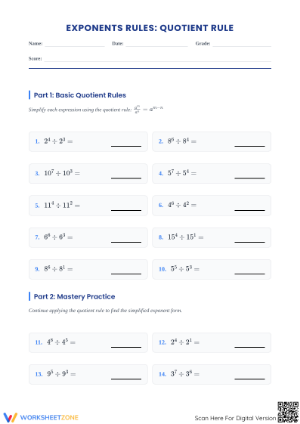
- Place value and multi-digit operations: powers of 10, standard algorithm review for multiplication and division, and factor and multiple work
Numbers printable worksheets for 6th grade are most useful when organized this way — by specific skill — because teachers need to locate and deploy them quickly. A well-sorted set also makes targeted reteaching during small-group time far less time-consuming to plan.
Errors That Show Up in Student Work — and Why They Matter Here
Several predictable misconceptions emerge when 6th graders work with the number strand, and knowing them in advance helps teachers notice the right things during independent practice.
Integer ordering is where the sharpest confusion usually lives. Students who have spent years building the understanding that larger digits mean larger values will often mark -9 as greater than -3 on a number line task, because 9 is unambiguously greater than 3 in every context they have previously encountered. Number line worksheets that ask students to plot and label both positive and negative values — then compare them — do more to address this than any written rule alone.
Fraction addition errors follow a similarly durable pattern. A student who correctly simplifies 3/6 to 1/2 will still write 1/3 + 1/4 = 2/7 because adding across numerators and denominators simultaneously feels procedurally consistent with what addition means to them. Worksheets that insert an estimation step — "Is this answer closer to 0, 1/2, or 1?" — before the computation step catch this error before it becomes ingrained.
Ratio problems surface a different issue: students routinely treat a 3:5 ratio as if 3/5 of the total belongs to one part, rather than recognizing the whole as 8 units. This part-to-part versus part-to-whole confusion affects both ratio tables and percent tasks, and worksheets that use tape diagrams to visualize the structure before any calculation is introduced help students distinguish the two relationships clearly.
Building These Worksheets Into Your Lesson Plans
Getting real instructional return from numbers printable worksheets for 6th grade depends on sorting each worksheet into one of three buckets before the unit begins: introduce, practice, or check. An introduce worksheet includes a worked example or visual model alongside a limited problem set — right for the first day of a concept, when cognitive load is already high. A practice worksheet focuses on independent work with varied problem types and belongs one or two days later. A check worksheet uses 6 to 8 mixed items to reveal who is ready to move on and who needs another pass through the skill.
This sorting habit changes how the set functions across a week. On Monday, a short 4-problem decimal warm-up gives students low-stakes re-entry after the weekend without requiring new instruction. By Wednesday, a full practice worksheet on unit rates works for independent seat time following a direct lesson. On Friday, a brief formative check — not a graded quiz, just a half-sheet — shows which students have consolidated the week's learning and which ones need a targeted pull the following Monday.
Small-group intervention is where these worksheets probably do their most important work. Pulling three or four students who reversed integer ordering the day before, handing them a focused number line worksheet, and spending 12 minutes on it together produces more traction than a whole-class re-explanation. The worksheet becomes the anchor of the conversation rather than just a task to complete.
Standard Alignment
These worksheets align to two core domains of the Common Core State Standards for Grade 6 Mathematics. The first is 6.RP (Ratios and Proportional Relationships), which covers ratio concepts, unit rates, equivalent ratios, and percent reasoning — all addressed across the ratio and percent worksheets in this set. The second is 6.NS (The Number System), covering multi-digit computation, fraction division, decimal operations, and the extension of the number line to include negative rational numbers. The 6.NS.C cluster — which formally introduces integers, absolute value, and the four-quadrant coordinate plane — is where many students hit their first real conceptual wall in grade 6, making focused practice for that cluster especially valuable in the second half of the year.
Adjusting These Worksheets for a Range of Student Readiness Levels
Differentiation with this set does not require writing entirely separate tasks for every tier. Most adjustments are structural. For students still building fluency, reduce the problem count, use friendlier numbers — unit fractions instead of complex mixed numbers, single-digit integer values — and include a reference model at the top of the worksheet. For on-level students, use the standard version with a mix of computation, comparison, and a short word problem. For students ready for extension, replace the straightforward computation items with error analysis: present a worked solution containing a mistake and ask students to locate and correct it. Error analysis is particularly effective for students who finish quickly and need to slow down and reason rather than produce answers faster.
One honest limitation worth naming: error analysis items frustrate students who are not yet secure in the underlying procedure. If a student cannot reliably add fractions with unlike denominators on their own, they cannot meaningfully evaluate whether someone else's method is correct. Reserve those items for students who have demonstrated basic procedural fluency first.
Frequently Asked Questions
Which number topics should teachers prioritize for repeated practice in grade 6?
Ratio reasoning, fraction operations, and integer concepts deserve the most frequent return visits because they are foundational to 7th-grade proportional thinking and operations with rational numbers. Decimals and percent matter too, but students often carry stronger decimal intuitions from 5th grade — ratio and integer work is where grade 6 brings genuinely new territory.
How many problems should a grade 6 number worksheet include?
For most skill-focused practice, 8 to 12 problems is a reasonable range. Multi-step ratio or percent problems warrant fewer items — around 5 to 8 — so students have time to work carefully and show their reasoning. Warm-up or formative check worksheets can be as short as 4 to 6 items and still produce useful information about where students are.
Can these worksheets work for homework, or are they better for classroom use?
Both uses are legitimate, but the purpose should shape the choice. Worksheets with visual models and example prompts are better suited to classroom use, where a teacher can address confusion as it arises. Cleaner computation and application worksheets — with straightforward directions and included answer keys — translate better to homework. Numbers printable worksheets for 6th grade work for either context when the right worksheet is matched to the right setting.
How do I keep worksheet practice from feeling repetitive for students?
Keep individual practice sessions short and purposeful. A 10 to 15 minute focused worksheet followed by a structured debrief — even just two or three problems discussed aloud — carries more instructional weight than 30 minutes of silent problem completion. Mixing in peer checking, brief error discussions, or asking students to write one sentence explaining a single answer also shifts the work from rote production toward genuine mathematical thinking.













 Interactive Worksheet Maker
 Quiz Maker
 Word Search Maker
 Crossword Puzzle Maker
 Word Scramble Generator
 Sentence Scramble Generator
 Handwriting Worksheet Generator
 Name Tracing Generator
 Fill In The Blank Generator