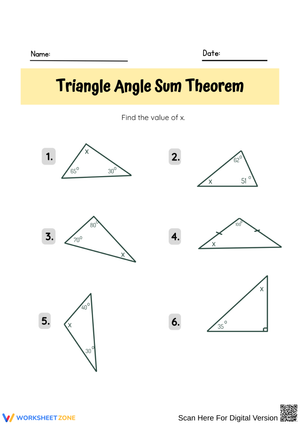
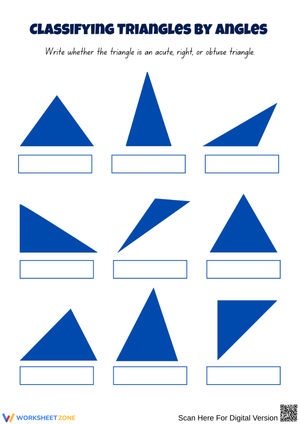
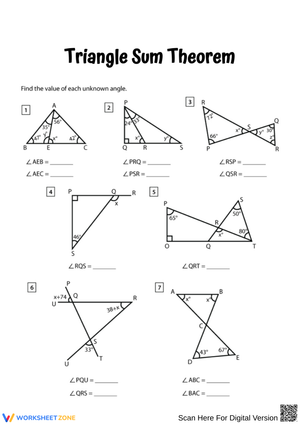
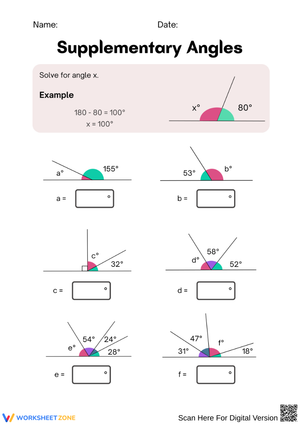
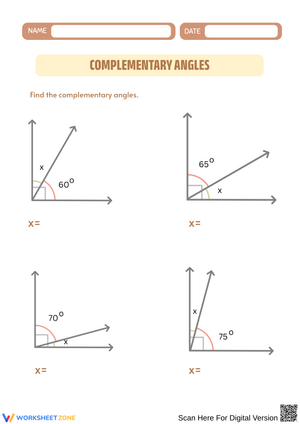
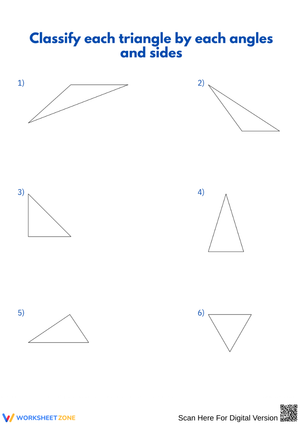
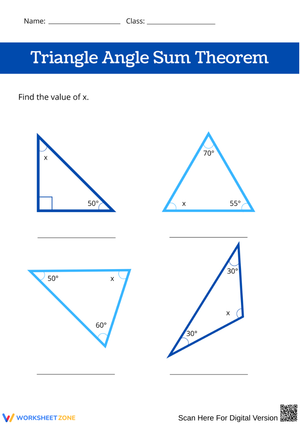
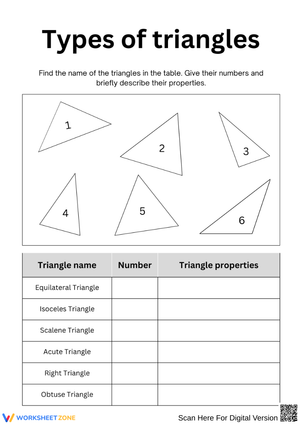
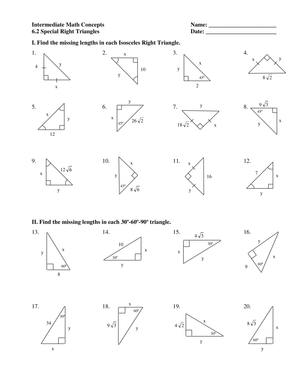
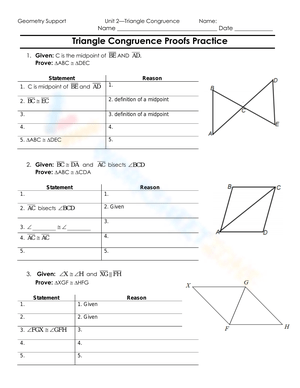
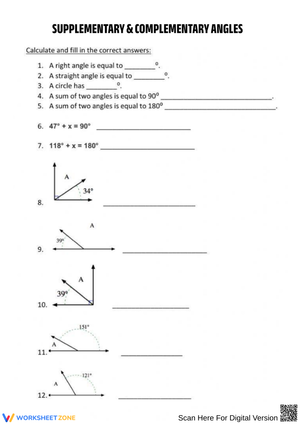
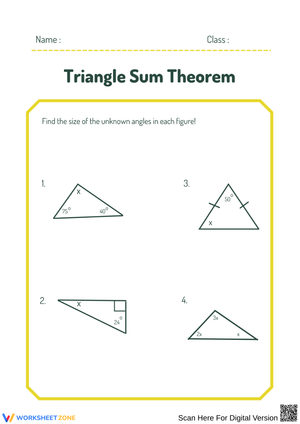
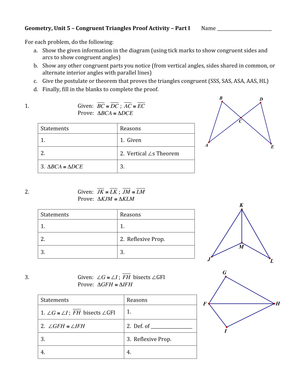
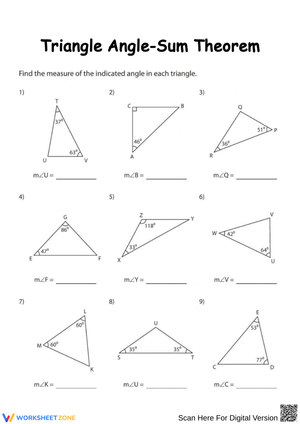
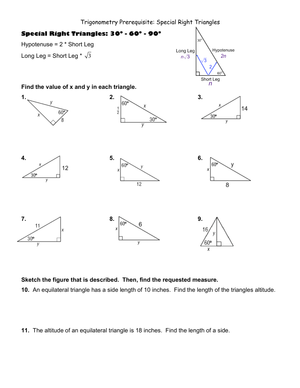
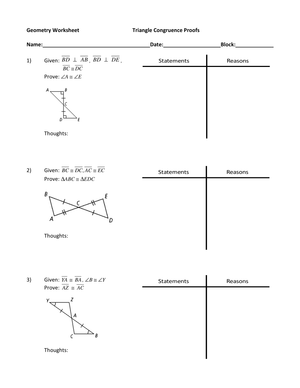
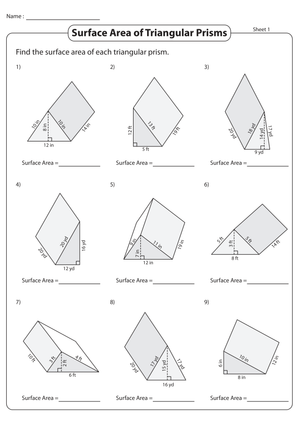
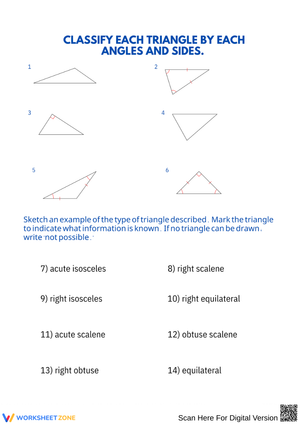
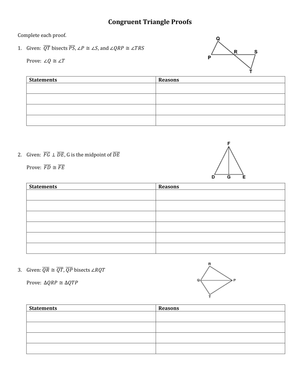
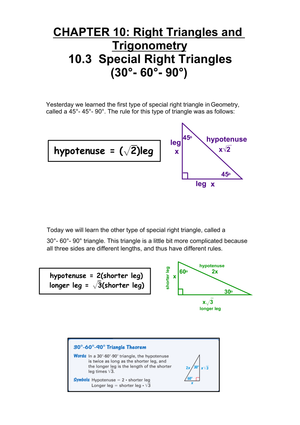
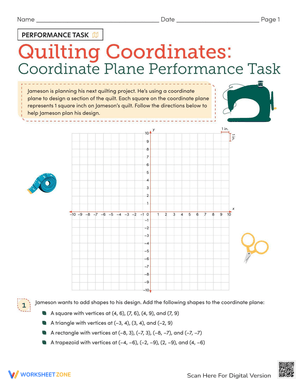
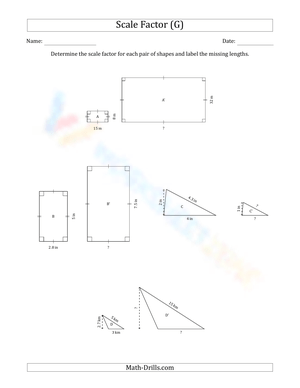
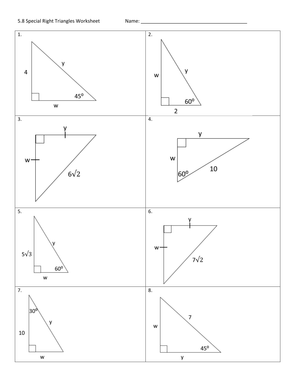
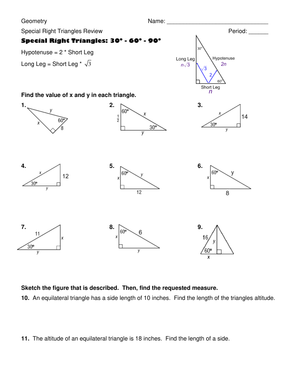
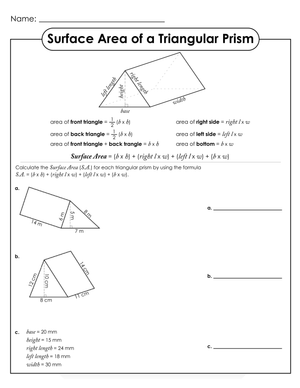
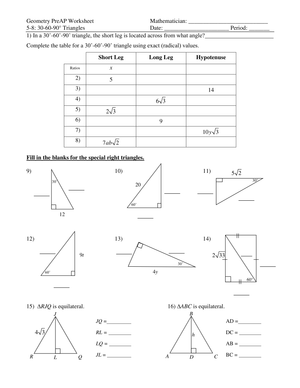
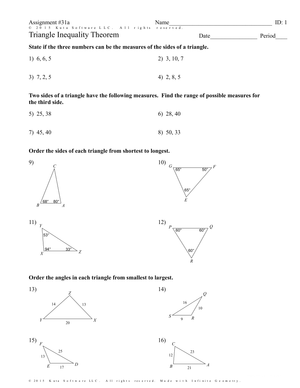
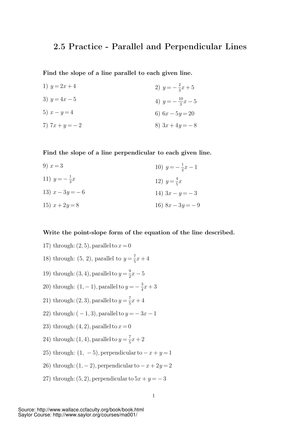
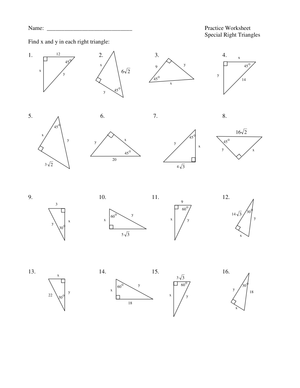
These triangles printable worksheets for 6th grade target the specific geometry moves that grade 6 demands: classifying triangles by both sides and angles, applying the angle-sum property to find missing measures, and calculating area and perimeter from labeled diagrams. Each worksheet stands alone—printable, sized for a focused classroom slot, and matched to a clear skill target. Teachers get a set they can sort by purpose and assign by need rather than working through a fixed sequence.
The Specific Skills Each Worksheet Targets
Grade 6 is when geometry stops being about naming shapes and starts requiring students to reason with them. Students who arrive from 5th grade can usually point to a triangle; what they cannot yet do reliably is explain why it qualifies as acute rather than right, or calculate its area when the height is not a visible side. Each worksheet addresses a definite gap rather than repeating what students already know.
- Classification by sides: identifying scalene, isosceles, and equilateral triangles from measurements or tick marks
- Classification by angles: distinguishing acute, right, and obtuse triangles, including figures that carry two classification labels at once—such as a right isosceles triangle
- Angle-sum reasoning: using the 180° rule to find a missing interior angle, with some items presenting two known angles and requiring subtraction from 180
- Perimeter: adding given side lengths, and in some items, recovering a missing side from a stated perimeter total
- Area: applying ½ × base × height, with close attention to identifying the correct height in non-right triangles
- Vocabulary in context: matching terms to diagrams, completing sentence frames, and writing brief justifications for a classification choice
A worksheet that keeps classification and calculation on the same figure—asking students to identify the triangle type and then find its area—builds more durable understanding than worksheets that never connect those two moves. The connection is the skill.
Mistakes Students Make That These Worksheets Help You Catch
The most consistent error in 6th grade triangle work is the area formula: students multiply base times height and stop, skipping the ½. It appears even after direct instruction. On a worksheet, the error is easy to spot—a student who writes 24 instead of 12 for a triangle with base 6 and height 4 has the multiplication right but the concept wrong. That distinction matters for reteaching, because the fix is conceptual, not computational.
Height identification in obtuse triangles is the second major trap. When the altitude falls outside the triangle, most students draw a vertical line from the highest vertex down to the base regardless of where it lands geometrically, or they measure a slant side and call it the height. A worksheet that includes at least two obtuse triangles with unlabeled heights pushes this confusion into the open. Students who handle right triangles accurately often fall apart here.
Classification errors cluster around overlapping categories. A right isosceles triangle reliably stumps students who have learned classification as if each triangle belongs to exactly one group. They will mark it "right" or mark it "isosceles" but resist marking both. This is a conceptual gap, not a vocabulary gap, and it surfaces in student work far more often than teachers expect before they have seen it firsthand.
How to Work These Worksheets Into Your Lesson Plans
The right fit depends on where you are in the unit. A classification worksheet lands well at the start—five items during the opening minutes of class tells you immediately who has the vocabulary and who does not. Area and perimeter worksheets belong after modeling and a first round of guided practice, not before. Assigning them before instruction produces students guessing at the formula rather than applying it, and that guessing is hard to undo once it becomes a habit.
- Bell ringers: Three classification items or a single missing-angle problem—fast enough for the seven minutes before attendance is done, focused enough to prime the lesson.
- Post-modeling practice: One focused worksheet immediately after the teacher models a procedure. Proximity matters; students need to attempt the skill while the example is still on the board.
- Geometry stations: Sorting and cut-and-match worksheets work well at a center where students rotate every 12–15 minutes.
- Small-group reteach: Pull whichever worksheet isolates the specific error you spotted during independent work and address it with a small group at the back table.
- Pre-unit check: Run a mixed-skill worksheet at the start of the geometry unit to find out who already understands classification and who needs more time before area work begins.
Treating each worksheet as a brief diagnostic—rather than extra practice to fill time—changes what the set gives you. A teacher who collects returned worksheets and groups them by error type plans a more targeted next day than one who simply marks items right or wrong and moves on.
Adjusting the Set for a Range of Learners
For students still building fluency with triangle vocabulary, start with visual sorting tasks—worksheets where students circle, color-code, or group triangles by type before any numbers appear. A small reference card with definitions and example figures reduces the memory demand enough that students can focus on the classification decision itself rather than struggling to recall what "scalene" means while simultaneously counting tick marks. These worksheets do not replace vocabulary instruction; they give students structured practice applying terms they have already encountered.
On-level students handle mixed worksheets well: classify the triangle, apply the angle-sum rule to find the missing angle, then calculate area. That three-step chain within a single item mirrors how geometry questions appear on assessments, so the practice transfers. Triangles printable worksheets for 6th grade that link classification, angle reasoning, and area calculation—rather than isolating each skill on a separate worksheet—produce stronger retention across the unit.
For students ready for extension, error analysis tasks work harder than additional computation. Give them a worked problem where the height was misidentified in an obtuse triangle and ask them to locate the error, correct the calculation, and explain in writing why the original measurement was wrong. These tasks work best after students have practiced the correct procedure enough times that they have a reliable reference point to compare against. A student who completes one successfully has a firmer grip on the concept than one who can only execute the formula on a familiar, straightforward figure.
Standard Alignment
These triangles printable worksheets for 6th grade address CCSS 6.G.A.1, which requires students to find the area of triangles and other polygons by composing and decomposing shapes. The standard places area in a reasoning context—students are expected to explain why ½ × base × height gives the area of a triangle, not only apply it mechanically. A worksheet item that asks students to write a sentence justifying their height selection connects directly to that expectation. Classification work supports the diagram-reading and vocabulary that underpins 6.G.A.1 and extends into 7th grade geometry, where triangle properties anchor reasoning about scale drawings and cross-sections.
Frequently Asked Questions
Which triangle skills matter most at the 6th grade level?
Classification by sides and angles, the 180° angle-sum rule, perimeter, and area using ½ × base × height are the core skills at this grade. Of these, area causes the most consistent difficulty because it requires both formula knowledge and the ability to identify the correct height—which in obtuse triangles often falls outside the visible figure.
Can these worksheets serve as both practice and quick formative assessment?
Yes. A focused worksheet with clear items and an answer key works as formative assessment when teachers read the error patterns across the class rather than simply marking items correct or wrong. Sorting returned worksheets by mistake type gives a sharper picture of what the class needs next than any summary score.
How do these worksheets differ from what students practiced in 5th grade?
Fifth grade geometry centers on shape recognition and attribute sorting. Sixth grade requires students to calculate—area and perimeter from given measurements—and to apply a formal rule like the angle-sum property to recover missing values. Triangles printable worksheets for 6th grade carry a heavier reasoning load: labeled diagrams with measurements, missing values that require multi-step arithmetic, and short justification prompts that 5th grade materials typically skip entirely.
Do these worksheets include answer keys?
Yes. Answer keys support self-checking routines during partner work, cut grading time on review days, and allow students to correct errors during a brief class discussion—which is generally more effective than returning a marked worksheet a day later when the class has already moved on.













 Interactive Worksheet Maker
 Quiz Maker
 Word Search Maker
 Crossword Puzzle Maker
 Word Scramble Generator
 Sentence Scramble Generator
 Handwriting Worksheet Generator
 Name Tracing Generator
 Fill In The Blank Generator