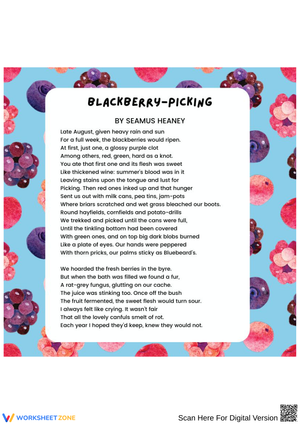
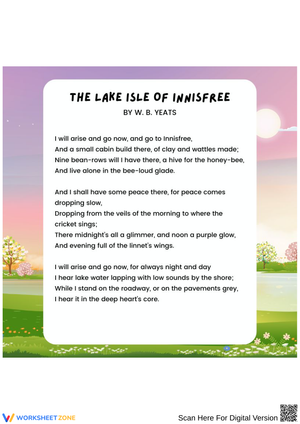
6th grade poetry printable worksheets give ELA teachers a way to work poetry into the weekly schedule as a regular practice rather than a unit-length event — each worksheet handles close reading, figurative language analysis, or original writing without needing elaborate setup. By sixth grade, most students can hold a poem in mind long enough to dig into structure and meaning, but they still need a concrete task to keep that digging focused. These resources supply that focus.
The Skills Each Worksheet Targets
The set of 6th grade poetry printable worksheets addresses the full range of poetry skills expected in a grade 6 ELA classroom, from noticing craft at the word level to constructing evidence-based claims about theme. Students do not just identify devices — they explain what those devices do.
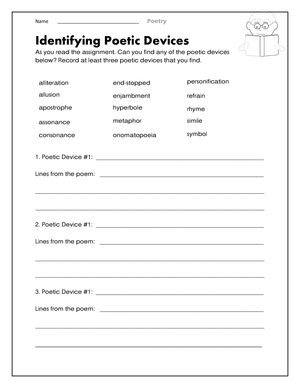
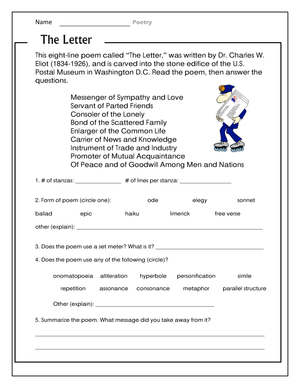
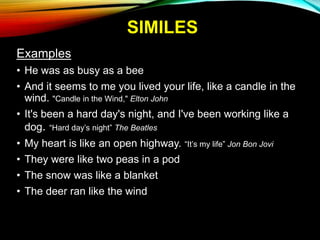
- Figurative language identification and effect: students underline similes, metaphors, personification, and imagery, then write a sentence explaining what each device adds that a literal statement could not.
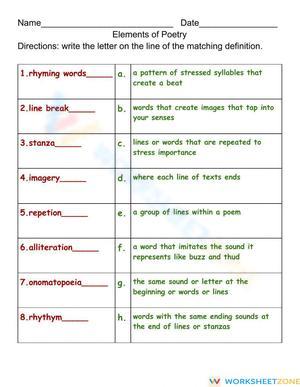
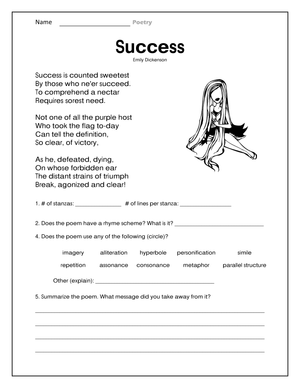
- Rhyme scheme and sound patterns: students label end rhyme, track internal repetition, and describe how sound structure shapes the mood or pace of a poem.
- Stanza structure: students annotate line breaks and stanza divisions, then consider why the poet grouped lines that way rather than another.
- Speaker and tone: students identify who is speaking, mark attitude in word choice, and write a short claim about how tone shifts across stanzas.
- Theme and text evidence: students build a written response around a central message, citing specific words and lines as support.
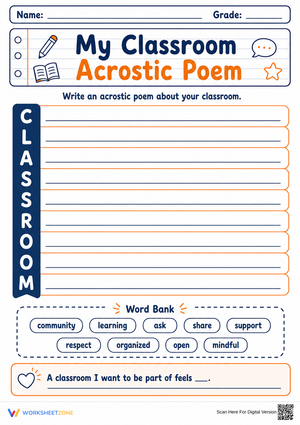
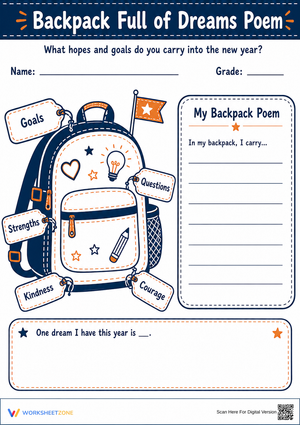
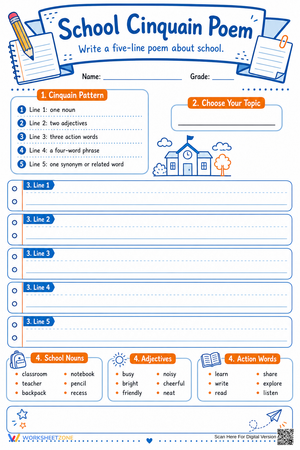
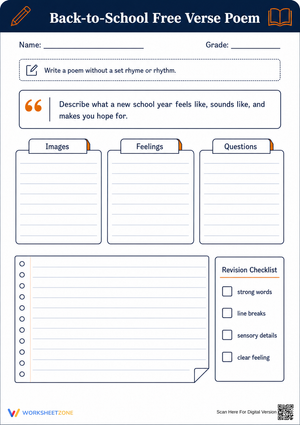
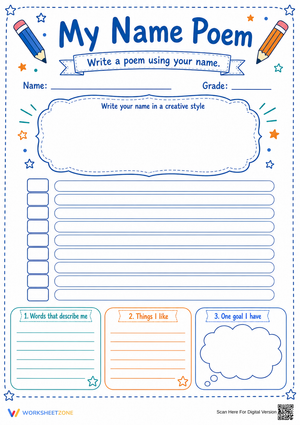
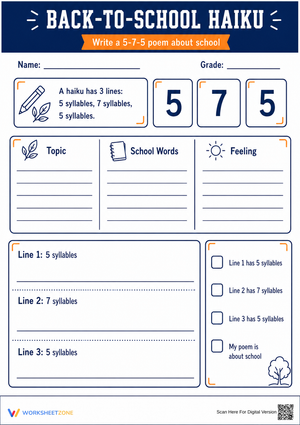
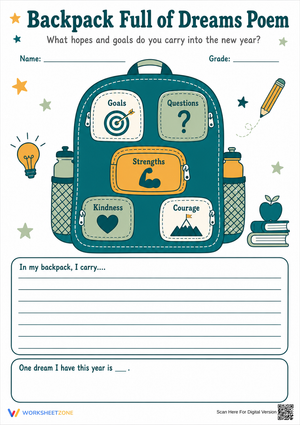
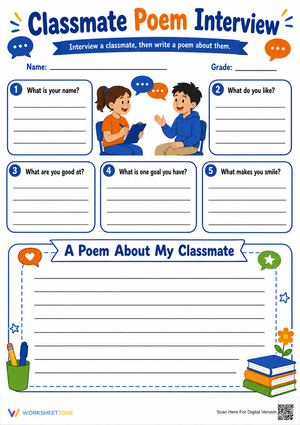
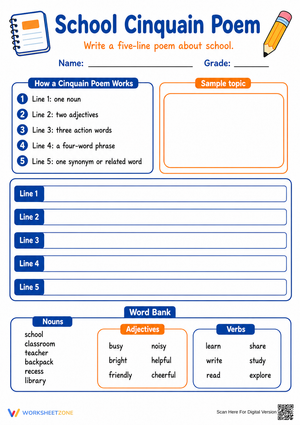
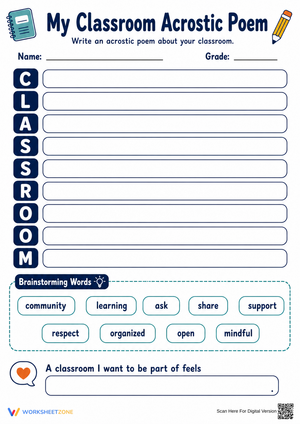
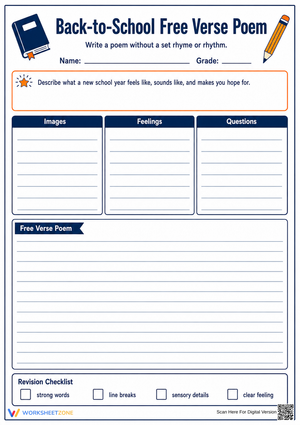
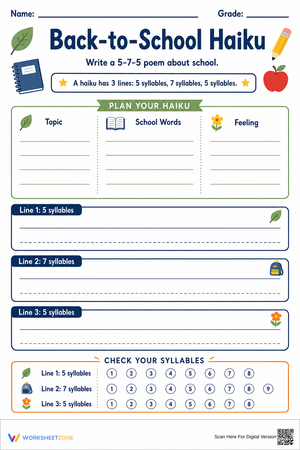
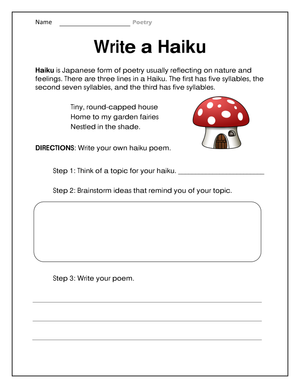
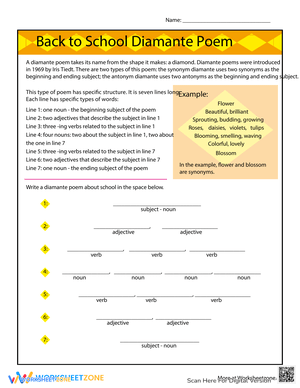
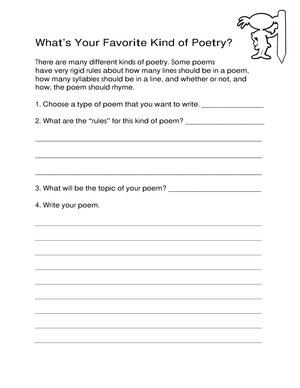
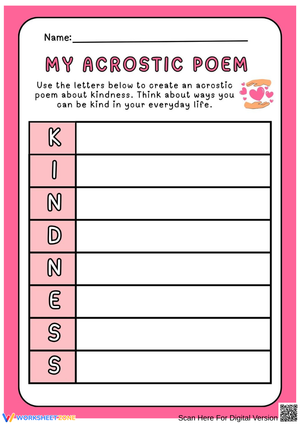
- Original poetry writing: several worksheets include structured writing tasks — line starters, word banks, or imitation formats — that move students from reading a poem to drafting their own.
Lesson-Planning Strategies for Getting the Most From These Worksheets
The most reliable slot for poetry practice in a middle school ELA block is the first eight minutes of class. A short analysis worksheet as a bell ringer asks students to read one stanza, mark one device, and write one sentence of explanation before the lesson shifts. That rhythm, repeated two or three times a week, builds genuine familiarity with poetic language without eating into core instructional time.
During a mini-lesson, project the poem and work through the first two questions as a class before releasing students to finish independently or with a partner. One approach that consistently produces stronger written responses: use the same poem on two consecutive days. On day one, students identify craft moves such as imagery or repetition. On day two, they return to the exact same poem and analyze tone or theme. Because they are no longer spending cognitive energy on first impressions, the textual evidence they cite tends to be more precise and more varied. For centers, give one group an annotation worksheet, another a figurative language task, and a third a writing organizer — all within the same genre, all running at the same time. Directions are self-contained on each worksheet, which makes them equally workable for homework and substitute plans without requiring any prior setup or introduction.
Patterns in Student Work Worth Anticipating
The most persistent error at this grade is conflating tone with theme. A student writes "the theme is sad" when they mean the speaker sounds mournful — they have noticed an emotional quality in the language but named it as the poem's larger message. These worksheets separate tone and theme into distinct questions with different response frames: tone prompts ask students to describe the speaker's attitude and cite the word choices that signal it, while theme prompts ask what claim the poem makes about a larger human experience.
Shallow figurative language analysis is the second consistent pattern. A student who correctly labels a metaphor will often stop there, as if naming the device completes the job. The figurative language worksheets in this set pair every identification task with an effect question — "What does this comparison help you understand that a literal sentence could not?" — because that push toward explanation is where actual comprehension lives at this level.
Speaker and poet are also routinely collapsed by sixth graders. Even when a poem clearly places the voice in a specific time or persona, students assume the speaker is the author. Written tasks on these worksheets ask students to describe the speaker's situation using textual evidence, which forces close reading rather than projection.
Standard Alignment
The 6th grade poetry printable worksheets in this set align with CCSS.ELA-Literacy.RL.6.4, which asks students to determine the meaning of figurative and connotative language and analyze the impact of word choice on meaning and tone. That standard sits at the center of sixth grade poetry instruction because it requires students to move beyond labeling devices toward explaining what those choices do — a distinction visible in every analysis task built into the worksheets. The resources also support RL.6.1 (citing textual evidence) and RL.6.2 (determining theme), both of which appear in the written response questions across the set.
Differentiating the Worksheets for Mixed-Ability Classrooms
For students who need more support, the most effective move is not to simplify the poem — it is to add more structure to the task. Chunked questions, bolded task verbs, sentence starters, and annotation guides that specify exactly what to circle or underline all reduce cognitive load without lowering the level of thinking required. Word banks help during writing tasks, particularly when students are reaching for vocabulary to describe mood or sensory detail and do not yet have those words in their working memory.
Multilingual learners benefit from the shorter text that poetry naturally provides — twelve lines with a structured response frame demands close attention to word choice and meaning while limiting total reading volume. For students working above grade level, extend each worksheet rather than replacing it: ask them to compare the poem to a second text, rewrite a stanza from a different speaker's perspective, or identify how one word substitution would change the tone and explain why. That kind of extension keeps advanced learners working with the same shared poem as the rest of the class while demanding a more sophisticated layer of analysis.
Frequently Asked Questions
Do the worksheets include poems, or do teachers need to supply them separately?
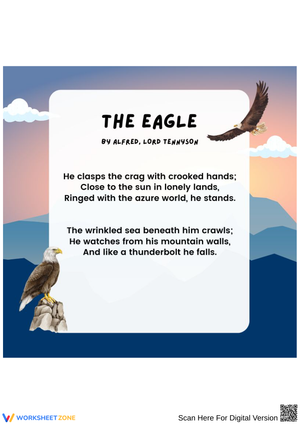
Each worksheet includes the poem students analyze. No separate text is needed. Poems are selected for grade-appropriate complexity and vary in voice, structure, and subject matter across the set.
How do these worksheets handle the writing side of poetry instruction?
The 6th grade poetry printable worksheets that include writing tasks use line starters, imitation formats, or word banks to give students a structured entry point for drafting, then open toward a complete poem or extended stanza. These writing worksheets work best after students have analyzed a mentor poem, so they are borrowing craft moves they have already noticed in someone else's work.
Can students with limited poetry experience use these independently?
The analysis worksheets move from surface observation to deeper interpretation — students mark what they notice first, then respond to questions that push toward meaning. For a student who has never annotated a poem, pairing one of these worksheets with a brief whole-class walkthrough of the first stanza provides enough of a model to proceed on their own.
Are these useful for assessment as well as practice?
Because each worksheet combines close reading with a written response tied to textual evidence, they function well as formative assessment tools. The written response sections reveal how well students can reason about a poem — not just whether they can identify its parts — which is the distinction that matters most when preparing students for sixth grade ELA assessments.












 Interactive Worksheet Maker
 Quiz Maker
 Word Search Maker
 Crossword Puzzle Maker
 Word Scramble Generator
 Sentence Scramble Generator
 Handwriting Worksheet Generator
 Name Tracing Generator
 Fill In The Blank Generator