




























0
Views
0
Downloads

Save
0 Likes
Share
Write a Haiku Worksheet
0 Views
0 Downloads

Paste this activity's link or code into your existing LMS (Google Classroom, Canvas, Teams, Schoology, Moodle, etc.).
Students can open and work on the activity right away, with no student login required.
You'll still be able to track student progress and results from your teacher account.
Information
Description
What It Is:
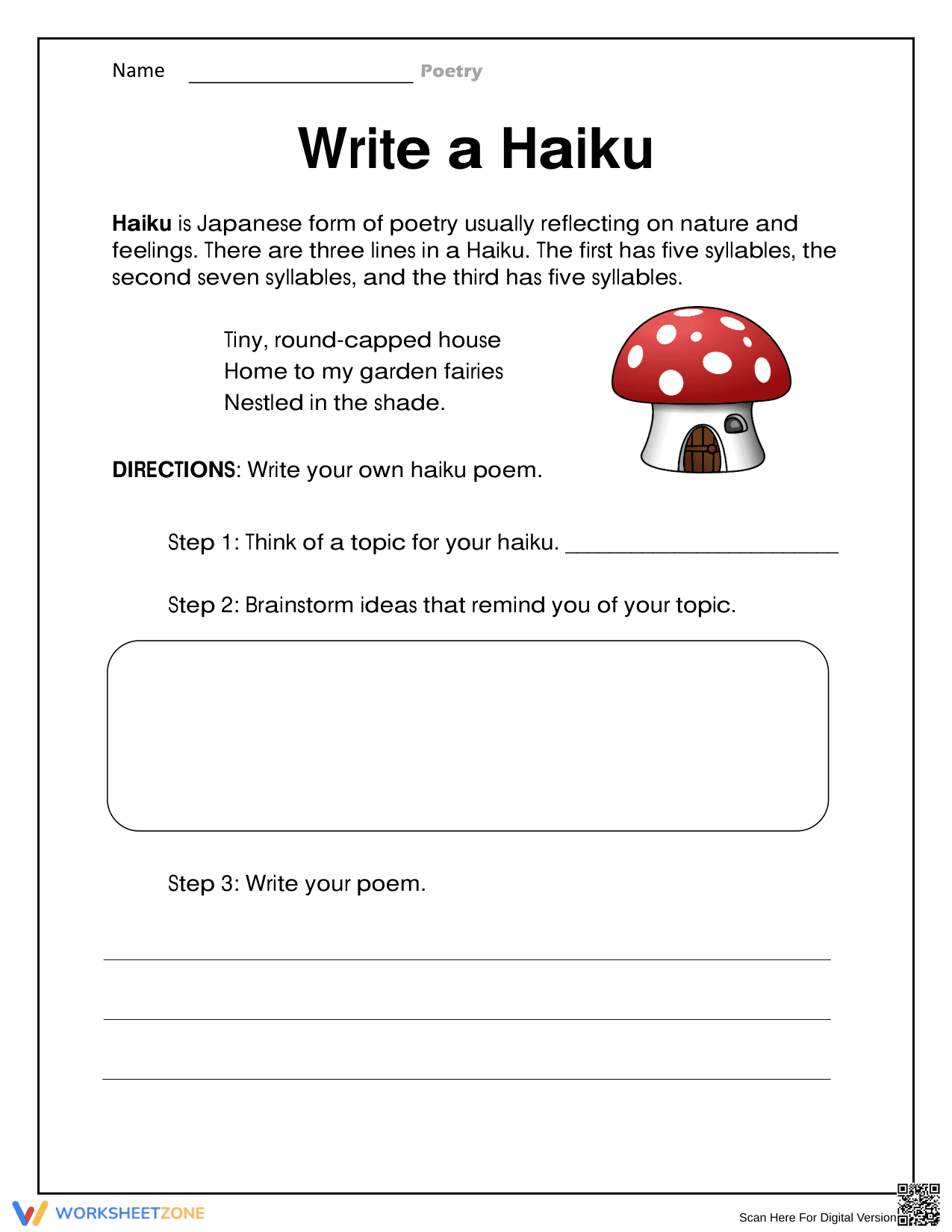
This is a poetry worksheet focused on teaching students how to write a haiku. It includes a definition of a haiku, explaining its structure (three lines with 5, 7, and 5 syllables respectively) and its focus on nature and feelings. It provides an example haiku and includes step-by-step instructions: choosing a topic, brainstorming ideas, and then writing the poem. There are spaces for the student to write their haiku topic, brainstorm ideas, and write the final poem. A cartoon image of a mushroom house is included as well.
Grade Level Suitability:
This worksheet is suitable for grades 2-5. It introduces a simple poetic form and provides structured guidance, making it accessible for younger students. The brainstorming activity and syllable counting can be adjusted for different skill levels within these grades.
Why Use It:
This worksheet helps students learn about haiku poetry, develop their creative writing skills, practice counting syllables, and express their thoughts and feelings in a concise and structured format. It encourages observation of nature and the world around them.
How to Use It:
First, read the definition of a haiku and the example poem. Then, follow the steps: 1. Think of a topic for your haiku and write it down. 2. Brainstorm ideas related to your topic in the provided box. 3. Write your three-line haiku, making sure to follow the 5-7-5 syllable structure.
Target Users:
This worksheet is designed for elementary school students learning about poetry, specifically haiku. It's also beneficial for teachers looking for a structured activity to introduce poetry writing in the classroom. It can be used for individual practice or as part of a poetry unit.
This is a poetry worksheet focused on teaching students how to write a haiku. It includes a definition of a haiku, explaining its structure (three lines with 5, 7, and 5 syllables respectively) and its focus on nature and feelings. It provides an example haiku and includes step-by-step instructions: choosing a topic, brainstorming ideas, and then writing the poem. There are spaces for the student to write their haiku topic, brainstorm ideas, and write the final poem. A cartoon image of a mushroom house is included as well.
Grade Level Suitability:
This worksheet is suitable for grades 2-5. It introduces a simple poetic form and provides structured guidance, making it accessible for younger students. The brainstorming activity and syllable counting can be adjusted for different skill levels within these grades.
Why Use It:
This worksheet helps students learn about haiku poetry, develop their creative writing skills, practice counting syllables, and express their thoughts and feelings in a concise and structured format. It encourages observation of nature and the world around them.
How to Use It:
First, read the definition of a haiku and the example poem. Then, follow the steps: 1. Think of a topic for your haiku and write it down. 2. Brainstorm ideas related to your topic in the provided box. 3. Write your three-line haiku, making sure to follow the 5-7-5 syllable structure.
Target Users:
This worksheet is designed for elementary school students learning about poetry, specifically haiku. It's also beneficial for teachers looking for a structured activity to introduce poetry writing in the classroom. It can be used for individual practice or as part of a poetry unit.


