6th grade short story worksheets give ELA teachers a reliable format for targeting fiction skills without committing to a full novel unit. Each worksheet focuses on the literary analysis moves 6th graders are expected to demonstrate — tracking character development, identifying conflict, inferring theme, and citing text evidence — and fits into whole-group lessons, literacy stations, or homework assignments without requiring major prep adjustments.
The Specific Skills Targeted
The fiction skills covered here map directly to what students need to handle independently by the end of sixth grade. That's the standard against which each worksheet earns its place in the set.
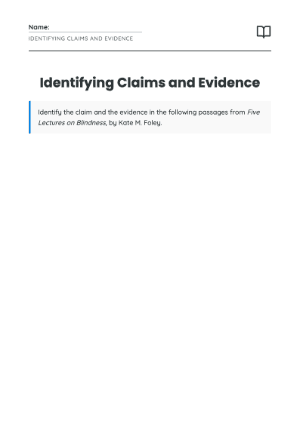
- Plot structure: Students sequence major events and label story phases, then explain how rising action feeds into the central conflict rather than simply listing what happened.
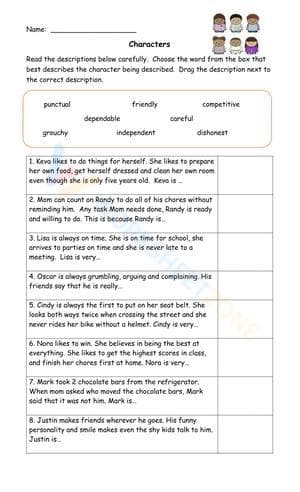
- Character analysis: Students name traits and back each one with specific dialogue, action, or internal thought from the text — not paraphrase or general impression.
- Conflict identification: Students distinguish between internal and external conflict and explain what role each plays in driving the plot forward.
- Theme development: Students write complete, arguable theme statements — not topic words — and support them with at least two pieces of textual evidence.
- Point of view: Students determine the narrator's perspective and explain how that position controls what the reader does and does not know.
- Vocabulary in context: Students use sentence-level clues to infer word meaning, identify the specific context clue type, and apply the word in a new sentence.
- Text evidence: Students write in complete sentences, quote or paraphrase the story precisely, and explain how each detail supports their interpretation.
Several worksheets pair two skills rather than isolating one — a comprehension section followed by a written response on theme or character change, for instance. That structure keeps the cognitive load manageable while still asking students to produce genuine analysis.
Common Misconceptions to Watch For and Correct
Theme is where 6th graders fall apart most visibly. Even after direct instruction, many students write "theme: friendship" or "theme: courage" rather than a complete statement about what the story argues. The pattern is persistent. The worksheets address it by prompting students to draft a full theme statement before they gather evidence — reversing the usual trap of summarizing the story and slapping a word at the end. Until students are required to write something like "Loyalty means staying honest even when honesty has a cost," theme tasks rarely produce anything worth reading.
On plot structure, the climax is consistently misidentified. Students mark the most violent or emotionally intense scene rather than the moment of highest narrative tension — the turning point where the outcome becomes inevitable. The plot diagram worksheets include a brief teacher note flagging this specific error and suggesting a class discussion before students work independently. Without that conversation, a third of students will mark the wrong moment every time.
Character analysis produces a subtler problem. Students frequently list traits based on personal feeling rather than textual evidence — "She was brave" appears in responses even when no scene demonstrates courage. The worksheets require trait and evidence in the same response box, which makes skipping the proof step structurally harder.
How to Build These Worksheets Into Your Lesson Plans
The most effective sequence is gradual release: teacher-led close reading on day one, guided pair practice on day two, then one worksheet completed independently as formative assessment on day three. Students arrive at the independent task having already rehearsed the skill with support, so the worksheet becomes evidence-gathering rather than cold introduction. That distinction matters — the worksheets aren't a substitute for discussion, they're the step that follows it.
For bell-ringer work, a short excerpt paired with two or three targeted questions takes about eight minutes and activates the reading habits students need for the longer tasks later in the period. For literacy stations, worksheets that focus on a contained skill — conflict identification, or vocabulary in context — work better than broad comprehension sets, because groups can debrief quickly and rotate without losing the thread. These 6th grade short story worksheets also hold up well as sub plans, because the directions are self-contained and the tasks don't depend on a class discussion that may not have happened.
One honest limitation: students who freeze when they encounter an unfamiliar text sometimes shut down before they reach the first question. Building in a one-minute preview step — skim the title, first paragraph, and last paragraph — addresses that without changing the worksheet itself.
Standard Alignment
The worksheets align to Common Core ELA standards for grade 6, specifically RL.6.1 (citing textual evidence to support analysis), RL.6.2 (determining theme and summarizing), RL.6.3 (describing how plot unfolds and characters respond), RL.6.4 (vocabulary in context), and RL.6.6 (explaining how point of view affects narrative). These standards sit at the center of 6th grade ELA because they mark the shift from literal comprehension — which most students manage by 5th grade — to evidence-based literary analysis. RL.6.2 is worth noting in particular: "theme" at this grade is an arguable, evidence-supported claim, not a one-word label, and the task design throughout the set reflects that expectation directly.
Adjusting the Set for Mixed-Ability Classrooms
The most effective differentiation isn't changing the task — it's changing the entry point. Students who struggle with written expression frequently understand more than their responses show. Sentence frames like "The character's motivation shifts when ___" or "One detail that supports this theme is ___" lower the production barrier without reducing the thinking level. These 6th grade short story worksheets include optional sentence starters marked clearly as support structures, so teachers decide which students receive them rather than distributing them across the whole class and flattening the challenge for everyone.
For students reading above grade level, the written response sections extend naturally into argument structure. Instead of one piece of evidence, ask for two with an explanation of how they work together — that's a meaningful stretch that lives inside the existing worksheet format without requiring a separate document.
Multilingual learners benefit most from the graphic organizer versions, where the visual layout separates the reading task from the writing task. Starting with a labeled organizer before moving to a written response gives those students a reference point while they draft. The thinking becomes visible before they have to articulate it in full sentences.
Frequently Asked Questions
Do the worksheets include the story text, or do I need to supply it?
Most worksheets in the set pair with a story you select — you bring the text, each worksheet handles the skill focus. A few include short passages printed directly on the worksheet for standalone use. The product description specifies which format applies to each worksheet.
How long does each worksheet take to complete?
Completion time ranges from roughly 15 minutes for a focused comprehension set to 30 minutes for a worksheet that includes a written analysis response. The evidence-based response worksheets work well as a full independent work period or an extended homework task.
Can I use these with a novel instead of a short story?
Yes. The skill focus — plot, character, conflict, theme, point of view — transfers directly to novels. Many teachers pull a chapter or excerpt and use these 6th grade short story worksheets to anchor the literary analysis work for that day's reading, especially during the opening weeks of a novel unit when students are still getting comfortable with the text.
Are these appropriate for 5th or 7th grade?
The question complexity and skill expectations are calibrated for 6th grade, where the Common Core shift toward evidence-based literary analysis becomes most explicit. Stronger 5th-grade readers handle them well when sentence starters are provided. For 7th grade, the worksheets work as targeted review for students who need additional reinforcement of core fiction skills before moving into more complex or longer texts.















 Interactive Worksheet Maker
 Quiz Maker
 Word Search Maker
 Crossword Puzzle Maker
 Word Scramble Generator
 Sentence Scramble Generator
 Handwriting Worksheet Generator
 Name Tracing Generator
 Fill In The Blank Generator