




























Views
Downloads


Grade 5 Reading Comprehension — Printable No-Prep Worksheet

Paste this activity's link or code into your existing LMS (Google Classroom, Canvas, Teams, Schoology, Moodle, etc.).
Students can open and work on the activity right away, with no student login required.
You'll still be able to track student progress and results from your teacher account.
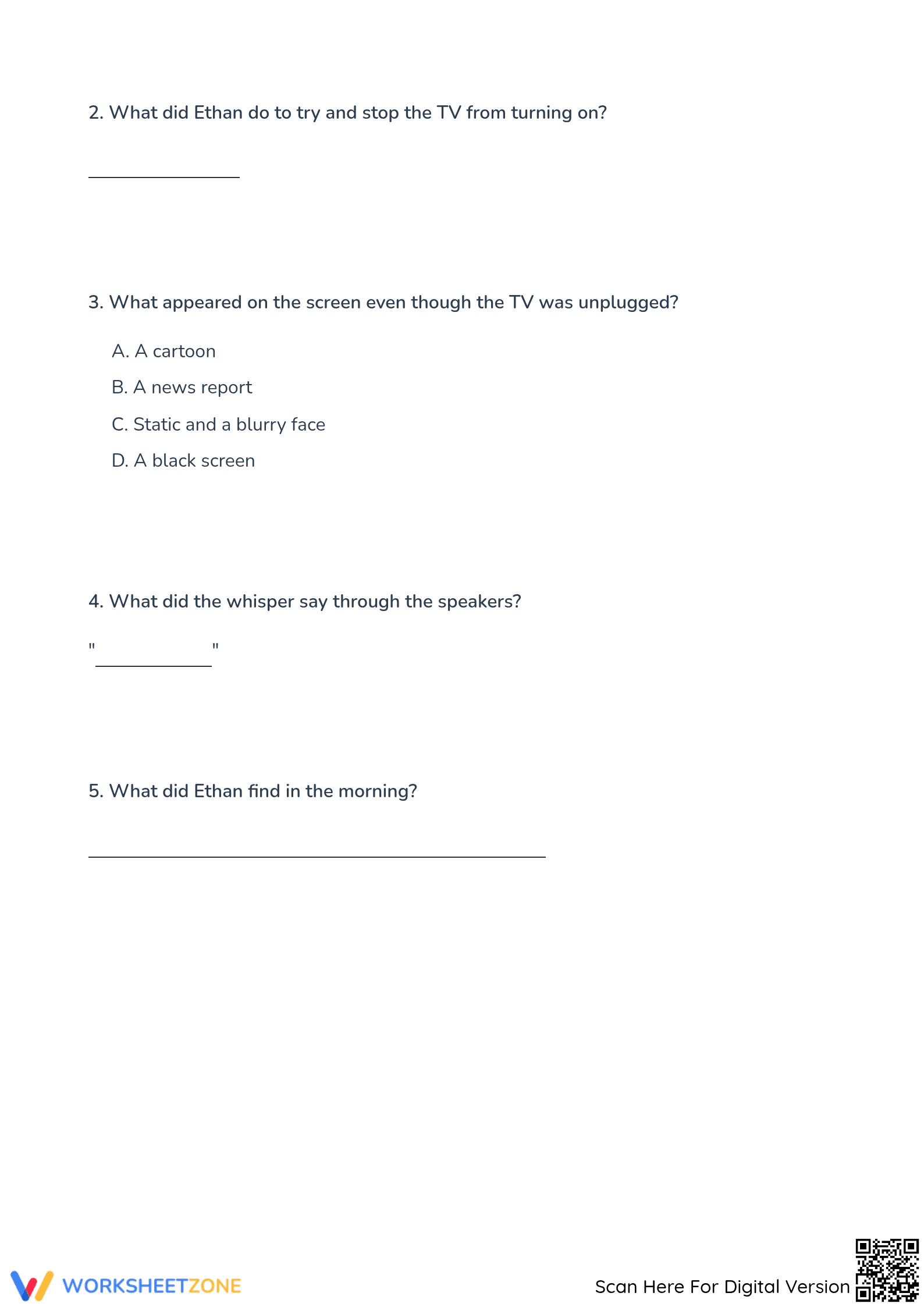
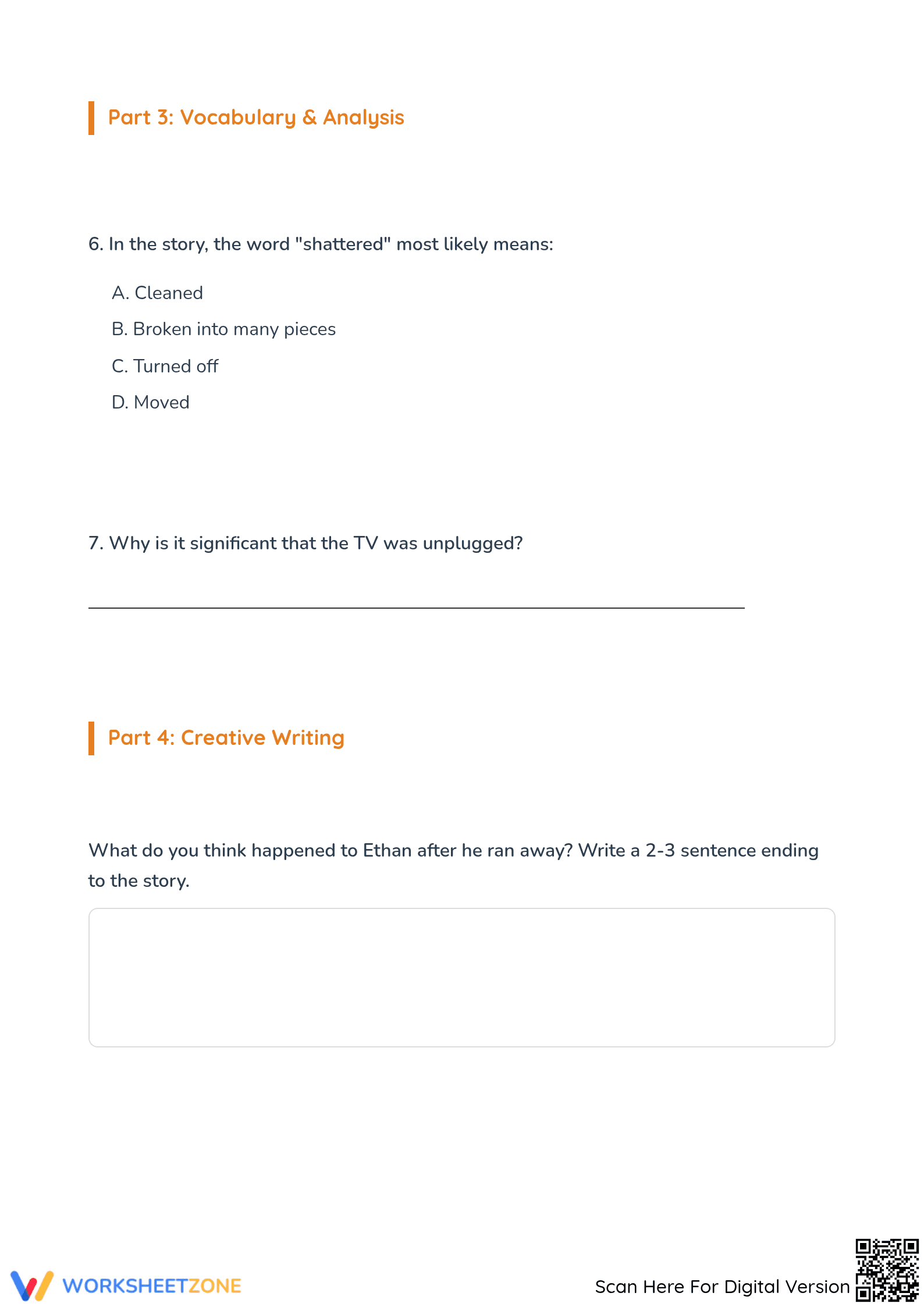
This Grade 5 reading comprehension worksheet provides students with an engaging short story to build foundational literacy skills. By reading "The TV That Never Turned Off," learners practice answering explicit questions, determining vocabulary meaning, and writing a creative narrative ending.
At a Glance
- Grade: 5 · Subject: ELA
- Standard:
CCSS.ELA-LITERACY.RL.5.1— Quote accurately to explain the text and draw inferences- Skill Focus: Reading Comprehension
- Format: 3 pages · 8 problems · Answer key included · PDF
- Best For: Independent practice and sub plans
- Time: 20–30 minutes
This resource features a suspenseful short story followed by structured activities. Students tackle four sections: reading the passage, answering five direct comprehension questions, analyzing vocabulary in context, and completing a creative writing prompt. The three-page layout provides ample workspace, and a complete answer key is provided for quick grading.
Zero-Prep Workflow
This resource is designed for immediate classroom implementation:
- Print (1 minute): Generate copies of the three-page student packet and the single-page answer key.
- Distribute (1 minute): Hand out the packets as a standalone assignment or warm-up activity.
- Review (3 minutes): Use the provided answer key to quickly check student comprehension and vocabulary acquisition.
With a total teacher prep time of under two minutes, this packet is an excellent option for emergency sub plans or independent work.
Standards Alignment
This material is aligned to primary standard CCSS.ELA-LITERACY.RL.5.1, requiring students to quote accurately from a text when explaining what it says explicitly and when drawing inferences. It also supports vocabulary development. Both standard codes can be copied directly into lesson plans, IEP goals, or district curriculum mapping tools.
How to Use It
Deploy this worksheet during independent reading blocks or as a targeted literacy station. It works perfectly as a Friday assignment or seasonal activity. As a formative assessment tip, observe if students re-read surrounding sentences to find context clues before answering the vocabulary question. Most students finish within 20 to 30 minutes.
Who It's For
This resource is optimized for fifth and sixth-grade general education students, though the high-interest, low-readability format makes it highly effective for older students receiving reading interventions. The clear, segmented parts naturally scaffold the cognitive load for learners who struggle with sustained attention. Pair this worksheet with a mini-lesson on using context clues.
Aligning instructional materials to specific literacy targets like CCSS.ELA-LITERACY.RL.5.1 ensures that students build the necessary skills to quote accurately to explain the text and draw inferences. According to a comprehensive EdReports 2024 analysis, high-interest texts paired with structured, text-dependent questions significantly improve reading stamina and comprehension outcomes in upper elementary classrooms. When students are given engaging narratives, such as suspenseful or spooky stories, their intrinsic motivation to read and analyze the text naturally increases. This targeted practice allows educators to accurately measure how well students can extract explicit details and infer implicit meanings from the passage. By integrating vocabulary analysis and creative writing extensions directly into the comprehension workflow, teachers provide a robust literacy experience that reinforces multiple domains simultaneously. This evidence-based approach supports long-term retention and prepares students for more complex literary analysis.


