


























Views
Downloads

Printable Claims and Evidence Worksheet | Grade 6 ELA
Paste this activity's link or code into your existing LMS (Google Classroom, Canvas, Teams, Schoology, Moodle, etc.).
Students can open and work on the activity right away, with no student login required.
You'll still be able to track student progress and results from your teacher account.
This comprehensive reading comprehension worksheet helps middle school students master the crucial skill of identifying claims and evidence. By analyzing a short informational text, students learn to extract main arguments and locate the specific textual support that validates those points, strengthening their overall critical thinking and analytical reading abilities.
At a Glance
- Grade: 6 · Subject: ELA
- Standard:
CCSS.ELA-LITERACY.RI.6.8— Evaluate arguments and specific claims in a text.- Skill Focus: Claims and Evidence
- Format: 4 pages · 12 problems · Answer key included · PDF
- Best For: Independent practice and reading centers
- Time: 30–45 minutes
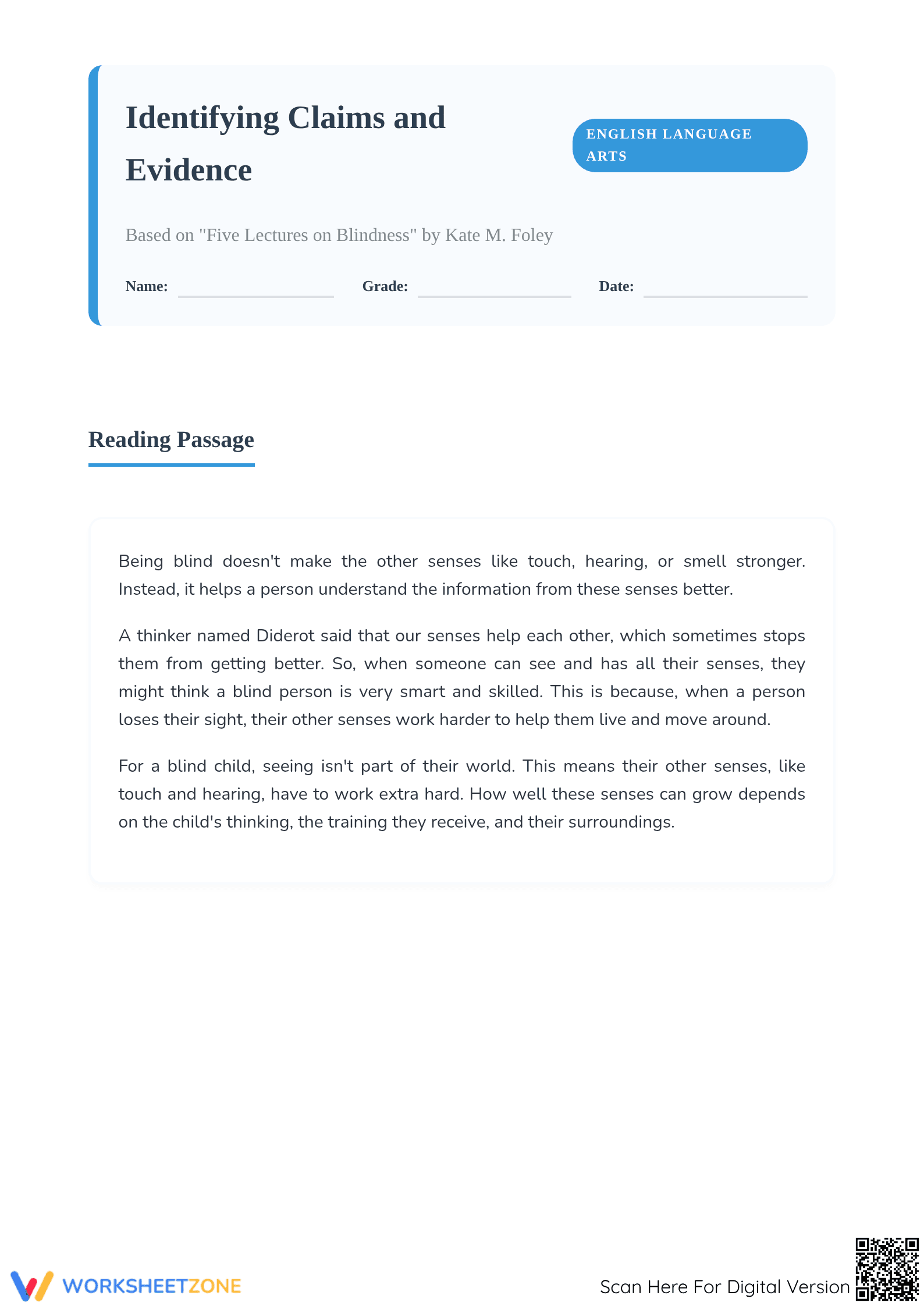
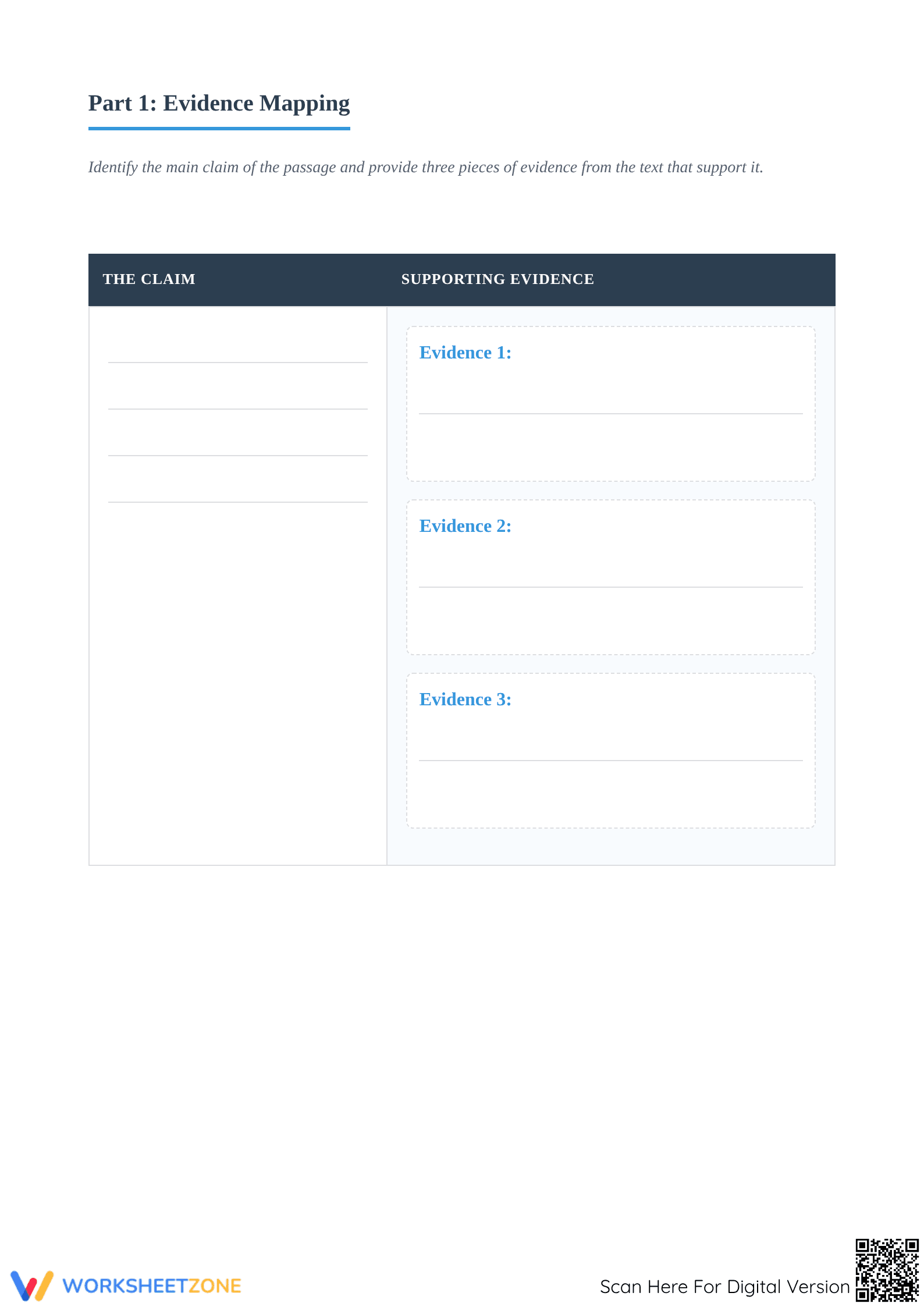
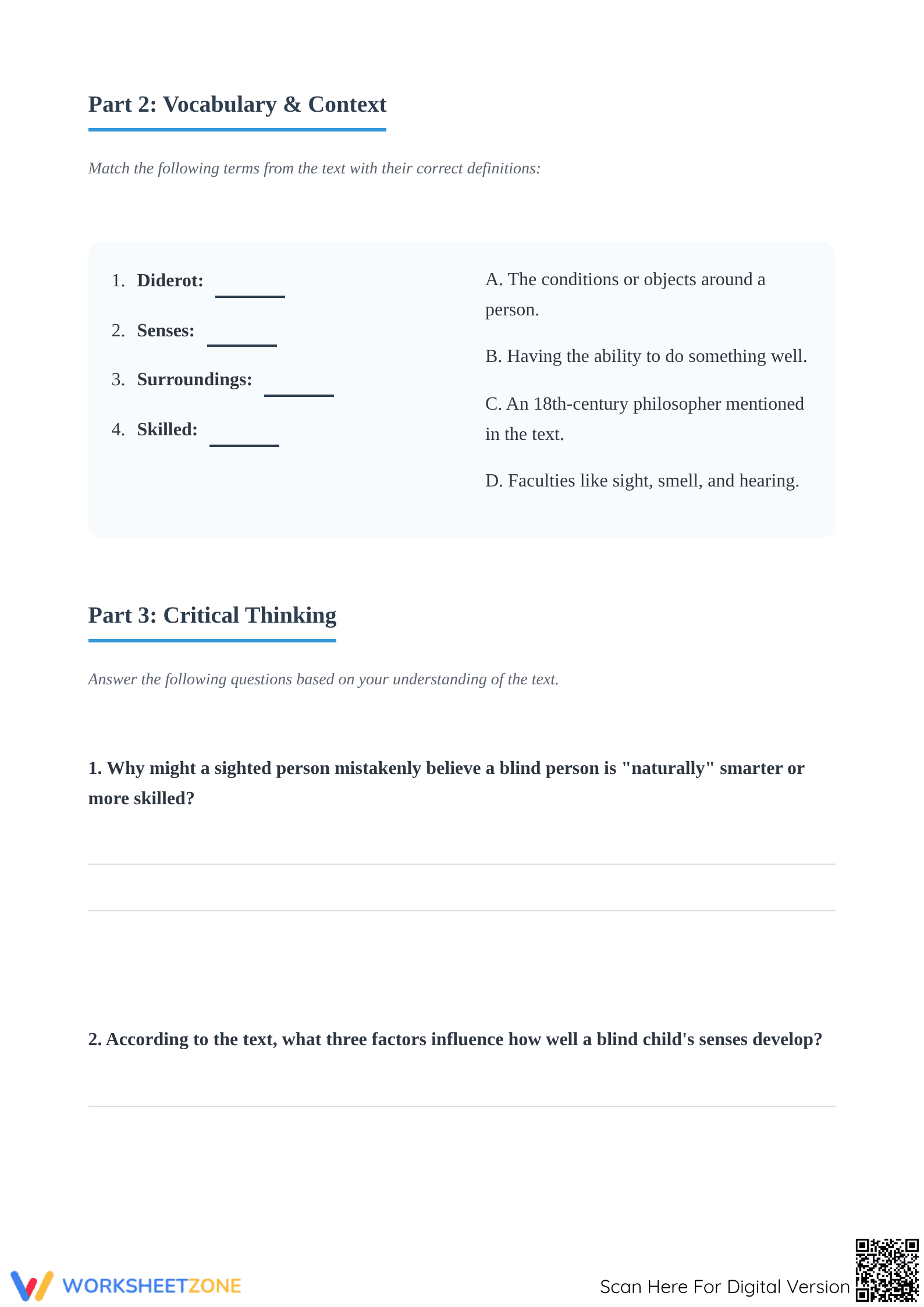
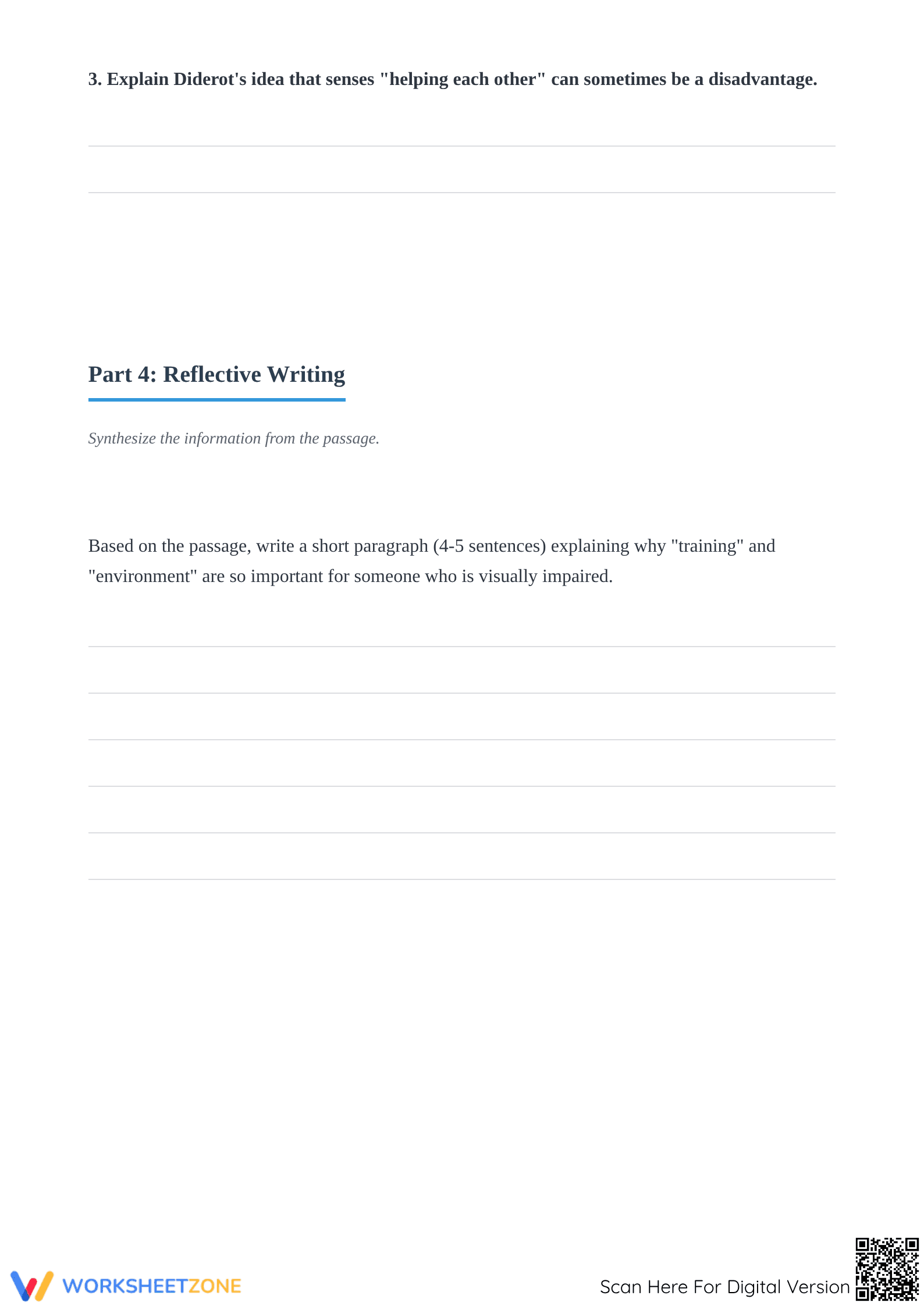
This four-page resource features a carefully selected reading passage titled "Five Lectures on Blindness," followed by four distinct sections of targeted practice. Students will complete an evidence mapping graphic organizer, a vocabulary matching section to build context, three critical thinking short-answer questions, and a final reflective writing prompt. A complete answer key is provided to ensure accurate grading and facilitate meaningful feedback.
Skill Progression
- Guided practice: The worksheet begins with an evidence mapping task where students identify one main claim and extract three specific pieces of supporting evidence directly from the text.
- Supported practice: Students then move to vocabulary matching and targeted critical thinking questions, requiring them to interpret the author's meaning and analyze specific details.
- Independent practice: The activity culminates in a reflective writing task where students synthesize the passage's information into a cohesive 4-5 sentence paragraph.
This gradual-release structure ensures students build confidence before tackling the more demanding synthesis writing task.
Standards Alignment
This resource is directly aligned to CCSS.ELA-LITERACY.RI.6.8, requiring students to trace and evaluate the argument and specific claims in a text, distinguishing claims that are supported by reasons and evidence from claims that are not. It also supports general reading comprehension and vocabulary acquisition standards. Both standard codes can be copied directly into lesson plans, IEP goals, or district curriculum mapping tools.
How to Use It
Deploy this worksheet during your informational text unit after introducing the concepts of claims and supporting evidence. It works exceptionally well as an independent practice assignment or a collaborative reading center activity. As a formative assessment tip, review students' evidence mapping organizers before they begin the reflective writing portion to ensure they have accurately identified the text's core argument. Expect students to complete the full packet in 30 to 45 minutes.
Who It's For
This resource is designed primarily for 6th and 7th-grade ELA students developing their analytical reading skills. The structured graphic organizer provides built-in scaffolding that benefits visual learners and students who struggle with organizing their thoughts. Pair this worksheet with a whole-class anchor chart detailing the differences between a claim, a reason, and textual evidence to maximize student success.
Mastering the ability to identify and evaluate arguments is a foundational requirement for middle school literacy and critical thinking. Standard CCSS.ELA-LITERACY.RI.6.8 emphasizes the need for students to evaluate arguments and specific claims in a text, a skill that directly impacts their own persuasive writing capabilities. According to a recent EdReports 2024 analysis of middle grades ELA curricula, students who regularly engage with structured evidence-mapping tasks show significant improvements in their ability to distinguish between fact, reasoned judgment, and unsupported claims. By explicitly teaching students how to locate the structural pillars of an author's argument, educators equip them with the critical thinking tools necessary for advanced high school coursework, standardized testing, and informed civic participation. This targeted practice ensures learners move beyond basic comprehension to true analytical reading.


