




























Views
Downloads


Grade 3-7 Reading: A Day at the Zoo Printable Worksheet

Paste this activity's link or code into your existing LMS (Google Classroom, Canvas, Teams, Schoology, Moodle, etc.).
Students can open and work on the activity right away, with no student login required.
You'll still be able to track student progress and results from your teacher account.
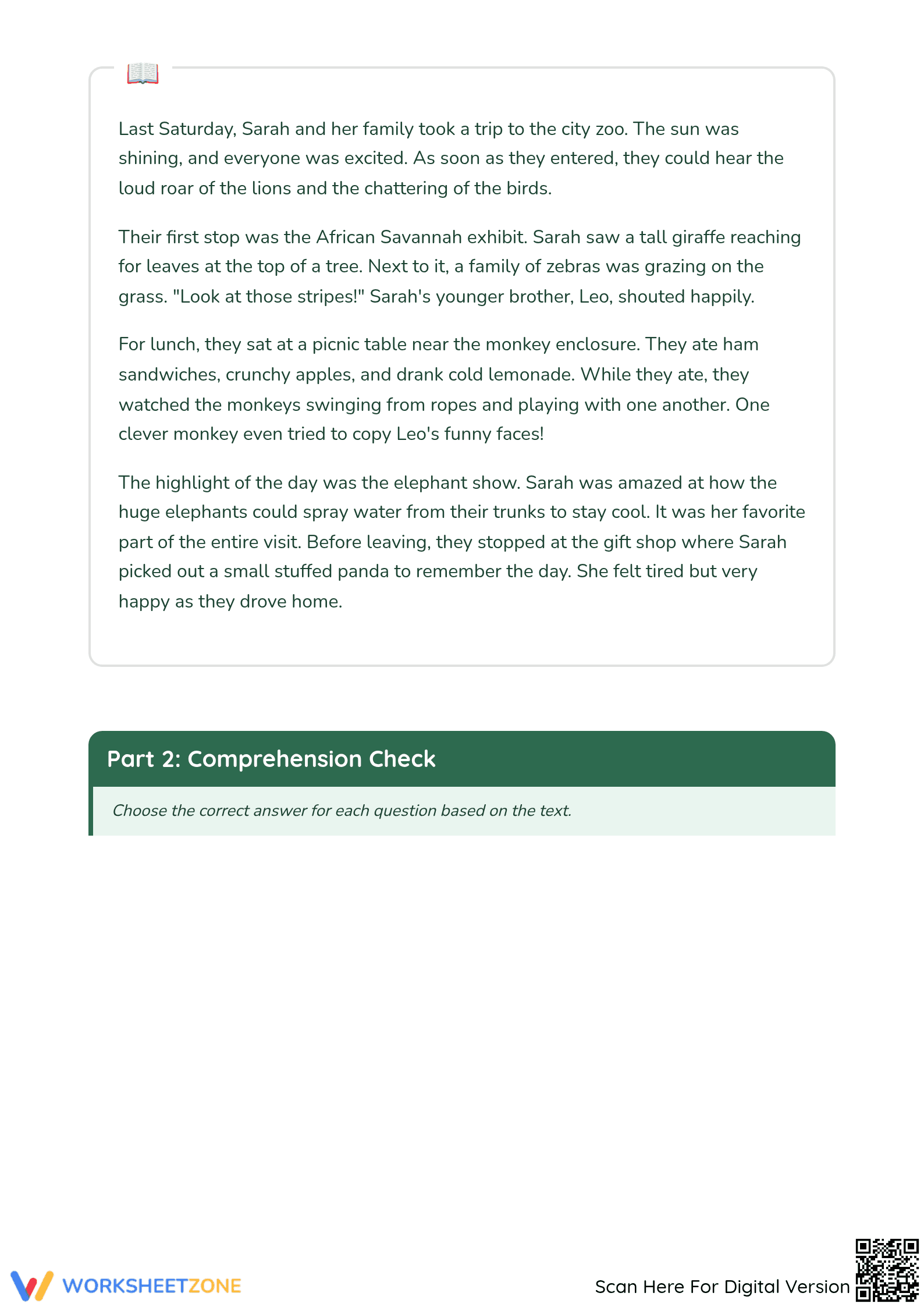
This reading comprehension packet centers on a narrative text about a family trip to the zoo. Students engage with the story through multiple-choice questions, vocabulary matching, and reflective writing. It ensures learners can identify key details and expand their descriptive language while connecting the text to their own personal experiences and opinions.
At a Glance
- Grade: 3-7 · Subject: ELA
- Standard:
CCSS.ELA-LITERACY.RI.3.1— Ask and answer questions to demonstrate understanding of a text- Skill Focus: Reading comprehension and vocabulary
- Format: 5 pages · 11 problems · Answer key included · PDF
- Best For: Independent practice or sub plans
- Time: 30–45 minutes
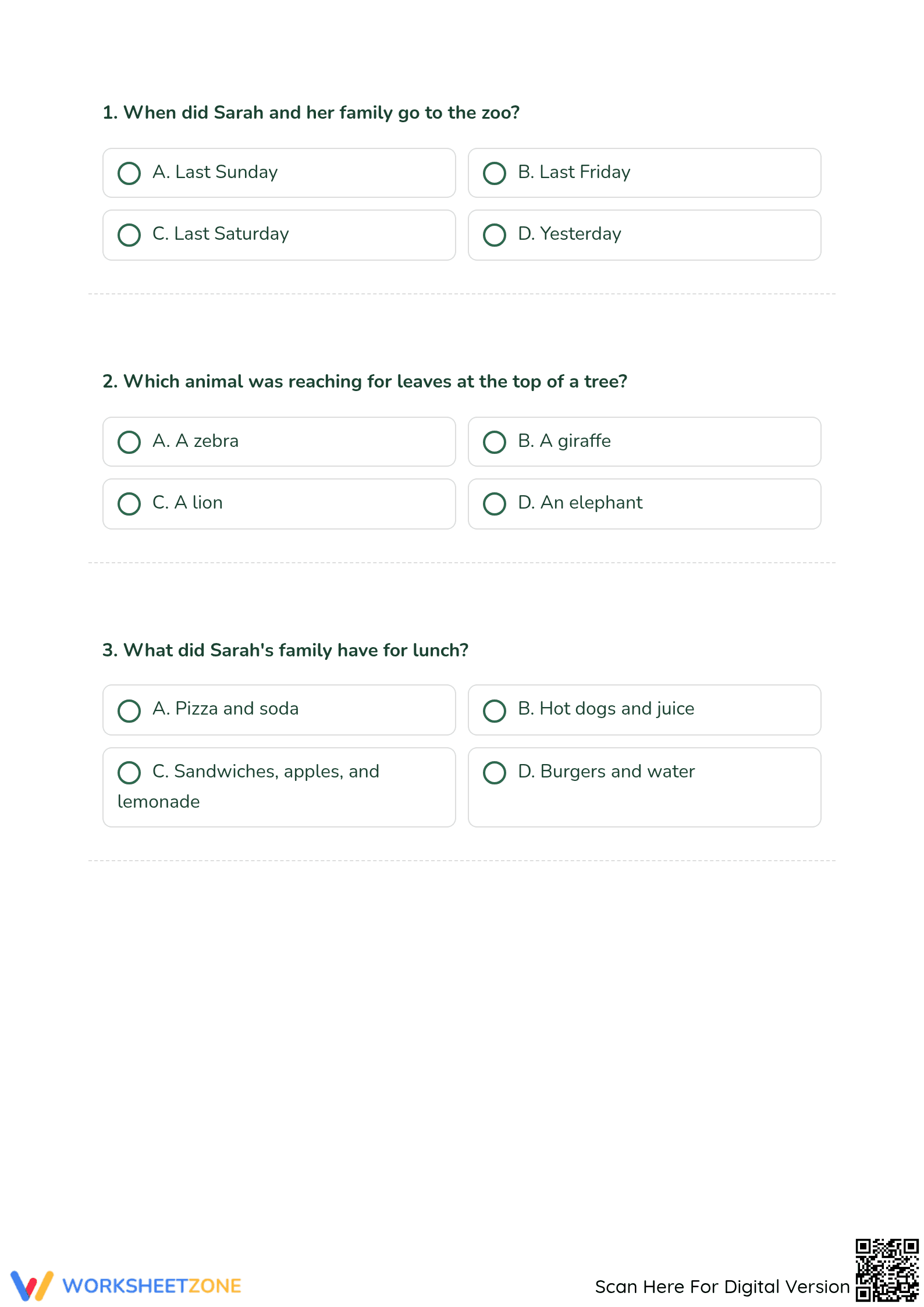
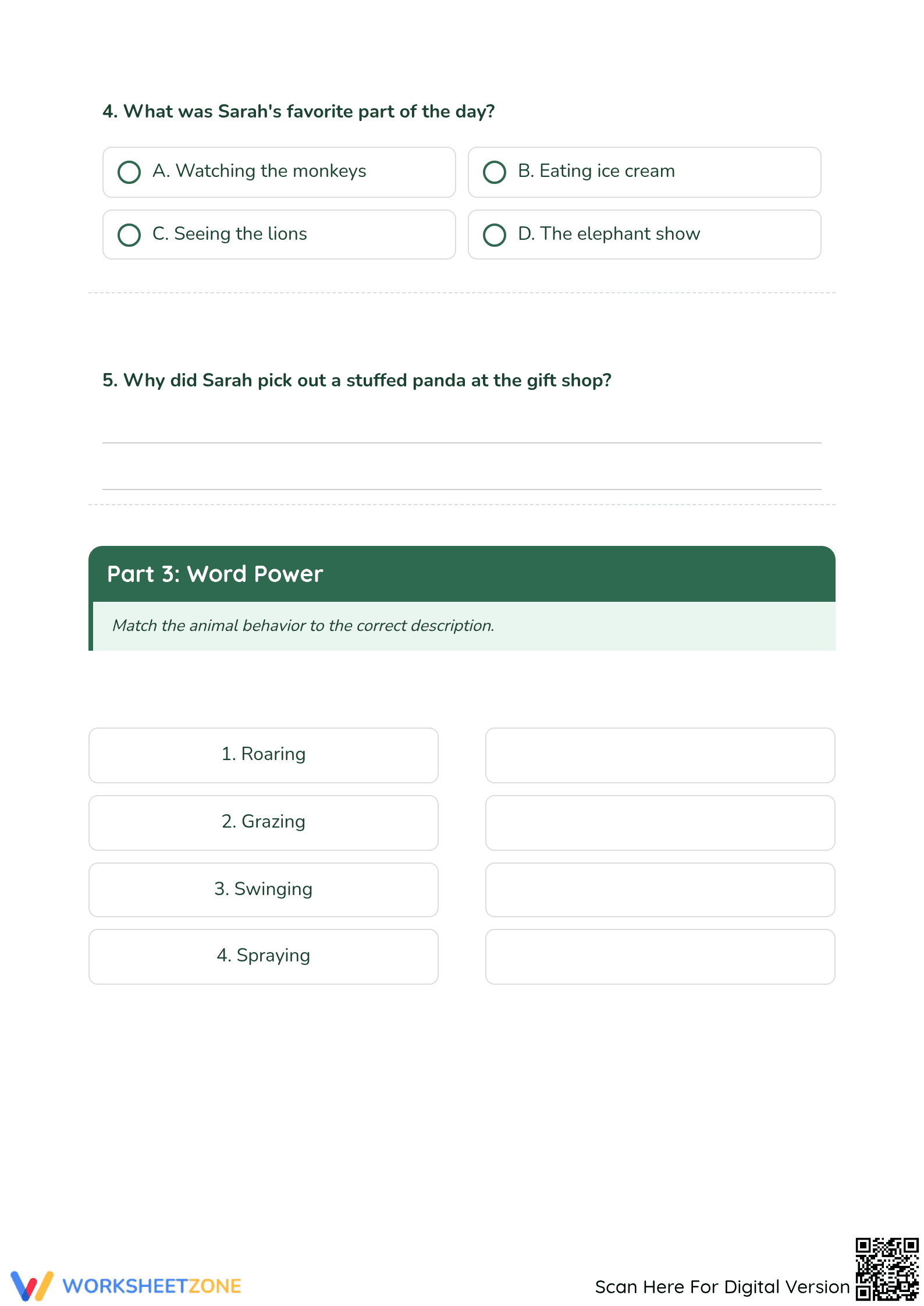
The packet contains five distinct pages designed to guide students through a complete literacy cycle. It includes a dedicated notes page for active reading, a full-page narrative story, four multiple-choice comprehension questions, a vocabulary matching section focused on animal behaviors, and two open-ended opinion prompts. A comprehensive answer key is provided for efficient grading.
The zero-prep workflow is designed for maximum teacher efficiency. First, print the five-page PDF (under 1 minute). Second, distribute the packets to students for independent or small-group work (1 minute). Third, use the included answer key to review student responses or facilitate a quick peer-grading session (5 minutes). This structure makes it an ideal resource for emergency sub plans or Friday morning literacy blocks.
This resource aligns with `CCSS.ELA-LITERACY.RI.3.1`, which requires students to ask and answer questions to demonstrate understanding of a text, referring explicitly to the text as the basis for the answers. It also supports vocabulary acquisition through context-based matching of animal actions. Both standard codes can be copied directly into lesson plans, IEP goals, or district curriculum mapping tools.
Use this worksheet as a summative assessment after a unit on narrative structures or as a quiet-time activity during literacy centers. Teachers should observe how students use the "Notes" page during the first read to identify which learners are successfully employing active reading strategies. Completion typically takes between 30 and 45 minutes depending on student writing speed and grade level.
This resource is built for elementary and middle school students in grades 3 through 7 who need structured practice in literal and inferential comprehension. It is particularly effective for English Language Learners who benefit from the clear vocabulary matching tasks. Pair this with a video clip of zoo animals or an anchor chart on "Wh-" questions to provide additional context.
According to the RAND AIRS 2024 report, structured reading interventions that combine literal comprehension with vocabulary reinforcement significantly improve long-term retention of informational and narrative details. This worksheet applies these findings by requiring students to match specific animal behaviors, such as "grazing" and "spraying," directly to the context provided in the story. By integrating 11 distinct tasks across multiple cognitive levels—from simple recall to personal opinion—the material ensures that students are not merely scanning for answers but are processing the text deeply. The inclusion of a dedicated notes section further aligns with Fisher & Frey (2014) recommendations regarding the importance of scaffolding the reading process to support independent mastery. This comprehensive approach provides the necessary evidence for educators to track progress toward CCSS.ELA-LITERACY.RI.3.1 and related literacy benchmarks in diverse classroom settings.


