


























Views
Downloads

5.MD.C.5.c Worksheet: Composite Volumes — Grade 5 Essential
Paste this activity's link or code into your existing LMS (Google Classroom, Canvas, Teams, Schoology, Moodle, etc.).
Students can open and work on the activity right away, with no student login required.
You'll still be able to track student progress and results from your teacher account.
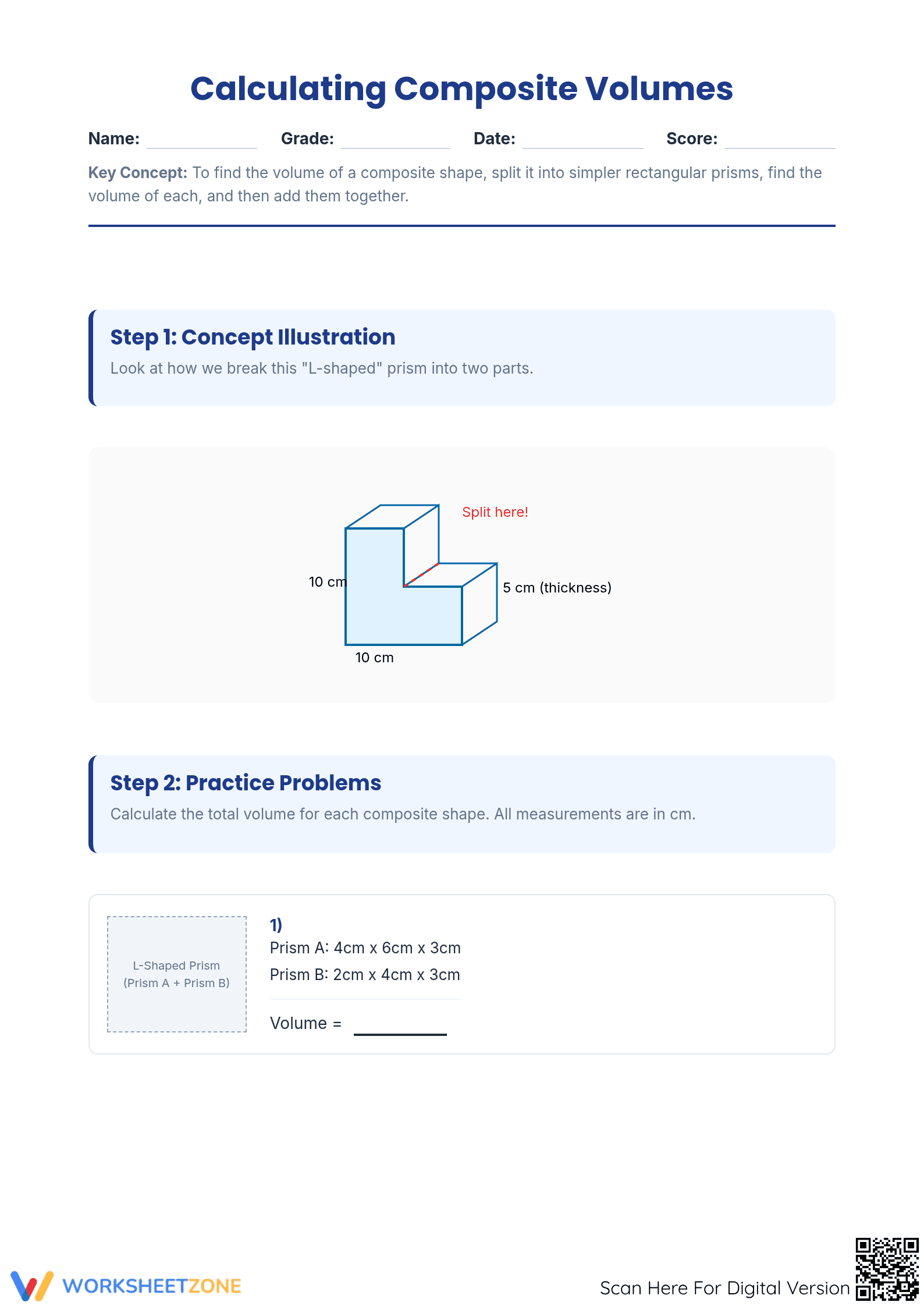
Calculating the volume of solid figures composed of two non-overlapping rectangular prisms is a critical milestone in fifth-grade geometry. This printable packet guides students through the process of additive volume calculation, ensuring they can decompose complex shapes into manageable units to find accurate totals. By the end of these exercises, learners will confidently apply mathematical formulas to both abstract diagrams and concrete real-world scenarios.
At a Glance
- Grade: 5 · Subject: Math
- Standard:
5.MD.C.5.c— Recognize volume as additive and find volumes of solid figures composed of prisms- Skill Focus: Composite Volume Decomposition
- Format: 5 pages · 25 problems · Answer key included · PDF
- Best For: Geometry unit assessment or independent mastery practice
- Time: 45–60 minutes
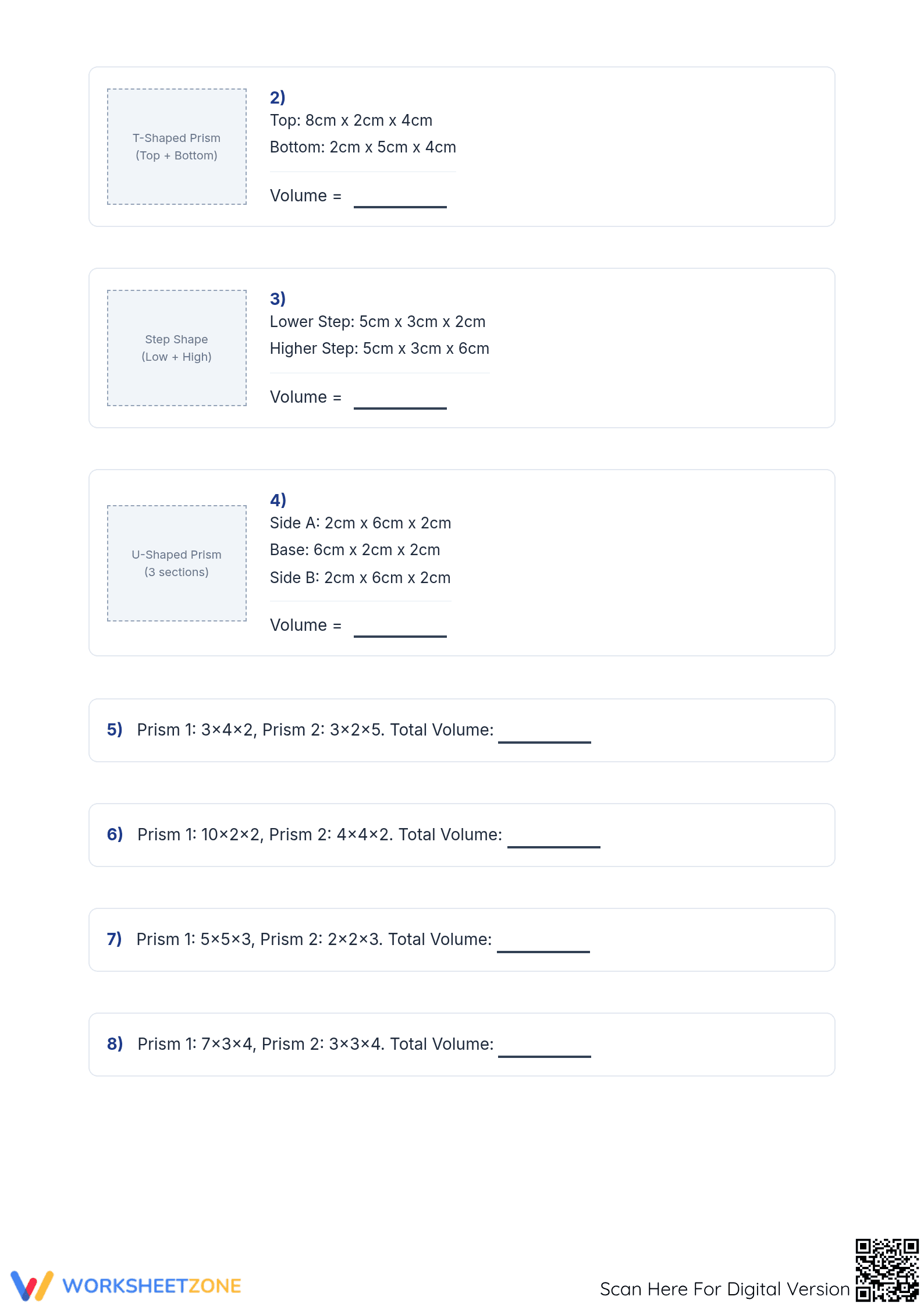
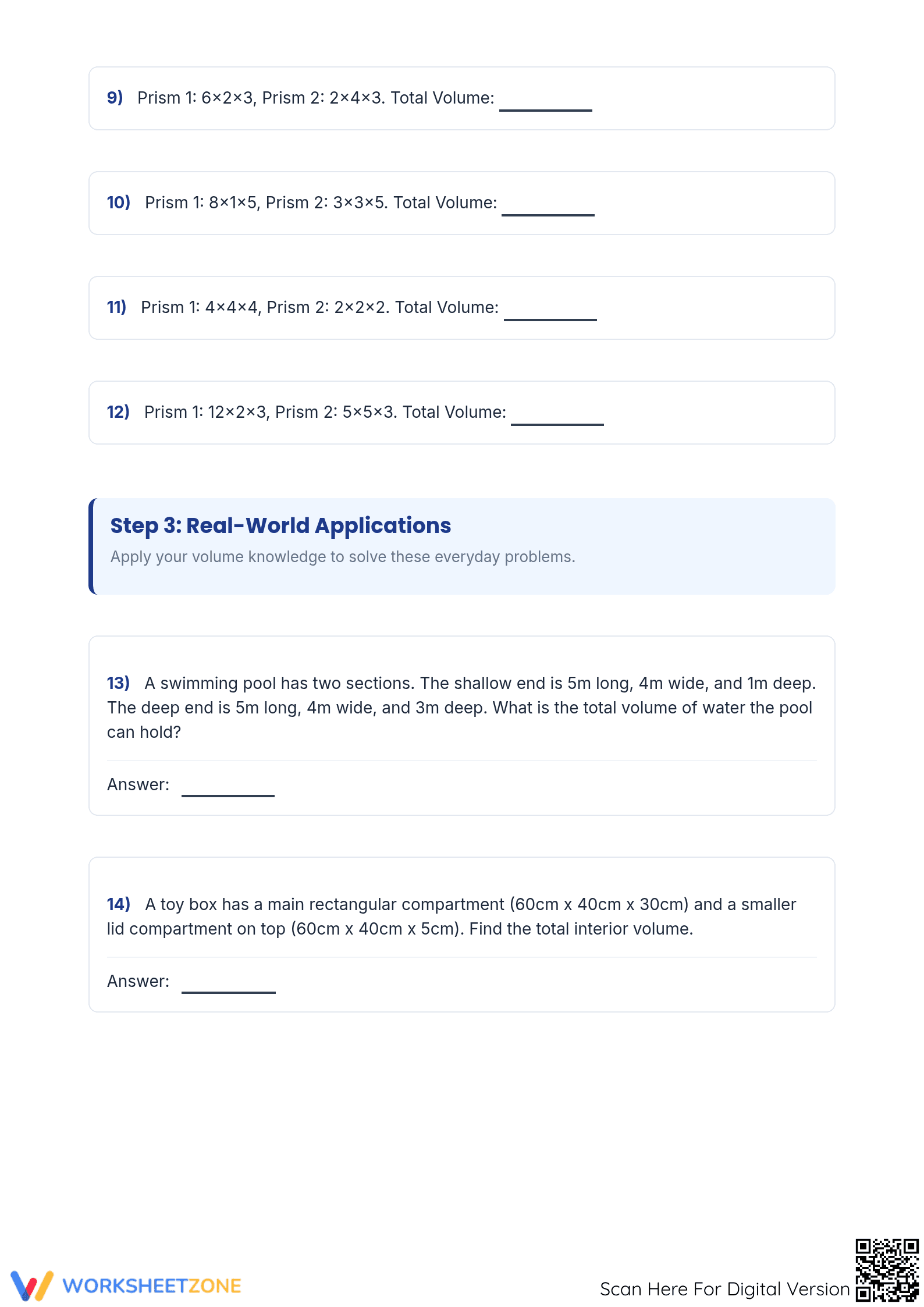
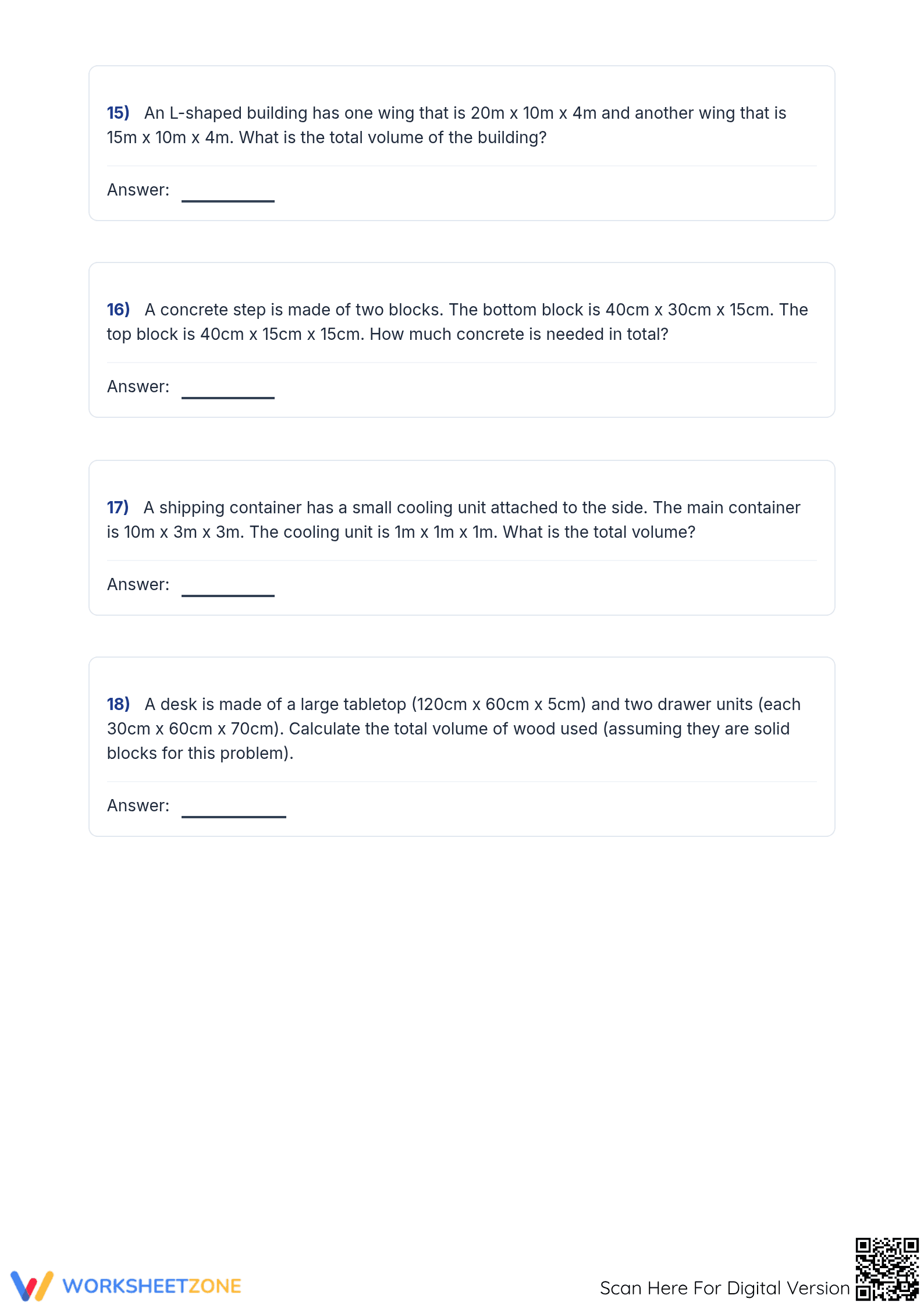
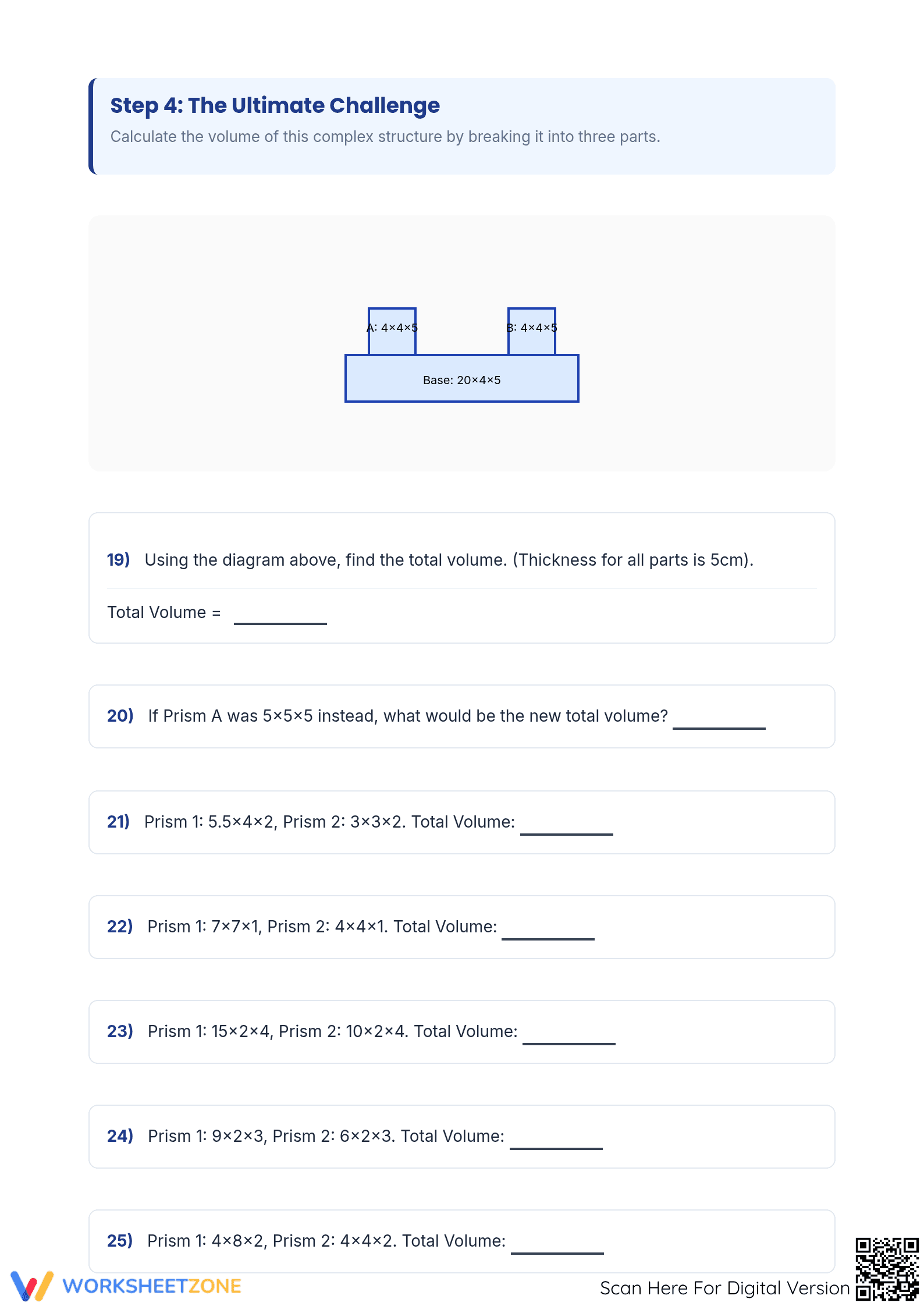
This comprehensive 5-page resource offers 25 structured problems to build conceptual understanding and application. It begins with a detailed concept illustration of an L-shaped prism, followed by twelve abstract practice problems of varying complexity. The second half transitions into six real-world word problems and a final "Ultimate Challenge" with complex three-part structures. A complete answer key is provided for immediate grading.
Mastery Evidence and Progression
Each section aligns with cognitive tiers of the 5.MD.C.5.c standard. Problems 1-12 focus on procedural fluency, while real-world applications (13-18) provide meeting-level evidence. The multi-step ultimate challenge assesses spatial reasoning for exceeding the standard, with scores suitable for IEP progress monitoring or standard-based report cards.
Standards Alignment
The primary alignment is to `5.MD.C.5.c`, requiring students to recognize volume as additive and find volumes of solid figures composed of two non-overlapping right rectangular prisms by adding their parts. It also supports `5.MD.C.5.b` as students calculate individual prism volumes using length, width, and height. Standard codes can be copied into lesson plans, IEP goals, or curriculum mapping tools.
How to Use It
Use this packet during the final phase of a geometry unit to evaluate readiness for summative assessments, or as independent practice after direct instruction on decomposition. Teachers should observe students during Step 2 to ensure correct identification of "split" points in composite shapes, as miscounting shared edge lengths is a common error.
Who It's For
Designed for fifth-grade students in Measurement and Data, this resource also challenges advanced fourth graders or provides review for sixth-grade learners. It pairs well with 3D manipulatives or volume anchor charts. The inclusion of word problems is useful for students applying math to architectural or engineering contexts.
This worksheet provides 25 distinct tasks that demand deep spatial reasoning, supporting high-quality alignment to the 5.MD.C.5.c standard. It incorporates both standard problems and advanced applications to confirm mastery across diverse learner profiles.


