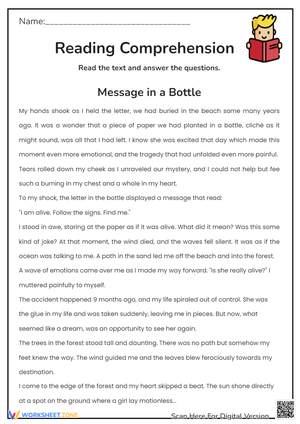
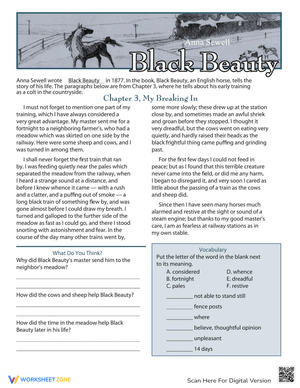
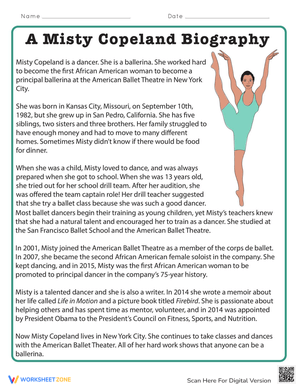
These 5th grade relevant details worksheets resources put a genuinely hard decision in front of students — not "find the main idea" as a label exercise, but the messier work of deciding which supporting facts actually earn their place in a paragraph. The set covers identification, deletion, and revision, which mirrors the progression teachers use in mini-lessons before releasing students to independent writing.
The Specific Skills Targeted
Relevant details work shows up across reading response, short constructed responses, and informative paragraph writing at grade 5, which is exactly why it resists being taught once and checked off. Students who can circle the main idea often struggle to explain why a particular sentence belongs or doesn't belong. Each worksheet isolates one move so teachers can see precisely where the breakdown happens.
- Students sort details as relevant or irrelevant under a stated topic — topics drawn from familiar fifth grade content areas such as ecosystems, U.S. history, and persuasive argument.
- Students cross out an off-topic sentence in a paragraph and write a one-line explanation for why it doesn't fit.
- Students choose the two or three details from a provided list that best support a specific claim, then explain their ranking.
- Students revise a thin paragraph by replacing a vague general statement with a more precise, on-topic detail they write themselves.
- Students match evidence to a prompt before drafting a short response, practicing the pre-writing habit of screening details before committing to them.
That last task — matching evidence to a prompt before writing — is especially useful because it interrupts a common fifth grade habit: writing "everything I know about the topic" rather than "what this question actually asks for."
Mistakes Students Make That These Worksheets Help You Catch
The most persistent error isn't choosing a detail that's obviously wrong — it's choosing a detail that's true and interesting but doesn't connect to the stated claim. A student writing about why wetlands matter to local wildlife will often include a sentence about how wetlands form through geological processes. The fact is accurate. It even sounds academic. But it serves a different paragraph about a different question. Fifth graders frequently equate topic-adjacent with topically relevant, and that conflation shows up repeatedly in both reading responses and informative writing drafts.
A second pattern: students who can identify irrelevant details in someone else's paragraph still include them in their own writing minutes later. The skill transfers slowly, and it transfers faster when students annotate their own sentences — marking each one with what job it does — rather than working on an anonymous example. The worksheets that include a revision step after the identification task help close that transfer gap more reliably than identification-only formats.
Standard Alignment
The Common Core State Standards for English Language Arts place grade 5 students in evidence-based work across reading and writing. In informative writing, W.5.2b requires students to develop the topic with facts, definitions, concrete details, and quotations — a standard that directly calls for choosing details that serve the topic rather than merely decorate it. In reading, RI.5.1 requires students to quote accurately from a text and explain what it says explicitly and what can be inferred, which means evaluating whether a given detail actually addresses the question at hand. Relevant-details practice doesn't lead up to these standards — it is these standards, made workable in daily classroom tasks.
Recommended Lesson-Planning Strategies for These Worksheets
The most natural entry point is a whole-group think-aloud on Monday. Project a paragraph with one clearly irrelevant sentence and one detail that's relevant but weak, then narrate the decision process aloud: "This sentence is about the same general topic, but it doesn't answer what we said our paragraph was about — so it goes." That five-minute model makes the reasoning audible before students encounter it on a worksheet. Assigning the first worksheet for independent practice the same day, while the think-aloud is still fresh, keeps the transfer tight.
Later in the week, the revision worksheets work well in small-group instruction. Six to eight minutes of focused work with a group of four students — each student defending their deletion and reading their replacement detail aloud — generates more usable information about individual understanding than a whole-class discussion. For homework, the identification and sort worksheets are cleanest because the task is checkable without a teacher present. Save the open-ended revision and paragraph-building worksheets for supervised practice, where students can ask questions before the work breaks down.
When a class is heading into a standardized writing assessment, a set of 5th grade relevant details worksheets materials makes a reliable review tool because unfocused paragraphs — where students include details that don't connect to the prompt — are exactly what evaluators flag in scored responses at this grade level. A focused review block with one or two worksheets the week before assessment produces more visible improvement than reviewing conventions students have already internalized by late fifth grade.
Differentiating the Worksheets Across a Mixed-Readiness Class
Students still working on identifying main idea need a different entry point than students who can already sort details correctly on the first attempt. For students earlier in their development with this skill, the sort worksheets with a clearly stated topic sentence give them a concrete anchor. They can apply a simple yes-or-no test: does this detail explain the topic sentence? That binary framing keeps working memory demands manageable without removing the intellectual work of the task.
Students who sort accurately but struggle to generate their own relevant details benefit from a sentence frame that specifies what the new detail must do — "Add a detail that explains why this happens, not just that it happens" — rather than an open-ended blank. That constraint pushes toward precision without leaving students stranded in front of empty space. Students who are ready to work at or above grade level can extend any revision worksheet by writing a complete revised paragraph and annotating each sentence to explain its role. That annotation step is demanding enough to challenge strong writers without requiring an entirely different set of materials.
Frequently Asked Questions
Are these worksheets appropriate for use alongside a reading comprehension unit?
Yes, and that's often the strongest placement. When students are reading informational texts in science or social studies, the relevant-details skill maps directly onto what they're already doing: evaluating which details from a passage actually answer the question. Running one worksheet per week during a reading unit keeps the skill visible without taking over the literacy block.
What's the difference between supporting details and relevant details — aren't they the same thing?
They overlap, but the distinction matters at grade 5. A supporting detail is any fact, example, or explanation that relates to the topic. A relevant detail is one that specifically answers or advances the claim or question at hand. Every relevant detail is a supporting detail, but not every supporting detail is relevant to a particular prompt. Students tend to collapse this distinction, which is why 5th grade relevant details worksheets tasks that ask students to choose which supporting details to include — rather than just locate any — build the more precise skill.
How long does each worksheet take to complete?
Well-structured relevant-details practice at the fifth grade level typically runs 10 to 15 minutes per worksheet when students are working at the right level. Worksheets focused on a single task — a detail sort or a one-paragraph revision — work best as warm-ups or exit tickets. Worksheets with multiple task types work better as center activities or homework, where students have time to move through each step without the pressure of a timed instructional block.
Can these be used for students who need writing intervention but not reading intervention?
Yes. Because the relevant-details skill appears in both reading response and independent paragraph writing, 5th grade relevant details worksheets resources work for students who struggle specifically with organizing and focusing written responses, even when their reading comprehension is grade-level. The paragraph revision worksheets are especially useful for this group — they provide the paragraph and ask students to improve it, which narrows the task to writing precision without the additional demand of reading and analyzing a new passage first.












 Interactive Worksheet Maker
 Quiz Maker
 Word Search Maker
 Crossword Puzzle Maker
 Word Scramble Generator
 Sentence Scramble Generator
 Handwriting Worksheet Generator
 Name Tracing Generator
 Fill In The Blank Generator