Fifth graders are old enough to talk through a hard moment, but they still need concrete tools when stress shows up in the classroom. That is why circle of control worksheets printable for 5th grade searches make sense for teachers planning SEL, behavior reflection, or counseling support. A clear visual helps students separate what they can do right now from what they cannot fix on their own. Instead of staying stuck on a test score, a classmate's choice, or a schedule change, students can name their next move.
On Worksheetzone, this topic fits behavior and self-management work for upper elementary classrooms. The printable format also matters. Teachers can use one page during morning meeting, a re-entry conversation after recess, a counselor check-in, or a short reset before independent work. The activity does not need a full unit to be useful. In many grade 5 rooms, the best version is short, direct, and tied to one real situation students are facing that day.
What Students Practice With This Activity
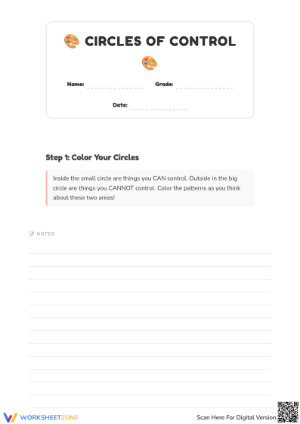
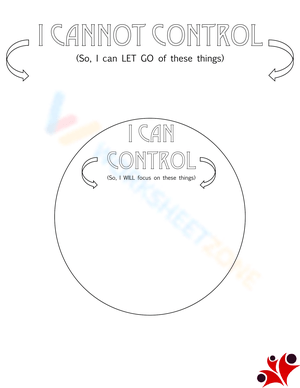
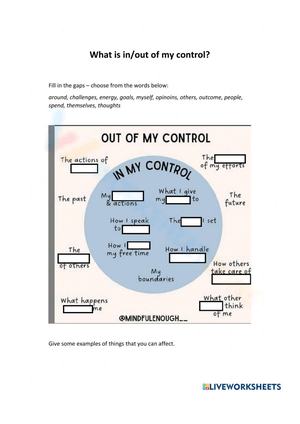
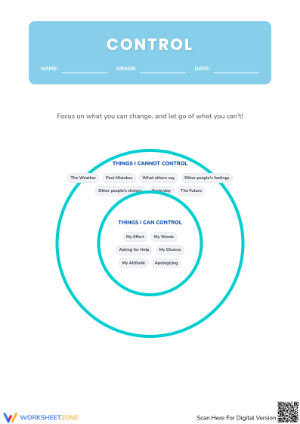
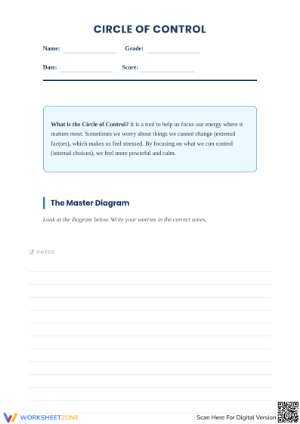
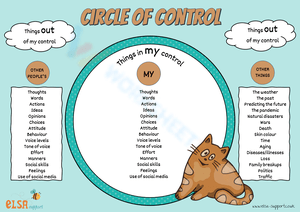
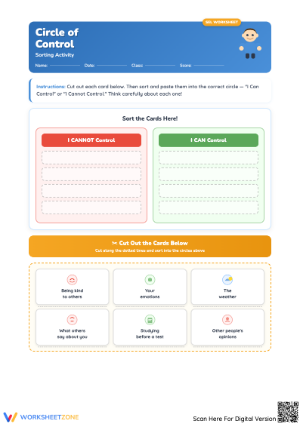
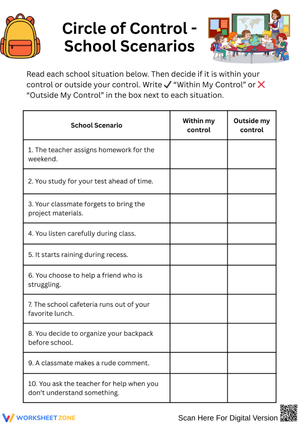
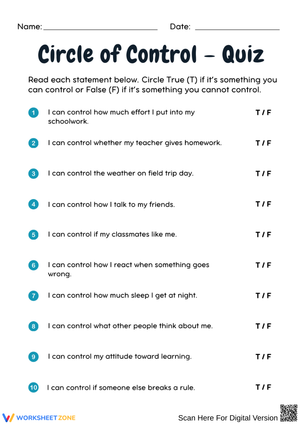
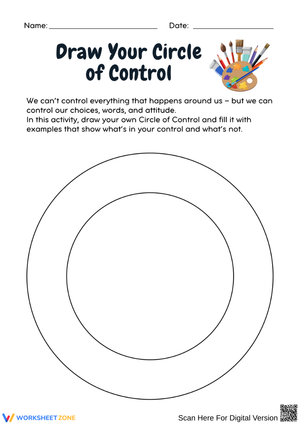
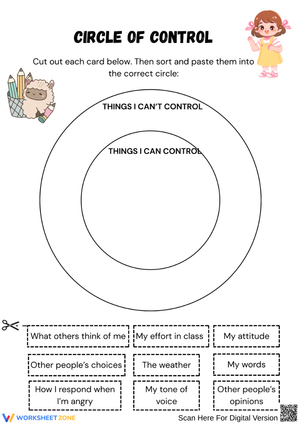
A circle of control worksheet is not just a calming page. It asks students to sort thoughts and actions, which makes it useful for self-management and decision-making. When a student writes, draws, or lists what belongs inside the circle, the conversation becomes more specific. They can control effort, words, breathing, asking for help, checking directions, or trying again. They cannot control another student's reaction, yesterday's mistake, or whether a quiz was harder than expected.
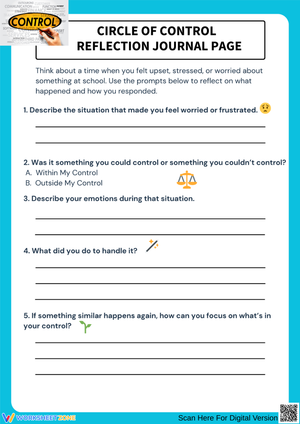
This structure supports the kind of self-management described in CASEL: What Is the CASEL Framework?. In a grade 5 setting, teachers can connect the worksheet to realistic classroom language: manage your thoughts before group work, choose a response during conflict, or make a plan after frustration. Students also practice reflection because they have to explain why an item belongs inside or outside the circle instead of sorting by guesswork.
- Emotional awareness: students identify what is making them feel stressed, angry, disappointed, or worried.
- Behavior reflection: students connect actions they can control to the outcome they want.
- Problem solving: students move from a broad complaint to one next step they can actually take.
- Communication: students use sentence stems to discuss their thinking with a partner, teacher, or counselor.
Classroom Implementation
Start by naming one stressor in simple language. You might say, I am worried about today's math test or I am upset that my group is not listening. Then model how to sort the problem into two categories: what is outside my control and what is inside my control. For grade 5 students, the real teaching move is the follow-up question: What can you do in the next 10 minutes? That keeps the page from turning into a list of feelings with no action step.
Sentence stems help students who know they are frustrated but cannot explain the difference between the two circles. Try stems such as I can control..., I cannot control..., and One choice I can make next is.... If you want stronger writing output, ask students to finish with a two-sentence reflection on how their inside-the-circle choices could improve the situation.
Three low-prep routines work especially well in grade 5:
- Morning meeting launch: students complete one example together, then fill out a personal scenario independently.
- Behavior reset: after a conflict, the student completes the page before a short repair conversation.
- Counseling check-in: the teacher, counselor, or support staff member uses the worksheet to guide a 5-minute problem-solving talk.
In upper elementary, the worksheet tends to work better when teachers treat it as a decision tool instead of a calming worksheet alone. Fifth graders often resist vague SEL language, but they respond when the page clearly leads to a plan: which action to take, who to ask for help, and what to try before the end of the period.
Frequently Asked Questions
1. What is a circle of control worksheet for 5th grade?
It is a printable reflection tool that helps fifth graders sort a stressful situation into what they can control and what they cannot. Teachers use it to support SEL, behavior reflection, and coping choices in a concrete way.
2. How do teachers use circle of control printables in class?
They work well in morning meeting, short SEL lessons, counselor check-ins, calm corner routines, and behavior repair conversations. Most teachers introduce one specific scenario, model the sort, and finish with one action the student can take that day.
3. What skills do students practice with a circle of control activity?
Students practice self-management, reflection, problem solving, and communication. They learn to separate emotions from actions, identify realistic choices, and explain why a next step is within their control.
4. Are circle of control worksheets appropriate for counseling and behavior support?
Yes. They are especially useful when a student feels overwhelmed, stuck, or reactive. Because the format is brief and structured, it fits both classroom behavior support and counselor-led conversations without requiring extensive prep.












 Interactive Worksheet Maker
 Quiz Maker
 Word Search Maker
 Crossword Puzzle Maker
 Word Scramble Generator
 Sentence Scramble Generator
 Handwriting Worksheet Generator
 Name Tracing Generator
 Fill In The Blank Generator