Character traits work in grade 5 should go beyond asking students to label a character as kind, brave, or selfish. At this level, students need to explain how they know, support an idea with details from a text, and compare characters when a story includes more than one important point of view. That is why Worksheetzone's character traits pdf worksheets for 5th grade are most useful when they push students to read closely, infer carefully, and defend their thinking in writing.
How These Worksheets Support RL.5.3
The Common Core State Standards for ELA, Grade 5 Reading Literature asks students to compare and contrast two or more characters, settings, or events using specific details from the text. Character traits worksheets help teachers break that work into manageable steps. Students can first identify traits for one character, then collect evidence for a second character, and finally explain similarities and differences in a short written response.
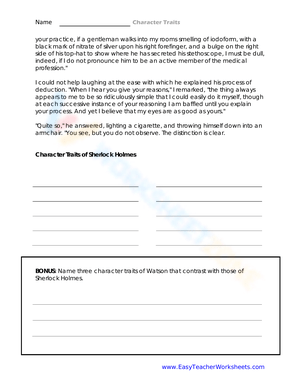
That structure matters because many students can name a trait but struggle to justify it. A printable page gives them a visible routine: read the passage, underline evidence, record the trait, and explain the connection. When the layout includes side-by-side boxes or response frames, teachers can quickly see whether students are actually using text details instead of guessing.
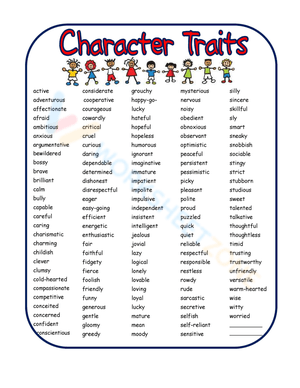
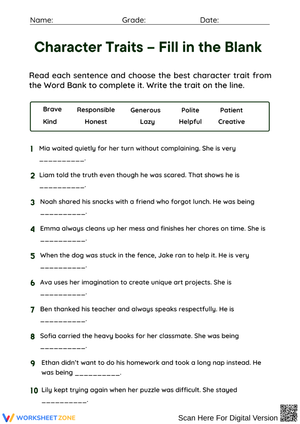
Teachers can also use these worksheets to teach precision. For example, students may first write that a character is nice, then revise to generous, patient, or responsible after returning to the text. That revision step is where comprehension deepens.
What Effective Character Traits PDF Worksheets Include
The most useful printable sets usually mix a few task types instead of repeating the same prompt on every page. That gives teachers options for whole-group modeling, partner work, intervention, and independent practice.
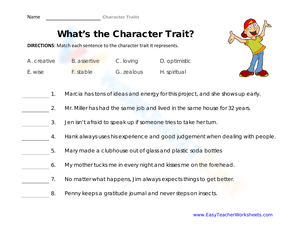
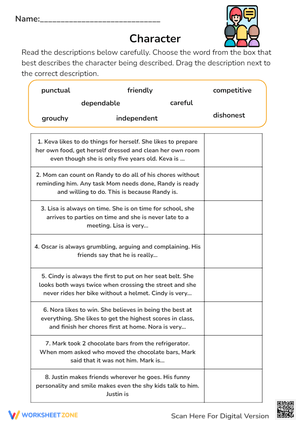
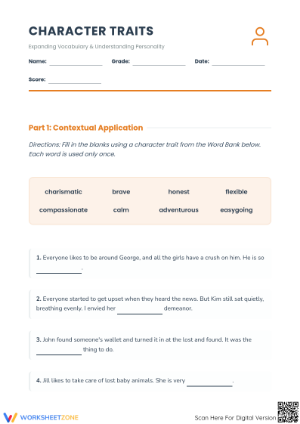
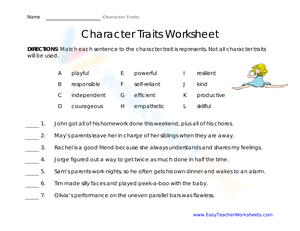
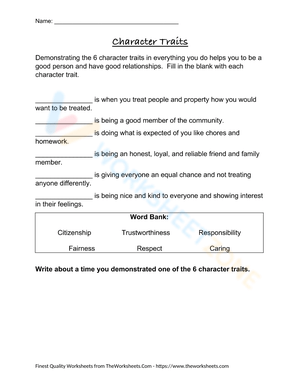
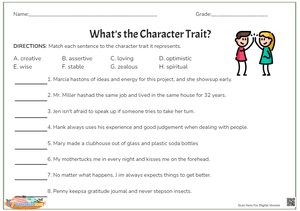
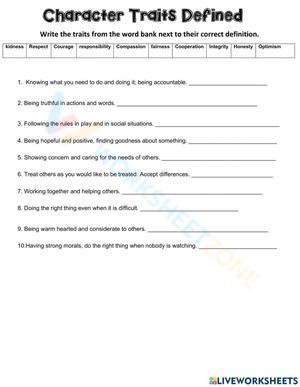
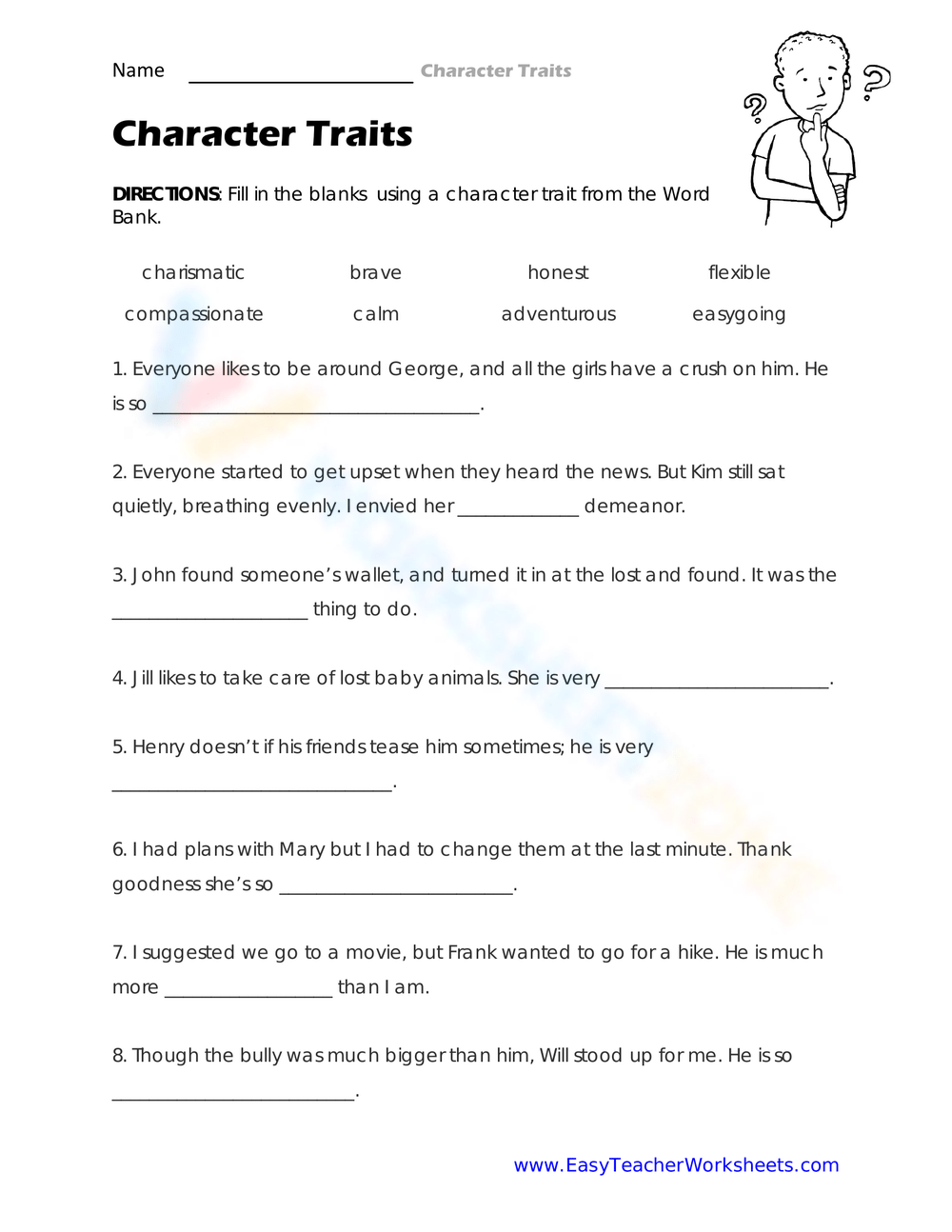
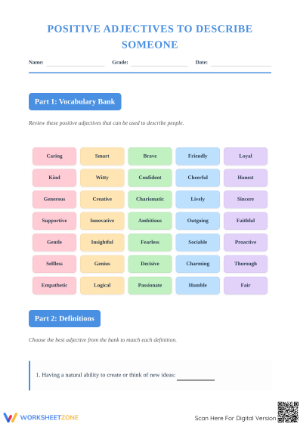
- Trait matching pages help students connect precise vocabulary to short character descriptions.
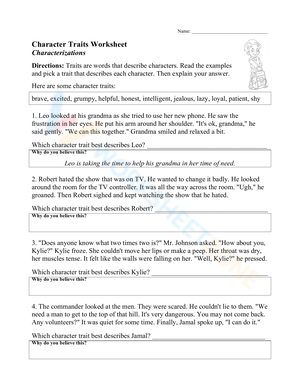
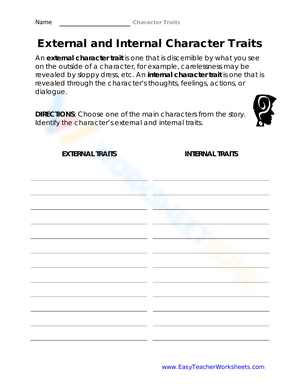
- Evidence charts ask students to list what a character says, does, and thinks before naming the trait.
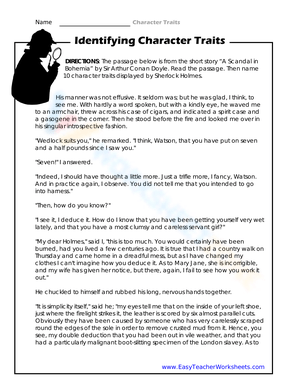
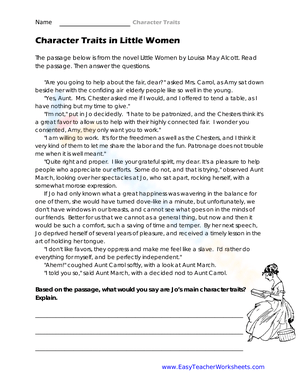
- Short reading passages create a manageable way to practice inference without a full novel excerpt.
- Compare-and-contrast frames guide students toward RL.5.3 responses with sentence support.
- Quick exit-ticket formats let teachers check understanding in a few minutes.
Reading Rockets explains inferencing as drawing conclusions from clues in the text plus what the reader already knows. That is the core move behind character-trait work. A worksheet is effective when it makes that thinking visible instead of treating traits as a vocabulary-only skill.
Classroom Implementation
These printable worksheets fit naturally into several parts of a grade 5 reading block. In whole group, a teacher can project a short passage, complete the first evidence box together, and then release the rest of the page for independent work. In small groups, the same format works well for students who need extra support with inference language such as because, this shows, and another detail is.
For centers, choose a short-passage worksheet that students can finish in 10 to 15 minutes. For homework, assign a page with one character and one written explanation so the workload stays reasonable. For sub plans, use a stand-alone passage with clear directions and a trait bank. For test-prep review, select compare-and-contrast pages that mirror short constructed responses.
Teachers can also sequence the pages across a week. Start with trait vocabulary and guided evidence on day 1, move to independent evidence charts on day 2, compare two characters on day 3, and finish with a paragraph response on day 4. That progression keeps the practice focused and measurable.
Teacher Tips for Stronger Responses
Students often need direct coaching to move from shallow answers to evidence-based ones. A few simple routines make these worksheets more effective.
- Ask students to highlight the exact words or actions that support each trait before they write.
- Require complete sentences for trait explanations, especially in grade 5 written responses.
- Teach students to replace vague traits like good or bad with more precise academic language.
- Use partner talk before written work so students rehearse their reasoning aloud.
- Revisit the same worksheet format with new passages so students build confidence with the structure.
Here is a useful citation capsule for planning: According to the Common Core State Standards for ELA, Grade 5 Reading Literature, students should compare and contrast two or more characters using specific text details. That makes character-trait worksheets strongest when they require direct evidence and comparison, not just isolated trait labeling.
When teachers keep the response routine consistent, they can spend less time explaining directions and more time listening for misconceptions. That is especially helpful during intervention groups and quick formative checks.
FAQ
1. What should 5th graders know about character traits?
Fifth graders should be able to identify a trait, explain it with specific details, and compare characters using evidence from the text. They should also understand that traits are more lasting than temporary feelings.
2. How do these worksheets support Common Core RL.5.3?
They help students compare and contrast characters with specific details from a passage. The best pages include space for evidence, trait selection, and a written comparison response.
3. How can teachers help students cite evidence for a character trait?
Model the process aloud, require students to point to exact actions or dialogue, and use organizers that ask for at least two supporting details before the final answer.
4. What is the difference between character traits, feelings, and motivations?
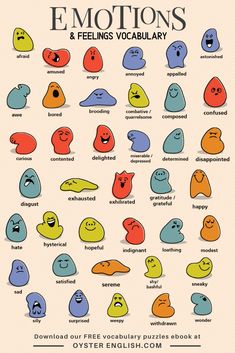
Traits describe a character's more stable qualities, feelings describe emotions in a moment, and motivations explain why a character acts. Grade 5 students need practice separating those ideas.
5. How can these PDFs be used in small-group intervention or homework?
In intervention, use short passages and guided evidence boxes to reduce overload while keeping the reasoning strong. For homework, assign one focused page with a brief written explanation so students practice without too much reading at once.