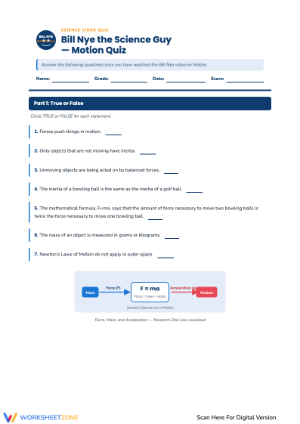
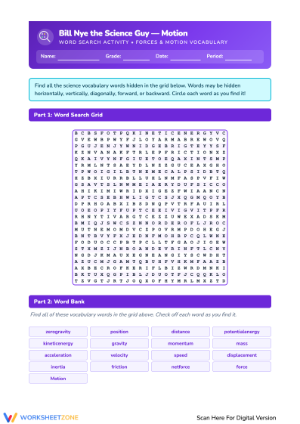
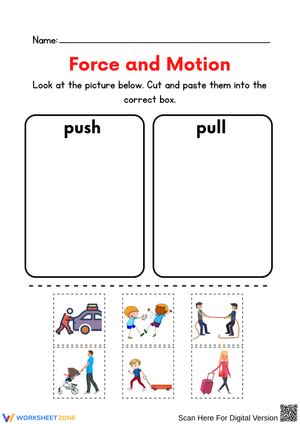
These 4th grade forces motion and machines worksheets resources cover push-and-pull forces, friction, motion variables, and all six classical simple machines, giving teachers a printable set that moves from basic identification tasks through diagram labeling, data recording, and comparison activities. The materials fit anywhere in the instructional sequence: science stations, guided notes alongside demonstrations, independent practice, or end-of-unit review. Teachers get resources that are usable the day they're downloaded, with no science kit required for the worksheet-based tasks.
The Specific Skills These Worksheets Target
Each worksheet in the set focuses on one of three interconnected areas: force identification, motion analysis, or simple machine mechanics.
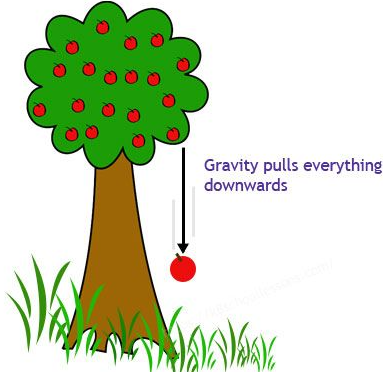
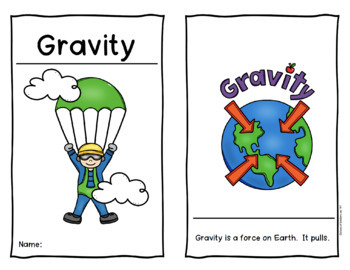
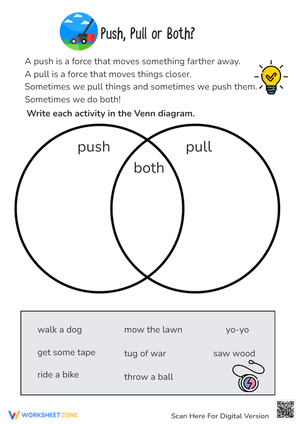
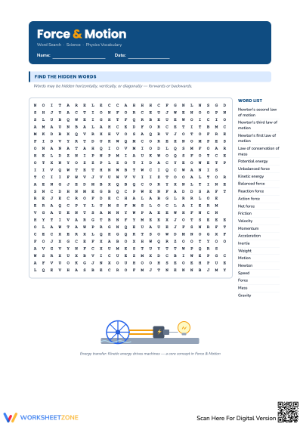
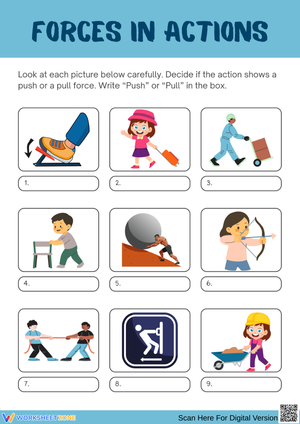
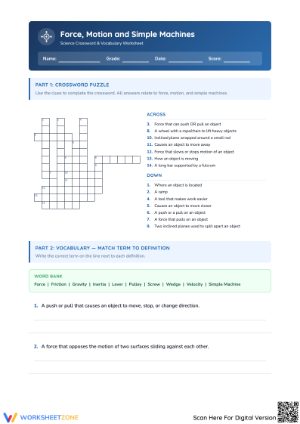
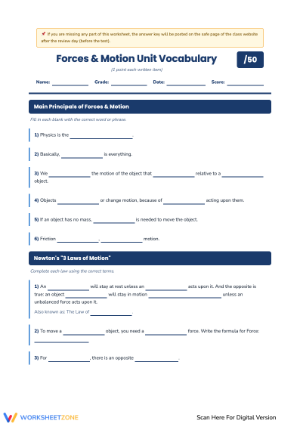
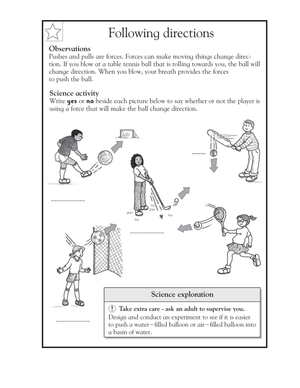
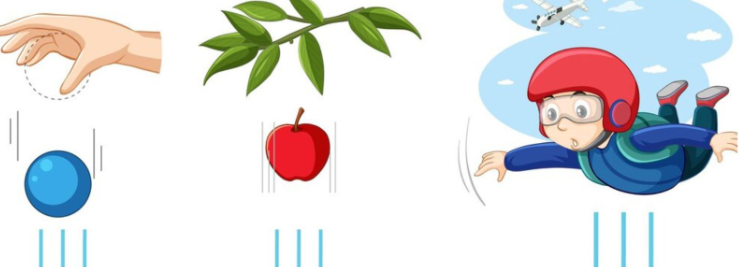
Force identification tasks ask students to categorize pushes and pulls in everyday scenarios — a dog pulling a leash, a hand pushing a shopping cart, gravity acting on a dropped ball. Vocabulary work builds on those scenarios, asking students to match terms like inertia, friction, gravity, balanced forces, and unbalanced forces to definitions and visual examples.
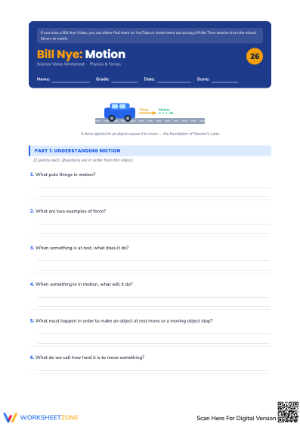
Motion analysis worksheets center on how forces change speed and direction. Students record data from ramp experiments — measuring how far a toy car travels on tile versus carpet, or comparing how ramp angle affects travel distance. The recording format is consistent across the motion worksheets: observation column, data table, and a sentence requiring the student to explain what the data shows. By the third worksheet in the sequence, students stop spending mental energy on the directions and put it into the science itself.
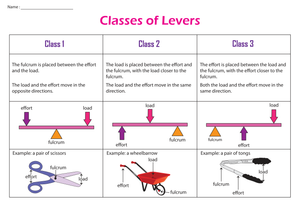
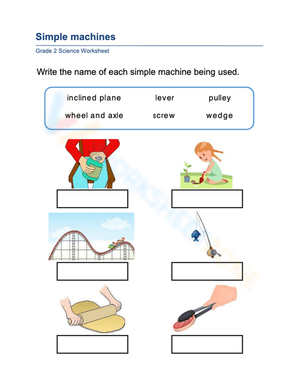
Simple machine worksheets include diagram labeling (identify the fulcrum, load, and effort on a lever system), classification tasks (sort household items by machine type), and application questions asking why a ramp requires less force than lifting a heavy box straight up.
Common Misconceptions in This Unit That Teachers Need to Address Head-On
Physical science at 4th grade runs straight into several deeply held intuitive beliefs, and these worksheets surface them quickly enough that teachers can intervene before the misconceptions get reinforced.
The most persistent error involves lever classes. Students who correctly label a first-class lever — a seesaw, fulcrum between effort and load — will then place the fulcrum in the same middle position on a wheelbarrow, because they've internalized "fulcrum in the middle" as the universal rule rather than understanding that the three lever classes differ in fulcrum placement relative to load and effort. Diagram worksheets catch this error in one class period. Watch for it especially when the worksheet shifts from seesaws to wheelbarrows or bottle openers.
Pulleys generate a related problem. Students write that any pulley system reduces the force required to lift an object. A fixed single pulley only changes the direction of pull — it provides no mechanical advantage at all. Students who label a flagpole pulley as a force-reducer need a targeted demonstration before that error calcifies. The diagram-labeling worksheets make this misconception visible early, which is exactly when it's easiest to correct.
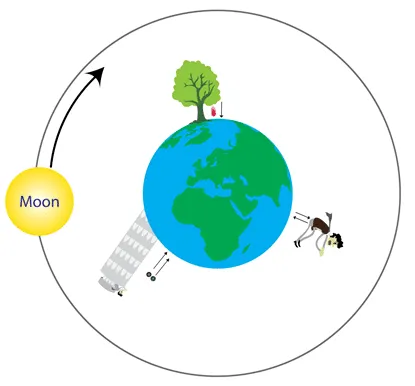
Running underneath almost all the force work is a mass-versus-weight confusion. Students will correctly say a bowling ball pushes harder against the floor than a tennis ball, but ask what would happen to that same bowling ball on the moon and the muddiness of their model shows immediately. A worksheet question comparing the same mass under different gravitational conditions — even framed as a thought experiment — is worth including because it forces students to separate the two concepts rather than treating them as synonyms.
Working Through All Six Classical Simple Machines
Selecting a solid 4th grade forces motion and machines worksheets collection means verifying that each of the six machines gets its own focused diagram worksheet before students encounter a cumulative classification review. Jumping straight to sorting all six at once produces surface-level pattern matching — students memorize visual silhouettes rather than understanding mechanical function.
- Lever: Students identify the fulcrum, effort, and load in labeled diagrams of seesaws, crowbars, and tweezers. The exercises distinguish first-, second-, and third-class levers through position-labeling tasks rather than category-name memorization.
- Wheel and axle: Worksheets highlight how doorknobs, steering wheels, and hand-crank pencil sharpeners all transfer rotational force. The pencil sharpener works particularly well — most students own one and have never thought of it as a machine.
- Pulley: Diagram tasks show the difference between a fixed pulley (direction change only) and a movable pulley (mechanical advantage). Students trace the rope path and mark where force is applied and where the load hangs.
- Inclined plane: Students compare the force needed to drag a weighted object up a ramp at different angles versus lifting it vertically. Recording worksheets give them a place to document the relationship between ramp length and effort required.
- Wedge: Worksheet examples use axes, doorstops, and teeth to show how a portable inclined plane separates, lifts, or holds objects. The teeth example typically generates strong discussion about the body itself as a collection of machines.
- Screw: Matching activities connect the screw's helical structure to jar lids, lightbulbs, and drill bits, helping students see that the screw is an inclined plane wrapped around a cylinder — two machines in one form.
How to Build These Worksheets Into Your Science Block
The most effective entry point is pairing a diagram worksheet directly with a classroom demonstration. If you're building a makeshift pulley system using a broomstick, two chairs, and some rope, hand out the pulley labeling worksheet before the demonstration starts so students arrive with a task — tracing the rope path, marking effort and load — while they watch. This dual-channel approach keeps students from drifting into passive observation. The last 8 minutes of a lab period, when students are still handling ramps and toy cars, is also a natural slot for the data-recording worksheets; it gives that time structure without shutting down hands-on engagement before the period ends.
For Monday re-entry after a weekend, a force identification warm-up — circling pushes and pulls in a scene diagram — takes 4 to 5 minutes and reactivates vocabulary before new instruction begins. Use it right after morning meeting, before the science block formally opens. The low cognitive demand of a recognition task makes it a reliable reactivation tool rather than a graded check.
One activity that generates strong transfer is a desk audit: students use a classification worksheet to identify every simple machine at their own desk or in their backpack. A pencil sharpener is a wheel and axle. A zipper is a wedge. A three-ring binder screw post is, obviously, a screw. The exercise takes about 15 minutes and builds exactly the real-world application that the NGSS performance expectations ask for — students drawing connections between abstract categories and objects they handle every day.
Standard Alignment
The core standard these worksheets address is NGSS 4-PS3-1: students use evidence to construct an explanation relating the speed of an object to the energy of that object. The motion data-recording worksheets sit directly inside this expectation — students document how increasing ramp angle changes travel distance and speed, then write a claim supported by their recorded data. That's not just content coverage; it's the scientific practice the standard names explicitly, and having a completed worksheet gives the teacher a concrete artifact to assess against the standard before moving to the next lesson.
The simple machine worksheets connect to disciplinary core idea PS3.C (Relationship Between Energy and Forces), which states that when two objects interact, each exerts a force on the other that can transfer energy to or from the object. Students applying a small effort force over a longer ramp distance and observing the trade-off with a large force over a short vertical lift are working with that core idea in a repeatable, documentable format. The 4th grade forces motion and machines worksheets set keeps that energy-force relationship at the center of the work, rather than treating simple machines as a vocabulary unit disconnected from the physics of motion that opens the unit.
Adjusting the Set for a Range of Learners
Students who are strong visual-spatial thinkers typically finish diagram-labeling worksheets quickly and accurately — but that format has an honest limitation. A student can correctly label a lever diagram by matching visual patterns without grasping why fulcrum position changes mechanical advantage. For those students, adding a short verbal explanation prompt closes that gap: "In two sentences, explain why moving the fulcrum closer to the load makes lifting easier." That one addition separates students who understand from those who have memorized the diagram shape.
For students who struggle with abstract vocabulary, the classification and sorting worksheets serve as better entry points than the written explanation tasks. Let them begin with the diagram-matching tasks — grouping images by machine type — before attempting the explanation questions. Once the categories feel concrete, the written component becomes accessible. The 4th grade forces motion and machines worksheets set works best for mixed-ability classrooms when teachers sequence the diagram identification work before the explanation work, rather than treating those two task types as interchangeable.
Students who receive pull-out support benefit from completing the vocabulary matching worksheet as a pre-teaching tool before the full class lesson, so the terminology is already familiar when instruction begins. This reduces cognitive demand during the main lesson and lets those students participate in discussion rather than decoding terms in real time.
Frequently Asked Questions
What are the six simple machines covered in this set?
The six classical simple machines are the lever, wheel and axle, pulley, inclined plane, wedge, and screw. Each worksheet in the set addresses one or more of these machines through diagram labeling, classification tasks, or data-recording activities tied to force and mechanical advantage.
How do simple machines make work easier without reducing the total work done?
Simple machines redistribute force and distance — a longer ramp requires less force but more travel distance to move the same load to the same height. The total work (force multiplied by distance) stays constant. What changes is that a smaller force becomes sufficient, which matters when the available force is limited by human strength or the weight of a load. This is the trade-off worth emphasizing in classroom discussion; students often assume machines give something for nothing.
What is the difference between balanced and unbalanced forces?
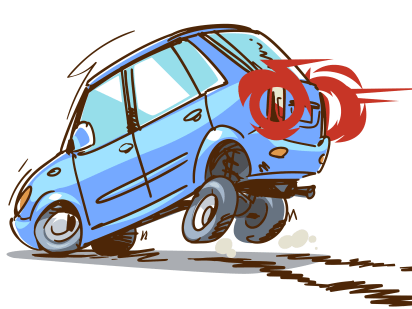
When forces acting on an object are equal in size and opposite in direction, they are balanced and the object does not change its motion — it stays still or continues moving at the same speed in the same direction. When forces are unbalanced, the net force produces a change in the object's motion: it speeds up, slows down, or changes direction depending on which force is greater and how it is applied.
How does friction affect motion, and why does surface type matter?
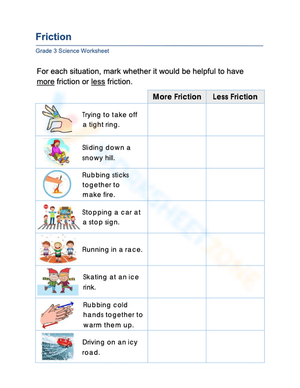
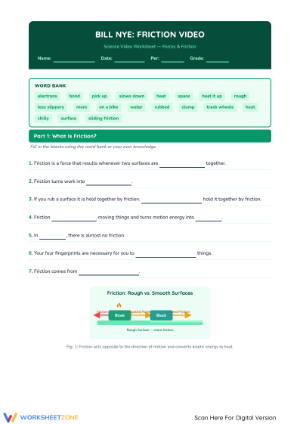
Friction is a contact force that resists motion between two surfaces. Rougher surfaces create more friction, which slows moving objects more quickly and requires more applied force to start or maintain movement. Smoother surfaces reduce friction, allowing objects to travel farther with the same push. This is why the ramp experiment worksheets specify the surface material — tile and carpet produce measurably different results, and that difference is the data students need to draw a direct connection between surface texture and friction magnitude.












 Interactive Worksheet Maker
 Quiz Maker
 Word Search Maker
 Crossword Puzzle Maker
 Word Scramble Generator
 Sentence Scramble Generator
 Handwriting Worksheet Generator
 Name Tracing Generator
 Fill In The Blank Generator