


























Views
Downloads

Essential 2D Shapes Identification Worksheet | Grade 1-3
Paste this activity's link or code into your existing LMS (Google Classroom, Canvas, Teams, Schoology, Moodle, etc.).
Students can open and work on the activity right away, with no student login required.
You'll still be able to track student progress and results from your teacher account.
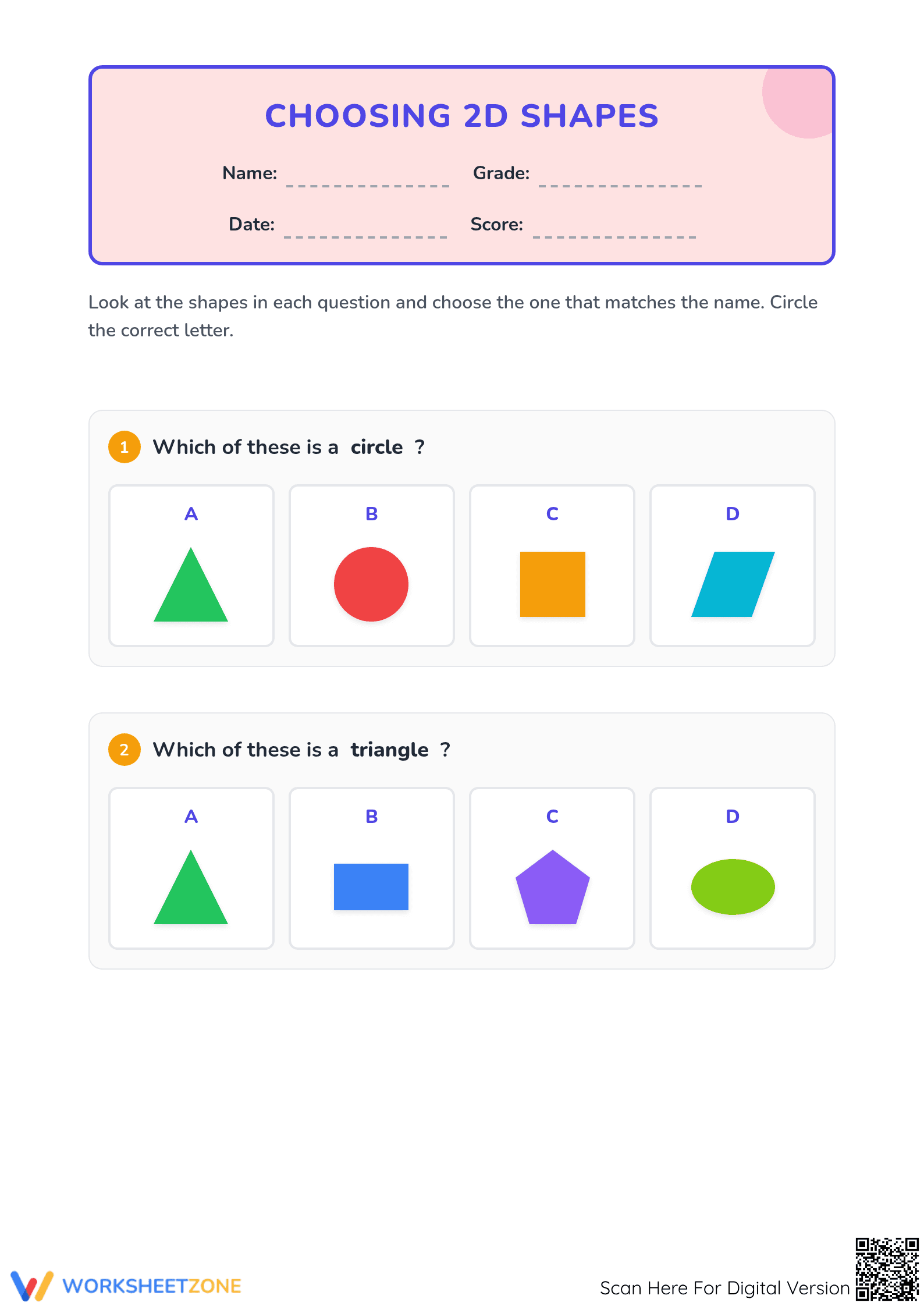
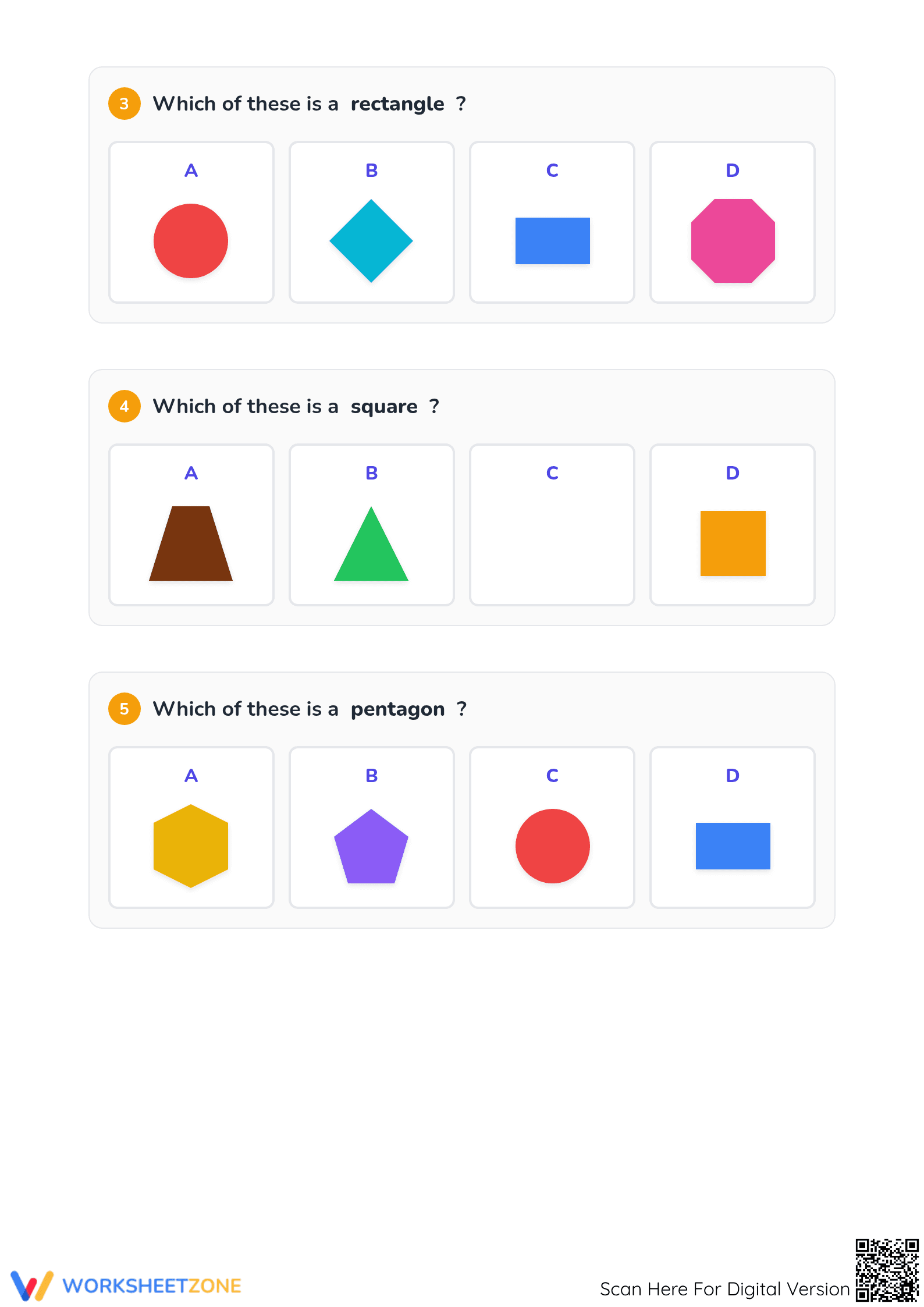
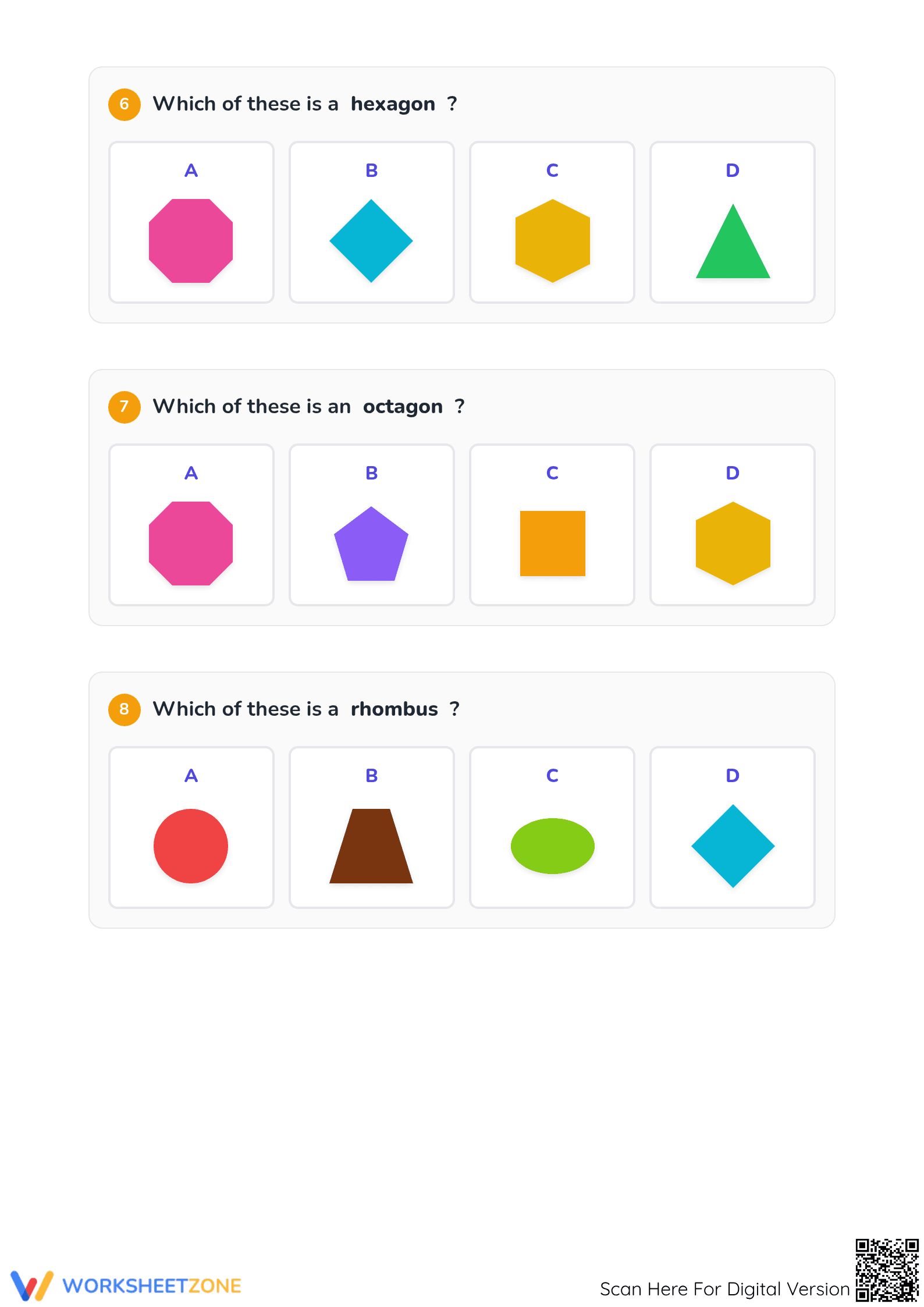
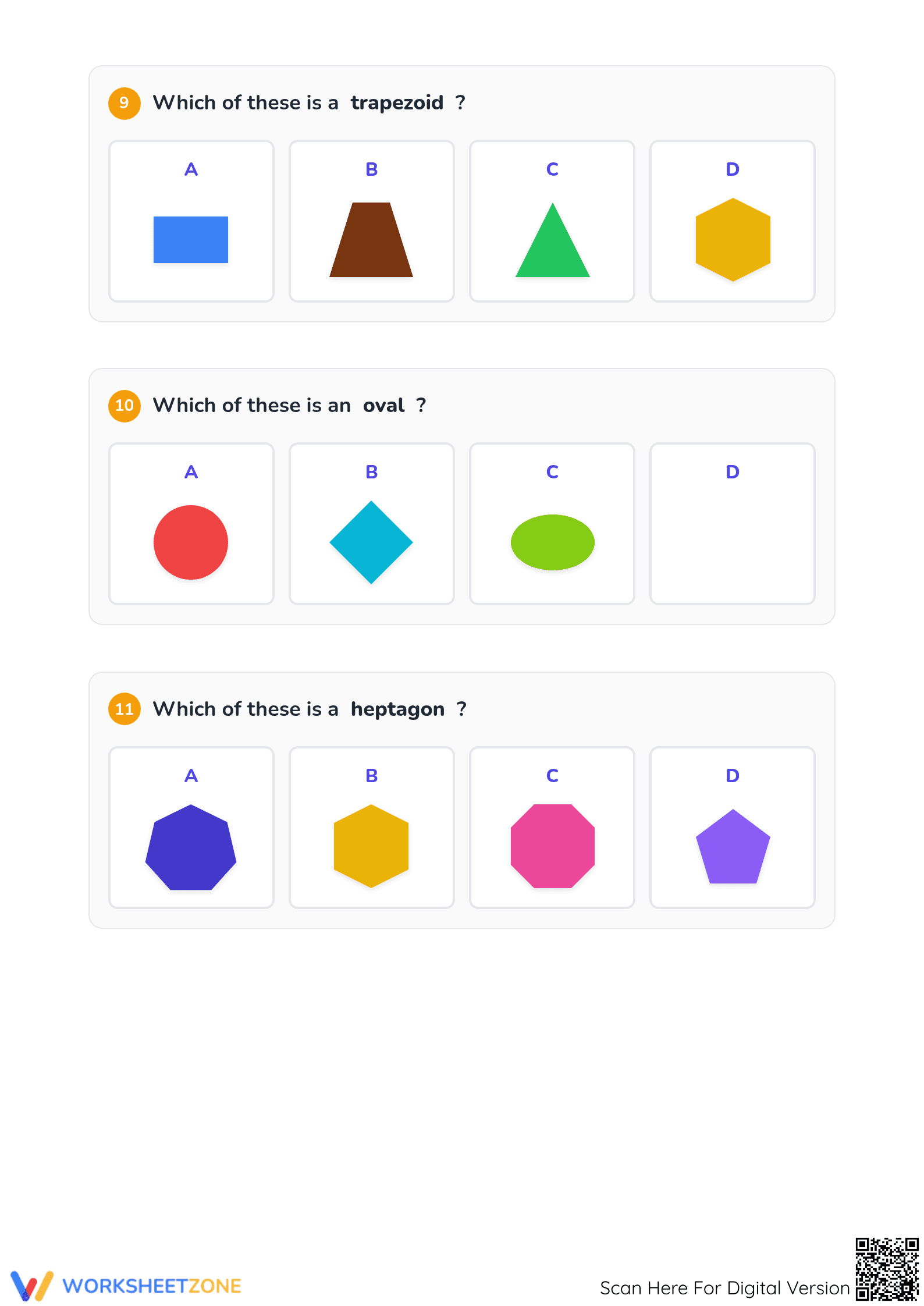
This printable 2D shapes worksheet helps early learners confidently recognize and name geometric figures. Engaging visuals and multiple-choice questions allow students to master identifying attributes and naming polygons accurately. This resource solidifies foundational geometry concepts through structured, repetitive practice.
At a Glance
- Grade: 1 · Subject: Math
- Standard:
CCSS.MATH.CONTENT.1.G.A.1— Distinguish between defining attributes like number of sides versus non-defining attributes- Skill Focus: 2D Shape Identification
- Format: 5 pages · 14 problems · Answer key included · PDF
- Best For: Independent geometry practice and formative assessment
- Time: 15–20 minutes
What's Inside
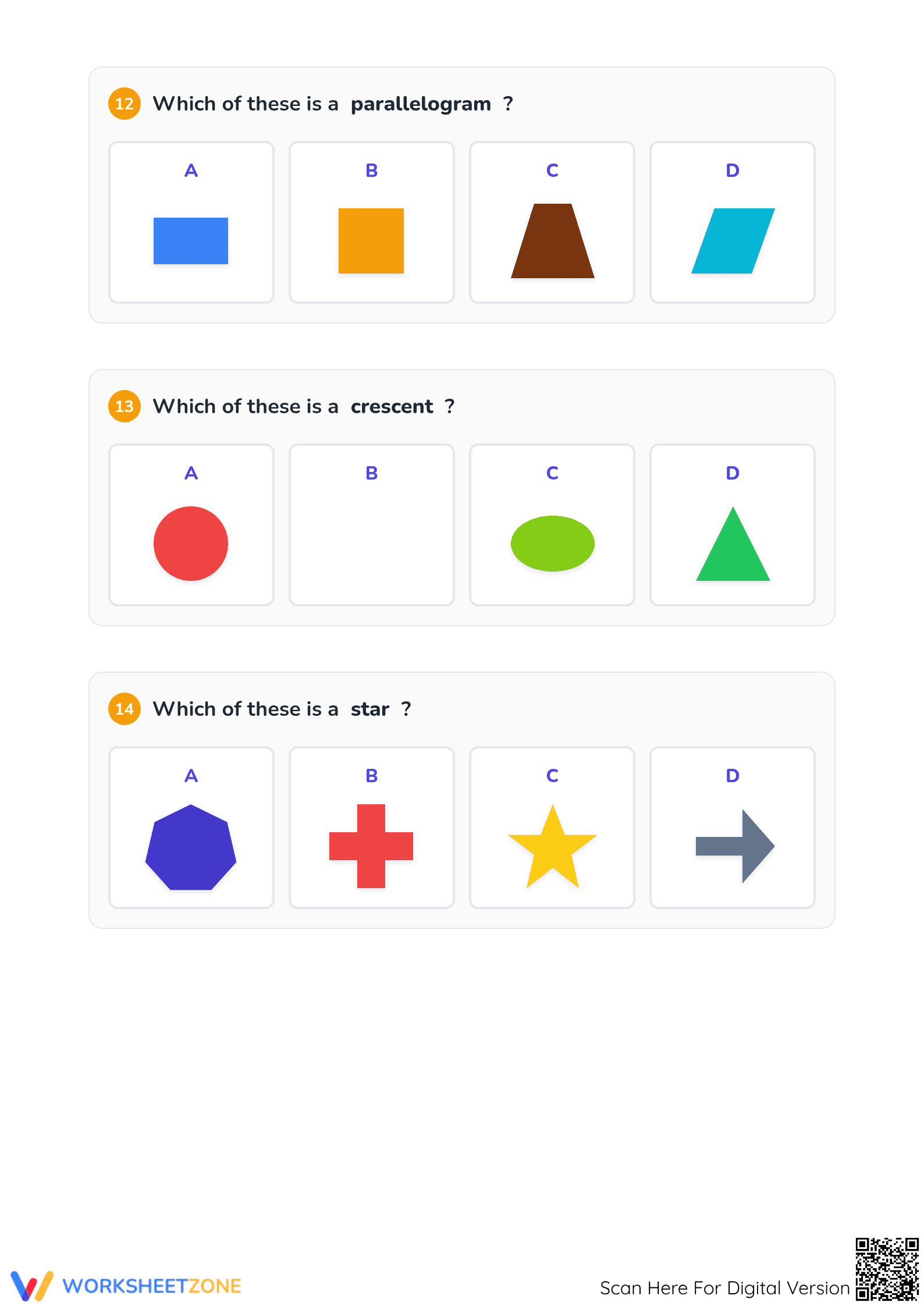
The packet contains 14 multiple-choice questions across 5 focused pages, ensuring a clear layout. Each question presents a shape name and four visual options, requiring discrimination between similar geometric properties. It covers basic forms like circles and squares, alongside advanced figures such as heptagons, parallelograms, and trapezoids. A complete answer key is provided.
Skill Progression
- Guided Practice: Initial tasks introduce familiar figures like circles and triangles using high-contrast colors to help students orient to the multiple-choice format (4 problems).
- Supported Practice: Mid-level questions introduce quadrilaterals such as rectangles and rhombuses, requiring students to observe specific side counts with minimal teacher assistance (5 problems).
- Independent Practice: The final section challenges students with complex polygons including heptagons, verifying mastery of advanced geometric vocabulary (5 problems).
This progression follows the gradual-release model, moving students from basic recognition toward comprehensive understanding of 2D properties through a structured I Do, We Do, You Do approach.
Standards Alignment
This resource aligns with CCSS.MATH.CONTENT.1.G.A.1, which requires students to "Distinguish between defining attributes (e.g., triangles are closed and three-sided) versus non-defining attributes (e.g., color, orientation, overall size)." By presenting shapes in various colors and sizes, the worksheet forces students to focus on defining geometric structure. Standard codes can be used in lesson plans or curriculum mapping.
How to Use It
Incorporate this worksheet during the independent practice phase of a geometry lesson to evaluate individual student progress. It serves as an excellent exit ticket after direct instruction on polygon naming conventions. Teachers should observe whether students confuse the oval with the circle or the rhombus with the square, using these observations to inform small-group interventions. Expect students to complete the 14 questions within 20 minutes.
Who It's For
Designed primarily for first-grade students, this resource also provides valuable review for second-grade learners or remediation for those struggling with shape vocabulary. It is particularly effective for students requiring visual scaffolds or those preparing for standardized math assessments. Pair this worksheet with physical pattern blocks or a shape anchor chart to provide a multi-sensory learning experience during the initial instructional phase.
Identifying 2D shapes is a cornerstone of early mathematical development, forming the basis for spatial reasoning. This worksheet aligns with CCSS.MATH.CONTENT.1.G.A.1 by requiring students to name shapes based on defining attributes. Structured multiple-choice tasks within a gradual-release framework improve technical vocabulary acquisition. This resource provides high-frequency exposure for students to transition from simple recognition to automatic recall of complex terms like heptagon and trapezoid, supporting evidence-based, standards-aligned instruction.


