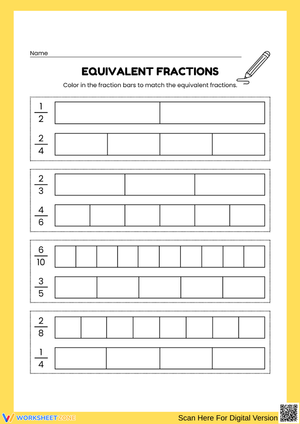
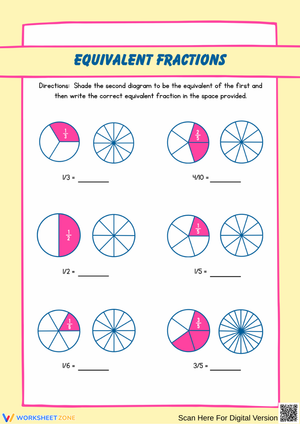
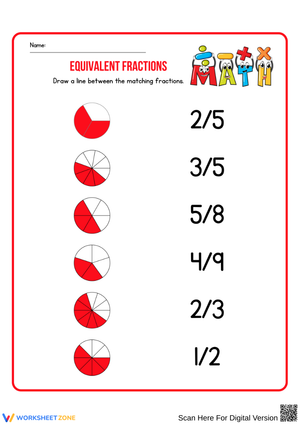
These identifying fractions worksheets for 3rd grade give teachers a print-ready set covering the two representations students need most at this level: shaded area models and number lines. Each worksheet targets fraction vocabulary, equal-parts reasoning, or the spatial thinking required to locate a fraction between 0 and 1. Most third graders arrive having worked exclusively with whole numbers, so the conceptual shift is real — and the set builds directly from counting and equal-groups knowledge students already carry into the lesson.
What the Worksheets Cover
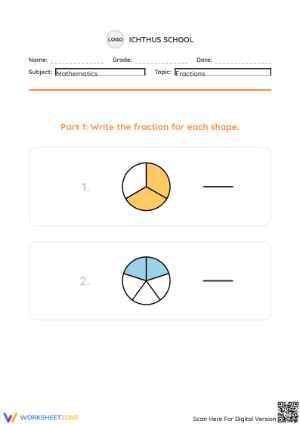
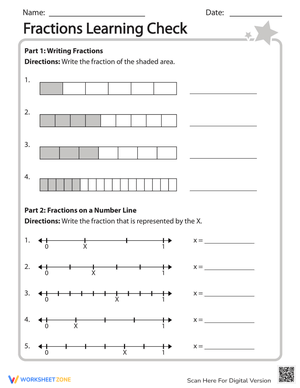
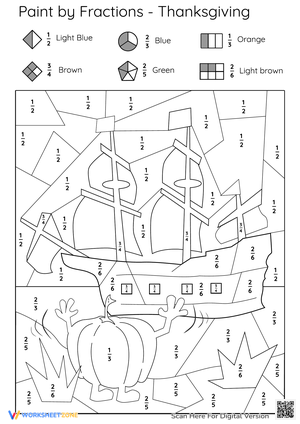
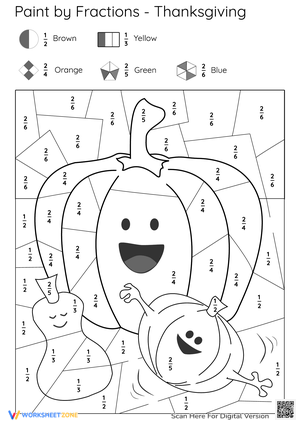
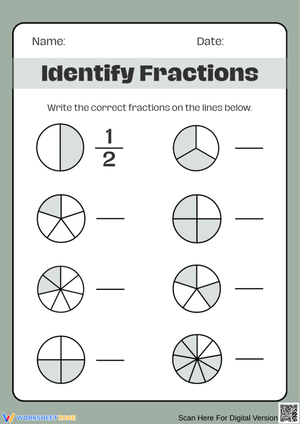
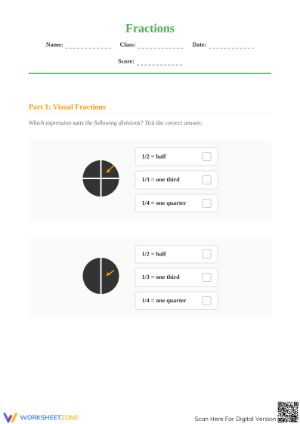
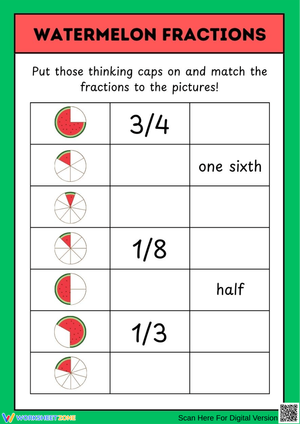
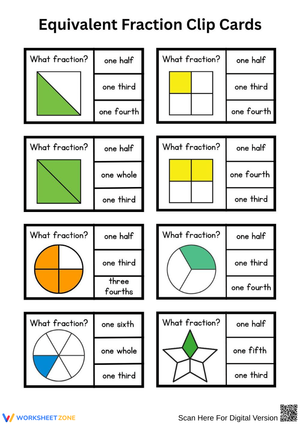
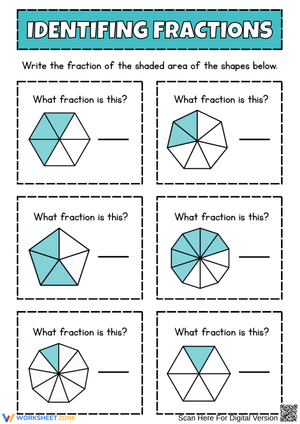
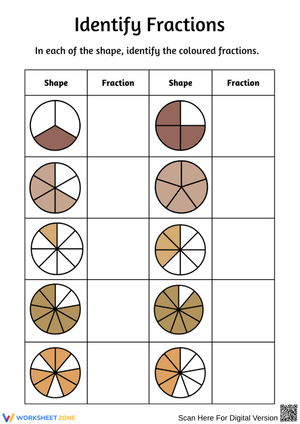
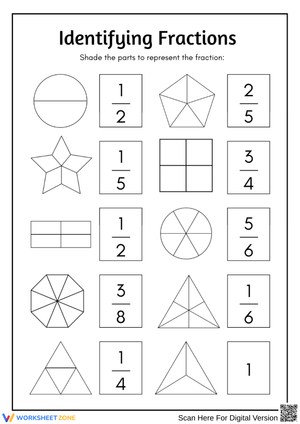
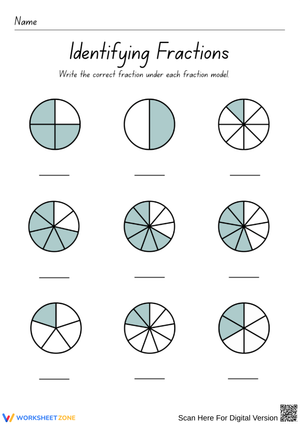
The area-model worksheets present circles, rectangles, and hexagons partitioned into equal parts. Students shade a specified fraction, identify the fraction that a given shading represents, or explain in writing why a particular shape does not show a valid fraction. That last task — identifying unequal partitions as invalid — gets less classroom time than it deserves, and building it into practice early makes a real difference in conceptual clarity later in the unit.
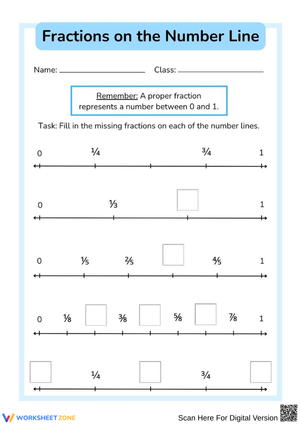
Number line worksheets ask students to count the total intervals between 0 and 1 to establish the denominator, identify the fraction named by a marked point, and plot given fractions such as 2/3 or 5/8 at the correct position. Several worksheets ask students to explain why two number lines that look different can represent the same fraction — a task that pushes beyond procedural placement into genuine understanding of magnitude.
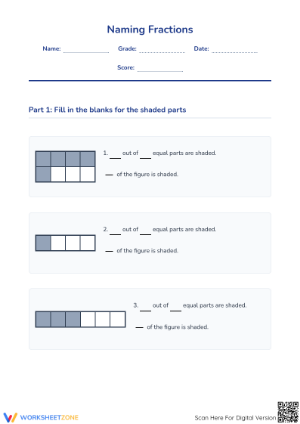
Vocabulary worksheets pair labeled diagrams with fill-in sentences, requiring students to write the numerator, the denominator, and the complete fraction. A handful of worksheets combine all three skill types in short sequences, which gives teachers a clear picture of exactly where each student's understanding breaks down rather than a single pass/fail score.
Student Mistakes Worth Catching Early
The most persistent error at this level is denominator confusion when unshaded parts are visible. A student looking at a circle divided into four equal sections with one shaded will frequently write 1/3 — counting the three unshaded pieces instead of the total parts. It reads like carelessness, but it almost always signals that the student has not yet internalized what the denominator actually measures. Worksheets that require students to write the total number of equal parts before they write anything else disrupt this pattern more reliably than re-explaining the vocabulary does.
On number lines, a different problem surfaces: students count the tick marks rather than the intervals. A number line from 0 to 1 divided into thirds has four marks including the endpoints, and many students record 4 as the denominator instead of 3. Pointing this out once is rarely enough. Distributing the same correction across multiple sessions — rather than addressing it in a single lesson — is what actually moves students past it.
A third misconception worth watching: students who practice exclusively with circles sometimes fail to recognize that a rectangle divided into six equal columns represents sixths just as a pie chart does. The fraction lives in the relationship between the parts and the whole, not in the shape itself. Including rectangles, hexagons, and other area models from the beginning prevents this narrow association from taking hold.
Standard Alignment
3.NF.A.1 requires students to understand a fraction 1/b as the quantity formed when a whole is partitioned into b equal parts, and a fraction a/b as the quantity formed by a parts of size 1/b. Area model and vocabulary worksheets map directly to this standard. 3.NF.A.2 requires students to understand a fraction as a number on the number line and represent fractions on a number line diagram — the number line worksheets address this standard specifically. In most third-grade pacing guides, both standards land in the second or third instructional unit, after students have worked with multiplication and division concepts. Treating fractions as a sustained unit rather than a compressed one-week push gives number line work the repeated exposure it needs to stick.
Fitting These Worksheets Into Your Math Block
An identifying fractions worksheets for 3rd grade fits naturally into several spots in the day: as a five-minute warm-up before direct instruction, as independent work following a whole-class lesson, or as a small-group task while other students work at centers. The vocabulary worksheets work especially well as entry tasks at the start of a new lesson. A student who cannot yet label the numerator and denominator before instruction begins tells you exactly where to anchor your opening — that information is harder to get once the lesson is already moving.
In small-group sessions, ask students to narrate what they are writing. "How did you know the denominator is 4?" surfaces reasoning that a completed worksheet alone cannot reveal. Students who land on a correct answer through counting luck rather than conceptual understanding are nearly impossible to identify from the paper, but they give themselves away the moment they explain their thinking aloud. Slipping a few worksheets into dry-erase sleeves lets students repeat the same number line exercises without burning through your print supply — useful when three or four students need more repetitions than the rest of the class.
Adjusting the Worksheets for the Full Range of Learners
For students still building basic fraction vocabulary, restrict early practice to halves, thirds, and fourths using circle and rectangle models before introducing number lines at all. The jump to sixths and eighths simultaneously introduces smaller parts and unfamiliar shapes — separating those two variables keeps the learning manageable. Rushing the sequence creates confusion that takes longer to correct than slowing down initially would have cost.
Students ready for extension can work with the identifying fractions worksheets for 3rd grade that feature eighths, sixths, and mixed-shape problems. A productive push for these students: embed two deliberate errors into a completed worksheet and ask them to find and explain what went wrong. Writing a correction and justifying it demands a different level of thinking than solving problems from scratch.
Students who freeze when presented with an unfamiliar shape — a hexagon divided into sixths, for example — often need one concrete anchor: count the total equal parts first, before doing anything else. Making that step explicit and requiring it in writing, rather than treating it as an internal shortcut, gives these students a reliable process to return to when the shape changes.
Frequently Asked Questions
Which fraction standards do these worksheets address?
The set covers 3.NF.A.1, which focuses on fractions as parts of a whole using area models, and 3.NF.A.2, which involves identifying and representing fractions on a number line. Each worksheet targets one or both of these standards, so teachers can sort the materials by instructional goal rather than working through the set in order.
My students understand area models but struggle with number lines. Can those worksheets be used on their own?
Yes — each number line worksheet stands alone and does not require students to have completed the area model worksheets first. That said, students who have already worked with fraction bars make the transition more smoothly, because a bar model is visually closer to a number line than a circle is. If number lines are the sticking point, one session with identifying fractions worksheets for 3rd grade that use fraction bars as the area model often bridges the gap before moving to number lines directly.
How can I use these worksheets for formative assessment rather than just practice?
The combination worksheets — those that mix vocabulary labeling, area model identification, and number line work in a single task sequence — function well as quick formative checks at the end of a lesson. Have students complete them independently in the last eight minutes of the math block, then sort the papers into three stacks: solid, partial, and not yet. That sort shapes the next day's small-group pull before you have put the papers down.













 Interactive Worksheet Maker
 Quiz Maker
 Word Search Maker
 Crossword Puzzle Maker
 Word Scramble Generator
 Sentence Scramble Generator
 Handwriting Worksheet Generator
 Name Tracing Generator
 Fill In The Blank Generator