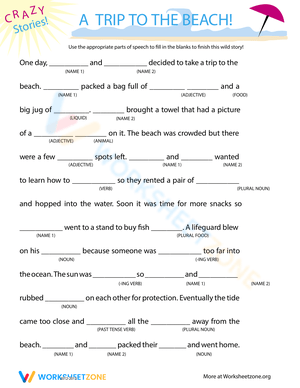
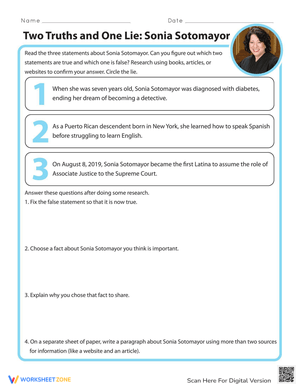
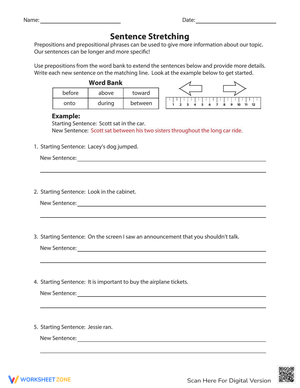
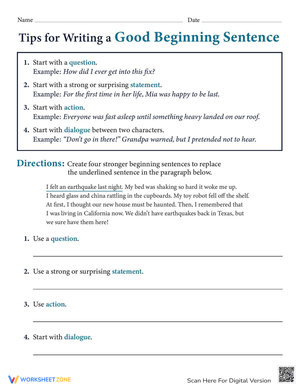
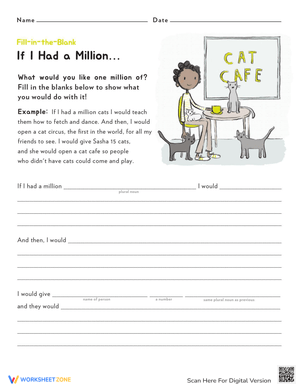
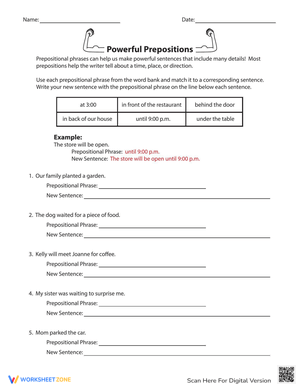
These writing process printable worksheets for 3rd grade give teachers a stage-by-stage structure for moving students from blank page to finished piece — and they solve one of the most persistent problems in third-grade writing instruction: students rushing past revision because they think "fixing it" means correcting spelling. Each worksheet addresses one stage of the five-step process, keeping students inside the stage they're actually working through instead of jumping to publishing before they've read their own draft critically. Third grade is the year multi-paragraph writing becomes a real expectation across narrative, opinion, and informative genres, which makes having a clear stage sequence more consequential here than most teachers anticipate before they've seen how badly eight-year-olds want to declare the brainstorm sheet the final copy.
Concepts in Each Worksheet
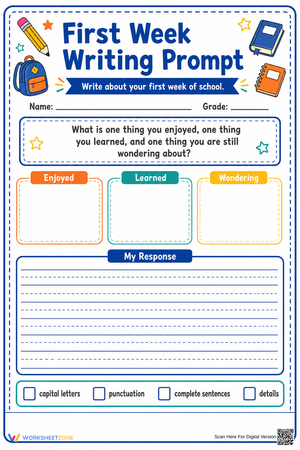
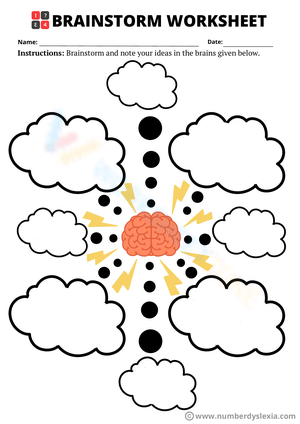
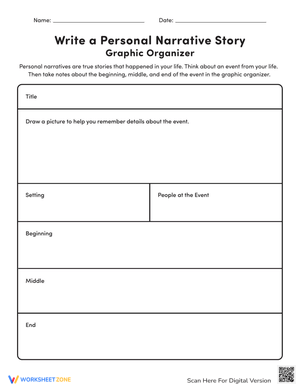
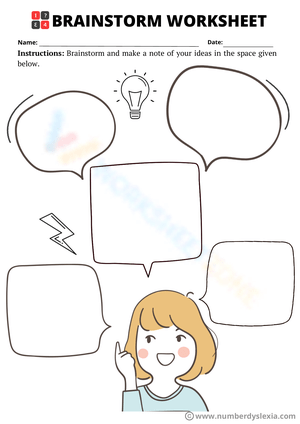
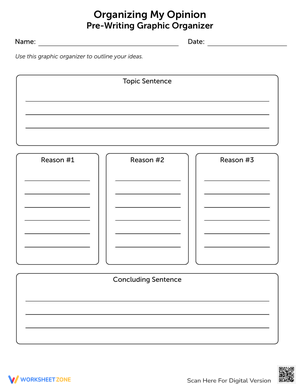
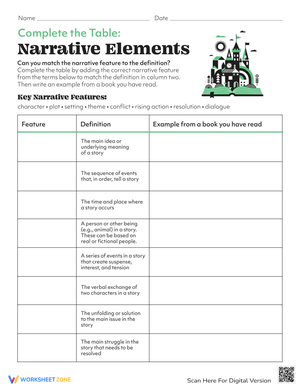
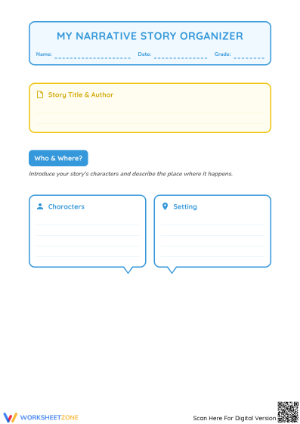
The prewriting worksheets use different organizer formats depending on the genre: story maps for narrative writing, T-charts and claim-and-reasons frames for opinion, and fact-collection webs for informative pieces. Students fill in labeled boxes — characters, setting, problem, solution for narrative; claim, three reasons, and supporting evidence for opinion — rather than confronting a blank planning space that most third graders leave nearly empty. That structure matters because the most common prewriting failure at this age is an organizer with two words per box that a student declares finished and immediately moves on from.
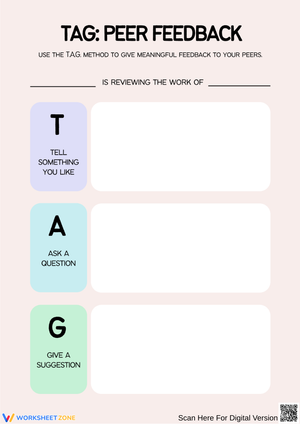
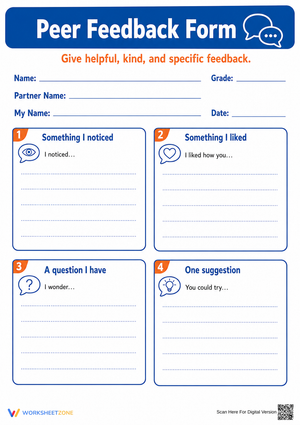
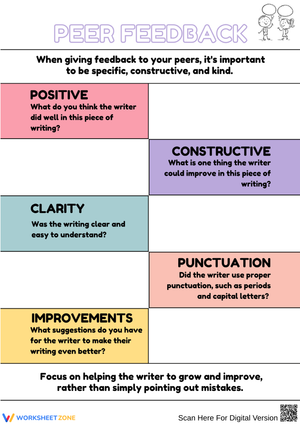
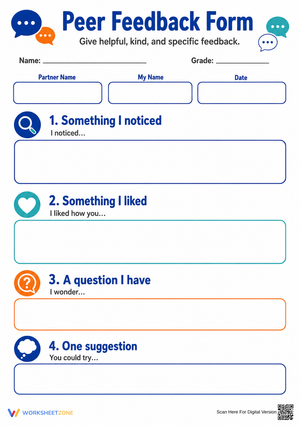
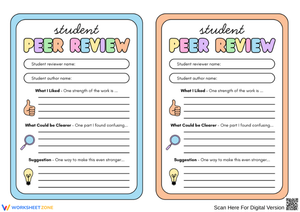
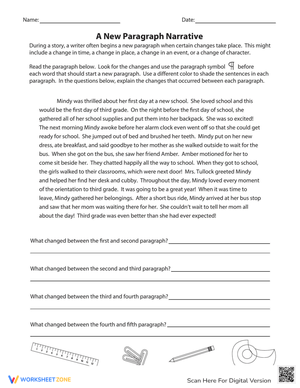
Drafting worksheets include paragraph break markers, giving students a visual cue that a new paragraph begins with a new main idea. Without that marker, the overwhelming majority of third graders write one continuous block of text regardless of how detailed their prewriting was. Revising worksheets ask students to evaluate specific features: does each paragraph open with a clear topic sentence, are there at least two supporting details, and does the ending resolve what the introduction set up — rather than just stopping? Peer review versions of the revision worksheet include partner response lines so feedback stays specific rather than the default "it was good."
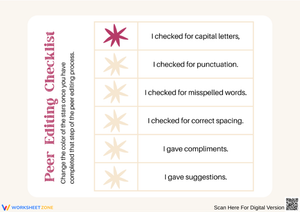
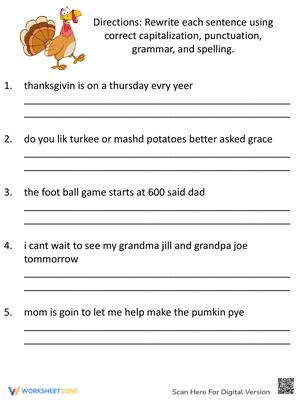
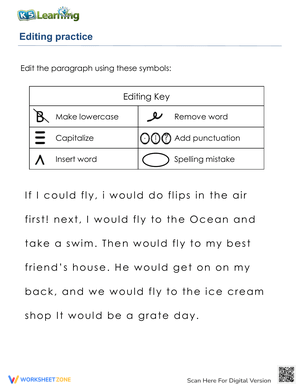
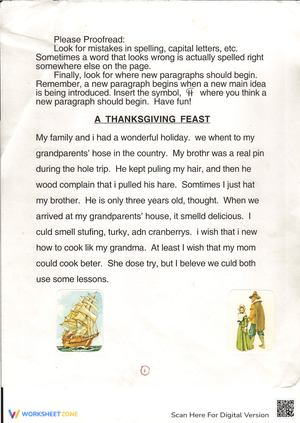
The editing worksheets use the CUPS structure — Capitalization, Usage, Punctuation, Spelling — with each checklist item broken onto its own line. Students mark directly on their draft before transferring corrections to a clean version. Publishing worksheets provide a formatted final-copy layout with consistent line spacing and a title and author line, which reinforces for students that writing is made for an audience, not just for a grade.
How to Work These Worksheets Into a Writing Unit
The most effective approach is to introduce each worksheet during a whole-class lesson before students use it independently. Put the prewriting organizer on a document camera and complete it together using a topic everyone already knows — a shared field trip, the class read-aloud, an event from the school week — so students can concentrate on how the worksheet works rather than spending mental energy generating brand-new ideas at the same time. The key move during that modeling session is thinking aloud when you cross something out and rework it. Students need to see that the organizer is a thinking tool, not a product to fill in correctly on the first try.
Once students move to independent work, keep all stage materials in a single writing folder. A complete folder holds:
- the genre-specific prewriting organizer
- the draft worksheet with paragraph break markers
- the revision checklist (student copy and, when applicable, a peer review copy)
- the CUPS editing checklist
- the publishing format sheet
These writing process printable worksheets for 3rd grade are sequenced so that moving between stages is a clear, visible transition rather than something students have to guess at. A brief Monday warm-up — three to five minutes rereading the previous week's draft before opening the next stage worksheet — reactivates the writing and reduces the "I forgot what I was writing about" problem that derails so many multi-week units.
Peer review works best when the roles are narrow. Assign one partner to look specifically for places where the writer used a vague word — "nice," "good," "fun" — that could be replaced with something more precise. Assign the other to check whether every paragraph has at least one concrete detail. Open-ended peer review at this age produces "I liked your story" and nothing usable. Specific roles produce specific, actionable notes the writer can actually do something with.
Mistakes Students Make That These Worksheets Help You Catch
The most reliably surfaced error is the confusion between revising and editing. After finishing a draft, students reach for an eraser and start correcting spelling. They are editing when the process calls for revision. The revision worksheet interrupts that habit because it asks students to add details and move or remove sentences — content work, not mechanics work. Expect to redirect the first few times regardless. The habit of equating "fixing writing" with "fixing spelling" is deeply set by the time students reach third grade.
In narrative drafts, watch for the "and then" chain: We went to the park and then we got ice cream and then we went home and then my dog knocked over the trash. Students who write this way have usually either skipped filling in their story map or only recorded plot events without thinking about scene detail. The revision worksheet's "did you describe what you saw, heard, or felt at this moment?" prompt addresses it, but only after you model what an expanded sentence looks like — students cannot write one on demand without having seen it demonstrated first.
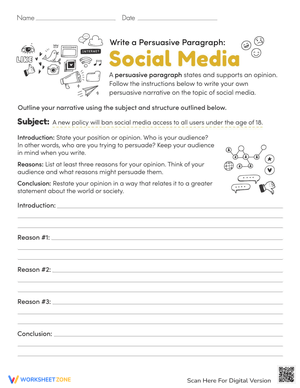
In opinion writing, a different pattern appears: students list reasons that are actually restatements of the claim. A student arguing that the school day should be shorter will write "because the school day is too long" as a reason — which adds no new information at all. The revision worksheet's "does each reason tell the reader something new?" check catches this, but it requires students to read their own writing with real critical attention, which most will not do without a structured prompt pushing them to slow down.
Standard Alignment
These worksheets align directly to CCSS.ELA-LITERACY.W.3.5, which requires third graders to develop and strengthen their writing by planning, revising, and editing with guidance and support from peers and adults. W.3.5 is the process standard, and it sits alongside the genre production standards — W.3.1 for opinion, W.3.2 for informative, W.3.3 for narrative — because the five-stage process applies across all three. In classroom terms, that means these worksheets belong inside every writing unit you teach, not only a standalone "writing process" unit. The same stage sequence runs through a narrative unit in October and an opinion unit in February; what changes is which prewriting organizer you distribute at the start.
Adjusting the Worksheets for Different Writers in the Room
Students who draft fluently and with detail benefit most from a more demanding revision task: cutting sentences that don't serve the main idea. Removing content is a harder revision move than adding it, and most above-level third graders have never been asked to try. The revision worksheet supports this by adding a "cross out one sentence that drifts off topic" step for students who need a greater challenge within the same task structure.
Students who struggle to generate ideas benefit from prewriting worksheets that include sentence starters inside the planning boxes. Instead of an empty "problem" field on the story map, the box reads: The problem is ___. This reduces the decision fatigue that causes some students to spend the entire prewriting block staring at a blank space. A parallel adjustment at the drafting stage — providing a first-sentence starter for each paragraph — tells students what the paragraph needs to accomplish before they write the rest of it.
For English language learners, the full CUPS editing checklist can be trimmed to focus only on end punctuation and capital letters at the start of sentences. Running through every checklist item when most lines come back marked is discouraging and doesn't improve the writing in proportion to the frustration it causes. The writing process printable worksheets for 3rd grade in this set allow that adjustment: print the full checklist for most students and a condensed version for students who need a narrower editing focus, without changing the underlying task or the genre expectations.
One limitation worth naming: the story map organizer is built around a linear problem-solution structure. A student writing a small-moment narrative — a single scene, a quiet memory, an internal observation — has nothing to put in the "solution" box because the piece isn't built around a problem. For those students, swap the story map for a sensory-detail web and have them plan around what they saw, heard, and felt instead. The rest of the stage sequence stays exactly the same.
Frequently Asked Questions
Do these worksheets cover all three writing genres?
The five-stage process applies across narrative, opinion, and informative writing. Prewriting and revising worksheets are genre-specific — each genre gets its own organizer format — but the drafting, editing, and publishing worksheets work across all three without modification. Most teachers organize the genre-specific organizers by unit and keep the shared worksheets in a central location students can access independently.
How long should a complete writing unit take using this sequence?
A piece moving from prewriting to publishing realistically takes two to three weeks when students have 30 to 45 minutes of writing time daily. The stage most frequently shortchanged is revision, which is also where the most significant thinking happens. If your schedule allows only one or two writing blocks per week, the unit runs five to six weeks, but the stage sequence stays the same — what changes is how many sessions you spend inside each stage.
Can these worksheets support formative assessment?
Collecting the prewriting and drafting worksheets together shows you where a student's breakdown actually occurred. A student with a detailed story map and a thin draft has a different instructional need than a student with a sparse map and an equally thin draft. The first student can plan but loses momentum during drafting; the second didn't generate enough detail to work from in the first place. Seeing only the final piece obscures that distinction entirely.
What is the practical difference between the revision and editing worksheets?
Revision addresses content and structure — ideas, organization, supporting detail, clarity of purpose. Editing addresses mechanics — capitalization, punctuation, spelling, and usage. Keeping them as separate worksheets completed on separate days trains students to read their writing twice, for different purposes. When revision and editing happen simultaneously, mechanics always win because surface errors are more visible than structural problems. The writing process printable worksheets for 3rd grade in this set are built on that separation as a core instructional principle, replicating how experienced writers actually move through a piece.












 Interactive Worksheet Maker
 Quiz Maker
 Word Search Maker
 Crossword Puzzle Maker
 Word Scramble Generator
 Sentence Scramble Generator
 Handwriting Worksheet Generator
 Name Tracing Generator
 Fill In The Blank Generator