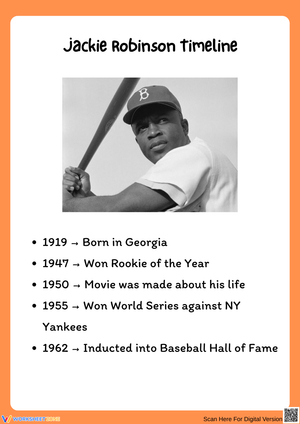
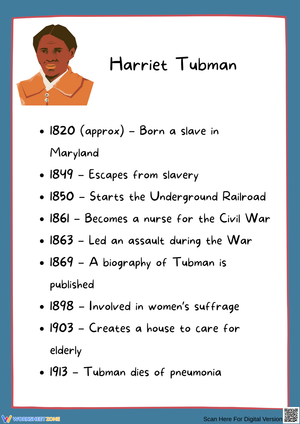
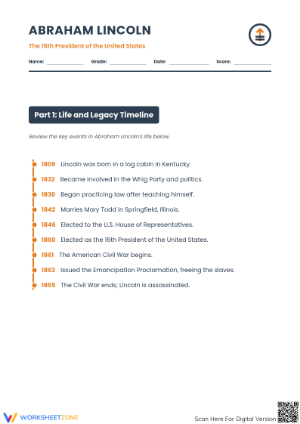
These 3rd grade timeline printable worksheets resources give teachers a structured way to build two skills that Grade 3 tends to treat separately: reading comprehension of informational text and the early drafting process for nonfiction writing. Each worksheet asks students to do more than fill in blanks — they select events, impose an order, and eventually translate chronological data into prose.
The Skills Each Worksheet Targets
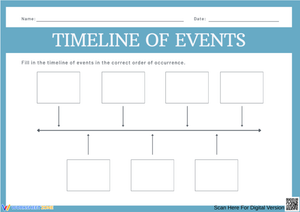
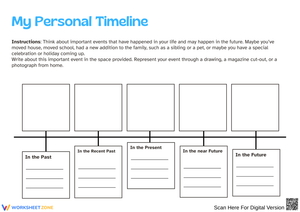
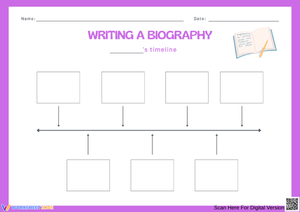
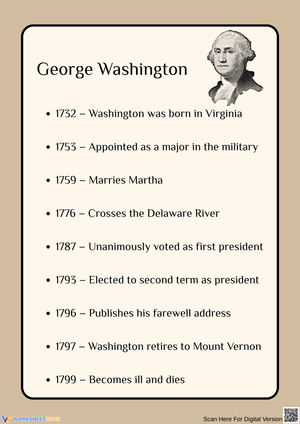
The set covers several distinct chronological reasoning tasks. Students work with horizontal timelines for biography study, plotting birth, early life milestones, and major achievements in sequence. Vertical formats appear when the task involves comparing two overlapping event lines — a layout that pushes students to consider why two events occupy the same period, not just where they fall on a line. Cut-and-paste worksheets present a scrambled event set pulled directly from a nonfiction passage; students sort and place them, which functions as a reading comprehension check rather than a writing exercise. Each worksheet also includes a word bank of transition vocabulary — words like initially, following this, and consequently — positioned at the top of the sheet so students can reference them without interrupting the task at hand.
Mistakes Students Make That These Worksheets Surface
The most consistent pattern in student work is overloading the timeline. Third graders who have just finished reading a biography of Rosa Parks, for example, want to record every detail they found interesting — including supporting evidence that is not a chronological milestone at all. The finite space on each worksheet forces a selection decision, and that friction is part of the instruction. Students cannot avoid the question "which events actually matter?" because there are only eight boxes.
A subtler error shows up when students fill in events in the order they encountered them in the text rather than in actual chronological sequence. A student might write "became a seamstress" before "born in Tuskegee" simply because the passage introduced her career early. The sorting worksheets are built to expose exactly this confusion — and when students catch their own placement errors during a partner check, the correction holds far longer than a teacher correction would.
Standard Alignment
CCSS RI.3.3 asks third graders to describe the relationship between a series of historical events, scientific ideas, or steps in a technical process using language that pertains to time, sequence, and cause and effect. In classroom terms, this standard appears most visibly during biography units and science procedure writing — both common Grade 3 assignments — and it surfaces in standardized reading tasks that ask students to order events from a passage. Understanding what 3rd grade timeline printable worksheets materials ask students to do on the page makes the connection to this standard direct: every time a student decides where an event goes and writes a transition phrase connecting it to the next one, they are performing the exact operation RI.3.3 requires.
Building These Worksheets Into Your Lesson Plan
The cut-and-paste format works as an exit ticket at the end of a read-aloud — takes roughly eight minutes and produces a quick visual record of who tracked the sequence and who lost the thread. The blank horizontal templates fit naturally into the biography drafting phase of a writing unit: students complete the timeline on day one, use it as an outline on day two, and write the first paragraph on day three. Teachers who have tried assigning the paragraph without the timeline step first report that student writing drifts — events surface out of order, and transitions like "also" replace time-based ones because students have no external reference keeping them anchored.
One activity worth building in: hand students a completed timeline and ask them to write the informational passage it represents. This reversal forces students to think about what a writer actually does with chronological data — not record it, but construct an argument or explanation from it. It works well as a Friday task after students have spent the week reading and annotating nonfiction, because it draws on accumulated content knowledge without requiring additional research time. The 3rd grade timeline printable worksheets set includes completed-timeline templates built for exactly this purpose.
Adapting the Worksheets for Mixed-Ability Classrooms
For students who need more support, pre-fill the date markers and ask them to write only the event descriptions. This removes one layer of decision-making and lets them focus on the language of each description rather than the ordering task. Some students also benefit from receiving the event descriptions in a word bank so their job becomes placement and sequence, with the writing demand reduced to a manageable level.
Students who move through these worksheets quickly can be extended by adding a "significance sentence" requirement: for each event, they write one sentence explaining why it mattered, not just what it was. A student who writes "Amelia Earhart set the women's altitude record in 1922, which proved that women could match male pilots in technical skill" is doing substantially more analytical work than a student who writes "set altitude record." That single additional prompt changes the cognitive weight of the entire worksheet without requiring a separate assignment. The flexibility of format and demand level is what makes 3rd grade timeline printable worksheets resources usable across a genuinely wide range of third-grade readiness levels.
Frequently Asked Questions
Do these worksheets work for science content or only social studies?
They work across both. A life cycle unit, a science procedure sequence, or a unit tracking how a weather system develops all use the same chronological reasoning as a biography or history passage. The blank templates are content-neutral — students bring the subject matter; the worksheet provides the organizational structure.
My students confuse chronological order with cause and effect. Do these worksheets address that distinction?
Several worksheets include a prompt asking students to mark which events on the line directly caused the next event and which simply followed each other in time. The distinction tends to click when students have to make that judgment themselves — marking arrows and then explaining their choices to a partner — rather than hearing the definition explained once from the front of the room. The teacher sees the thinking clearly in the marked-up worksheet and can address gaps individually.
Can I use these during personal narrative units?
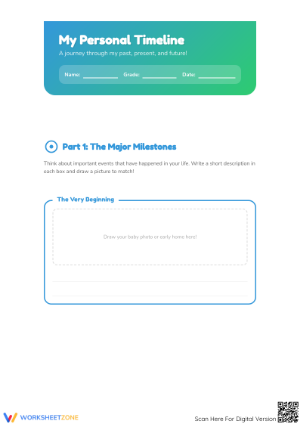
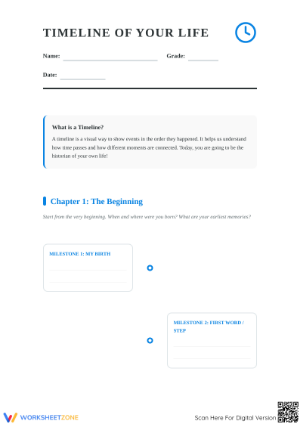
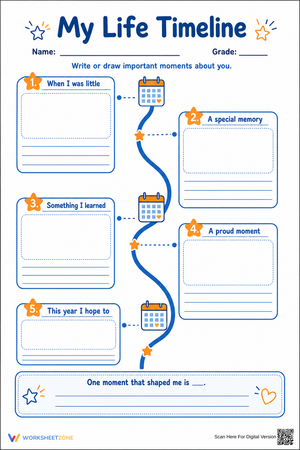
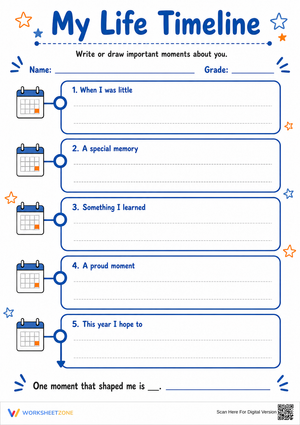
Yes. Timelines help students map the "small moment" structure that Grade 3 personal narrative instruction depends on. A student writing about the afternoon their dog got lost can use a timeline to track the sequence of events — realized the dog was gone, searched the yard, walked the block, found the dog at the neighbor's fence — which keeps the narrative focused on one thread instead of expanding into unrelated backstory. The skill is identical to what students practice with informational text; the content is personal rather than research-based.
How many events should a Grade 3 biography timeline include?
Five to eight events is the range where most third graders produce the most usable outlines. Fewer than five tends to produce thin drafts; more than eight usually means students are including supporting details rather than key milestones, which leads to unfocused paragraphs. The worksheets are sized to accommodate that range without leaving so much open space that students feel compelled to fill every slot with something marginal.












 Interactive Worksheet Maker
 Quiz Maker
 Word Search Maker
 Crossword Puzzle Maker
 Word Scramble Generator
 Sentence Scramble Generator
 Handwriting Worksheet Generator
 Name Tracing Generator
 Fill In The Blank Generator