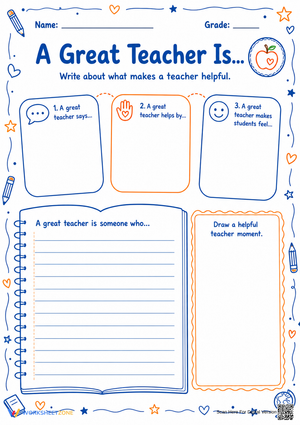
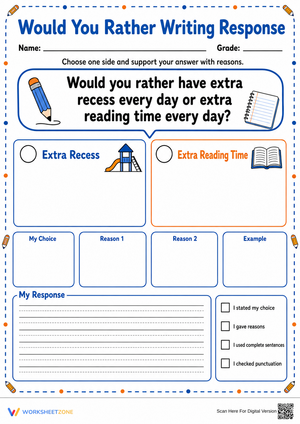
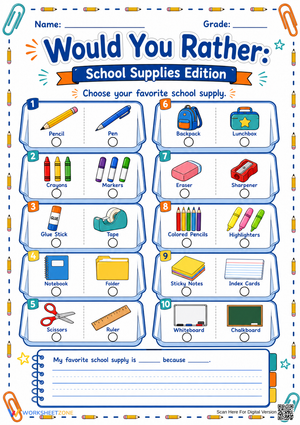
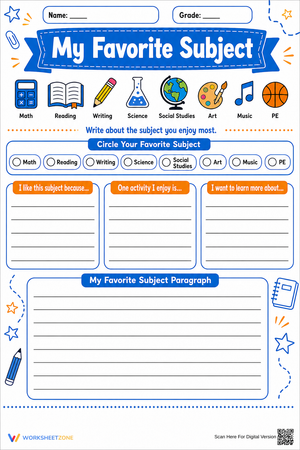
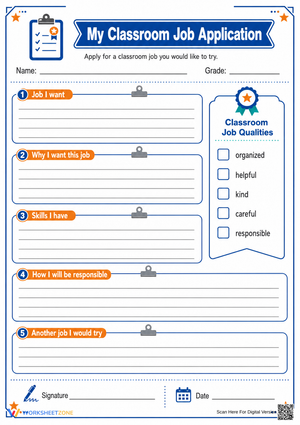
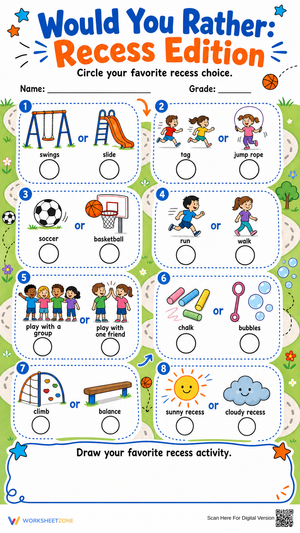
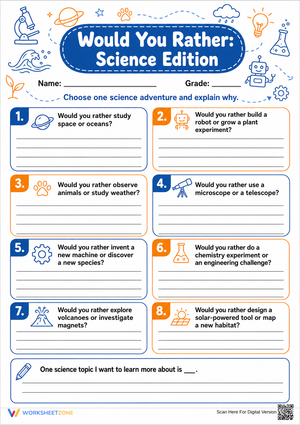
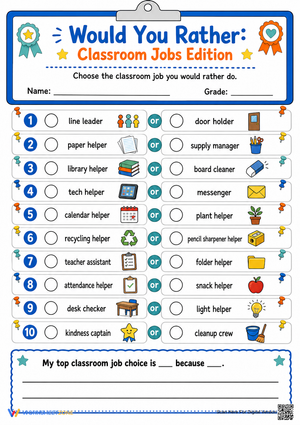
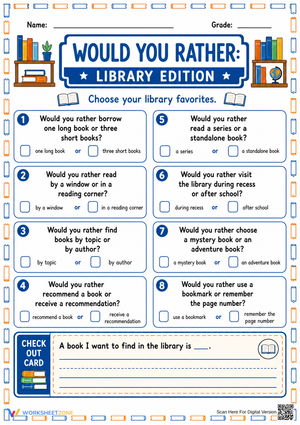
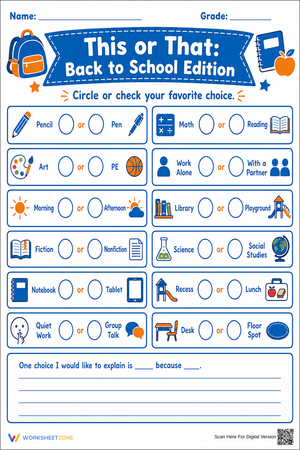
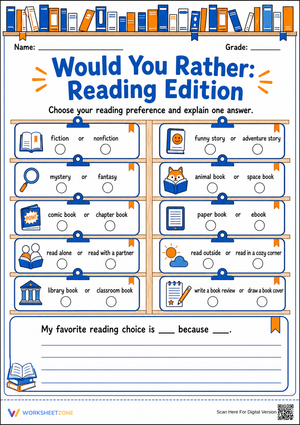
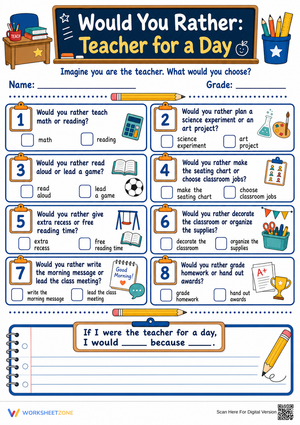
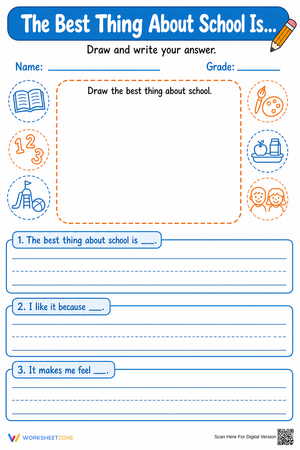
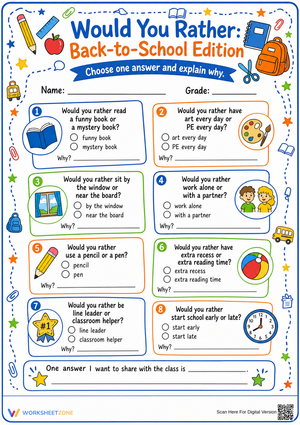
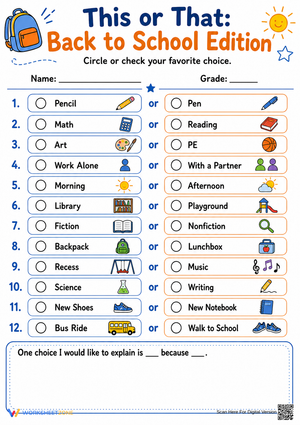
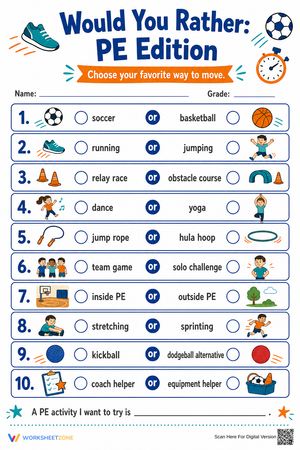
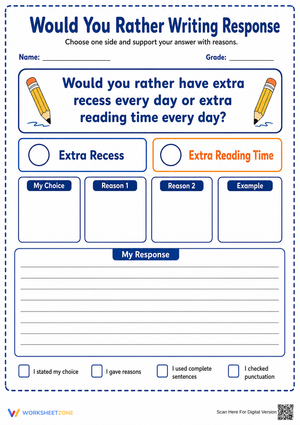
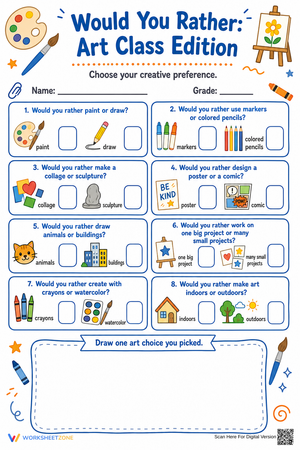
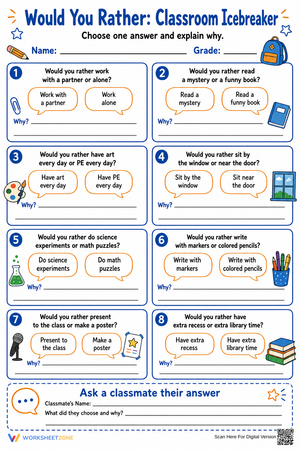
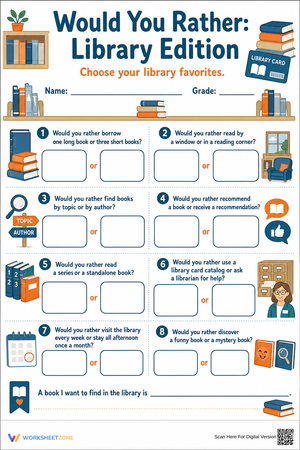
These 3rd grade opinion writing printable worksheets give students the structural support they need to move beyond personal preference and into genuine argument-making. Third graders arrive knowing how to say what they like — the real instructional work is teaching them to say why, with reasons that hold up under scrutiny and examples that do more than repeat the opinion in different words.
What's Covered Across the Set
Each worksheet targets a specific component of the opinion writing process rather than asking students to do everything at once. Separating the skills this way reduces cognitive load and lets teachers identify exactly where a student's thinking breaks down.
- Fact vs. opinion sorting: Students read paired statements and mark which is a fact and which is a viewpoint. This step matters more than it sounds — many third graders genuinely believe a sentence like "pizza is the best food" is a fact because it feels true to them.
- OREO organizer practice: Students map out Opinion, Reason, Evidence, and restated Opinion before drafting a full paragraph. Having those boxes filled in before writing starts cuts down significantly on blank-page stalling.
- Linking word exercises: Students insert transition words — because, for example, therefore, in addition — into partially written arguments. A word bank is included so the task stays a connector-practice exercise rather than a vocabulary test.
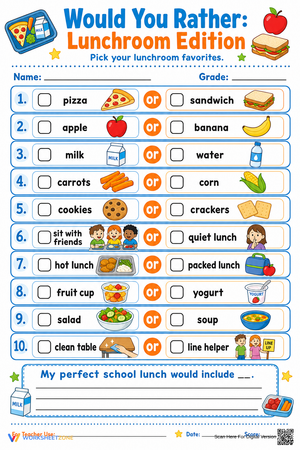
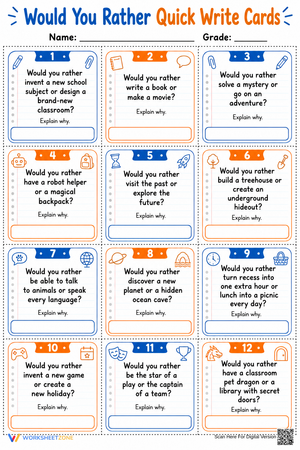
- High-interest prompts: Topics cover things third graders actually have strong feelings about: whether homework should exist, what the best school lunch is, whether recess should be longer. The specificity of the prompt matters — vague topics produce vague arguments.
- Student self-assessment checklists: Simple checklists let students verify they included a clear opinion, at least two reasons, supporting evidence, linking words, and a concluding sentence before turning in a draft.
Mistakes Students Make That These Worksheets Help Surface
The most persistent error in third-grade opinion writing isn't a missing period — it's the reason-evidence collapse. Students write: Dogs are better pets because they are fun. For example, dogs are very fun. The "example" just restates the reason without adding any new information. The OREO organizers address this directly by giving the two elements separate boxes, which forces students to pause and ask: wait, what's actually different between these two things I'm writing?
A second common problem is single-connector dependency. Students who have learned the word because will use it for everything and resist branching out. You'll see paragraphs where every sentence starts with because or ends with it mid-sentence in ways that don't connect logically. The linking word worksheets build a working vocabulary of alternatives so students have real choices during drafting — not just the one connector they already know.
There's also the restated-opinion problem. Students read "restate your opinion" and simply copy their first sentence again, word for word. Showing them two or three example closings that use different phrasing — "For all these reasons, dogs make outstanding pets" instead of repeating "Dogs are the best pets" — makes the expectation concrete enough to act on.
Standard Alignment
These worksheets address CCSS ELA-Literacy.W.3.1 directly. That standard asks third graders to write opinion pieces that introduce a topic, state an opinion, supply reasons supported by details, use linking words to connect opinion and reasons, and close with a concluding statement. In practical classroom terms, W.3.1 is the first time students are held accountable for the full architecture of an argument — not just having an opinion, but structuring it so a reader could follow the logic. Each worksheet targets one or more of those component parts: the opinion statement, the reason-evidence relationship, the linking language, or the conclusion. Teachers can map individual worksheets to specific W.3.1 sub-components when sequencing a writing unit.
How to Build These Worksheets Into Your Writing Block
The sorting and linking-word worksheets work well as warm-ups — five minutes at the start of the writing block before students move into independent drafting. The OREO organizers, on the other hand, belong earlier in the lesson cycle, before drafting begins. Using them as a pre-writing step, rather than handing them out after students have already started writing, is the difference between the organizer guiding the thinking and the organizer being filled in retroactively to match what was already written.
One effective weekly sequence: introduce the prompt on Monday using shared writing, with the class filling out one OREO organizer together on the board. Tuesday and Wednesday, pairs complete organizers with different prompts. Thursday shifts to independent drafting with a blank organizer available but not required. By Friday, students are using the self-assessment checklist to review a completed paragraph before the week closes. The 3rd grade opinion writing printable worksheets slot into that sequence at each stage without needing additional preparation materials.
The transition word wall is worth building early in the unit. Print the linking word worksheet, cut apart the individual word strips, and mount them on card stock near the writing center. Students who freeze mid-sentence because they can't find a connector can walk over, scan the wall, and pick a word that fits — a much more independent move than raising a hand and waiting.
Adjusting the Set for a Range of Writers
For students still working on generating reasons, pair the prompt worksheet with a class brainstorm list before any individual writing begins. Seeing six or seven possible reasons on the board doesn't limit thinking — at this stage, it removes the bottleneck that stops some students from getting any words on paper at all. Once they've picked a reason they believe in, the OREO organizer does the rest of the heavy lifting.
Students who move through the basic structure quickly can be pushed on the quality of their evidence. Give them a simple test to apply: "If someone didn't believe your reason, would your example actually change their mind?" Most third-grade examples don't survive that question on the first draft, and that's exactly the right productive challenge for advanced writers — not adding a fourth reason, but making the evidence for two reasons genuinely persuasive. The 3rd grade opinion writing printable worksheets include prompts that extend naturally into this kind of revision work for students who are ready for it.
For students who need more support, the fact vs. opinion sorting worksheet is the right entry point because it has a clear correct answer. That matters more than it might seem — students who struggle with open-ended writing often respond better when a task offers something to be definitively right about. From there, moving to the organizer feels less intimidating because they've already had a success in the same subject area during the same class period.
Frequently Asked Questions
What makes a strong opinion writing prompt at the third-grade level?
The prompt needs a topic the student has direct experience with and actual feelings about. Abstract prompts don't produce strong third-grade arguments because students don't have real examples to draw from. Prompts like "Should students choose their own seats at lunch?" or "Is soccer or basketball more fun to play?" give students concrete experiences they can use as evidence. The best prompts also have no obvious single correct answer — if every student in the room will write the same thing, the argument exercise loses most of its instructional value.
How do I help students understand the difference between a reason and an example?
The clearest language that lands at this level: a reason answers why, and an example answers how do you know? If the opinion is "recess should be longer," the reason is "because physical activity helps students focus in class," and the example is "last Tuesday, our class came back from field day's long recess and finished the math worksheet ten minutes faster than usual." The example is specific and grounded — not a rewording of the reason. Having students read their example aloud and ask "does this prove my reason, or does it just repeat it?" catches the collapse before it goes on paper.
Can these worksheets support students who are also working on handwriting or spelling?
The 3rd grade opinion writing printable worksheets focus on argument structure, not conventions — so students whose primary challenge is letter formation or spelling can still access the thinking work. The OREO organizers use short boxes that don't require lengthy writing, and the sorting and linking-word exercises are low-production-demand tasks. For students who need to dictate rather than write independently, the organizers work just as well as a verbal planning tool, with a teacher or aide recording the student's ideas so the structural thinking still gets the practice it needs.












 Interactive Worksheet Maker
 Quiz Maker
 Word Search Maker
 Crossword Puzzle Maker
 Word Scramble Generator
 Sentence Scramble Generator
 Handwriting Worksheet Generator
 Name Tracing Generator
 Fill In The Blank Generator