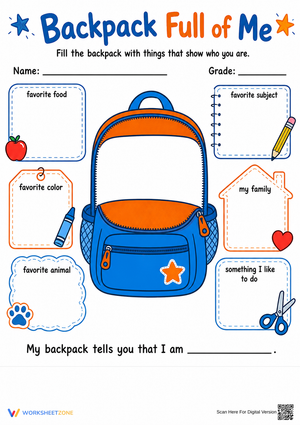
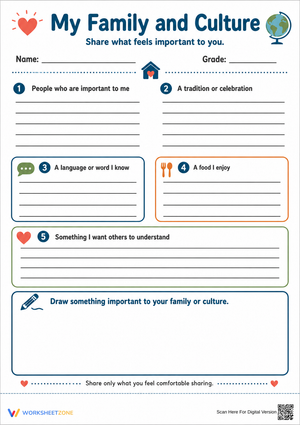
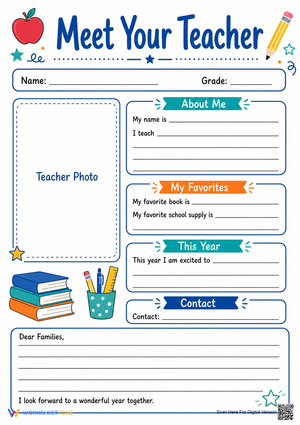
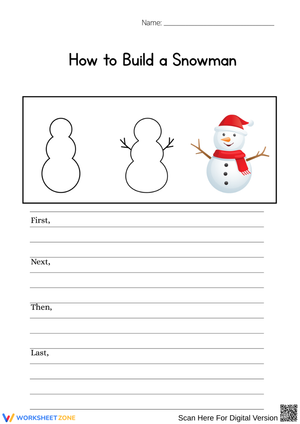
These informational writing printable worksheets for 3rd grade cover the full arc of nonfiction writing — from a prewriting organizer that separates facts from opinions before a single sentence goes on the page, to revision checklists that push students past weak introductions and restated conclusions. The set works within a standard writing workshop block and connects naturally to science and social studies units where students already have content knowledge they can put into structured prose.
What Each Worksheet Targets
The resources address the specific components CCSS W.3.2 expects students to control by the end of third grade. Each worksheet targets one or two skills rather than asking students to do everything at once — which matters here because holding topic focus, organizational structure, and word choice in mind simultaneously is genuinely hard for eight- and nine-year-olds. Breaking that into separate tasks lets students build competence in one area before combining skills in a full draft.
- Topic introduction practice: Students write and revise opening statements that name the subject and signal to readers what information is coming — not just "This is about elephants" but an introduction with enough specificity to orient an unfamiliar reader.
- Fact-sorting organizers: Students classify statements as factual or opinion-based before drafting, building the habit of questioning each sentence before committing it to a paragraph.
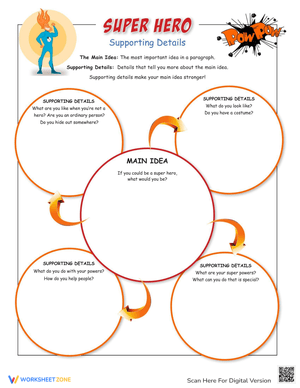
- Four-square and outline maps: Students assign supporting details to sections of an organizer, constructing paragraph structure visually before writing full prose.
- Linking word practice: Targeted exercises where students select or supply connective language — also, for example, in contrast, in addition — within informational paragraphs.
- Concluding statement work: Students rewrite endings that simply restate the introduction, practicing closures that reflect or extend the topic rather than just wrapping it up mechanically.
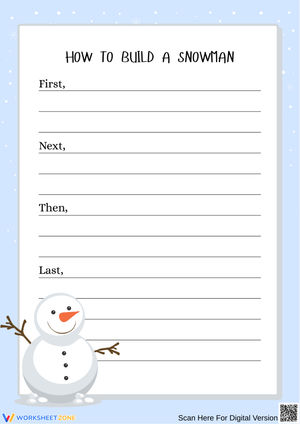
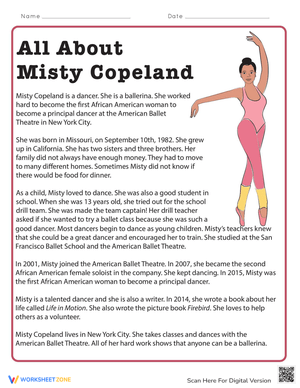
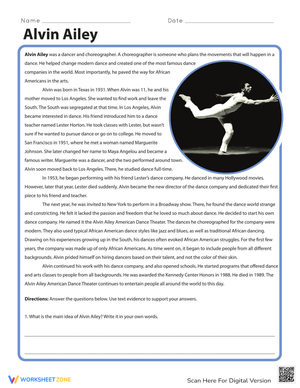
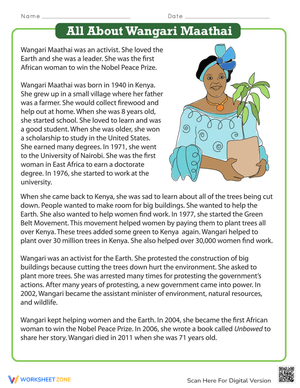
- Procedural and chronological formats: How-to templates with sequence markers and biography organizers with a timeline structure built in.
Errors That Show Up in Student Writing — and That These Worksheets Help You Catch
The most consistent problem in third-grade nonfiction drafts is opinion drift. A student begins a paragraph about dolphins with solid facts — size, habitat, diet — and then lands on "dolphins are also very smart and nice." The fact-sorting organizer builds the habit of questioning every statement before it enters a draft. Students mark whether a sentence can be verified in a reference source or whether it expresses a personal feeling. That one classification step catches more opinion drift than corrective feedback after the fact, because students are evaluating their thinking before it becomes a committed sentence.
Source copying is the second persistent problem. Students find a sentence in a reference book, write it down word for word, and consider the task finished. The sketch-and-write worksheet interrupts that process: students read a fact, close the source, draw what they understood, and then write a sentence based on their own drawing rather than the original text. The physical separation from the source is what makes it work. Students cannot copy what they can no longer see, and the drawing forces actual comprehension rather than transcription.
Conclusions are also consistently weak at this grade. The default ending is some version of "That is what I learned about ___." The revision worksheet addresses this by showing students three closing sentences on the same topic — one weak, one adequate, one strong — and asking them to rate each before rewriting their own. Seeing the contrast between versions makes the quality standard concrete in a way that a rubric descriptor rarely does for eight-year-olds.
Fitting These Into Your Writing Block
The most reliable entry point for informational writing printable worksheets for 3rd grade is a mentor text read-aloud at the start of a writing unit. Before students open any worksheet, spend ten minutes with a nonfiction picture book — Bugs Are Insects, a DK Reader, a short National Geographic Kids article — and annotate it together: where does the author introduce the topic? Where do facts appear? Where does the linking language connect two ideas? That shared reading gives students a reference point they can return to when they get stuck on their own worksheet later in the week.
The graphic organizers land best the day after a science experiment or a social studies read-aloud, when students already have content knowledge loaded and just need the writing structure to channel it. Asking a student to research a topic, organize it, and write about it simultaneously is a reliable way to produce a blank page. Sequence the content learning first, then introduce the four-square map or outline organizer as the tool that turns what they already know into a structured draft.
For revision checklists, peer editing during the last ten minutes of the writing block works better than self-editing immediately after drafting. Students who just finished writing cannot see their own gaps yet. A partner can. Narrow the peer task to two or three specific items — "underline every linking word" or "circle the concluding sentence" — rather than handing over a full checklist, especially early in the unit. Focused annotation produces more useful feedback than an open-ended review.
Standard Alignment
CCSS.ELA-LITERACY.W.3.2 requires students to write informative or explanatory texts that introduce a topic, use facts and definitions to develop points, use linking words to connect ideas, and provide a concluding statement. Most worksheets in the set map to one or two sub-components of W.3.2 rather than the full standard at once. W.3.2 bundles several distinct skills, and students who are shaky on linking language need direct practice on that element without the full cognitive weight of drafting an entire report at the same time. Treating the sub-skills as separate instruction targets also makes it easier to identify exactly where a student's writing breaks down.
CCSS.ELA-LITERACY.W.3.7 addresses short research projects, and the KWL and note-taking organizers in the set connect directly to the note-gathering and source-awareness expectations that standard describes. Using these worksheets during a science or social studies research block positions informational writing as a cross-curricular skill, not an ELA-only activity.
Adjusting the Worksheets for a Range of Learners
These informational writing printable worksheets for 3rd grade span a range of demand levels, and a few simple adjustments make the difference between productive challenge and frustration. For students who are still working on basic paragraph formation, the four-square map can be the entire writing task — completing the organizer is the product, not a step toward an extended draft. That gives them a finished, structured piece that meets nonfiction expectations at their current skill level without requiring full prose paragraphs before they're ready to write them.
Students who write with more confidence can use the same worksheets as a starting point and add a second layer of work: after completing a four-square, they draft a full paragraph for each section, then evaluate their own linking language using the revision checklist. The worksheet provides the structure; these students are filling it with more complex content and revising more deliberately. For students who need additional challenge, remove the sentence-starter prompts from the organizer before copying — taking out the "One fact is..." or "For example..." cues increases the writing demand considerably without changing the worksheet itself.
Frequently Asked Questions
Are these worksheets built around a specific topic, or can students write about any subject?
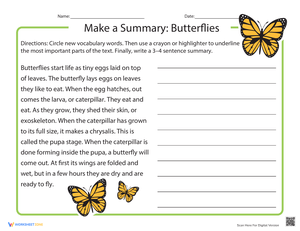
The graphic organizers and structural practice worksheets are topic-neutral — students apply them to animal reports, biography research, science unit summaries, or any nonfiction subject the class is studying. A few worksheets include a model paragraph on a sample topic (habitats, community helpers) to show students what a completed version looks like, but each working copy is blank so students can use it with their own chosen or assigned subject.
How do I help a student who keeps writing opinions even after the fact-sorting activity?
The most effective follow-up is a simple yes/no question: "Can we look this up and find out if it's true?" If the answer is no, it's an opinion. Students at this age often confuse widely held beliefs — "dogs are friendly," "pandas are cute" — with facts because those statements feel true. Practicing the "look it up" test with three or four examples before independent work makes the distinction stick faster than any worksheet exercise alone. The fact-sorting organizer reinforces the habit; the teacher question reinforces the reasoning behind it.
Which worksheets work as homework and which are better kept in class?
The graphic organizers and prewriting tools belong in class, where the teacher can catch misunderstandings before they're baked into a draft. A student who misunderstands the four-square structure and fills every section with random facts needs a quick redirection at the organizer stage, not after they've written three paragraphs. The revision checklists and concluding sentence practice can go home once students understand the task, since those involve marking and rewriting existing text rather than generating new content from scratch.
How do I connect these to science and social studies units?
The informational writing printable worksheets for 3rd grade integrate most smoothly when students are already two or three lessons into a unit — not on day one. By that point they have enough background knowledge to fill an organizer with real content rather than copying from a reference source because they have nothing else to say. Use the four-square map as the culminating written task for a science unit, or bring in the KWL organizer at the start of a social studies research block to activate prior knowledge before students begin reading sources.












 Interactive Worksheet Maker
 Quiz Maker
 Word Search Maker
 Crossword Puzzle Maker
 Word Scramble Generator
 Sentence Scramble Generator
 Handwriting Worksheet Generator
 Name Tracing Generator
 Fill In The Blank Generator