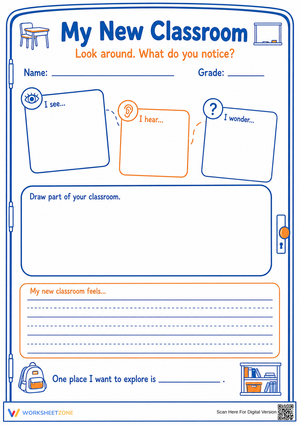
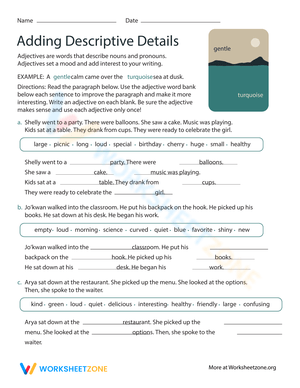
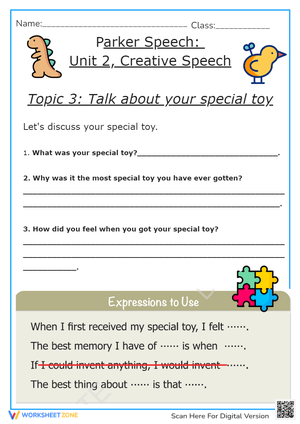
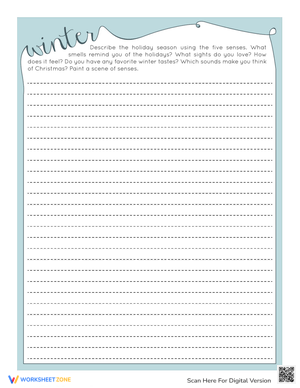
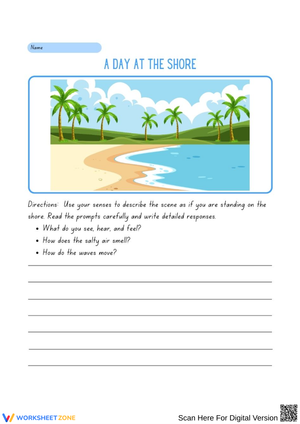
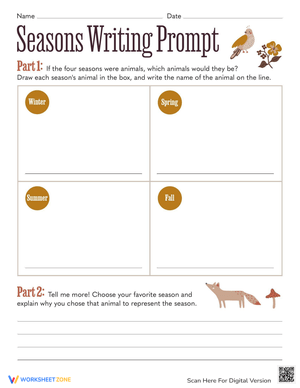
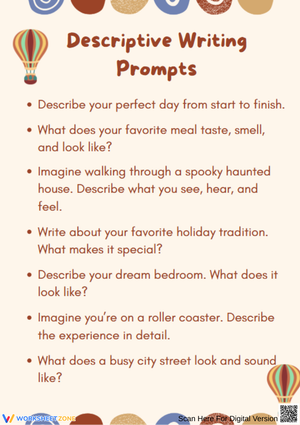
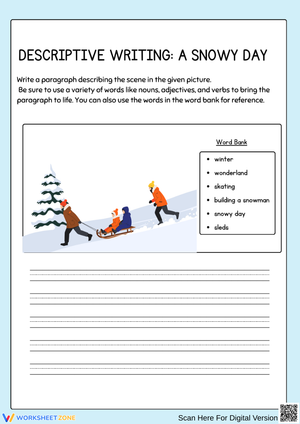
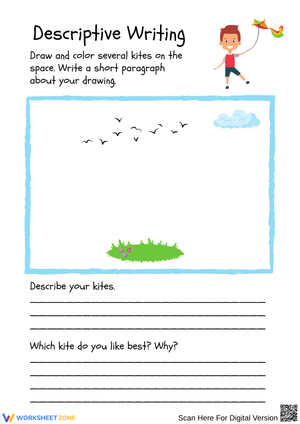
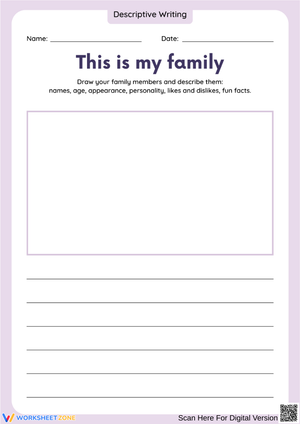
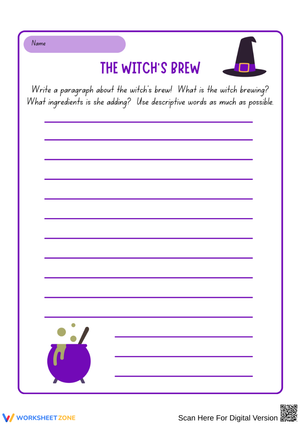
Descriptive paragraph printable worksheets for 3rd grade give teachers a structured way to bridge the gap between oral fluency and organized written expression. Most eight- and nine-year-olds can describe a thunderstorm or a favorite meal in surprising detail when speaking, but when asked to write it down as a paragraph, the structure collapses — detail sentences appear without a controlling idea, or the topic sentence is strong and the rest is drift. Each worksheet in this set moves students through a brainstorming phase, a structured graphic organizer, and a final drafting space, keeping the writing task manageable without removing the thinking work.
The Skills These Worksheets Target
The core challenge in third-grade descriptive writing is not a lack of ideas — it is coherence. Students tend to list details without subordinating them to a main point, or they write one strong sentence and then repeat it in slightly different words. Each worksheet addresses three specific skills: writing a topic sentence that names the subject and signals what the paragraph will convey, selecting supporting details that use sensory language rather than general approval words, and writing a closing sentence that completes the paragraph rather than simply announcing its end.
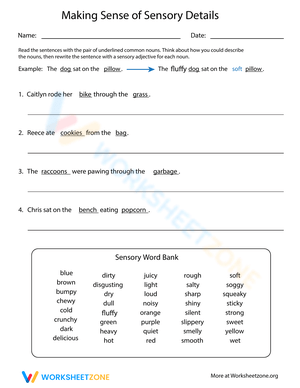
Prompts across the set draw on subjects students know concretely — a specific outdoor spot, a class pet, a single food, a familiar weather event. That specificity matters. When a student has to describe "a pet" in the abstract, the writing thins out. When the prompt is "the class hamster" or "the smell of the cafeteria on pizza Friday," sensory detail appears more readily. Word banks in each worksheet are organized by sense rather than alphabetically, so students reach for crinkled, hollow, and bitter rather than defaulting to nice or good.
Patterns in Student Work Teachers Should Know
The closing sentence is where most third graders lose points — not because the rest of the paragraph is weak, but because they don't understand what a closing sentence actually does. They write So that is why the beach is fun or That is all about my dog, which announce that the paragraph is over rather than completing the reader's picture. That pattern shows up in student work so consistently that it is worth addressing explicitly before students write their first full paragraph. Several worksheets include a closing-sentence prompt that asks students to return to the feeling or image from their topic sentence rather than summarize what they already said.
A second pattern worth watching: when a graphic organizer includes three detail boxes, students frequently write one-word responses — soft, fast, loud — and then copy those same single words directly into their paragraph sentences. The organizer recorded vocabulary but did not generate sentences. Reviewing the organizer during the brainstorm phase, not after drafting, catches this early. Asking "what does soft feel like on your fingertips?" typically produces the sentence the student needed but did not know how to reach independently.
Lesson-Planning Notes for Getting the Most From These Worksheets
Descriptive paragraph printable worksheets for 3rd grade slot naturally into the independent writing window that follows a brief model lesson. After a 5- to 8-minute teacher demonstration — writing one example paragraph aloud and narrating each decision — students move directly into the brainstorm section of the worksheet. The transition is nearly seamless because students have a task waiting; there is no blank-page moment. That first work period runs 15 to 20 minutes, a realistic window at this age without the pace problems that come when early finishers have nothing to do.
A useful sequencing strategy: run the same organizer format across several different prompts during the unit. Monday, students describe a place. Thursday, an object. The following week, an animal. The format stays constant; only the topic changes. After two or three rounds, students stop reading the directions and start writing — a sign that the structure has done its job and students' attention has shifted to the actual sentences. Completed organizers also serve as conferencing records. When a paragraph is unfocused, checking whether the organizer was completed thoughtfully or filled in with single words usually reveals exactly where the writing broke down.
Standard Alignment
These worksheets address CCSS ELA-Literacy W.3.2, which requires third graders to write informative and explanatory texts that introduce a topic, develop it with facts and details, and provide a concluding statement or section. Descriptive paragraph writing maps directly onto that structure — topic sentence as introduction, sensory detail sentences as development, closing sentence as conclusion. W.3.4, which asks students to produce clear and coherent writing appropriate to task and purpose, is reinforced each time a student revises a vague sentence into a specific, sensory one. In most district pacing guides, these two standards receive concentrated attention during October and November, when writing units shift from personal narrative toward explanatory and descriptive modes.
Reaching Every Writer in a Mixed-Ability Classroom
For students who need more structure, several adjustments work well together:
- Reduce the required detail sentences from three to two so the writing load matches what the student can sustain.
- Pre-fill the topic sentence in the organizer so students direct their energy toward generating concrete details.
- Provide a word bank sorted by sense — what you see, what you hear, what you feel — to reduce vocabulary decision fatigue during the planning stage.
- Color-code the planning boxes to match the numbered lines in the drafting area, which helps students transfer organizer notes without losing track of which detail belongs in which sentence.
For students ready for more challenge, the worksheet's organizer becomes a floor rather than a ceiling. Ask them to complete the draft paragraph, then revise one plain sentence into something more precise — replacing the dog was big with a sentence that gives the reader a specific measurement or comparison. A second extension: have them read the paragraph aloud and listen for where a transition word would keep two sentences from bumping into each other. That listening revision move is something many fourth-grade teachers still wish more students had practiced.
Frequently Asked Questions
How long should a third-grade descriptive paragraph be?
Five to seven sentences is a realistic target. A topic sentence, three supporting detail sentences, and a closing sentence gives students a complete structure that matches the graphic organizer without asking for length they cannot yet sustain. A tighter paragraph with specific sensory language is more instructionally useful than a longer one filled with vague or repeated wording.
Can struggling writers use these worksheets independently?
Most students who are still developing basic sentence fluency need oral preparation before written work. Have them dictate a topic sentence and one or two details to a teacher or partner, then transfer those words into the organizer before drafting. The descriptive paragraph printable worksheets for 3rd grade separate the planning phase and the drafting phase on purpose — a student can work through the organizer orally and write only the polished final version, which reduces frustration without reducing the writing demand.
What topics produce the richest student writing?
Specific and personally familiar topics outperform broad ones at this grade level. "My backyard" produces more sensory detail than "nature." "The cafeteria on hot dog day" works better than "school lunch." Abstract prompts like "describe a good friend" tend to generate trait lists rather than imagery, so those are better saved for later in the year when students have more practice sustaining sensory language across several sentences.
How do these worksheets fit into a writing workshop structure?
Each worksheet functions as the independent practice tool after the day's mini-lesson, and the completed organizer doubles as a conferencing record during share time or small-group work. When a student's paragraph feels unfocused, the organizer shows whether the problem originated in planning — vague or incomplete boxes — or appeared during drafting when the student abandoned the organizer and wrote from memory. Teachers building a sustained descriptive writing unit will find that the full set of descriptive paragraph printable worksheets for 3rd grade provides enough prompt variety to run three to four weeks of practice without repeating a topic or a sentence structure.












 Interactive Worksheet Maker
 Quiz Maker
 Word Search Maker
 Crossword Puzzle Maker
 Word Scramble Generator
 Sentence Scramble Generator
 Handwriting Worksheet Generator
 Name Tracing Generator
 Fill In The Blank Generator