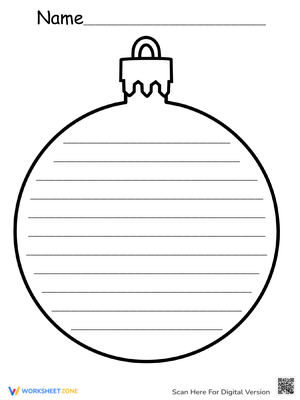
These 3rd grade creative writing printable worksheets give teachers the targeted tools they need for the moment when narrative writing becomes genuinely hard — not the opening sentences, when students are eager to get started, but the sustained middle of a story, where plot stalls, characters flatten, and the "and then, and then, and then" problem takes over. The set covers the full range of fiction fundamentals third graders are expected to control: character development, plot structure, sensory description, and event sequencing.
The Specific Skills Targeted
Third grade marks the first year students are held to multi-paragraph narrative standards — not a single anecdote about their weekend, but a story with a genuine conflict arc and a resolution that actually responds to the problem set up in the middle. That developmental jump is real, and each worksheet in this set addresses one piece of it directly.
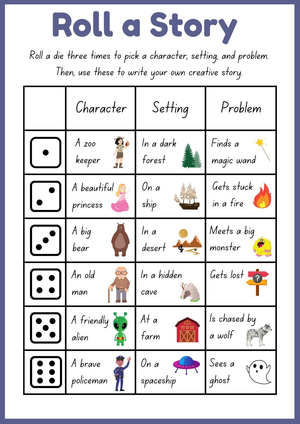
- Character profiles that move past physical description — students name what their character wants, fears, and is hiding before any story sentences are drafted
- Story maps with a Beginning-Middle-End structure that separates rising action from resolution, so students can see where conflict belongs in the arc
- Transition word practice using temporal connectors like "suddenly," "by the time," and "without warning" — not just the familiar first/next/last pattern
- Sensory detail exercises that isolate one sense at a time before asking students to layer descriptions into a full scene
- Dialogue frames embedded in a brief narrative context, where students punctuate a two-character exchange within a story passage
- Emotional arc mapping, where students mark the moment their character feels brave, frightened, or relieved and then write the sentence that shows — rather than states — that internal shift
Students who can articulate what a character wants before they begin drafting write more specific, sustained narratives than those who discover character as they go. The 3rd grade creative writing printable worksheets in this set treat that pre-writing thinking as non-negotiable — the character and emotional arc worksheets come before the blank draft, not after it.
Patterns in Student Work Worth Watching For
The most consistent error at this grade level is additive sequencing. Students have a story in their heads; they just report it as a chain of events without signaling that time has passed, tension has risen, or anything has changed emotionally. Worksheets that ask students to name the cause of each event — not just what happens next — disrupt that pattern immediately, because students have to reason about why things happen rather than simply listing them.
The second reliable pattern is thin characterization. Students name a character and then treat that character like a prop. Emma goes to the forest. The dragon flies away. Nobody wants anything, fears anything, or gives the reader a reason to care what happens. A character profile worksheet that asks "What mistake will your character make?" forces story complexity before the first narrative sentence is written.
The third pattern is abrupt closure — two decent paragraphs followed by "And then it was over. The end." Students need to see the direct connection between the problem established in the middle and the ending they write. That connection is not intuitive at eight years old. Planning tools that label the resolution separately from the climax help students understand that ending a story means answering the central conflict, not just stopping.
How to Work These Worksheets Into Your Writing Block
Most teachers anchor the character and story map worksheets to the pre-writing phase of a formal narrative unit — students spend a full class period completing a character profile before a draft sentence goes down. That front-loaded planning pays off consistently: students who have named their character's central want, greatest fear, and the mistake they'll make write more cohesive stories than students who start cold. Reluctant writers especially benefit, because the blank-page anxiety that quietly shuts them down disappears when the worksheet has already generated names, motivations, and stakes.
The sensory detail and transition worksheets work best as stand-alone quick writes at the start of a literacy block rather than as unit anchors. Ten minutes, one worksheet, then an immediate class share. That low-stakes format lets students try language they wouldn't risk in a graded draft. Several teachers pull a sensory or transition worksheet on the Friday before a writing unit starts — partly for warm-up exposure and partly as informal baseline data. You can see in about seven minutes who is already reaching for specific sensory language and who defaults to "it was scary."
Peer review pairs naturally with completed story maps. After two students finish their maps independently, they trade and answer one question: "Does the ending solve the problem from the middle?" If a partner can't answer yes, the writer knows exactly what to revise before drafting. That focused exchange produces more specific revision than open-ended "give feedback" instructions ever do.
Standard Alignment
CCSS.ELA-LITERACY.W.3.3 is the anchor standard for this set. It requires third graders to establish a situation and introduce a narrator or characters, organize an event sequence that unfolds naturally, use dialogue and description to show characters' actions and feelings, use temporal words to signal event order, and provide a sense of closure. Each of those five sub-elements maps directly to a worksheet type in this set — this is not a standard cited for compliance; it is the actual structure that determined what worksheets were built and in what order. Teachers working in states with non-CCSS frameworks will find parallel narrative standards at the third-grade level, since the core competencies are broadly consistent across state adoptions.
Adjusting the Set for a Range of Writers
For students who struggle to generate ideas independently, 3rd grade creative writing printable worksheets like the character profile and story map work well with a few sentence frames added to the first row or two — not the answers, just the structure. "My character wants ___ because ___" gives a student something concrete to respond to rather than something to invent from nothing. That adjustment keeps the cognitive demand the same while lowering the entry barrier for students who freeze at open prompts.
Fluent writers benefit from using these worksheets as revision checklists rather than pre-writing tools. After a first draft, a student goes back to a transition worksheet and marks every place in their story where a stronger temporal connector could replace a weak "and then." That move produces more precise edits than generic "add more details" feedback. Students who already draft with ease need these resources to sharpen craft precision, not to generate initial ideas.
For English learners, the sensory detail worksheets with included word banks provide access to descriptive vocabulary without reducing the intellectual demand of the task. The student is still writing description; the word bank is a reference, not a substitute for thinking. The goal is to clear the language barrier, not lower the bar.
Frequently Asked Questions
Do these worksheets work for students already writing above grade level?
Strong third-grade writers benefit most from the emotional arc and transition worksheets, which push past surface-level plot reporting into the specifics of craft. Using those worksheets as revision tools — after a draft exists — keeps the challenge appropriate without modifying the worksheet itself. A student who already drafts fluently can still deepen a story by mapping exactly where the character's internal state shifts and then checking whether the prose actually shows it.
How many worksheets fit into a standard four-week narrative unit?
A four-week unit pairs naturally with the full set. Character worksheets come first, story maps follow, and sensory detail and transition practice run alongside drafting during the middle weeks. Teachers running a two-week condensed unit typically focus on the story map and one character worksheet, saving the isolated sensory exercises for a standalone lesson later in the semester.
What's the most effective starting point for reluctant writers?
The character profile worksheet is the strongest entry point for students who shut down at open-ended prompts. It asks specific questions rather than saying "write a story," so students respond to something concrete rather than generating from nothing. Once a reluctant writer has named their character, identified the central want, and listed one fear, they already have the raw material for a story. The 3rd grade creative writing printable worksheets that get the most traction with this group are the ones that front-load the decision-making in answerable chunks before any narrative writing begins.
Can these be used at independent writing centers during literacy rotations?
The sensory detail and transition worksheets are self-explanatory enough to run independently at a writing station without teacher direction. The character and story map worksheets work better when introduced whole-class first, then moved to a center afterward — students who have seen the format in direct instruction can navigate them during a rotation without additional support.












 Interactive Worksheet Maker
 Quiz Maker
 Word Search Maker
 Crossword Puzzle Maker
 Word Scramble Generator
 Sentence Scramble Generator
 Handwriting Worksheet Generator
 Name Tracing Generator
 Fill In The Blank Generator