


























Views
Downloads
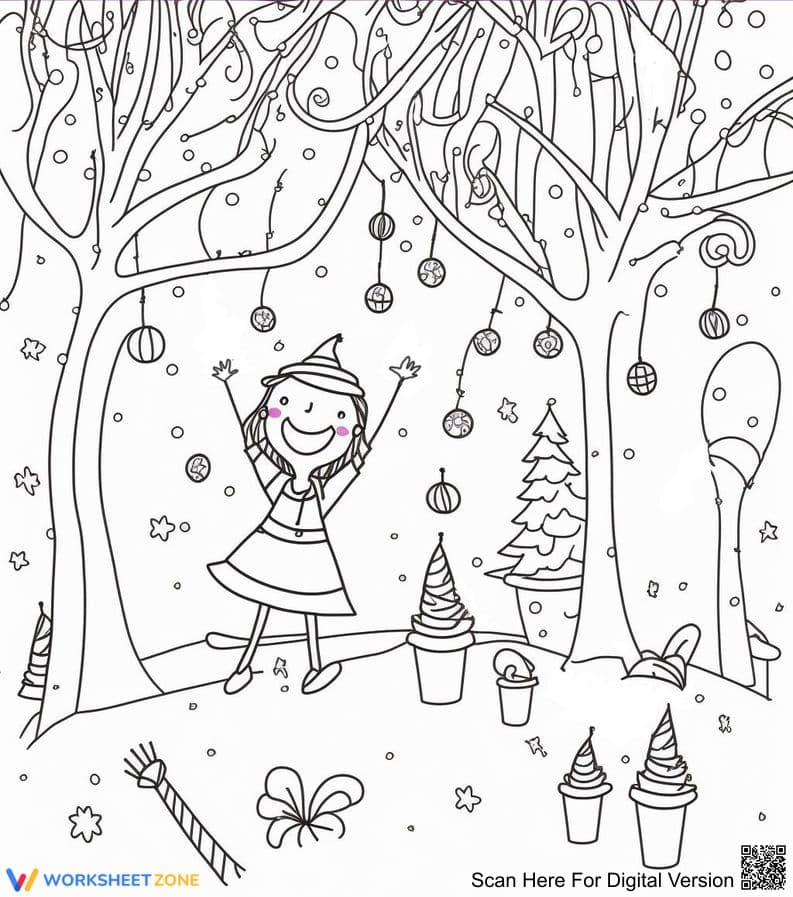

Magical Forest Coloring Page | Grade 3 Printable
Paste this activity's link or code into your existing LMS (Google Classroom, Canvas, Teams, Schoology, Moodle, etc.).
Students can open and work on the activity right away, with no student login required.
You'll still be able to track student progress and results from your teacher account.
This Magical Forest coloring page provides a high-interest visual canvas for students to develop fine motor control and creative storytelling skills. By engaging with the whimsical elements of the illustration, learners can practice focus and artistic expression while preparing for narrative writing tasks. This resource transforms a simple coloring activity into a meaningful literacy-building exercise.
At a Glance
- Grade: 3 · Subject: English
- Standard:
CCSS.ELA-LITERACY.W.3.3— Use descriptive details to develop imagined experiences or events in writing- Skill Focus: Visual Narrative & Fine Motor
- Format: 1 page · 1 task · Answer key not required · PDF
- Best For: Creative writing prompts and brain breaks
- Time: 15–20 minutes
What's Inside
Inside this PDF, you will find a single, high-resolution coloring page featuring a detailed magical forest scene. The illustration includes a central girl character, whimsical trees adorned with ornaments, and playful elements like ice cream cones and stars. The clean line art is designed to accommodate various coloring mediums, from crayons to colored pencils, ensuring a professional look regardless of the tools used.
Zero-Prep Workflow
The zero-prep design of this resource ensures it can be integrated into a busy classroom schedule in under 2 minutes. Step 1: Print the single-page PDF (30 seconds). Step 2: Distribute the sheets to students as they transition between subjects (1 minute). Step 3: Review the completed artwork or use it as a springboard for a 5-minute oral storytelling session (30 seconds). This workflow makes it an ideal choice for emergency sub plans.
Standards Alignment
This worksheet is primarily aligned with CCSS.ELA-LITERACY.W.3.3, which focuses on writing narratives to develop real or imagined experiences or events using effective technique and descriptive details. By coloring the scene, students are encouraged to think about the setting and characters. Both standard codes can be copied directly into lesson plans, IEP goals, or district curriculum mapping tools.
How to Use It
Use this worksheet as a pre-writing activity during a narrative unit. Before students begin their drafts, have them color the forest and then write three descriptive sentences about the setting. Alternatively, use it as a formative assessment tool to observe student focus and fine motor precision during transition periods. Completion typically takes 15 to 20 minutes depending on the level of detail applied.
Who It's For
This resource is designed for elementary students in Grade 3, though its whimsical nature makes it appropriate for older students needing a creative outlet. It is particularly effective for English Language Learners who can use the visual as a basis for vocabulary building. Pair this worksheet with a short story about enchanted woods to maximize its instructional impact.
The use of visual arts and coloring in the English Language Arts classroom serves as a vital scaffold for narrative development and descriptive language acquisition. According to Fisher & Frey (2014), providing students with visual stimuli before writing tasks helps bridge the gap between abstract thought and concrete expression. This Magical Forest worksheet aligns with CCSS.ELA-LITERACY.W.3.3 by allowing students to visualize a setting and characters before engaging in the writing process. Research indicates that fine motor activities like coloring can reduce cognitive load, enabling students to focus more effectively on subsequent complex linguistic tasks. By integrating this printable resource, educators provide a low-stakes entry point for students to explore setting, mood, and characterization. This approach is supported by the NAEP framework, which emphasizes the importance of diverse representational modes in developing comprehensive literacy skills. The standard code CCSS.ELA-LITERACY.W.3.3 ensures this activity remains grounded in rigorous academic expectations.


