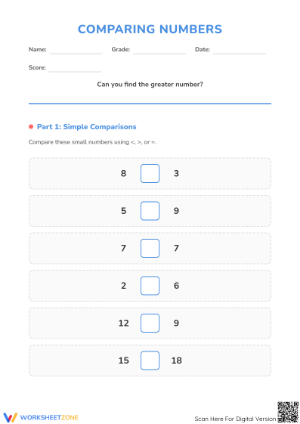
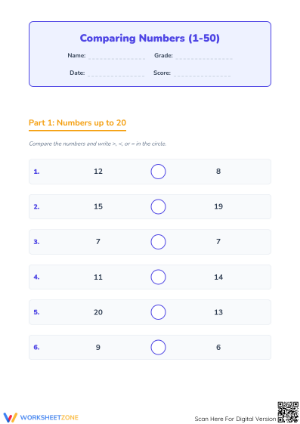
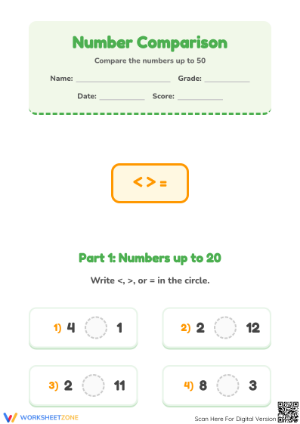
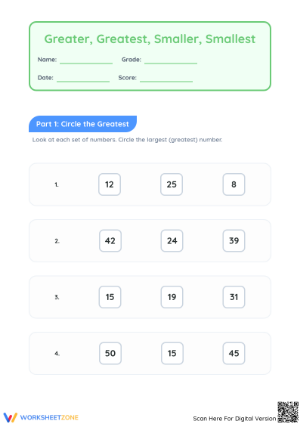
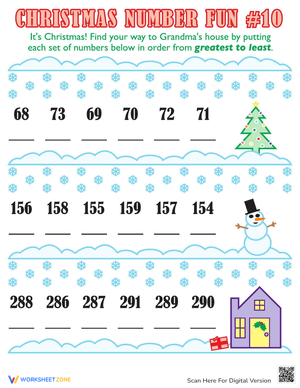
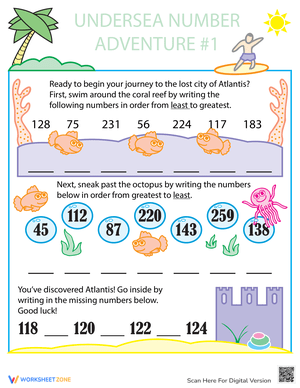
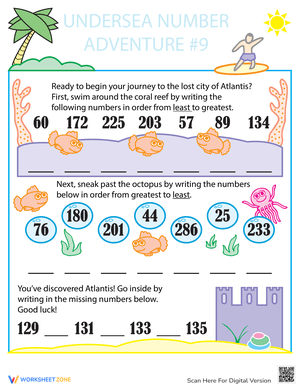
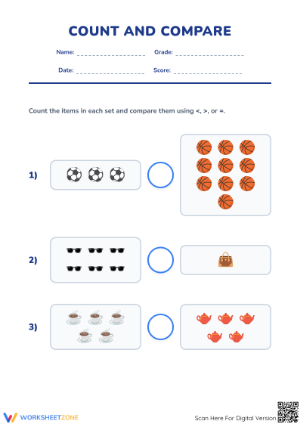
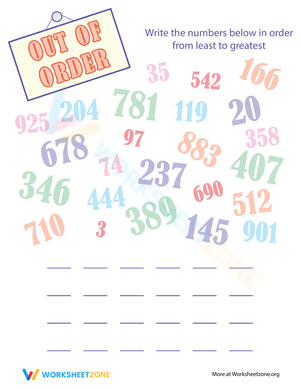
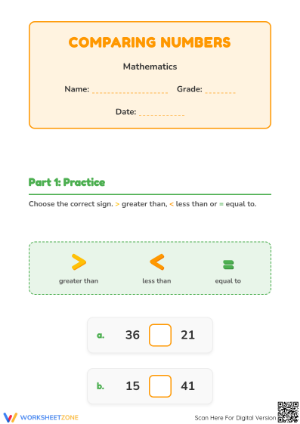
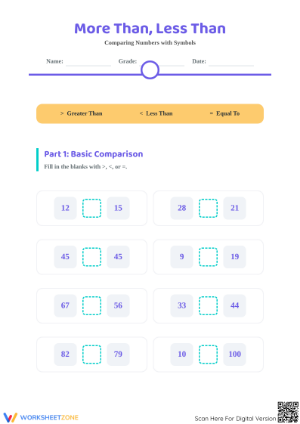
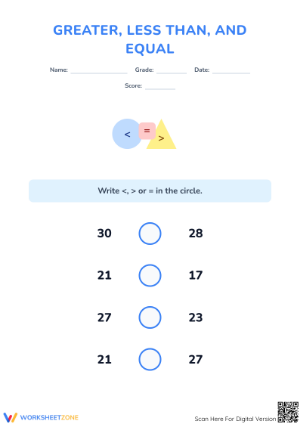
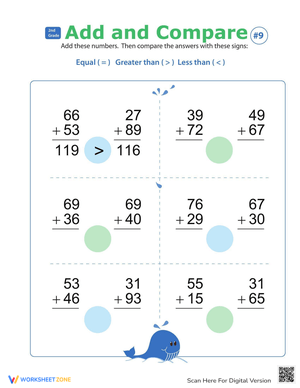
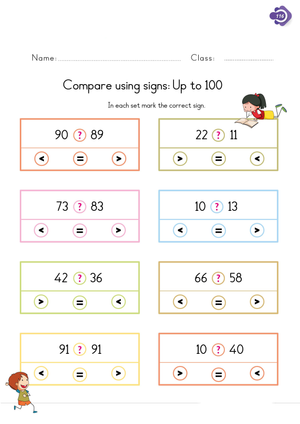
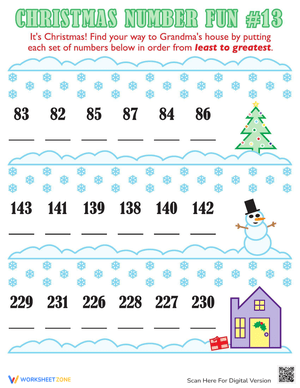
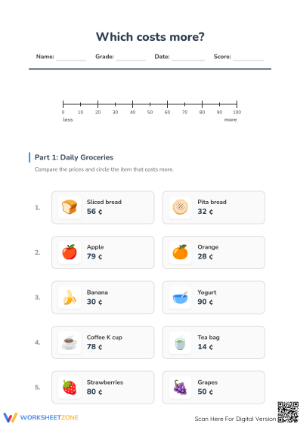
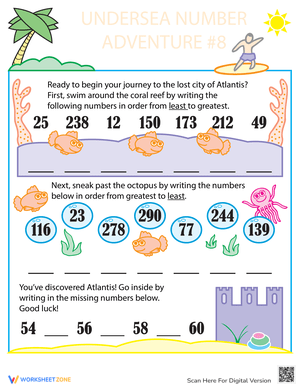
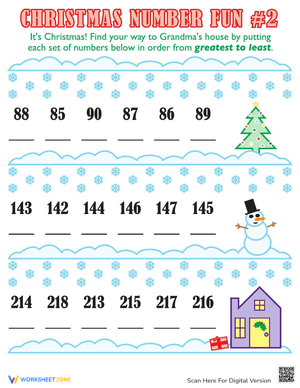
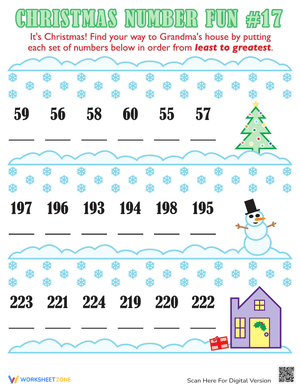
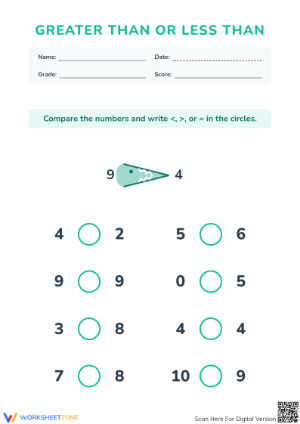
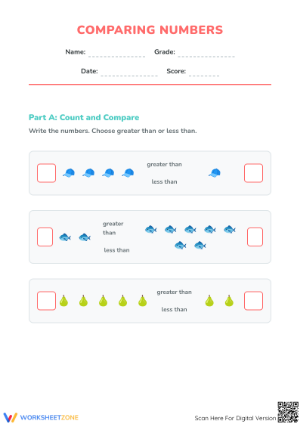
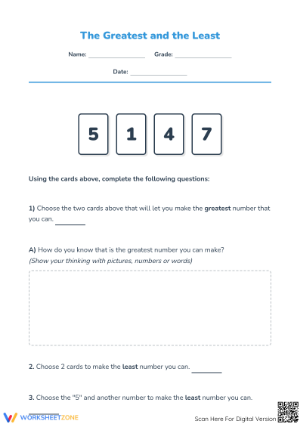
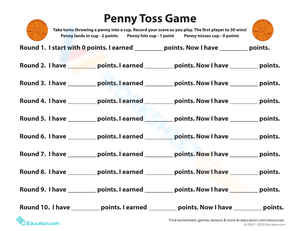
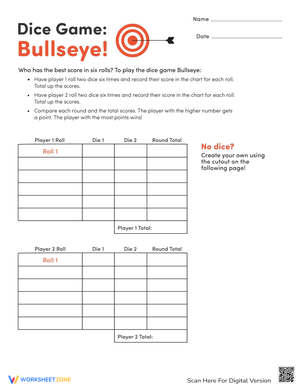
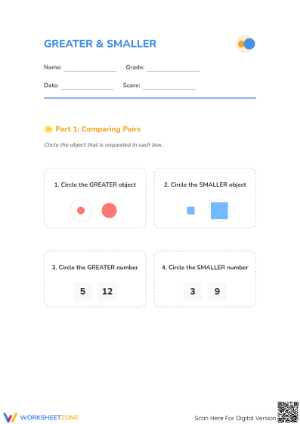
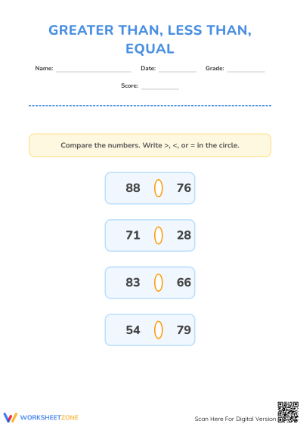
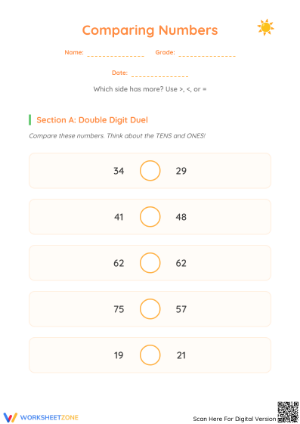
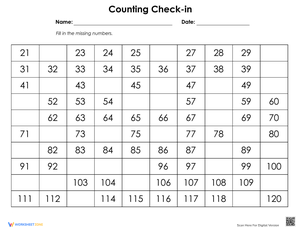
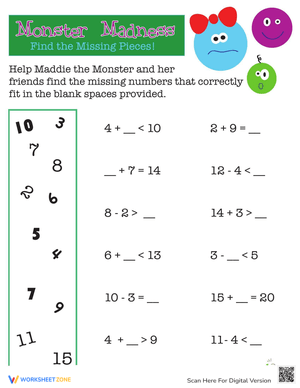
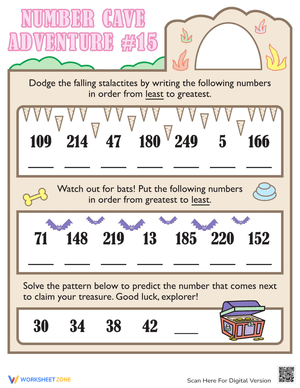
These 2nd grade comparing two digit numbers printable worksheets give teachers a focused way to build the place value reasoning that makes number comparison click for second graders — not just recognizing which symbol points which direction, but genuinely understanding why 42 is greater than 24 when both numbers use the same digits. The set moves through a deliberate progression, from number pairs with clearly different tens digits to trickier pairs where the tens match and students must look carefully at the ones place to decide.
Skills These Worksheets Target
Each worksheet addresses a specific layer of the comparison skill rather than mixing everything together at once. Students identify which of two two-digit numbers is greater, place the correct symbol — greater than, less than, or equal to — between number pairs, and on several worksheets, write the full comparison statement as a mathematical sentence. Formats vary across the set: some present standard numeral pairs, others pair numerals with base-ten block diagrams so students connect the concrete representation to the notation, and a few ask students to generate their own number pair that satisfies a given symbol — a task that shifts the cognitive demand from recognition to construction.
- Comparing pairs with different tens digits — the clearest entry point, where the decision is immediate
- Comparing pairs with matching tens digits but different ones, such as 54 and 59, which requires closer reading of the number structure
- Placing the correct symbol between number pairs and reading the resulting statement aloud
- Interpreting base-ten block diagrams and recording comparisons in symbolic form
- Extracting numbers from short word problems before making the comparison
- Writing original comparison problems for a classmate to solve, specifying which symbol must appear in the answer
How to Build These Worksheets Into Your Lesson Plans
The most effective placement for 2nd grade comparing two digit numbers printable worksheets is immediately after a concrete lesson with base-ten blocks — not as the opening move. When students have already physically pulled apart a two-digit number into rods and loose units, the worksheet becomes a record of reasoning they have already done rather than a first encounter with an abstract idea. That sequence — concrete manipulation first, then the representational worksheet — gives students something real to refer back to when the numbers on paper stop making sense.
Several teachers use one worksheet as an exit task in the final eight minutes of math block, having students complete five comparison problems and then circle the one they found hardest. That annotation step takes thirty seconds and returns far more instructional information than a score alone. Other worksheets in the set work well as Monday morning warm-ups after a weekend away from numbers — short enough to complete before morning meeting ends, focused enough to rebuild number sense before the week's new content begins. For dice-and-card center rotations, the worksheet doubles as a recording sheet: each partner rolls to build a two-digit number, they both write the comparison, then check each other's symbol.
Errors Worth Catching Before They Become Habits
The most persistent mistake in second-grade comparison work is reading from right to left — comparing ones digits before tens digits. A student who sees 39 and 41 may confidently circle 39 as the greater number because nine is greater than one. This is a place value error, not a symbol error, and drilling the symbols will not fix it. The student needs to return to physical base-ten blocks and see that four rods already outweigh three rods and nine loose cubes before the comparison even reaches the ones place. Writing "TENS FIRST" in the margin before students begin is a low-effort procedural prompt that interrupts the habit long enough for the reasoning to take hold.
Symbol confusion between less than and greater than is a separate issue, and it is usually visual rather than mathematical. Students correctly identify which number is bigger and then flip the symbol anyway. The dot method — two dots beside the larger number, one dot beside the smaller, then connect them to form the symbol — gives students a physical act to perform rather than a direction to recall from memory. Consistent exposure across 2nd grade comparing two digit numbers printable worksheets, particularly across varied formats, helps this become automatic well before state testing windows open.
Standard Alignment
Two-digit number comparison is formally introduced under CCSS.MATH.CONTENT.1.NBT.B.3 in first grade. By second grade, the anchoring standard shifts to CCSS.MATH.CONTENT.2.NBT.A.4, which extends comparison to three-digit numbers. In practice, most second-grade math units open with two-digit comparison as review — particularly for students who had inconsistent instruction in first grade — before extending into hundreds-place reasoning. Classroom placement is typically in the first trimester, bridging the place value unit and the two-digit addition-and-subtraction work that follows. Students who have not secured fluency at the two-digit level carry the symbol-confusion errors directly into three-digit comparison, so early assessment matters here.
Adjusting the Set for a Range of Learners
Students still working at the concrete level benefit from having base-ten blocks on the desk while completing each worksheet. Building both numbers physically before touching the paper makes the comparison accessible; the worksheet then records what they have already seen rather than asking them to reason abstractly. For students working at grade level, standard numeral pairs with a symbol box to fill in keep the cognitive demand on the comparison itself rather than on additional processing. That format is the right starting point for most of the class.
When 2nd grade comparing two digit numbers printable worksheets need to stretch more advanced learners, the most useful lever is expanded form. Asking a student to compare 40 plus 7 with 30 plus 16 requires reasoning through place value in an unfamiliar notation before the comparison can even be set up — the student has to recognize that 30 plus 16 equals 46 before reaching for a symbol. A further extension: have advanced students write a comparison problem for a classmate that uses a specific symbol, then trade and solve. Students who can author a valid problem have moved well past surface fluency into genuine understanding of the number relationships involved.
Frequently Asked Questions
Is two-digit comparison a first-grade or second-grade standard?
It is introduced under 1.NBT.B.3 in first grade. Second grade formally extends comparison to three-digit numbers under 2.NBT.A.4, so two-digit work functions as both review and prerequisite in second grade. Most teachers spend the first few weeks of the place value unit revisiting two-digit comparison to confirm mastery before adding the hundreds place — especially in classrooms where first-grade math coverage was uneven.
What should I do when a student keeps comparing ones before tens?
Return to base-ten blocks before more worksheet practice. Have the student build both numbers and ask which group of rods is bigger before counting the loose cubes at all. Once they see that three rods will never catch four rods no matter how many loose units are added, the reasoning usually clicks. Two or three physical sessions like this tend to transfer back to symbolic work on the page. Worksheet practice reinforces the habit, but it cannot build the concept on its own.
Can these worksheets serve as formative assessment, or are they just for practice?
Both, depending on the worksheet and how you use it. For formative data, a scan of wrong answers tells you whether errors cluster around place value confusion, symbol reversal, or only certain number types. For a cleaner summative snapshot, pull five targeted pairs from the set: one with different tens digits, one with matching tens digits, one with transposed digits like 37 and 73, one equal pair, and one problem that requires extracting numbers from a sentence. That five-item sequence reveals more about where a student actually stands than a longer undifferentiated worksheet where most problems are the same type.
Do you recommend the alligator mnemonic for teaching the symbols?
It works for some students, but it can break down when students forget which mouth is "hungry" — and then the mnemonic creates confusion rather than resolving it. A more durable strategy is teaching students to read the comparison sentence left to right, the same direction they read text: "Forty-two is greater than twenty-four." Pairing the verbal reading with the written symbol builds meaning rather than just symbol orientation. The dot method provides a reliable procedural backup that reinforces the shape of the symbol, and it works independently of any animal metaphor.













 Interactive Worksheet Maker
 Quiz Maker
 Word Search Maker
 Crossword Puzzle Maker
 Word Scramble Generator
 Sentence Scramble Generator
 Handwriting Worksheet Generator
 Name Tracing Generator
 Fill In The Blank Generator